Dan Benhamo Spent 8 Months Training Brisket and Tomahawk for the Sweetest Proposal

Dan Benhamo did not want Brisket and Tomahawk watching from the sidelines when he asked Kelly to marry him. So he spent eight quiet months teaching the two dogs a special cue, all for a few seconds on a Colorado mountainside that would become part of their family story.
Dan Benhamo knew one thing early in his proposal planning: Brisket and Tomahawk had to be there.
The two dogs were already woven into the life he shared with his girlfriend, Kelly, and leaving them out of such a big moment never felt right to him. Instead of simply bringing them along, he built the proposal around them. He kept the plan from Kelly and started working with the dogs in secret, patiently preparing them for a role they could not fully understand but that mattered deeply to him.
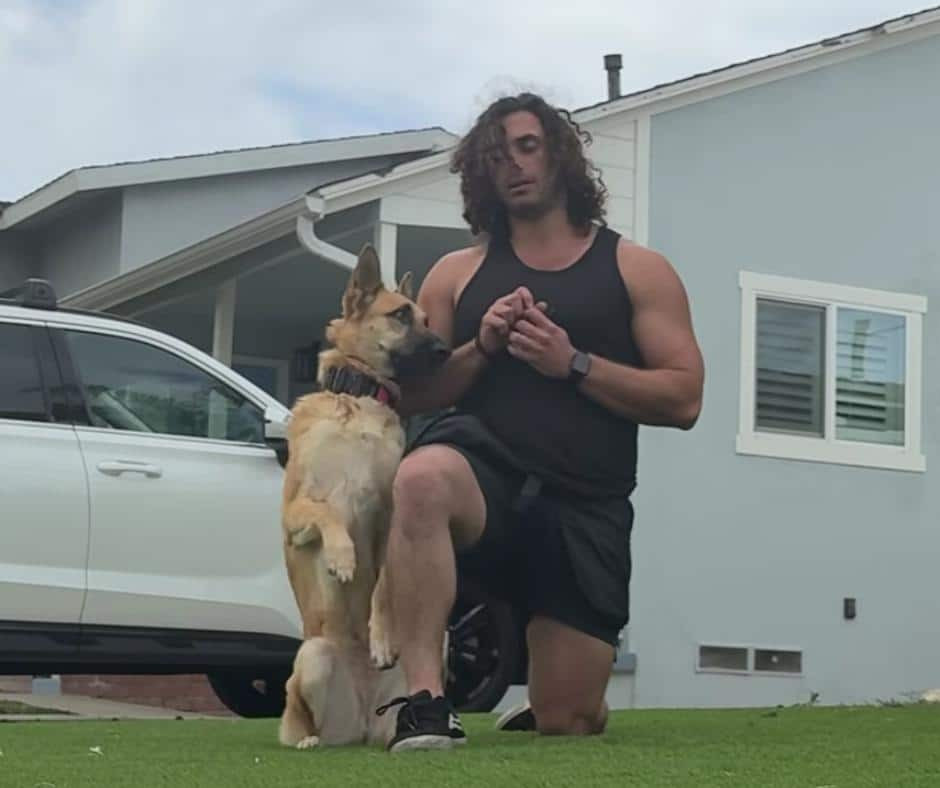
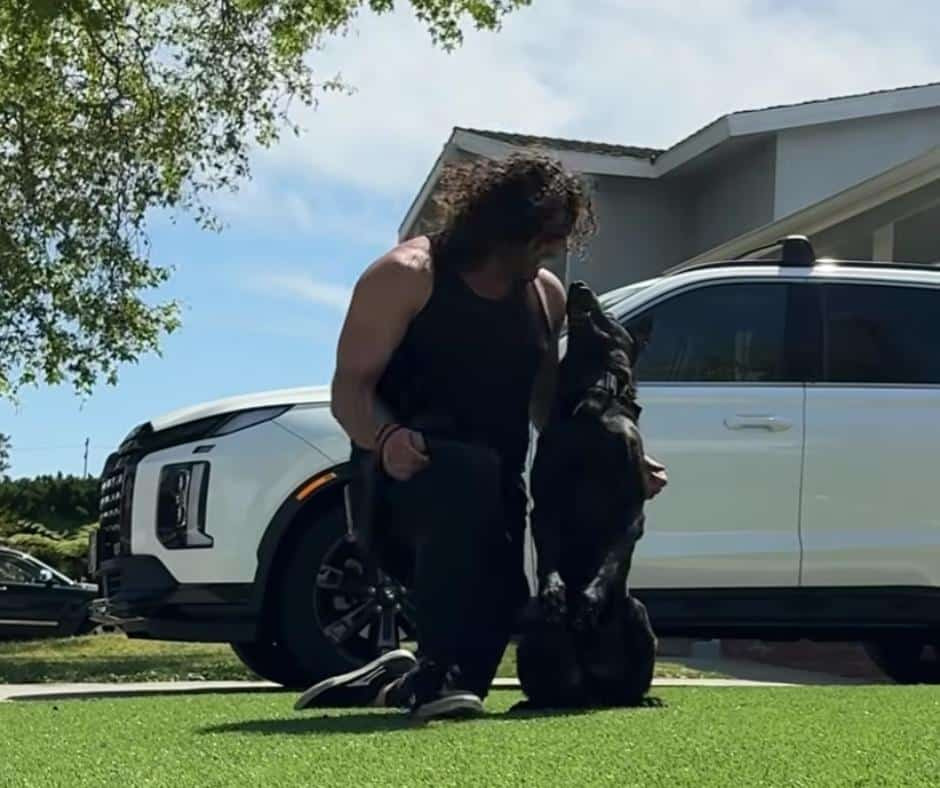
For eight months, Dan practiced with Brisket and Tomahawk so they would know exactly what to do when the time came. Getting two energetic dogs to hit their marks at just the right instant took repetition, steadiness, and a lot of consistency. The goal was not just a cute trick. Dan wanted the dogs beside him for a milestone that would shape the future of their family.
In the clip below, that long private rehearsal pays off in a single carefully timed moment.
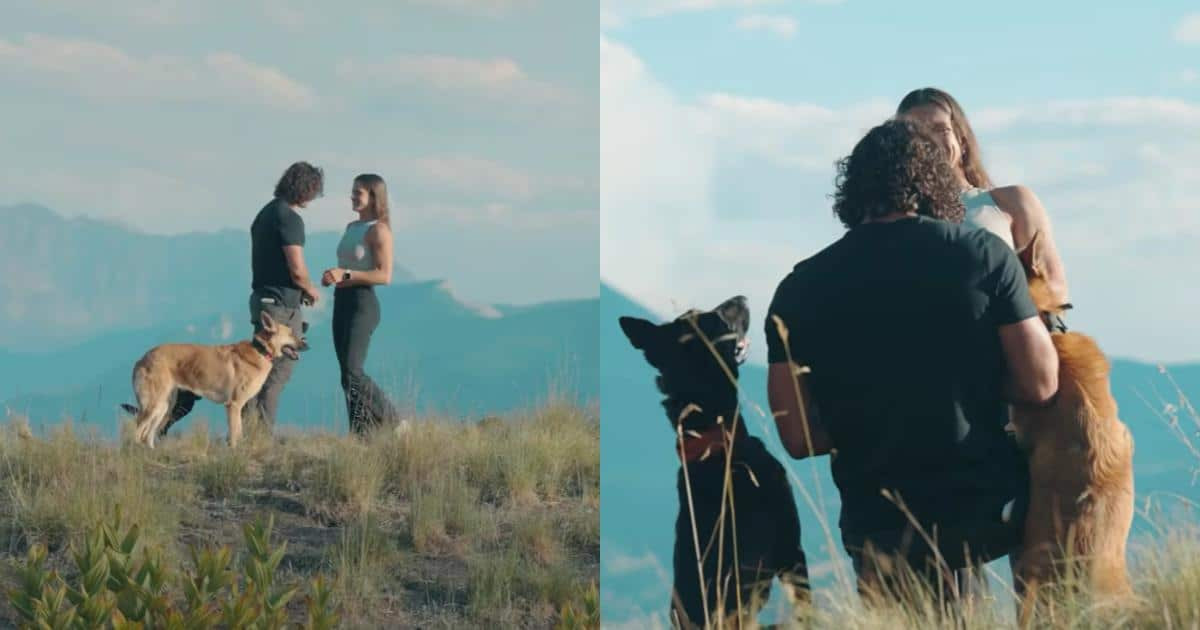
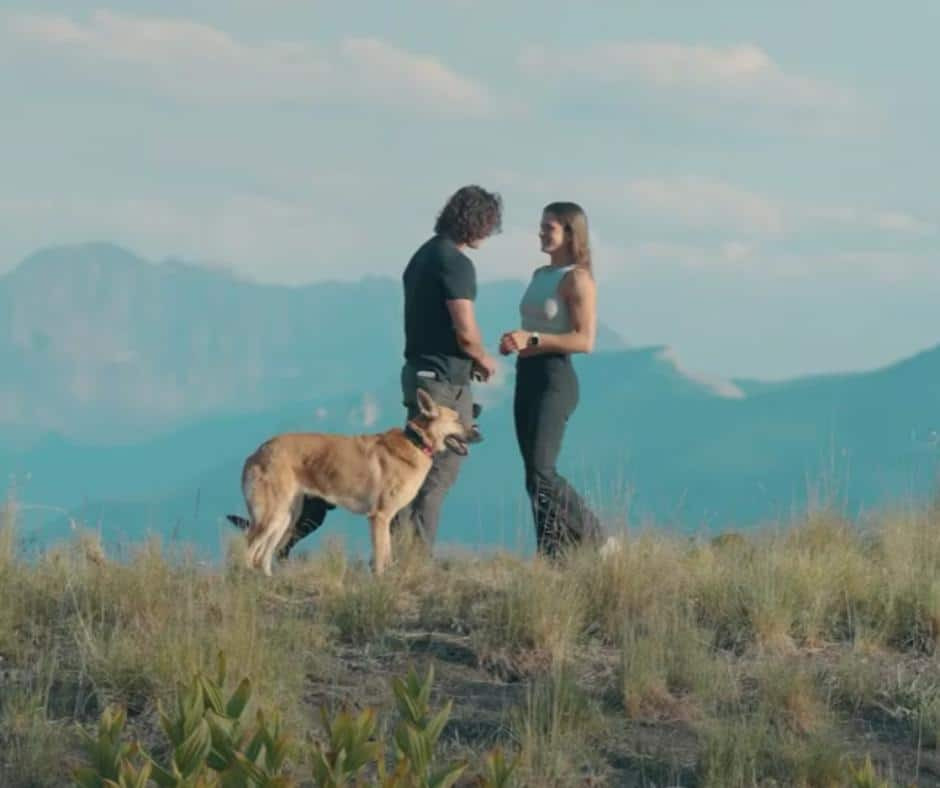
On a sunny day in Telluride, Colorado, Dan and Kelly headed to a mountain overlook with Brisket and Tomahawk. The setting was striking, with wide mountain views all around them, and the outing appeared calm and ordinary from the outside. For Dan, though, it was the place he had chosen to ask one of the biggest questions of his life.
Then came the moment he had spent months preparing for. Dan went down on one knee. Right on cue, Brisket and Tomahawk joined him, balancing upright on their hind legs at his side. What could have been a simple proposal instantly became something more personal, with the dogs participating rather than merely standing nearby.
Brisket added one more detail that made the scene even more memorable. As Dan opened the ring box, Brisket rested a paw on his knee, as if offering support. Kelly said yes.
Why the dogs mattered so much
The sweetness of the proposal was not only in the timing or the mountain backdrop. It was in the care behind it.
Dan had not arranged for Brisket and Tomahawk to be present as decoration or as an afterthought. He had spent months making sure they were part of the moment itself. Every practice session led to those few seconds on the mountainside, when the two dogs sat up beside him as he asked Kelly to marry him.
That choice says a lot about what the proposal meant. Brisket and Tomahawk were already central to the couple's everyday life, and Dan wanted that to be visible at the start of whatever came next. The proposal was about two people choosing a future together, but it also made room for the dogs who were already sharing that life.
That is what gives the story its staying power for dog lovers. The payoff is not just that the surprise worked, or that the training held under pressure, though both did. It is that Dan found a way to include Brisket and Tomahawk in one of the family's happiest milestones. By the time Kelly said yes, the secret training, the mountain trip, and the dogs' perfectly timed performance had all come together exactly as he hoped.
Some proposals are remembered for the ring or the scenery. This one will also be remembered for two dogs, a practiced cue, and one well-placed paw.
How dogs learn special event tricks
Dogs can be taught to take part in a big moment by breaking the job into small, repeatable steps. Trainers usually start with basics such as sit, stay, come, touch, and walking calmly beside a person. From there, a more specific task can be built, like carrying a small pouch, moving to a marked spot, or waiting for a cue before approaching.
Positive reinforcement is usually the clearest approach. Reward the exact behavior you want with a treat, praise, or a toy, then repeat it in short sessions. A marker word or click can help the dog understand the precise moment it got it right. If the final trick is complicated, shape it gradually. Reward first for noticing the object, then touching it, then picking it up, then carrying it a few steps.
Planning a dog's role in a memorable moment
Dogs usually do best when the routine is predictable. Practice in the same order every time so the dog learns a sequence, not just a single cue. Once the dog understands the behavior at home, rehearse in new places with more distractions, different people, and a little distance. That helps the dog generalize the skill instead of thinking it only applies in one room.
Keep the job simple. If a dog is asked to carry something, use an item that is light, safe, and easy to grip. Attachments should not dangle near the legs or mouth. It also helps to assign one handler whose only job is to guide the dog, reward success, and step in if the plan changes. A backup plan matters too. Even well trained dogs can get confused, excited, or tired.
Safety, comfort, and realistic expectations
Not every dog enjoys being the center of attention. Watch for stress signals such as lip licking, yawning, pinned ears, refusal to move, whining, pulling away, or taking treats too roughly or not at all. If those signs appear, make the task easier or stop.
Choose timing carefully. A dog that has had exercise, a bathroom break, water, and a quiet warm up is more likely to succeed. Avoid asking for a long stay on hot pavement, slippery floors, or in a crowded area if the dog is uneasy around strangers. The best canine role is one that matches the dog's temperament. Calm, short, and well rehearsed usually works better than elaborate.
Share this article: