Woman Gets Caught In An Argument With Partner After He Wanted To Name Their Baby After His Cat

One baby name suggestion turned into a full-blown relationship fight, and it all started with a cat named Max.
A woman on Reddit said she and her partner were talking about names for their first child when he brought up the one he liked most. The problem was that the name belonged to a pet he once shared with an ex-fiancée, and once that detail came out, the whole conversation went sideways.
Now she is left wondering whether she was wrong to push back, and his reaction only made the situation messier. Read on.
OP posted her story in the AITA community, asking if she is, in fact, the one at fault for refusing to name their baby after something so controversial.

She clarifies at first that she and her partner haven't been married yet but have been together for five years. They reached the conversation about deciding what to name their first child together, and her partner mentioned he liked the name Max—which she only half-heartedly considered since no other names were on her mind just yet.
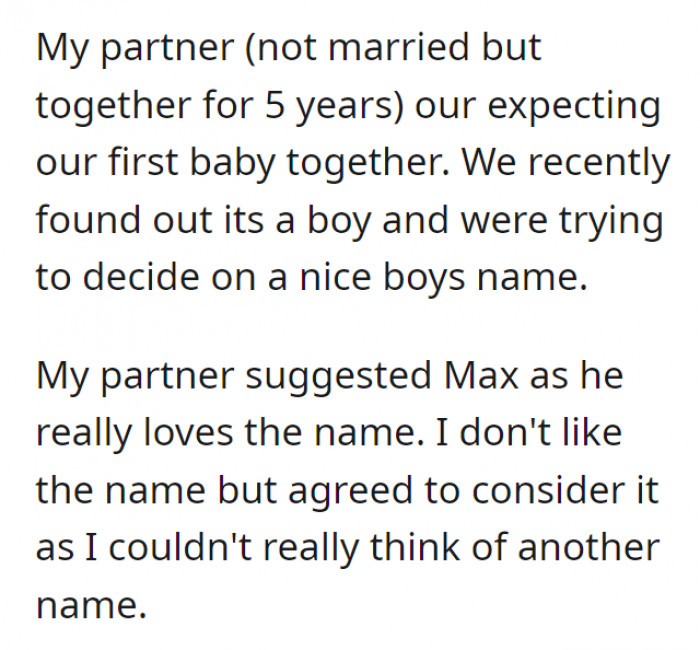
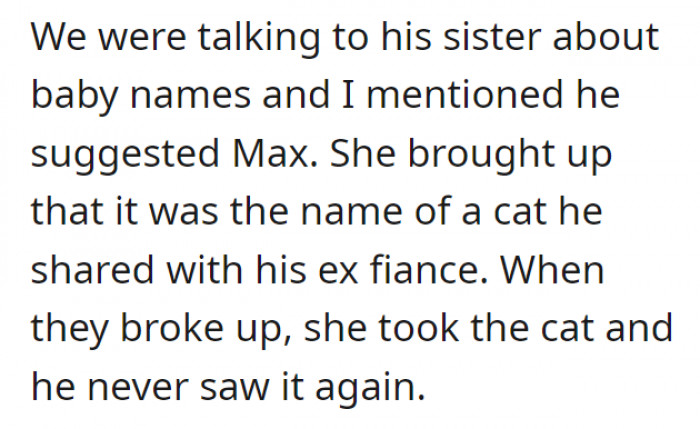
However, she revealed their plans to name the child Max to her sister-in-law, who then disclosed that the name "Max" was actually the name of his cat that he once shared with an ex-fiancée.
The name suddenly meant a lot more than she expected.
By the time she found out, the conversation had already gone from casual baby-name talk to a much bigger issue.
The decision to name a child can serve as a significant touchstone in a couple's relationship, representing a shared identity and mutual commitment. This is particularly important when the decision involves emotionally charged topics, such as naming a child after a pet, especially one associated with an ex-partner, which can evoke feelings of resentment or jealousy.
By fostering open communication and allowing each partner to voice their thoughts and feelings, couples can navigate these potentially divisive decisions more effectively.
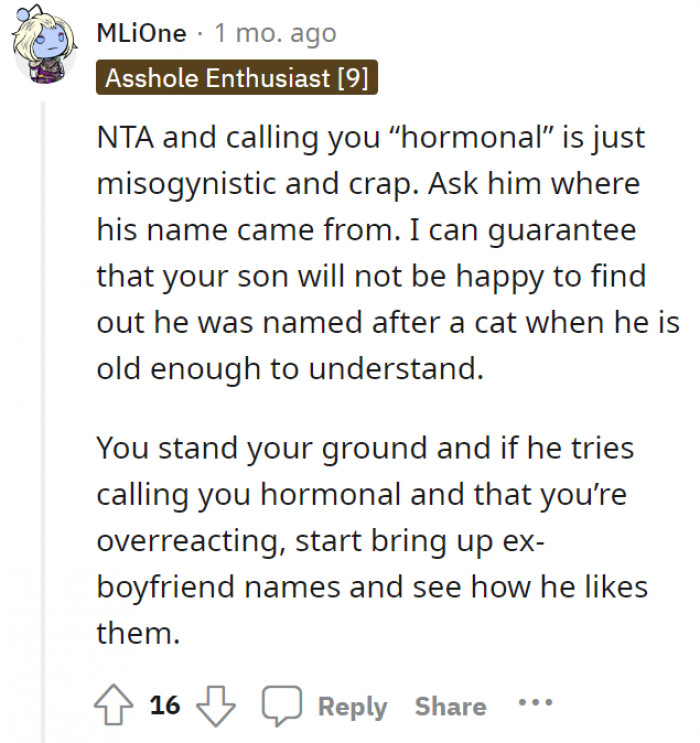
Naturally, she confronted her partner for even wanting to name their child after his ex's cat. You may have heard of people naming their child after their ex's name, but this one is equally questionable.
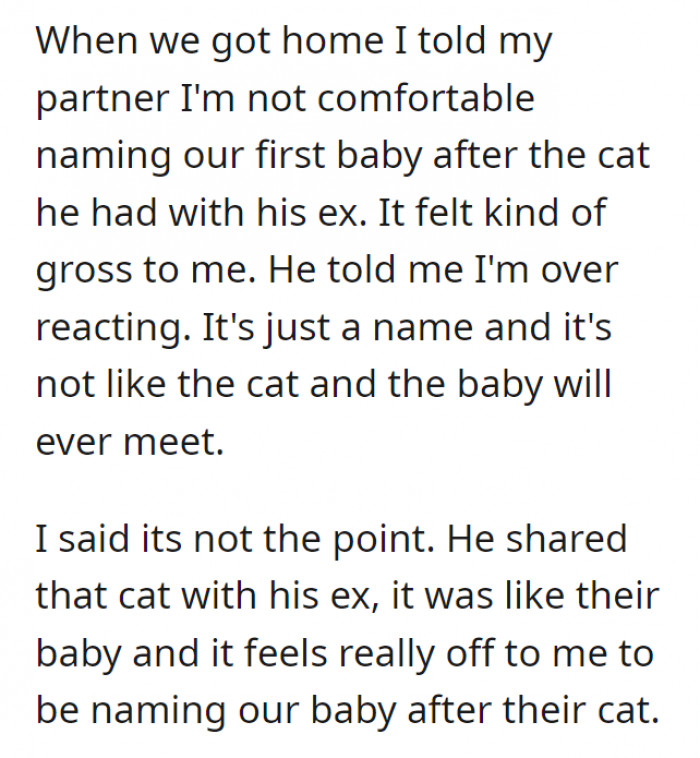
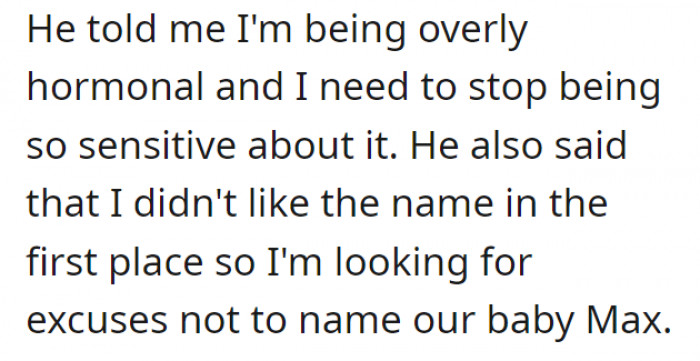
Her partner tries to gaslight her by saying it was just the hormones talking and that she's only finding a good reason to veto Max since she didn't even like it in the first place.
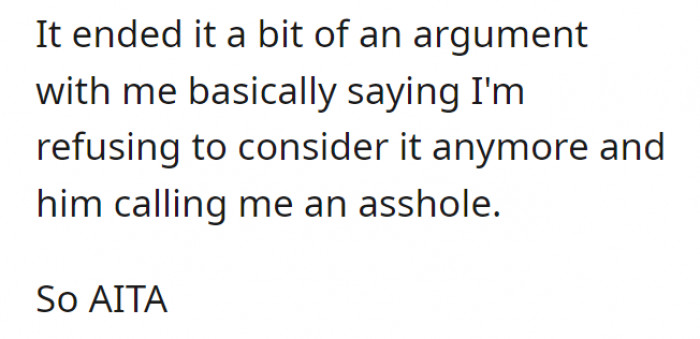
And surprise, she was the one who was called an asshole. Do you think she's the one at fault here?
The emotional weight of naming a child can be exacerbated by past relationships and unresolved feelings. A study from the University of Michigan found that emotional baggage from previous partnerships often influences current relational dynamics, particularly regarding significant decisions like naming a child.
For instance, if one partner associates a name with a previous relationship, it may lead to feelings of insecurity or discomfort. Understanding these emotional connections can help partners engage in meaningful discussions, promoting healing and reassurance.
Here are some of the best responses:
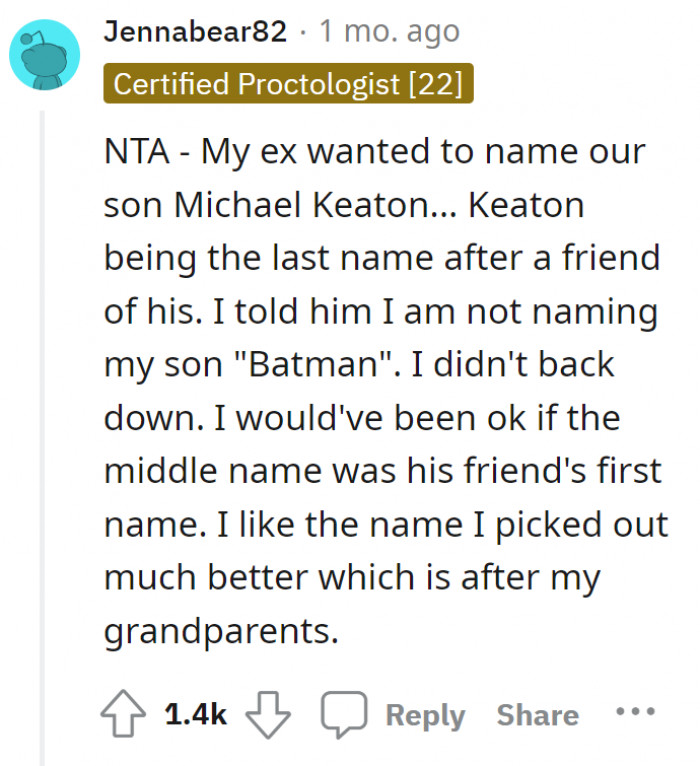
Yep, it's definitely a red flag—and it's even weird he still tried to insist on it even after OP found out.
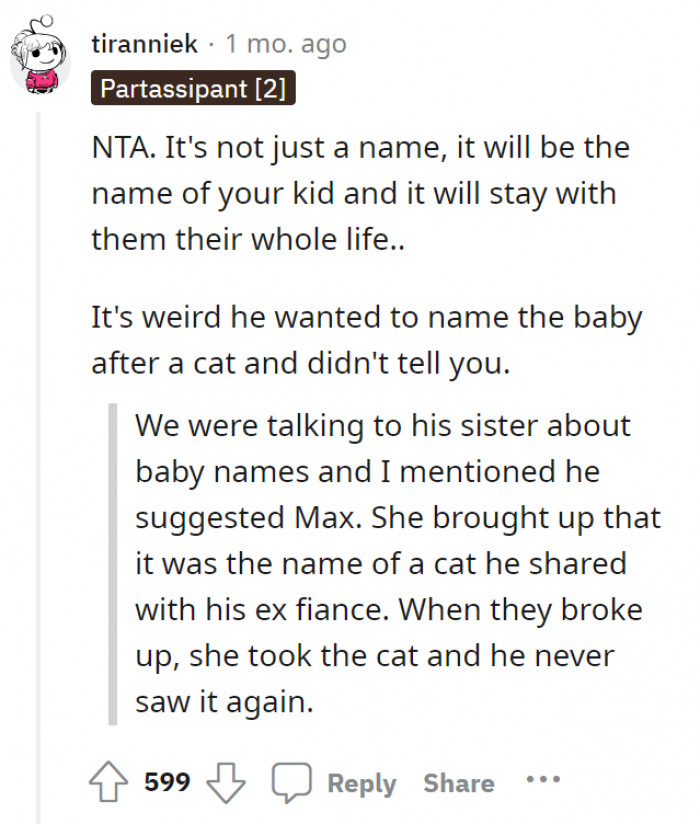
So many great and valid points here from this commenter.
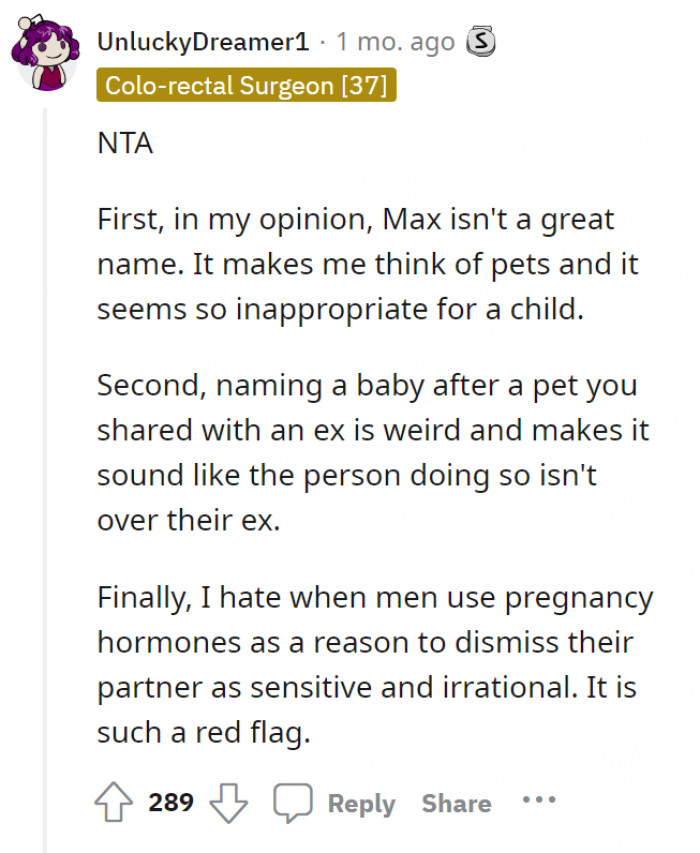
That explanation did not make things any less awkward.
When one partner suggests naming their child after a pet shared with an ex, it can trigger feelings of inadequacy or jealousy in the other partner. Research has shown that emotional triggers can arise from unresolved attachment issues stemming from past relationships. These triggers can lead to defensive communication patterns, which further complicate the decision-making process.
To mitigate these emotional triggers, couples are advised to first acknowledge each other's feelings before diving into the reasoning behind the name choice. This approach can help create a safe emotional space where both partners feel heard and validated, allowing for a more productive discussion about naming the child.
Also, this is like the lady who refused to change her cat’s name after her cousin demanded it for her baby.
What's with the name Max, anyway? (Sorry to all Maxes who are reading this.)
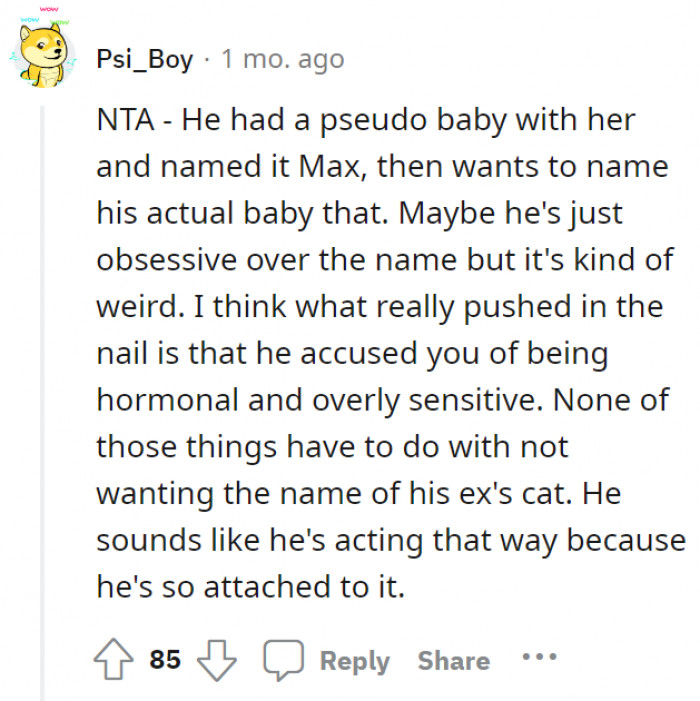
Rule number one: it has to be a name you *both* agree on.
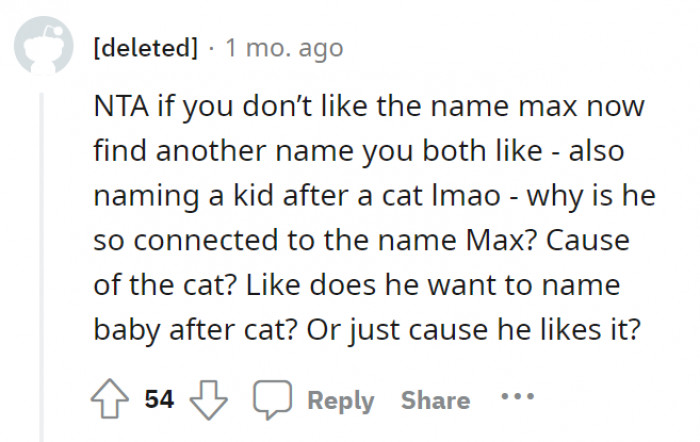
It was his reaction that escalated this minor disagreement into a complicated one in the first place.
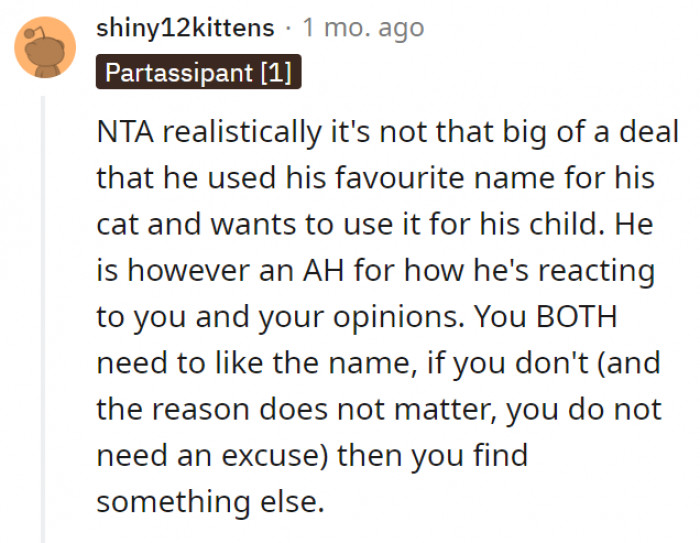
He did not exactly handle the pushback well.
When faced with a sensitive topic like naming a child, one partner's suggestion can lead to flooding in the other, causing them to react defensively or withdraw.
To counteract this, couples can practice self-soothing techniques, such as taking a break during heated discussions or using 'I' statements to express their feelings. This can help prevent the escalation of conflicts and facilitate a more constructive conversation.
The commenter continued with some advice:
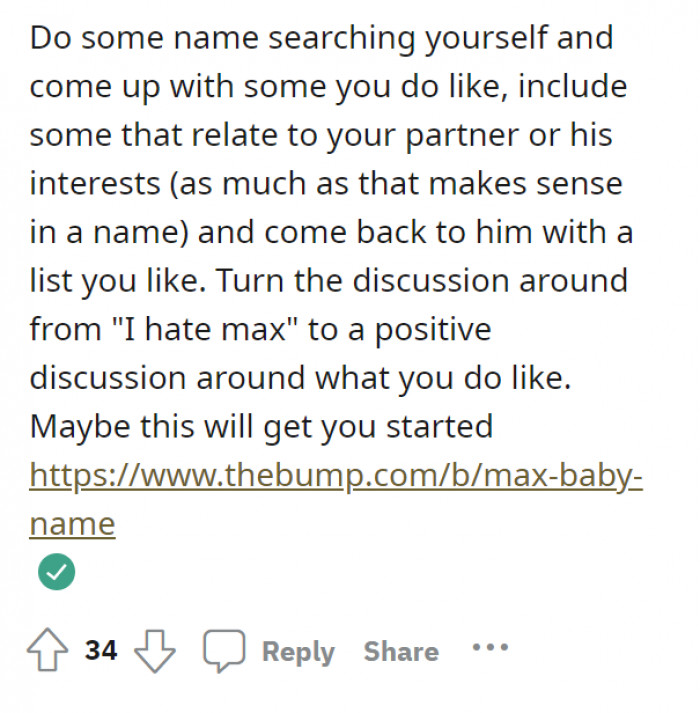
Given that they have already been together for five years, they should be able to communicate this effectively by now.
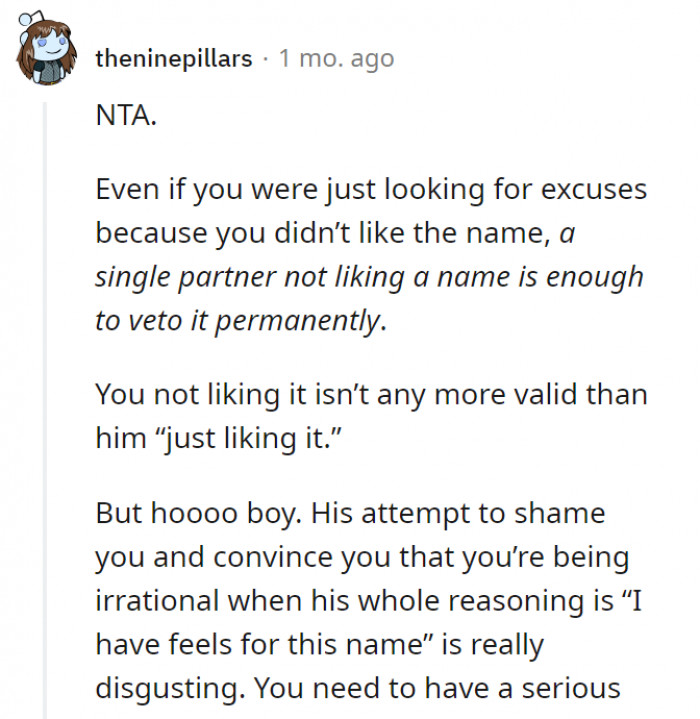
Aye!
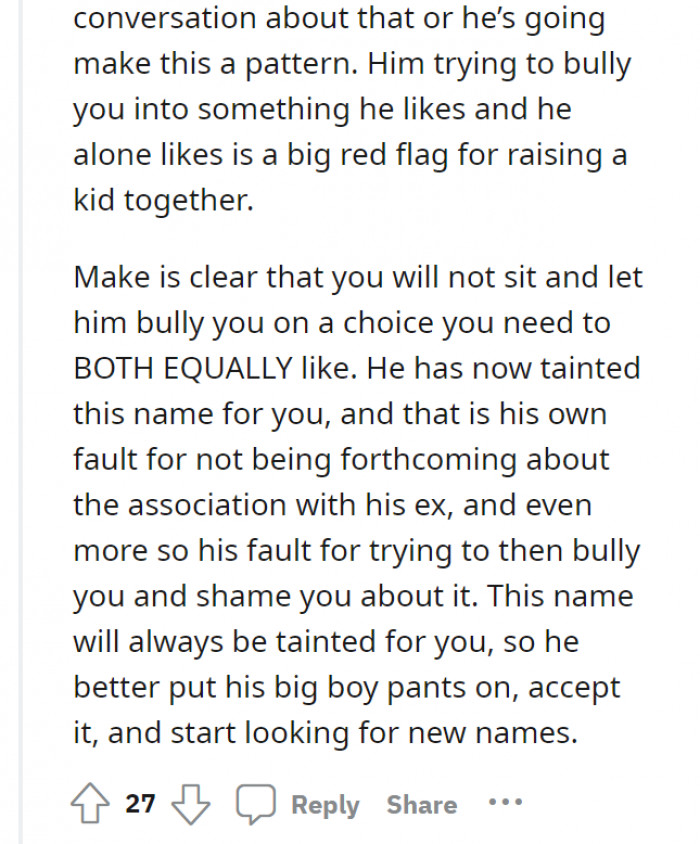
And that is where a lot of commenters landed too.
To avoid potential conflicts over naming their child, couples can establish a collaborative naming process that involves brainstorming together.
Creating a list of names together, discussing the meanings behind each one, and considering how they resonate with both partners can help in finding a name that feels good to both and reinforce unity and shared purpose. Engaging in this activity can serve as a bonding experience, allowing partners to reflect on their values and hopes for their child.
Just like we said...
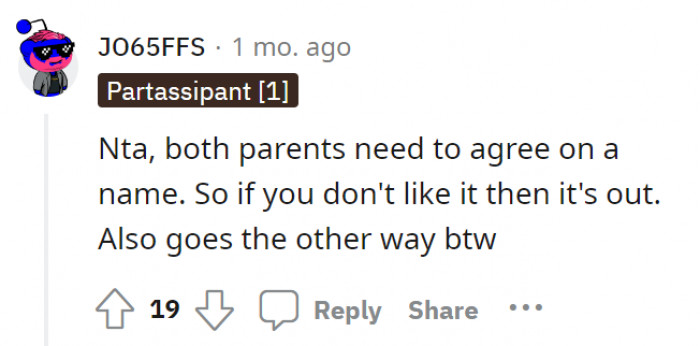
Oooh, get him with that reverse card!
Why was he so intent on naming it after a lost cat?
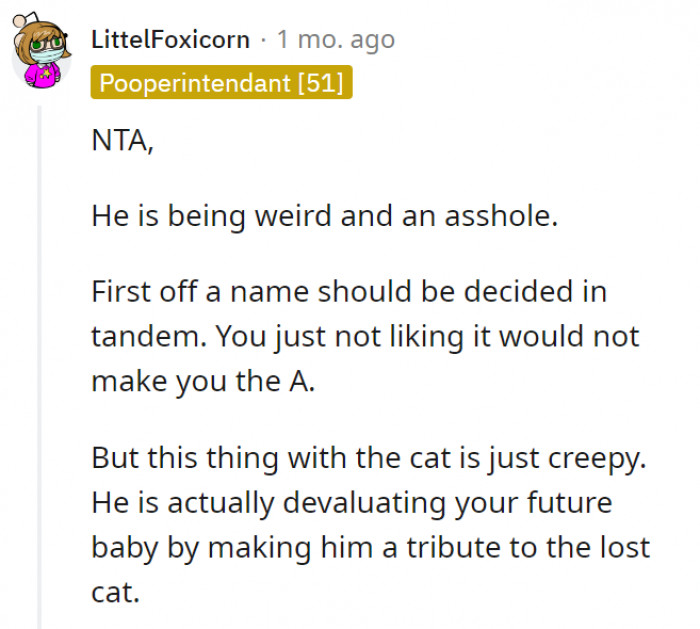
That question kept coming up in the comments.
Finally, it's crucial to consider the impact of societal norms and expectations on naming conventions. Research published in the Journal of Social Issues reveals that societal influences can shape individual preferences and expectations regarding names, often leading to stress if couples feel pressured to conform to these norms.
Couples should take time to discuss how external opinions might affect their choices. By prioritizing their feelings and preferences over societal expectations, partners can foster a more authentic connection with each other and their future child. This open dialogue can be transformative, paving the way for a more meaningful and personal naming decision.
He definitely knew what he was doing.
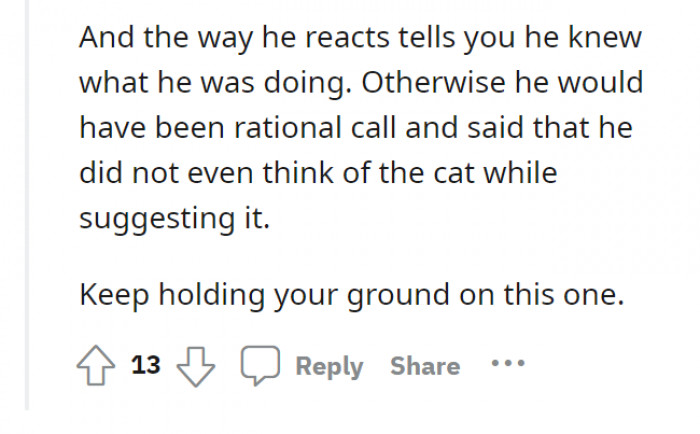
Goes for all partners out there.
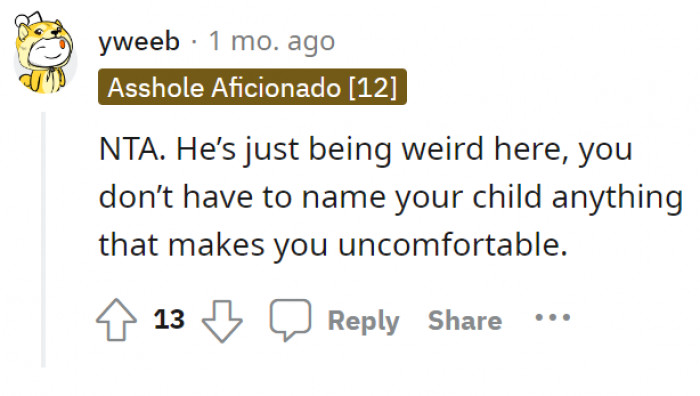
It was a strange hill to die on, especially after five years together.
Comment down your thoughts, or share this article for all your family and friends to see!
The recent dispute over naming a baby after a cat highlights the intricate dynamics of parental collaboration during pregnancy. The situation underscores the emotional triggers that arise when personal attachments clash with joint responsibilities. In this case, the partner’s desire to honor a pet may seem trivial to some, yet it reflects deeper societal norms regarding attachment and identity.
Open communication is essential in resolving such conflicts. The couple’s ability to engage in a dialogue about their differing views on naming not only alleviates the immediate tension but also sets a precedent for future parenting decisions. By fostering a supportive environment where both partners feel heard, they can navigate the challenges of parenthood more effectively. Ultimately, the naming process should be a celebration of their shared journey, allowing for a decision that resonates with both parties.
That baby name debate was never really about the cat.
Before you judge the “Max” baby-name fight, read what happened when he returned his pregnant girlfriend’s newly adopted cat to the shelter.
Share this article: