Jennifer Coffey Captured a Very Unusual In-Flight Dog Dilemma, and Passengers Had to Vote

Jennifer Coffey was not even documenting her own flight drama when she caught a scene that dog lovers and frequent flyers could not stop talking about. A pilot stepped into the cabin with an unusual update: a dog from the previous flight had urinated on the plane, and the next passengers had to choose between a cleaning delay or leaving on time with the smell.
Coffey's post turned a small travel mishap into a surprisingly big conversation. According to her account, the pilot told passengers that a dog had relieved itself on the aircraft during the previous trip. The solution was simple in theory but awkward in practice: call in a cleaning crew and wait, or accept the lingering odor and get moving.
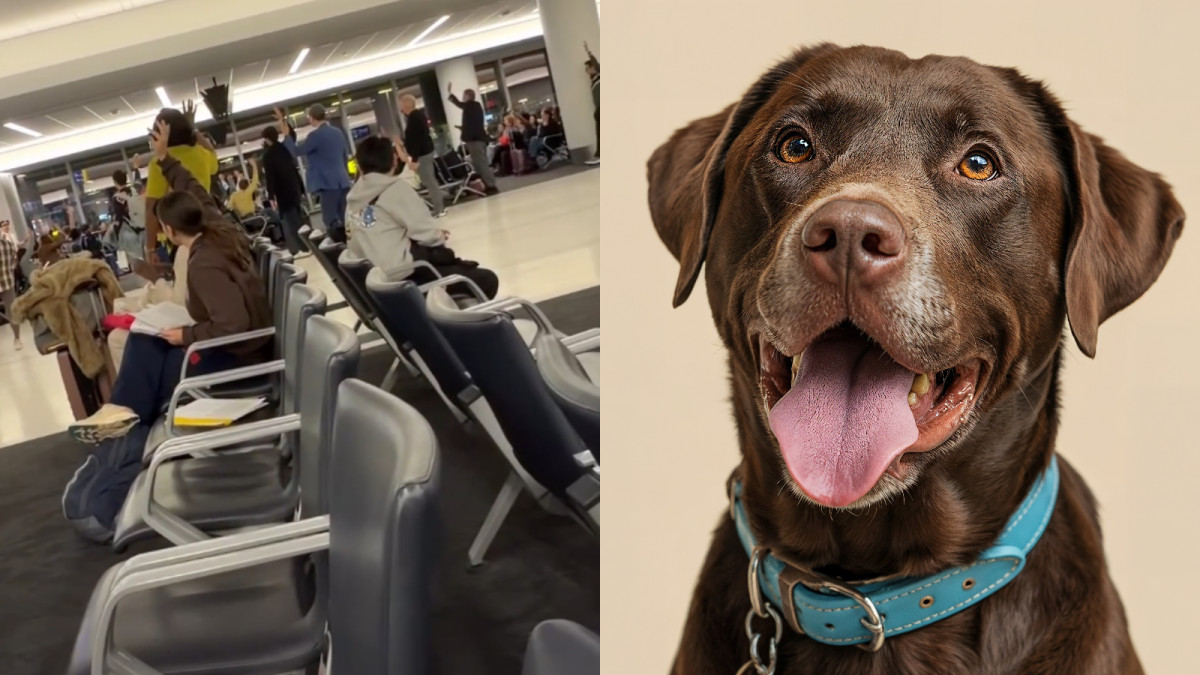
That put the whole cabin in an unusual position. Instead of deciding on his own, the pilot asked for a show of hands from anyone willing to tolerate the smell in order to get home on time. In the clip below, passengers can be seen raising their hands as the question goes out.
Coffey summed up the moment with a joking one-word verdict: democracy. The image of a cabin full of travelers voting on whether they could live with the smell of dog urine was enough to send the video across social media.
A cabin vote nobody expected
The story struck a nerve because it mixed two things almost everyone recognizes: the frustration of delays and the unpredictability of traveling with animals. Flight disruptions are irritating on their own. Add in an accident left behind by a four-legged passenger, and the choice becomes much less ordinary.
Judging by the raised hands, many of the people on board were ready to make the trade. They appeared willing to put up with the odor rather than lose time waiting for the plane to be cleaned. For travelers focused on getting home, that seemed to be enough.
What happened next, though, was less clear. Coffey's post showed the decision point, but it did not confirm whether the aircraft ultimately left without a cleaning. What it did show was a cabin that had very definitely made its preference known.
Sympathy for the dog, disagreement from everyone else
Once the video spread, the accident itself almost became secondary to the debate around it. Some people argued that the plane should have been cleaned no matter how the vote went. Others thought the smell was something passengers could reasonably endure if it meant staying on schedule.
A few responses compared the situation to other unpleasant in-flight experiences, with one person saying it did not sound as bad as a baby's diaper being changed on a seat instead of in the lavatory. Some commenters took a harder line on dogs in the cabin, saying pets should be kept elsewhere when flying.
But plenty of viewers landed on the dog's side. One comment suggested the animal may simply have had a long day and an accident, a reminder that even a viral travel headache can start with a very ordinary canine problem.
Coffey later said she had not expected the clip to become so divisive. She remarked on how heated the reaction had grown and used the attention to encourage support for local animal shelters.
For dog lovers, that may be the lasting note here. The story was messy, inconvenient and undeniably strange, but it also had the familiar shape of life with animals: sometimes they surprise people in the least convenient place possible, and everybody else has to decide how much grace they are willing to give.
How dogs usually fly
Most pet dogs that travel by air do so either in a carrier under the seat, or in a separate hold area used for animals. Which option is allowed depends on the dog's size, the route, the weather, and the airline's own policy. Assistance dogs may have different rules, but those rules also vary.
For cabin travel, the carrier usually has to fit fully under the seat and remain closed for most of the flight. That is why soft sided carriers are common. Airlines often require advance notice, limit how many animals can be in the cabin, and may ask for health or vaccination paperwork. International trips can add entry rules, quarantine requirements, or breed restrictions, so checking both the airline and destination rules matters.
Why dog disputes happen on planes
Air travel puts dogs into a loud, cramped, unfamiliar setting. Even calm pets can whine, pant, bark, or try to escape a carrier. Other passengers may have allergies, fear of dogs, or concerns about space and cleanliness. Cabin crew have to balance comfort with safety, and safety usually comes first.
A dog may be moved, reseated, or refused travel if it cannot stay contained, blocks an aisle, snaps, or causes a serious disruption. Crew can also separate people if there is a conflict over seating. Passengers should not assume that a verbal agreement with nearby travelers overrides airline policy. The final call on boarding and onboard safety usually rests with the crew.
What owners can do before booking
The best preparation starts before you buy the ticket. Read the pet policy closely, call if anything is unclear, and get written confirmation when possible. Measure the carrier, confirm the dog's weight and size fit the rules, and ask what documents are needed.
Before travel, help the dog get used to the carrier at home with short practice sessions and treats. Feed lightly, offer a bathroom break just before heading into the airport, and pack absorbent pads, wipes, and a collapsible water bowl. Avoid giving sedatives unless your veterinarian specifically recommends them, because some dogs do poorly with medication during air travel. If your dog is anxious, elderly, flat faced, very young, or has health problems, ask a veterinarian whether flying is a good idea at all.
Share this article: