
Rare Andean Cat Mom and Kitten Finally Caught on Camera After 3 Years

A tiny wild cat with a fluffy face and a very big mystery has finally stepped into view. After three years of camera trap monitoring in the high Andes, researchers captured footage of an Andean cat and her kitten, offering a rare look at one of the least-seen cats in the world.
A long wait for a very rare cat
The footage was released late last year by Big Cat Rescue in work with the Pampas Working Group and Quechua Women for Conservation. For cat fans, it is a heart-melting sight. For conservationists, it is also evidence that a species with only a few thousand adults left is still out there.
The Andean cat lives across Peru, Bolivia, Chile and Argentina. It is often described as the rarest wild cat in the Americas, and researchers have compared its elusiveness to a ghost. Part of the challenge is its lifestyle. The cat is mostly active at night and around dusk, and it lives in cold, rocky country that offers little cover. Most known habitat lies roughly 3,800 to 5,180 meters above sea level, though surveys have also found cats as low as about 650 meters in Argentina’s Patagonian steppe.
Cute, compact, and built for cliffs
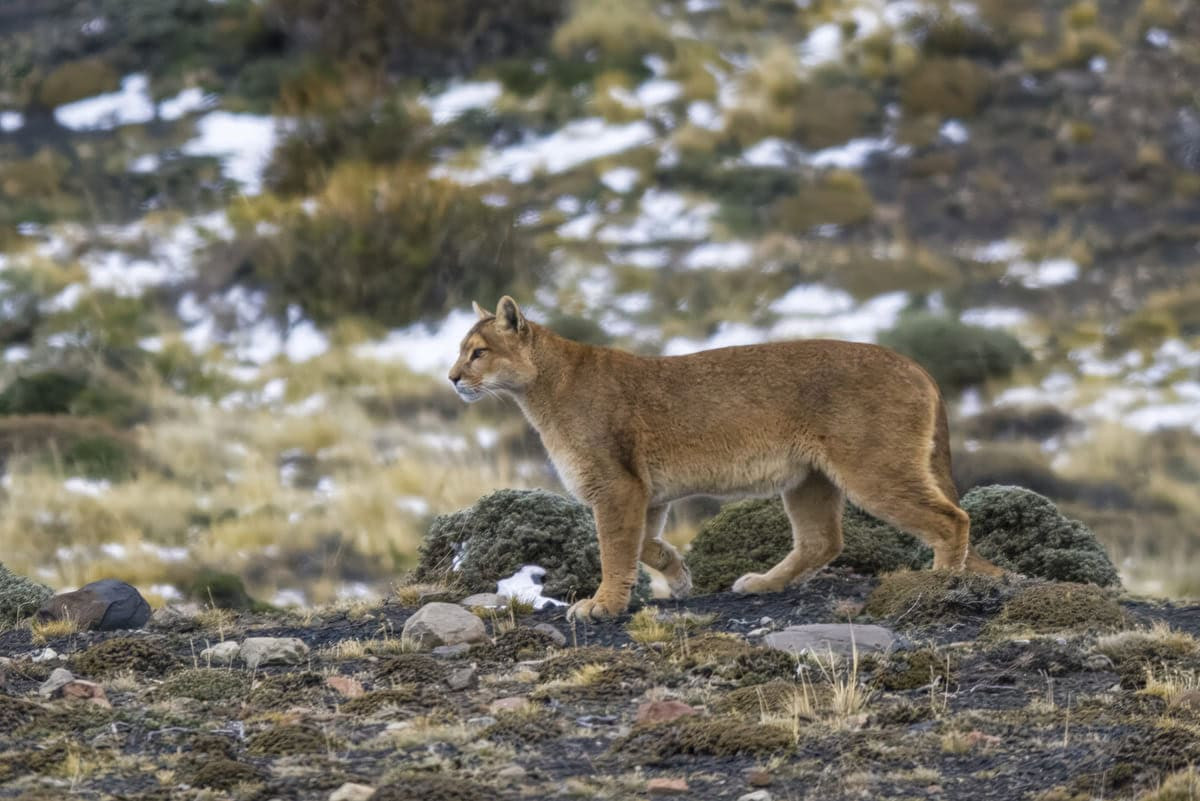
The Andean cat is about the size of a large house cat, with thick gray fur for freezing nights and a long, ringed tail that helps it balance on steep rock. It may look modest in size, but it uses a surprisingly large amount of space. Tracked cats in Argentina ranged across about 19 to 61 square kilometers, and one female followed in Bolivia used about 65 square kilometers.
That wide roaming is tied to dinner. Much of the species’ diet comes from mountain viscachas, rabbit-sized rodents that live in scattered rocky colonies, so the cats travel between prey patches rather than staying in one compact hunting ground.
Why the sighting matters, and what it does not answer
The IUCN lists the Andean cat as Endangered, with an estimated 2,177 adults in a total population of about 4,354. National assessments vary, with Bolivia classing it as Critically Endangered, Chile and Peru as Endangered, and Argentina as Vulnerable.
Threats include habitat disruption from mining and other projects, hunting for traditional ceremonies or in retaliation for supposed livestock attacks, declines in prey, attacks by domestic dogs, road deaths and climate change in the high Andes.
Camera traps are still adding important records. In January 2026, Wildlife Conservation Society Argentina photographed an Andean cat in La Payunia in Mendoza Province for the third straight year. Even so, repeated sightings do not show whether a local population is increasing or falling. Researchers say that takes years of systematic monitoring across many sites, plus the local partnerships that have supported Andean cat work since the Andean Cat Alliance began in 1999.
Share this article:





