Her Roommate Kidnapped Her Cat, So She Called The Police To Help Her Find It

Some roommates argue over dishes, noise, or rent. This one ended up in a fight over a cat named Tommie, and it escalated fast.
The Reddit poster lived with a roommate who did not like Tommie and had already tried to find him a new home before. When the roommate took matters into her own hands and the cat disappeared, the poster called her sister, then the police, to help track him down.
Tommie made it back safely, but the poster was left wondering if calling the police had gone too far. Read on.
The original post

She lost her adoptive father but managed to keep some of his things to remind her of him:

Her solace and only loyal friend is her cat, Tommie.

The bond between pets and their owners can be likened to that of parent and child. This relationship is often characterized by deep emotional connections that can significantly impact mental well-being. Research indicates that interacting with pets can increase levels of oxytocin, the ‘love hormone,’ which enhances feelings of attachment and reduces stress. The emotional support that pets provide can be particularly vital during stressful life events, such as the incident described in the article.
This emotional connection underscores the distress experienced when a pet is lost or taken away, as in the case of the cat. For many, pets are not just animals; they are companions who provide unconditional love and a sense of purpose.
The bond between pets and their owners can evoke intense emotions, often resembling the dynamics of human relationships.
Research from the Journal of Applied Animal Welfare Science indicates that pets can significantly impact their owners' emotional well-being, serving as sources of companionship, comfort, and emotional regulation.
This connection can lead to heightened distress when a pet is perceived to be in danger or removed from the household.
She lives in a rented apartment with her roommate and the cat Tommie, but the roommate is not a fan of Tommie.

The roommate had already tried to find Tommie a new home multiple times before, but she did it again.

So the OP involved the police and got her cat back:

To cope effectively with such conflicts, it may be beneficial for individuals to practice assertive communication. This involves expressing feelings and needs clearly while acknowledging the other person's perspective, which can help resolve misunderstandings and prevent further escalation of the situation.
When conflicts arise regarding pets, they can often mirror deeper relational issues between the individuals involved.
"What kind of person does that?"

And OP replied:

She might try to do it again:

Interpersonal conflicts, like the one described in the article, often stem from differing values and priorities. When a person feels their emotional needs are threatened, as in the case of the cat being taken, it can lead to increased tensions and misunderstandings. Individuals should consider having a candid conversation about expectations and responsibilities regarding shared pets to foster a cooperative living environment.
Effective conflict resolution strategies are essential in navigating disputes over pet ownership.
In this situation, both parties may benefit from articulating their feelings about the cat and exploring potential compromises.
"Or worse."

Tommie should be microchipped, just in case...
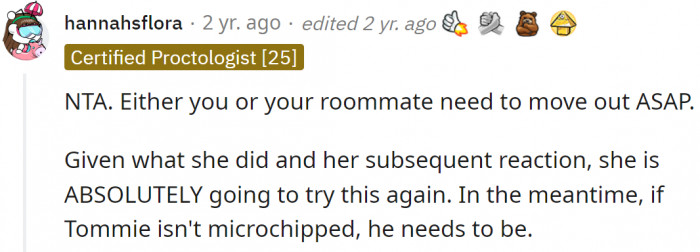
She should also keep Tommie in her room

To navigate this grief, it can be beneficial to seek support from friends, family, or even pet loss support groups, which can provide validation and understanding during such a challenging time.
This is similar to the sister’s house standoff, where a niece forced her to “steal” her cat back.
Research indicates that when individuals establish shared responsibilities for pets, they report higher levels of satisfaction in their arrangements.
By openly discussing each person's role in caring for the cat, both individuals can foster a sense of teamwork and cooperation.
"Make sure the information in the microchip is correct"

It was a good choice

This is terrible to imagine, but she might try to get rid of him again

Attachment theory posits that early relationships with caregivers shape our emotional responses and interpersonal dynamics throughout life. Individuals with secure attachment styles tend to handle conflicts more effectively, while those with anxious or avoidant styles may struggle. In the case described, the emotional reaction to the roommate's actions may reflect underlying attachment issues, such as fear of abandonment or betrayal.
Research shows that awareness of one’s attachment style can lead to healthier relationship dynamics. Individuals may benefit from reflective practices or therapy to explore their attachment patterns and how these influence their reactions to conflict. By understanding these dynamics, one can cultivate healthier responses in future interactions.
Emotional distress related to pets can also stem from attachment styles developed in childhood.
Studies have shown that individuals with insecure attachment styles may experience heightened anxiety over losing loved ones, including pets.
Recognizing these patterns can help individuals understand their emotional reactions and work towards healthier coping strategies.
"It's concerning how much she hates Tommie."

If she even knows what empathy means, but probably not

She literally stole her cat

Emotional regulation strategies can help individuals manage their distress during conflicts. Techniques such as mindfulness and cognitive restructuring allow individuals to observe their thoughts and feelings without being overwhelmed by them. This could be particularly useful in high-stress situations like the one in the article, where emotions run high due to the perceived loss of a beloved pet.
Practicing mindfulness can help individuals stay grounded during emotional turmoil, allowing for clearer thinking and more constructive communication. Online resources and apps focused on mindfulness can be a great starting point for those looking to enhance their emotional regulation skills.
To promote emotional well-being, individuals can benefit from engaging in activities that strengthen their bond with their pets.
Spending quality time together, such as playing or training, can enhance feelings of security and attachment.
Building a routine that includes pet care can also provide a sense of stability amid relational conflicts.
One of them has to move out

"Deeply messed up"

"That roommate needs to go"

Trust is a fundamental component of any relationship, and its fragility can greatly influence interpersonal dynamics. When trust is broken, as it may feel in the case of pet theft, it can lead to feelings of betrayal and resentment. When these bonds are threatened, it can trigger a cascade of negative emotions.
Restoring trust often involves transparency. Individuals facing similar situations may find it helpful to engage in dialogue with the offending party to express their feelings and seek mutual understanding, which can be a step toward repairing the relationship.
In situations where disputes escalate, seeking professional guidance can provide valuable support.
Redditors were shocked by her roommate's actions.
Her roommate might try to hurt Tommie again, so she needs to be cautious and protect her cat.
The situation involving the kidnapped cat highlights the deep emotional bonds that pet owners form with their animals.
In the case of the cat owner's distress, the emotional turmoil surrounding pet ownership is strikingly evident.
For another cat custody fight, see how a house-fire couple was guilt-tripped to give up Tommie.
Share this article: