
Purple Heart Soldier and His Three Legged Military Dog Finally Came Home Together

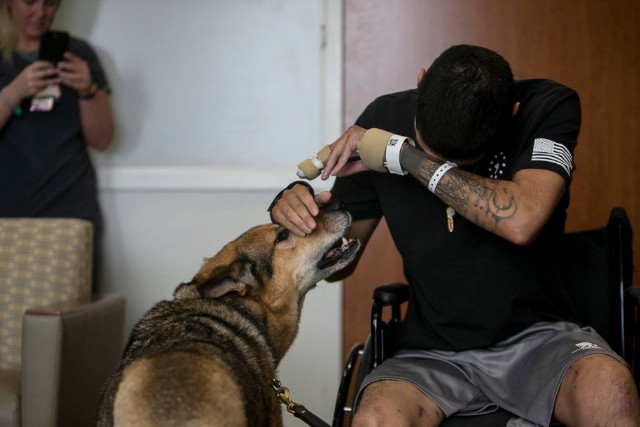
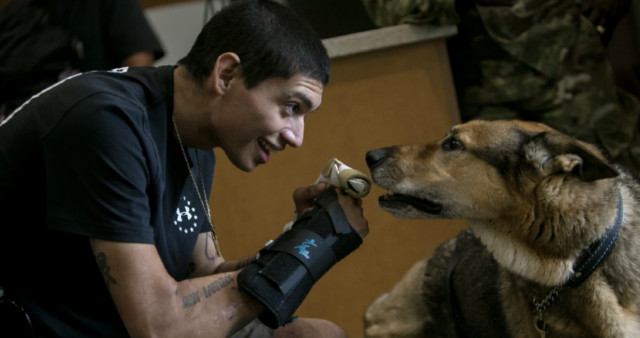
When Spc. Alec Alcoser saw Alex again at a rehabilitation center in Texas, the reunion did not need much explanation. The military working dog moved in close to greet him, and Alcoser wiped tears from his eyes as he welcomed back the partner who had stayed beside him through one of the worst moments of his life.
A reunion built on everything they had already survived
By the time they met again in Texas, Alcoser and Alex were already linked by much more than routine duty. Both had been awarded Purple Hearts after being injured in Afghanistan, and both were still working through recovery. The sight of them together carried the weight of all of that history.
Their reunion in Texas was not the first time they had seen each other after the attack. Partway through their recoveries, they had also been brought together in the nation’s capital. They were able to spend time together there, but the visit ended, and they were separated again.
That made the meeting in Texas feel especially significant. Alex, a German Shepherd and former military working dog, had already lost part of his body in the line of duty. Alcoser was still in rehabilitation himself. Yet the bond between them looked unchanged. Even after the injuries, the retirements, and the treatment that sent them to different places, they were still greeting each other as partners who had never really stopped being a team.
The day everything changed in Afghanistan
Six months into his deployment, Alcoser took Alex’s leash and left the barracks for a mission day. They had already worked together for months and had become unusually close. They slept in the same bed, spent their free time together, and relied on each other constantly.
On patrol, they rounded a street corner and saw a local Afghan walking toward them. Then came the blast. A suicide bomber detonated at close range, and what followed was pain and confusion for both soldier and dog. The explosion set off a firefight, leaving them caught in the middle.
Alcoser was badly hurt. He suffered multiple broken bones, including injuries to his arms and legs. Shrapnel struck 30 percent of his body, and doctors also reported a mild brain injury. The attack killed Afghan and Czech soldiers.
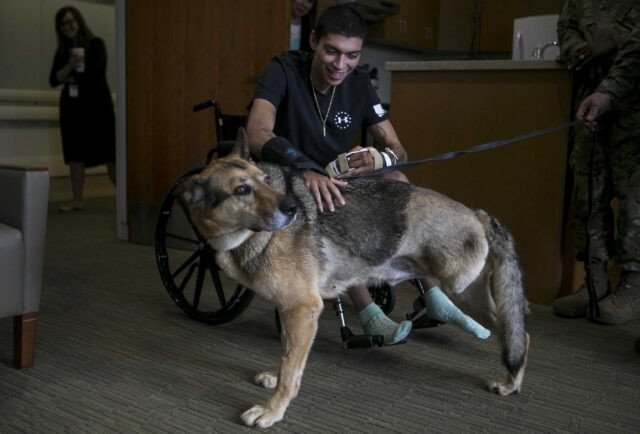
Alex was injured alongside him. In the aftermath, the dog needed to have his left rear leg amputated, and his military service came to an end. Through the attack itself, though, he never left Alcoser’s side. While Alcoser lay seriously injured and could do little except wait for the fighting to stop, Alex remained with him.
Different recoveries, one shared future
Recovery sent them down separate paths for a while. Alcoser was treated at a veteran’s rehabilitation center. Alex went to Joint Base San Antonio Lackland, where he learned how to walk on three legs after retirement from service.
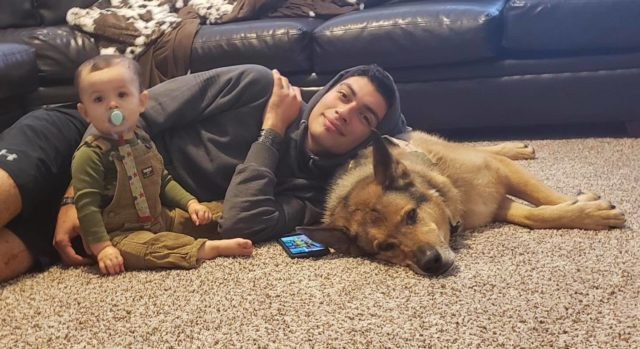
Alcoser still had months of rehabilitation ahead of him, but doctors were confident he would make a full recovery. He was already walking and looking forward to returning to service. He was also focused on getting better for his wife and infant son.
There was one more goal he kept in mind as he healed. He wanted Alex to become an official part of his family. After everything they had endured together overseas, he hoped their partnership would not end with retirement papers and hospital stays.
That wish became the final turn in their story. Alcoser was able to bring Alex home for good. Both recovered well, and they are now living happily together, no longer separated by deployments, medical centers, or military assignments. For dog lovers, it is the kind of ending that says the most important part of their service together was never left behind.
What military working dogs do
Military working dogs are trained to work closely with human handlers in high pressure settings. Depending on the dog and the assignment, they may help detect explosives or drugs, track a scent, patrol an area, or provide security support. Their training relies on repetition, clear commands, reward based work, and a very strong bond with one primary handler.
These dogs are not simply pets in uniform. They are selected for temperament, drive, confidence, and the ability to stay focused around noise, crowds, vehicles, and other stressors. That is why retirement can be a big transition. A retired working dog may need time to adjust to home life, strangers, other animals, stairs, or the ordinary unpredictability of a family routine.
If you ever meet or adopt a retired working dog, ask about triggers, handling preferences, and medical history. Give the dog space, keep introductions calm, and use predictable routines. Many thrive in retirement, but they often do best when expectations are clear and their need for structure is respected.
What to know about three legged dogs
A three legged dog can live a full, happy, active life. Dogs usually adapt far better than people expect, especially after recovery and rehabilitation. Over time, most learn a new balance and gait, but the remaining limbs do more work, so joint care and weight control matter.
The most useful thing an owner can do is keep the dog lean and fit. Extra weight adds strain to the shoulders, spine, hips, and remaining leg joints. Non slip rugs, ramps, supportive bedding, and easy access to food and water can make daily life more comfortable. Ask a veterinarian about safe exercise, pain monitoring, nail care, and whether physical therapy would help.
Watch for fatigue, slipping, soreness after activity, or reluctance to jump and climb. Short, regular walks are often better than occasional hard exercise. Many tripod dogs still enjoy play, training, and adventures, but they usually do best when activity builds gradually and recovery time is built in.
How to support retired or special needs dogs
People who want to help can start locally. Shelters, breed rescues, and working dog placement groups sometimes need adopters, foster homes, transport volunteers, or donations for surgery, rehabilitation, and senior care. If adoption is not possible, even simple support such as fundraising, sharing adoptable dogs, or providing supplies can make a difference.
Before bringing home a retired or disabled dog, think through the practical side. Ask who will handle exercise, what your home setup is like, whether your other pets are a good match, and how you will manage future medical needs. A quiet decompression period, positive reinforcement training, and regular veterinary follow up are usually more helpful than trying to rush the dog into a busy social life.
For many of these dogs, the best outcome is not dramatic. It is consistency, patience, and a home that understands both their skills and their limits.
Share this article:





