
Blossom Had Never Wagged Her Tail. Then Her Foster Dad Built Her a Tiny Bedroom

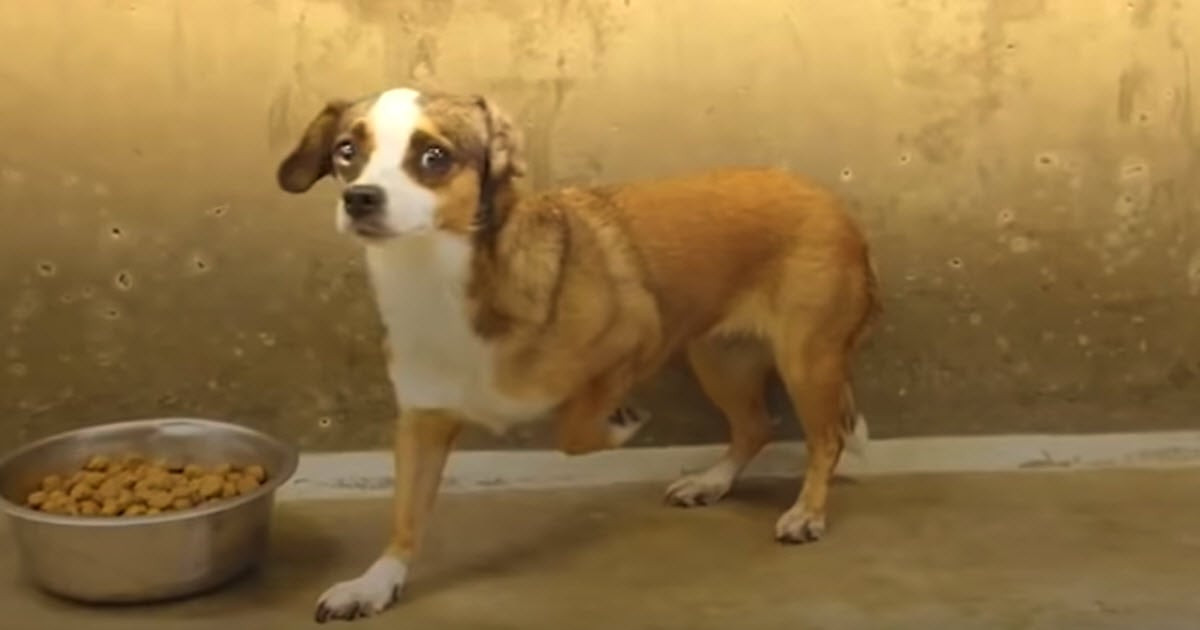
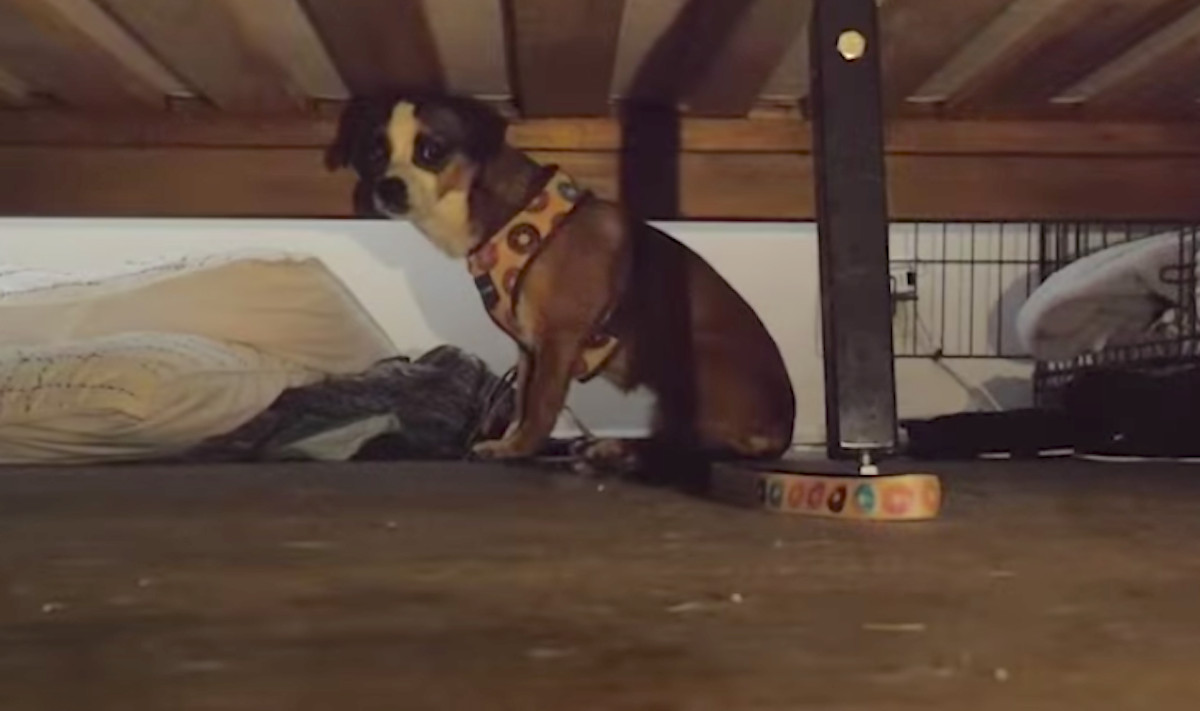
Blossom arrived carrying the kind of fear that showed up in every movement. Rescued from a hoarding situation with 150 other dogs, she was so frightened that shelter staff found her hidden under a bed, and getting her into a home was only the beginning.
When Rocky Kanaka first met Blossom at the shelter, a worker pulled up a bed and the little dog shot out from underneath it. That split second said a lot about where she was starting from. Blossom had already been rescued from a hoarding case, but safety on paper did not mean she felt safe in the world.
The clip below follows that long, careful process. In Blossom’s case, a house by itself did not fix anything. She was described as emotionally shut down, constantly trembling, and so overwhelmed that even ordinary things could send her scrambling away.
A small room, and a little space to choose
Weeks stretched into months, and the shaking did not stop. Blossom seemed unsure how to do even basic dog things. The feel of grass, the sun, and even eye contact could frighten her enough to make her retreat under a table, where she would stay for days.
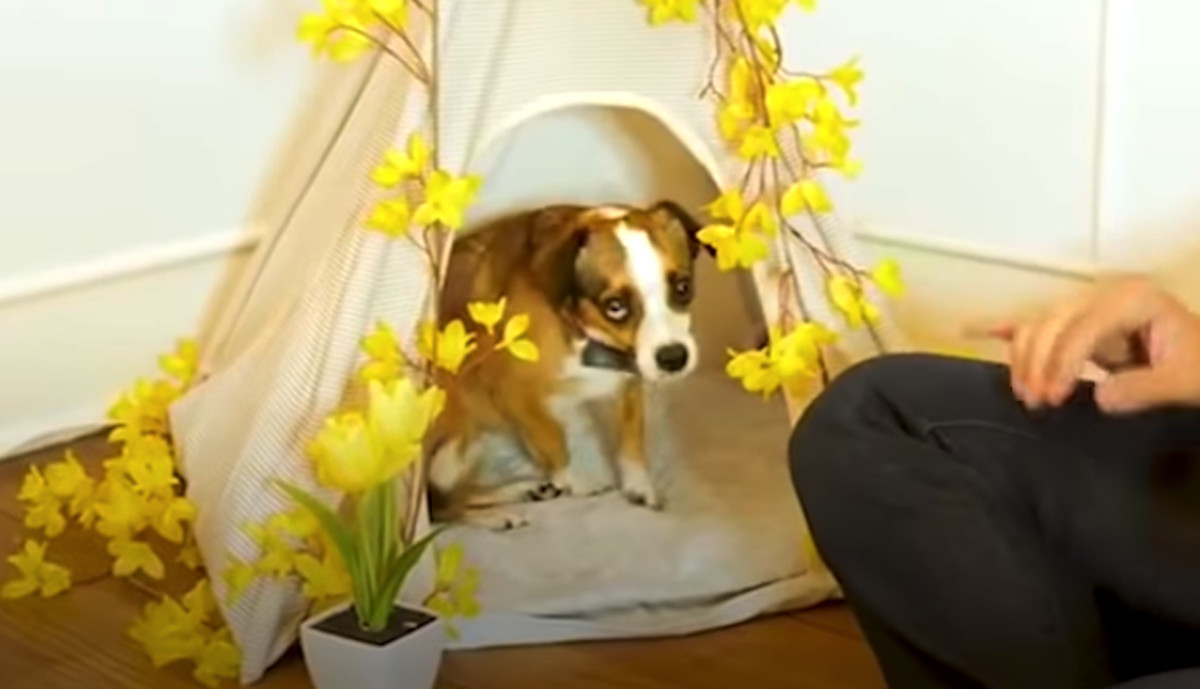
Instead of pulling her out and insisting she face everything at once, Rocky changed the space around her. He removed the table and made her a tiny bedroom of her own. It was a simple adjustment, but it gave Blossom a place that felt protected rather than exposed.
From there, the progress came in quiet, easy-to-miss steps. She became comfortable enough to accept food by hand. She also learned to drink from a bowl after watching a foster sibling do it, another milestone for a dog who had been frozen by so much of daily life.
The moment dog lovers wait for
One of Blossom’s biggest breakthroughs came after two months, when she climbed onto the couch and sat beside her foster dad for the first time. It was a small action, but for a dog who had spent so long hiding, it marked a new kind of trust.
Then came the change that tied the whole story together. Blossom ran around outside and wagged her tail for the first time ever. For a dog who had once met the world with nonstop shivering and a desperate search for cover, that first tail wag said what words could not. She was beginning, finally, to feel safe.
Why a dog might not wag much
Tail wagging is not a simple sign of happiness. Dogs use their tails as part of a larger body language system, and some wag less because of fear, stress, pain, past handling, breed traits, age, or simple personality. A dog that is shut down may hold the tail low or still, even when gently approached.
Look at the whole dog, not just the tail. Soft eyes, relaxed ears, a loose body, normal eating, curiosity, and willingness to rest nearby can all signal growing comfort. A fast wag can also mean arousal or uncertainty, especially if the body looks stiff. If a dog suddenly stops moving the tail, seems painful, or struggles to sit, stand, or eliminate normally, a veterinary check is wise.
Why a tiny bedroom or den can help
Many dogs relax when they have a small, predictable space that belongs to them. A den-like area can reduce overstimulation from noise, visitors, other pets, and constant movement in the home. For fearful or newly placed dogs, privacy can make resting easier, and rest is often a big part of emotional recovery.
This space does not need to be elaborate. It can be a crate left open, a covered bed nook, a pen corner, or a quiet section of a room. The goal is choice and safety, not isolation. A good setup lets the dog retreat without being followed, handled, or disturbed while sleeping.
How to make a safe retreat the dog will actually use
Pick a low traffic spot away from doorways, loud appliances, and rough play. Add soft bedding if the dog likes it, plus water nearby if practical. Some dogs prefer a partial cover that blocks visual clutter, while others do better with a more open view. Watch what helps the dog settle.
Teach everyone in the home one rule: leave the dog alone when it is in its retreat. Do not pull the dog out, crowd the entrance, or use the space for punishment. Toss treats in occasionally, feed meals nearby or inside if the dog is comfortable, and let the dog come and go freely.
Keep the routine predictable. Quiet walks, sniffing, regular meals, and short gentle interactions often help more than lots of excitement. Progress may show up first in small ways: deeper sleep, easier eating, stretching out, seeking touch, or a loose tail that starts to move.
Share this article:





