Oregon cat sanctuary shows how 140 rescue cats help volunteers find calm and community

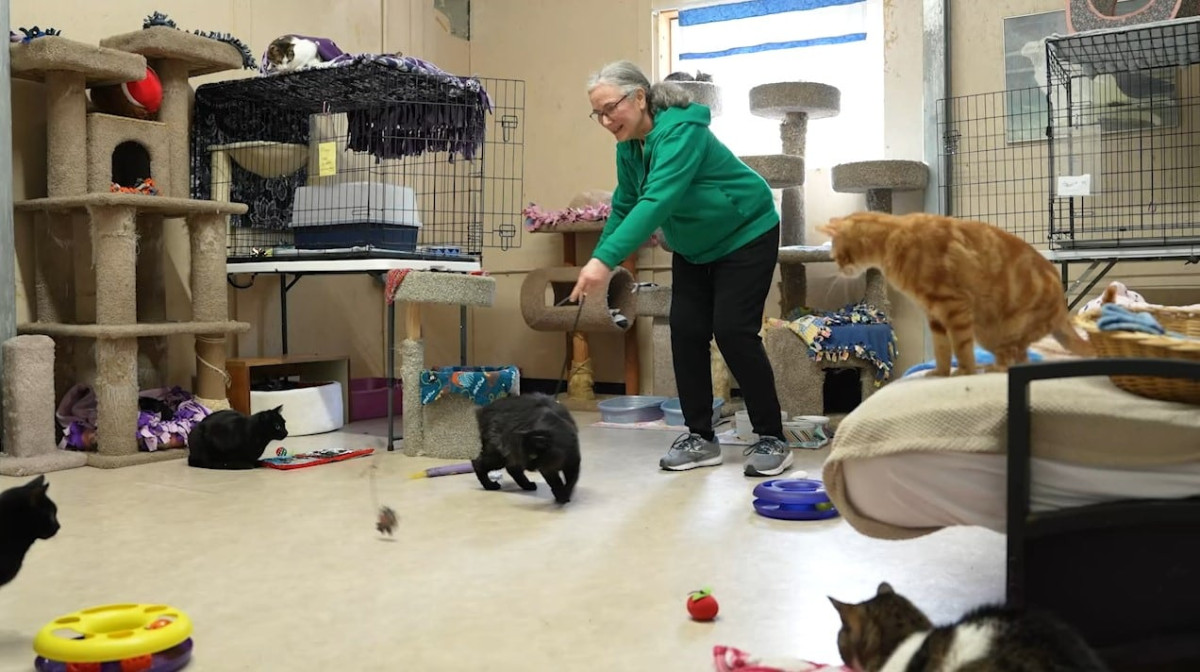
Elizabeth Lindemann goes to a cat sanctuary to refill water bowls, set out food and help with litter boxes. What she says she receives in return is harder to measure, but no less real: calm, connection and the feeling that she is still needed. At the Cat Alliance Team Sanctuary in Sherwood, Oregon, the daily work is about cats first. But the people who show up say the place gives something back, too, turning a roomful of resident cats into a small community built on care.
Where the helping starts
Lindemann has been volunteering at the Cat Alliance Team Sanctuary for about two years. Her jobs are practical ones. She helps with food and water, and if staff members need help with litter boxes, she does that too. She also describes her role another way: as another set of eyes on the cats.
That kind of attention matters in a sanctuary that houses 140 cats. The rooms hold roughly 15 to 25 cats each, and every animal comes with an individual history. Reatha Larson, who manages the cats living there, knows those stories and the cats' names.
The scale of the work is large, but the details are intimate. One cat, Hobbit, was born without eyelids. Another, Tommy, has an underbite. Another cat had already been adopted once, but was taken back by the sanctuary after repeatedly attacking the other cat in the home. In a place like this, the residents are not interchangeable. The day to day routine may involve bowls, boxes and check-ins, but the work is built around particular cats with particular needs.
Larson says most of the sanctuary's cats are considered unadoptable. That is the role the organization was created to fill, because many rescues focus on cats that are easier to place. One room holds more feral cats, and for them the sanctuary is expected to be a permanent home.
That mission shapes everything about the volunteer experience. This is not a stopover for a handful of cats waiting for quick placements. It is an ongoing effort to keep a large population of resident cats healthy, watched and cared for. Larson depends on volunteers to help the sanctuary run smoothly.
A place built for cats who need a landing spot
The sanctuary's purpose comes into focus through the kinds of cats it accepts. Some do not fit the polished picture of an easily adoptable pet. Some have visible differences, like Hobbit and Tommy. Some have behavioral histories that made home placement difficult. Some are feral. All of them still need care.
Larson says that is exactly why the sanctuary exists. While other rescues often take in the cats most likely to be adopted, this one was built around the cats who may stay much longer, or stay for life. In practical terms, that means a large, steady commitment to feeding, cleaning, watching and knowing the residents well.
For readers who share their homes with cats, that owner perspective may be the part that feels most familiar. The work described at the sanctuary is basic cat care at a much bigger scale: making sure water is fresh, food is handled, litter boxes get attention and each cat is noticed. Lindemann's idea of being an extra set of eyes captures something essential. In any cat household, observation matters. In a sanctuary with 140 cats, it becomes one of the most useful things a volunteer can offer.
And yet the place is not defined only by need. It is also defined by recognition. Larson knows the cats individually. Lindemann talks about them not as a crowd but as the kitties she checks on. Even with rooms full of animals, the care described by staff and volunteers is personal.
That helps explain why the boundary between giver and receiver can look less clear inside the sanctuary. People arrive to do jobs that plainly benefit the cats. But those same routines, repeated with purpose, also seem to steady the people doing them.
What volunteers say they get back
Research cited in the sanctuary's story says volunteering can help mental health. The Mayo Clinic says it may lower stress, increase feel good hormones in the brain and provide a sense of purpose. Volunteering has also been shown to improve self esteem.
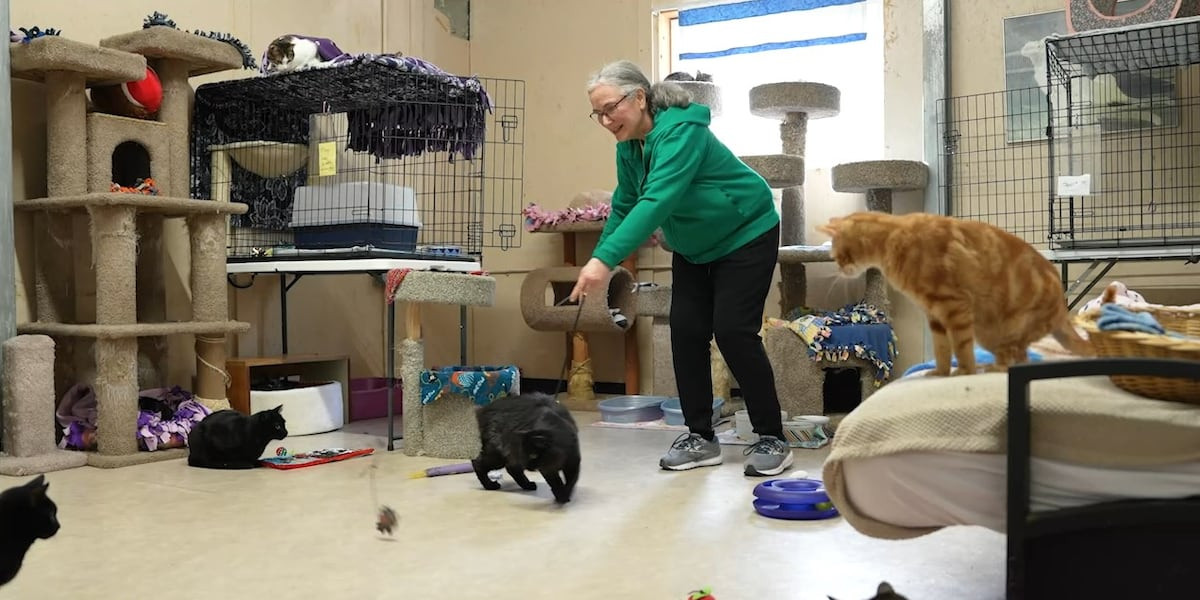
Lindemann says her own experience matches that. She says the work has helped her feel calmer. It has given her a sense of accomplishment. It has helped her build community. She also says it has pushed her beyond her comfort zone.
She describes the timing as important in her life. Speaking more broadly, she says an older person's mental health can rise and fall, whatever that person's background may be. For her, volunteering provides a kind of stability. It gives her a connection to something outside herself.
That may be the most striking part of this sanctuary's story. The benefits Lindemann describes are not abstract. They grow out of regular, necessary tasks and from returning to a place where she knows she matters. She says volunteering there reinforces the idea that she is needed and that she is contributing to the world.
In that sense, the exchange inside the sanctuary runs in several directions at once. Volunteers help the shelter function. The shelter gives cats a place to live, including cats that may never leave. The cats, in turn, become part of what volunteers say supports their own well being. The result is less a one way act of service than a circle of care.
Larson says the sanctuary is always looking for more volunteers. She also says it can be a good activity for parents and children to do together. That invitation fits the community spirit already described by the people there. The sanctuary needs hands for daily work, but it also offers something many people are looking for: a way to be useful, connected and present in a place where every small task clearly matters.
For cat lovers, that may be the simplest way to understand what is happening in Sherwood. A room full of cats still needs food, water, litter boxes and watchful people. But around that ordinary care, something else takes shape. The cats are being looked after. The volunteers say they are steadied by the work. And in a sanctuary designed for animals that other places may not take, that shared routine becomes a community of its own.
Share this article: