Wildcat Once Raised as a Kitten Is Now Recognized as a New Cat Species

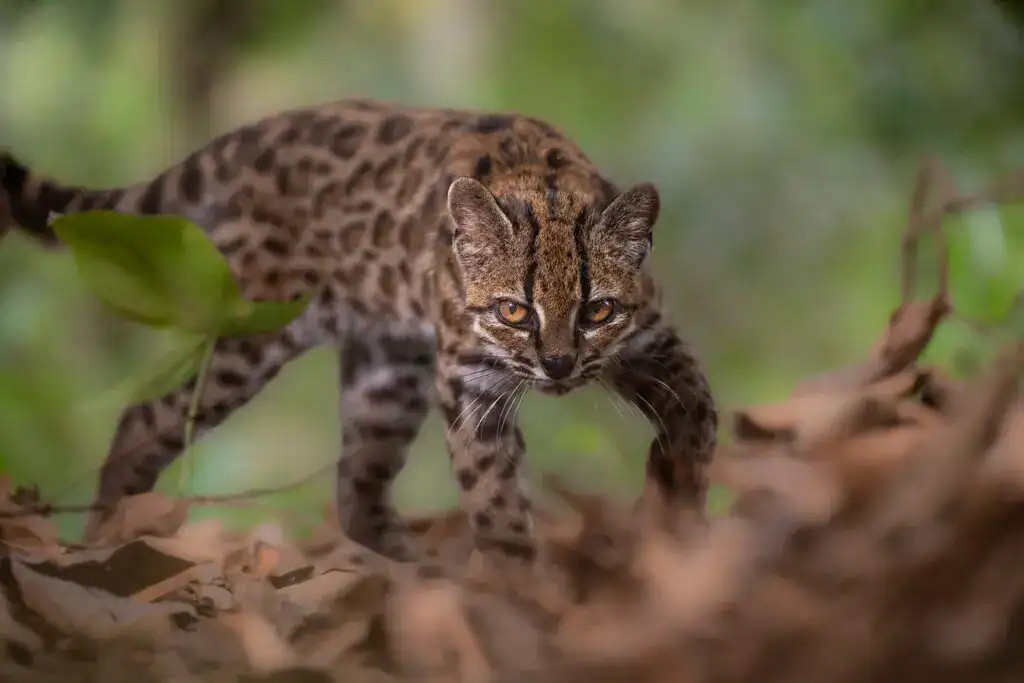
What looked like an unusually tiny cat turned out to be something far rarer. A spotted wildcat named Tigrino, once kept in a Bolivian home after being mistaken for a domestic kitten, has now helped scientists identify a previously unknown cat species.
For about a year, Tigrino lived with a family in Bolivia that believed he was a house kitten. By around 2017, it had become clear he was not a domestic cat, and he was taken to the Senda Verde Wildlife Sanctuary in the forested foothills northeast of La Paz.
The big change now is scientific: Tigrino is no longer seen as simply a very small example of a known wildcat. Researchers say he represents Leopardus tilcayo, a newly described species from Bolivia's Yungas cloud forests. The update comes with a study published in Current Biology.
That makes tilcayo especially notable. According to the study team, it is the first living cat species to be discovered and newly named in more than 100 years.
How Tigrino helped reveal a hidden cat
The breakthrough began when Bolivian biologist Paola Nogales-Ascarrunz took a closer look at Tigrino while working on a guide to Bolivia's wildcats. Even at full size, he seemed unusually small. Compared with reference images of the northern tiger cat, he also had larger, more irregular spots.
An international team then analyzed whole genomes from 38 cats in the South American Leopardus group, combining DNA from living animals with museum specimens. Their results suggest the cats often grouped together as tiger cats are actually five species. Along with tilcayo, the study supports L. guttulus, L. emiliae, L. pardinoides and L. tigrinus as separate species.
The newly identified tilcayo forms its own deep branch in the cat family tree, with ancestors estimated to have split from close tiger-cat relatives about 1.43 million years ago. Adults measure roughly 42.5 to 50.5 centimeters from head to body, plus a tail of about 25 to 26.5 centimeters. They have light-brown coats marked by large, irregular dark rosettes, and relatively full tails. The name tilcayo comes from the traditional local name used in the Bolivian Yungas.
For cat lovers, Tigrino's story is a reminder that even a cat taken in as a kitten can still surprise science. For conservationists, the finding raises urgent questions. Scientists have examined only two living individuals and have only a handful of camera-trap records. They still do not know the species' total population, full range, or much about its behavior and reproduction. Tigrino is currently the only known tilcayo living in protective captivity.
Share this article: