How Teddy the Goldendoodle Helped Veteran James Poggi Get His Independence Back

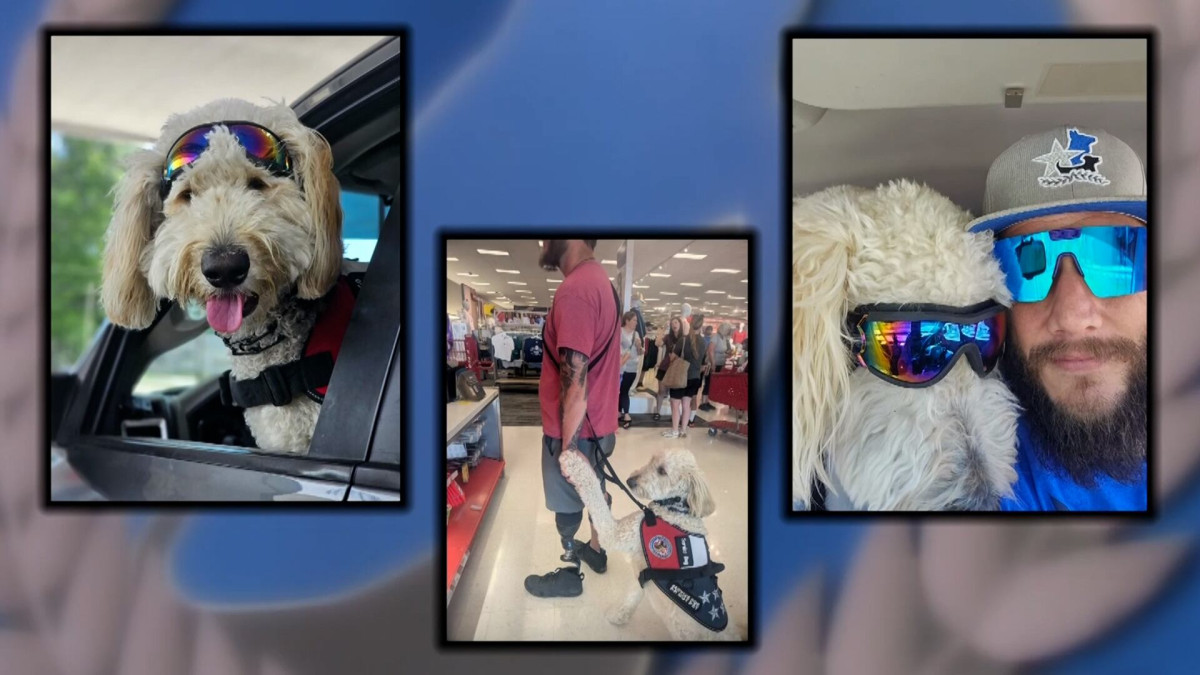
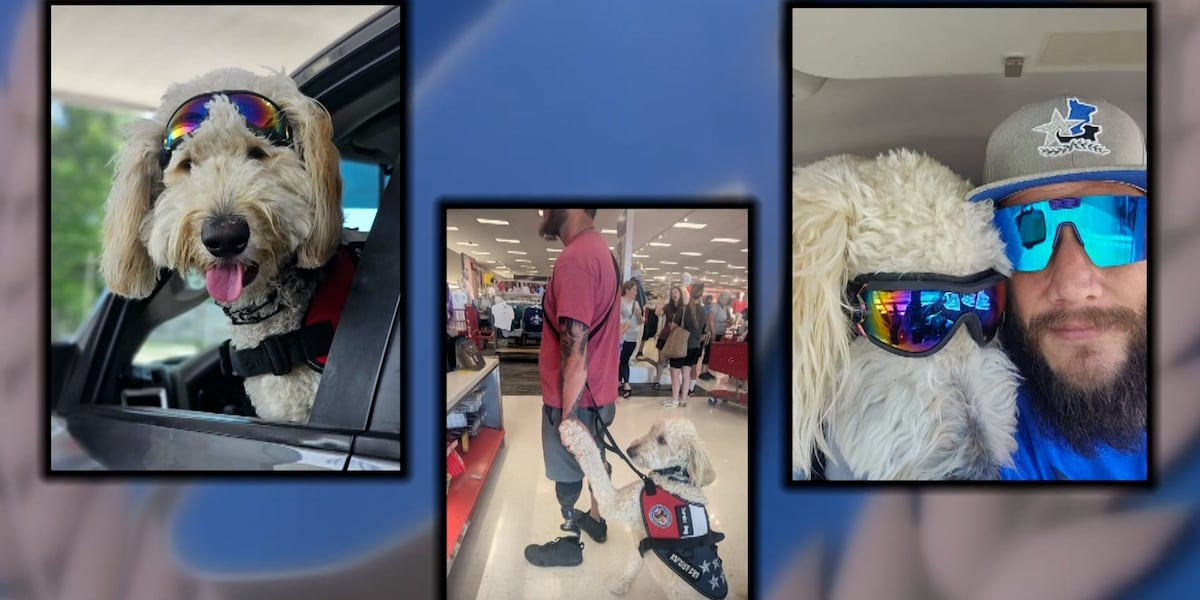
James Poggi is preparing to return to his school crossing guard post in Mascoutah, and Teddy will be there too. For Poggi, a Marine Corps veteran living with major physical injuries, the Goldendoodle at his side is not just a companion but the partner who helps make everyday life work.
A crossing guard and his constant partner
When James Poggi heads back to work as a school crossing guard in Mascoutah, he expects Teddy to be part of the routine, full-time, in all kinds of weather. Poggi said the dog even has a small crossing guard hut of his own.
That image is sweet on its face, but it carries real weight. Poggi is not talking about bringing a pet along for company. Teddy is his service dog, and Poggi describes him as the kind of partner who always has his back.
For dog lovers, the appeal is obvious. A Goldendoodle standing watch beside a crossing guard is the sort of scene people smile at right away. For Poggi, though, Teddy represents something more practical and more hard-won. The dog is part of how he plans to be back out on the corner every day, rain or shine.
Poggi served in the Marine Corps in aviation. He said the years he spent in the military left lasting damage to his body. The toll included five back surgeries and a below-the-knee amputation. He described the change in stark terms: going from being a large, capable service member who could be sent around the world to relying on wheelchairs, walkers and other mobility devices, and becoming vulnerable in a way he had never expected.
The tasks many people barely notice
Teddy helps with the kind of small chores that can decide whether a person gets through the day smoothly or struggles through it. Poggi said the dog loves to retrieve items and help carry things.
If Poggi drops his keys, Teddy can pick them up. If he needs his phone, Teddy can bring it to him. Those may sound like simple tricks to someone who has never had to think twice about bending down, balancing, or moving from place to place. In Poggi's life, they are a form of independence.
That is why Teddy has become such a central presence. He is not there for one dramatic moment. He is there for the many ordinary moments that add up to freedom: reaching what was dropped, carrying what is needed, stepping in where a physical limitation gets in the way.
Poggi said Teddy has also restored something less tangible than a set of tasks. He said the dog brought joy back into his life. He spoke about Teddy with the kind of affection people usually reserve for family, saying the dog ranks right up there like another child.
That closeness makes sense in the way Poggi describes the bond. He compared Teddy to the battle buddy a service member never goes without, the one who is expected to be there and look out for you. In Teddy, Poggi found that kind of steady presence again.
Why his wife urged him to get a service dog
The path to Teddy began with the emotional toll that followed Poggi's injuries. His wife, who is also his caregiver, suggested that he get a service dog.
By Poggi's account, his health problems were not the result of a single incident. He said he experienced multiple accidents while on active duty, including hard landings, physical training accidents and a car crash. He also developed spinal meningitis. All of it, he said, happened while he was still serving.
Placed together, those details help explain why daily life could become so difficult, and why a dog trained to help in practical ways could also matter emotionally. The shift Poggi described was not just physical. It changed how he moved through the world and how dependent he had to become on others and on equipment.
Teddy did not erase that history. What the dog seems to have done is help Poggi reclaim ground that had been lost, one task and one outing at a time. In a story about a veteran and his dog, that is the part that may resonate most with other handlers and dog owners. Service work can look extraordinary from the outside, but often its power is found in routine consistency. Teddy shows up, helps, retrieves, carries and stays close.
For Poggi, that reliability seems to be part of the point. He talks about Teddy less as an accessory to treatment and more as a daily lifeline.
Training for the real world
Poggi brought Teddy to Dog Training Elite St. Louis, where dogs are trained in everything from basic obedience to advanced therapy, protection and service work.
What stood out to Poggi was the way the training was set up. He said it may look like a facility, but the work is turned into real-world situations. In his view, that matters because a handler and a service dog need preparation for circumstances that cannot be learned from a book alone.
Matt Willis, the owner of Dog Training Elite St. Louis, said service dogs can play an important role for veterans dealing with physical limitations as well as PTSD. He said interaction with dogs changes how people feel, including chemical changes in the body, and that the effect can provide exactly the lift many veterans need.
Willis also said veterans have often gone through traumatic experiences physically, emotionally and mentally. In his view, there are still gaps in the care available to them, even as government systems try to help.
That need is part of why a private donor grant is being used to offset training costs for veterans and active military members. Willis said the money has been divided so that 10 people in need can receive help, with the grant covering 30% of training costs for those veterans or service members.
For families considering this path, that financial detail matters. Service dog training can be a major commitment. In this case, the donor wanted the funds directed specifically toward veterans and military personnel, reflecting what Willis said is a recognition of the benefit these dogs can provide.
A growing role for service dogs, and limits that remain
Poggi and Teddy's partnership sits inside a broader conversation about what service dogs can do for veterans. Evidence has been building that the dogs may ease some symptoms for certain people. A 2024 study found that service dogs were associated with lower rates of anxiety and depression in veterans with PTSD.
Another sign of demand came from a 2024 survey of about 600 veterans. Roughly four in 10 respondents said they had never had a PTSD service dog but would like one.
At the same time, there are clear limits in the current system. The Department of Veterans Affairs does not provide service dogs for mental health conditions, including PTSD, and it is still studying the possible benefits of those interventions.
That leaves stories like Poggi's carrying extra significance. They show what one trained dog can mean in a single household, while also pointing to a wider need that many veterans say still exists.
In Poggi's case, the outcome is easy to picture. A crossing guard returns to his corner. A Goldendoodle is there beside him. Children and drivers may see a friendly dog in a little hut. Poggi sees the teammate who helps him pick up what falls, carry what he needs, get through the workday and step back into a fuller version of his own life.
Share this article: