
Ghost the Deaf Shelter Dog Was Labeled Unadoptable. Then He Became Washington's First Deaf K-9

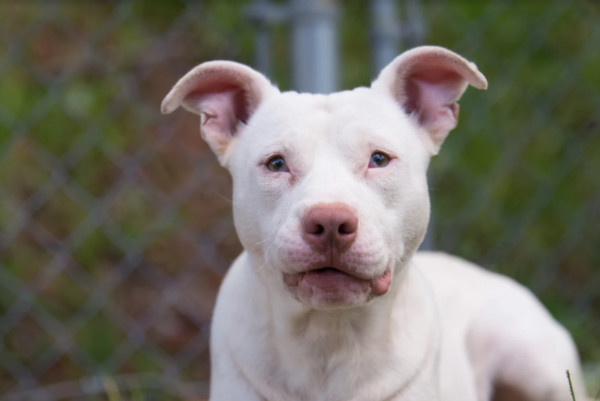
Ghost started out with the kind of label no dog deserves. Dumped at a Florida shelter and described as “unadoptable” because he is deaf, the white pit bull mix looked like the sort of pup many people might overlook.
In the clip below, Ghost's path takes him from a shelter kennel in Florida to a very different kind of working life in Washington.
What changed everything for him was being noticed by Swamp Haven, a Florida animal rescue that stepped in when Ghost was still sitting at the shelter. Instead of remaining there, he was moved into a temporary home with other dogs the rescue was helping.
For Swamp Haven, Ghost was new territory. Founder Lindsay Kelley said he was the first deaf dog the group had ever worked with, and learning how to communicate with him came with some trial and error. Even so, that learning curve did not stop people from becoming attached to him. The dog who had been written off for his deafness quickly won over the people around him.
That bond mattered, because Ghost's next opportunity was not close by. Swamp Haven reached out to the Olympic Peninsula Humane Society in Washington to ask whether it had room for him. The answer would send Ghost much farther than an ordinary adoption journey.
A long trip for a dog everyone remembered
The Olympic Peninsula Humane Society was launching a training program for deaf dogs, which made Ghost an especially good fit. Getting him there, however, was not simple. Transport from Florida takes about 12 weeks to arrange, which meant Ghost stayed longer with the people caring for him at Swamp Haven before his new chapter began.
When the trip finally came together, it drew a striking response. Kelley said 48 drivers volunteered to help move Ghost from Florida to Washington. By the time the week-long trip was over, she said, every one of them seemed to have a story about him.
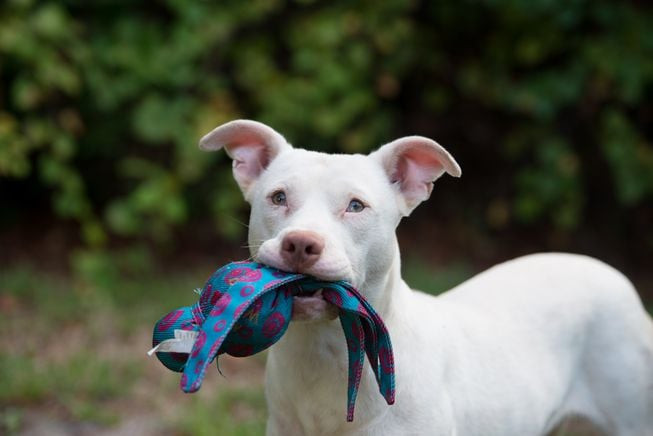
Those stories sounded exactly like the kind of tales a lively dog leaves behind. Kelley recalled accounts of car seats getting torn up, leashes being chewed through, and a tennis ball that Ghost popped in less than a minute. They were mischievous moments, but they also hinted at what made him special. Ghost had energy to spare, and he had a powerful fixation on one thing in particular: chasing and finding tennis balls.
The game that revealed a job
At the Olympic Peninsula Humane Society, that obsession with tennis balls became more than a funny quirk. Staff members saw how much Ghost loved searching for hidden balls and realized the same drive could be directed into something useful.
Barbara Davenport, the trainer the organization turns to for high-energy dogs, recognized the potential right away. She has trained 450 rescue dogs for shelters, rescues and humane societies in Washington since the 1980s, and when she met Ghost, she believed he was suited to become a drug-detection K-9 for the Department of Corrections.
For a dog like Ghost, Davenport saw work as a better answer than asking him to simply suppress his intensity. High-energy dogs need an outlet, and she said his deafness seemed to make him even more focused.
His disability also meant the people working with him needed their own new set of skills. Davenport noted that owners would need to learn different ways to communicate with Ghost. So would anyone preparing him for service work. To make that possible, she asked Joe Henderson to help create a system of hand signals that Ghost could use during training and on the job.
From 'unadoptable' to first-of-his-kind
The plan worked. Ghost completed training with Davenport and Henderson and officially became Washington's first deaf K-9.
The same dog who once spent his time hunting down hidden tennis balls now uses that drive to detect drugs in prisons. Ghost and Henderson have also taken on additional work together in other state facilities. And when he is off duty, he still gets the reward he has always loved most: time spent chasing tennis balls.
For the people who helped move him from a shelter label to a working role, Ghost's story is bigger than one happy ending. Kelley called his rescue a team effort and said Swamp Haven was glad to have played a small part in his journey.
She also hopes his example travels as widely as he did. Ghost's story, she has said, can encourage people to adopt and draw attention to dogs that society often places in the "unadoptable" category. In Ghost's case, the trait that once got him dismissed did not prevent him from finding a place. It helped shape a path that turned him into something no one at that Florida shelter would have expected.
Deaf dogs can learn differently, not less
Dogs do not need spoken commands to understand people. Many deaf dogs are trained with hand signals, body position, eye contact, and touch. Some also learn that a gentle floor vibration, a porch light flick, or a vibrating collar means, look at me. The collar is used as a cue, not a punishment. Practical basics are simple: approach where the dog can see you, avoid startling from sleep, and reward frequent check ins.
Why a deaf dog can still do working tasks
A great deal of canine work is driven by scent, pattern learning, and handler communication. Hearing can help in some jobs, but it is not always the main skill. Detection and search style tasks often rely on odor recognition, a clear alert behavior, and steady focus. For owners, this means enrichment matters. Nose games, hide and seek, tracking, and place training can build confidence and channel energy productively.
What to ask before adopting a dog with a tough label
Labels such as unadoptable can reflect limited shelter resources, stress, or behaviors that need a more specific home. Ask for plain language notes on triggers, handling, other animals, and recovery after stress. If possible, request foster observations or a training plan. For safety, use a secure leash system and fenced areas, since a deaf dog cannot hear recall from a distance.
Share this article:





