Baloo the Saint Bernard Is Training Baby Baloo to Be Siena University's Next Mascot

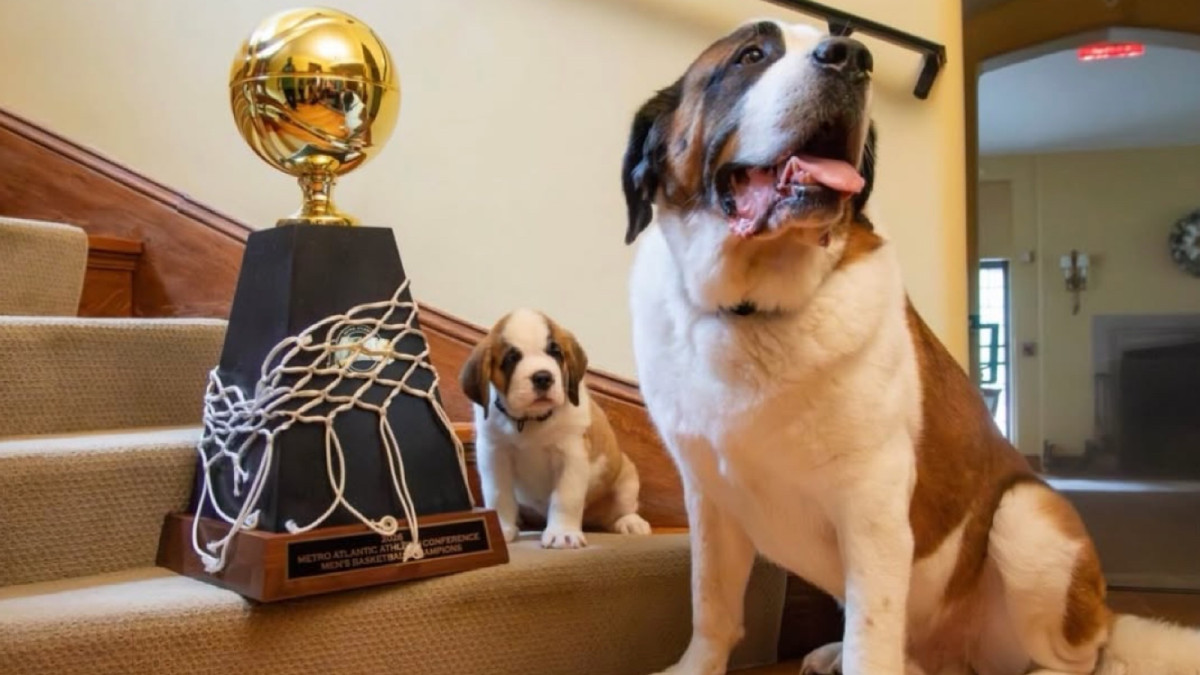
Baloo has spent years greeting fans, posing for photos and representing Siena University from the sidelines. Now the Saint Bernard has a different assignment: showing a 3-month-old puppy named Baby Baloo how to handle the job before he steps away.
At an exhibition game against Syracuse at MVP Arena, the university introduced the next dog in line with a very clear message on his vest: "In Training, Do Not Pet." Baby Baloo, also a Saint Bernard, is being brought along to home games this season so he can learn the rhythms of mascot life before taking over next year.
The arrangement appears in the clip below, but the idea behind it is straightforward. Siena is using its current live mascot not just as the face of the program, but as the puppy's example.
Learning the job by following Baloo
Handler Charles Rice said the training leans on a basic dog behavior: imitation. Baby Baloo is, in effect, learning by watching what Baloo does and repeating it.
That matters because a game environment asks a lot from a young dog. Rice said the goal is to help the puppy learn to self-regulate, keep his attention on the handler and relax around the commotion that comes with basketball games, including the many sights and sounds around the arena. The training vest is expected to stay part of the routine until January.
One beloved mascot, one very big future mascot
Baloo became Siena University's live mascot in 2021 and has grown into a familiar presence at basketball games and campus events. He has posed for hundreds of photos with students and fans during nearly five years in the role.
Now, with Baloo nearing his seventh birthday, the university is preparing for a handoff. Baby Baloo currently weighs about 40 pounds, but he is expected to grow to around 190 pounds. If that estimate holds, he could end up even larger than Baloo, who weighs 160 pounds.
Baloo is expected to retire at the end of this academic year. The plan is for Baby Baloo to become Siena's sole mascot in 2027, turning this season into a rare kind of apprenticeship: one Saint Bernard showing another how to become the dog everyone comes to know.
What a live mascot does
A live school mascot is part ambassador, part working dog. The job is less about tricks than about staying calm around noise, crowds, costumes, music, cameras and unpredictable movement. A mascot dog may appear at games, welcome events, alumni gatherings and community visits, where the goal is to create a friendly, recognizable presence.
For the dog, that means public life has to be managed carefully. A good mascot routine includes short appearances, regular water breaks, a quiet place to decompress and a handler whose full job is to watch the dog’s body language. If you meet a mascot dog, the polite approach is simple: ask before petting, approach from the side, let the dog sniff first and stop if the dog turns away, yawns repeatedly or seems overwhelmed.
Why Saint Bernards stand out
Saint Bernards are giant dogs known for their gentle expression, steady temperament and strong bond with people. Those traits can make them appealing public dogs, especially in settings where a calm, approachable look matters. They are also powerful, heavy-coated dogs, which means comfort and safety need extra attention.
Anyone caring for a Saint Bernard in public should think about heat, slick floors, stairs, tight spaces and the strain that repeated jumping or rough handling can put on joints. Keep outings shorter in warm weather, carry water, use non-slip footing when possible and choose a well-fitted harness or collar that gives the handler control without causing discomfort. Giant breeds also mature slowly, so expectations should match the dog’s age and physical development.
How a future mascot is trained
Training usually starts with basics: loose-leash walking, settling on a mat, reliable recall, polite greetings and comfort with being touched by familiar people. After that comes exposure work. The dog learns to hear cheering, see waving arms, walk past banners and ignore dropped food or sudden noises, all at a pace that keeps the dog confident.
If you are raising a dog for any public-facing role, reward calm behavior more than flashy behavior. Practice short sessions in gradually busier places. Pair new sights and sounds with treats, praise or play. End before the dog gets tired or worried. A dog that can relax on cue, recover quickly from surprises and look to the handler for guidance is usually better suited to public mascot work than a dog that only knows showy commands.
Share this article: