West Virginia firefighters rescue kitten from wall and adopt Little Debbie as firehouse cat

A kitten rescue in West Virginia ended with more than a safe return. After firefighters cut into a wall to reach the trapped animal, the little black-and-white cat gained a new home at the fire station and a new name, Little Debbie.
The call came from a home in the Kingmont area of Pleasant Valley, where a kitten on a back porch slipped through an exterior block wall and became stuck in the gap between the outside wall and the inside wall of the house.
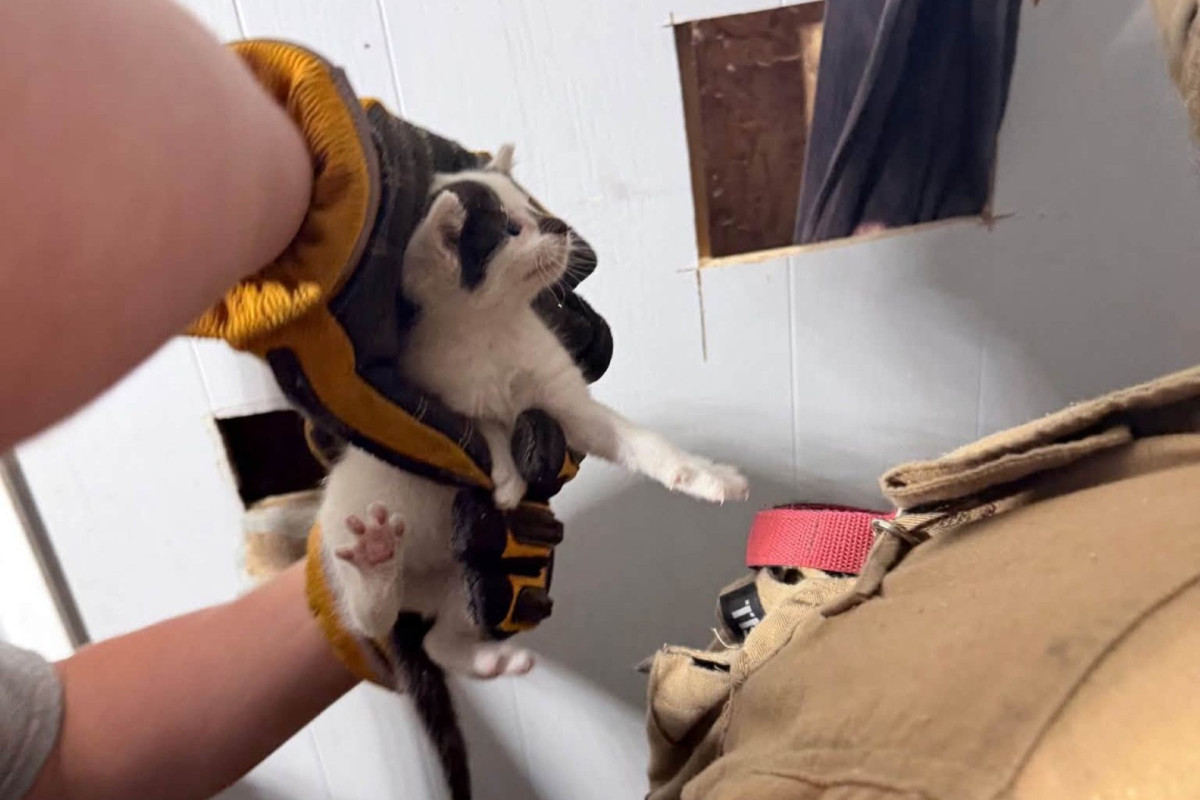
Firefighters from the Valley Volunteer Fire Department responded and worked close to the spot where the kitten was trapped. To get to the animal, they carefully opened the wall using specialized equipment.
According to the department, the rescue took about 20 minutes. Once they had access, crews used a towel to bring the kitten out safely.
It was the kind of small-scale emergency that can feel enormous to the people standing nearby, especially when the one in trouble is a tiny pet that cannot get out on its own. In this case, the response was quick and practical, with firefighters cutting into the wall only where they needed to in order to reach the kitten.
A new cat at the station
The story kept getting better after the kitten was out.
The cat was examined by a veterinarian and was found to be healthy. After that checkup, the department decided to adopt the kitten.
The fire department said the newest member of the station is a black-and-white firehouse cat named Little Debbie. In a social media post, the department described the kitten as black and white, or "Dalmatian Colored," and said Little Debbie was safe and healthy after the veterinary visit.
For cat lovers, that ending is hard not to smile at. What began with a kitten slipping into a wall at a residence ended with that same kitten not only being rescued, but also staying with the people who helped pull it free. Little Debbie's story is a reminder that some of the most memorable animal rescues are also the most personal ones, with a single call bringing together neighbors, first responders, and one very lucky cat.

Why kittens end up in walls
Very young kittens can squeeze through gaps around pipes, vents, crawl spaces and damaged siding. Once inside, they may keep moving toward warmth or sound and become hard to locate. A hidden kitten may cry loudly for a time, then go quiet from exhaustion, so silence does not always mean it has left.
If you hear meowing, first check whether a mother cat is nearby. She may be moving her litter and return if the area is calm. Keep pets and people back, note where the sound is strongest, and listen at different times of day.

How a safe rescue usually works
Rescuers usually try to pinpoint the kitten before opening any wall or ceiling. That can mean listening through outlets or access panels, looking for paw sized openings, and using food, gentle voices or familiar kitten sounds to encourage movement. In buildings, the safest option is often the smallest possible opening rather than tearing into a large area.
Do not use poison, smoke, flooding, or tools that could collapse material or injure the kitten. If the kitten may be near wiring, insulation, ducts or machinery, contact building maintenance, a local animal rescue, or emergency services if there is immediate danger.

What to do after the kitten is out
A rescued kitten needs warmth, quiet and a quick check for injuries, dehydration, fleas and breathing problems. Cow's milk is not a good choice for kittens and can upset the stomach. If the kitten is very young, chilled, weak or unable to eat, a veterinarian should advise on feeding and care as soon as possible.
For the longer term, set up a small safe room with a litter tray, water, soft bedding and hiding spots. A new cat often settles best with a routine, gentle handling and a gradual introduction to other pets.
Share this article: