Pregnant Wife Angry At Redditor For Giving Her A Nickname Similar To Their Whiny Dog’s Nickname

A 12-year relationship, a new baby on the way, and one tiny nickname. That is how this Reddit post went sideways fast.
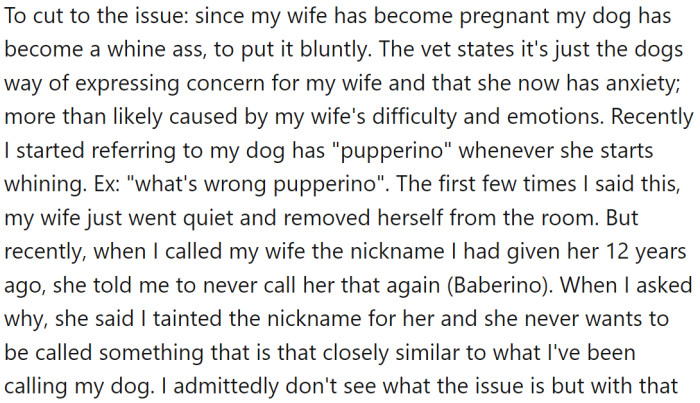
OP and his wife adopted a dog two years ago, and the dog’s whining started ramping up right when the wife got pregnant. OP started calling the whiny little guy “pupperino,” and at first the wife would just leave the room when he said it. But recently, she snapped and asked him to stop calling her by a nickname that sounds way too close to the dog’s.
Now OP is stuck wondering how a harmless bit of cuteness turned into a full-on pregnancy-triggered fight.
OP asks:

Two years ago, OP adopted a dog and has been with their wife for 12 years since they were teenagers. They are now expecting their first child
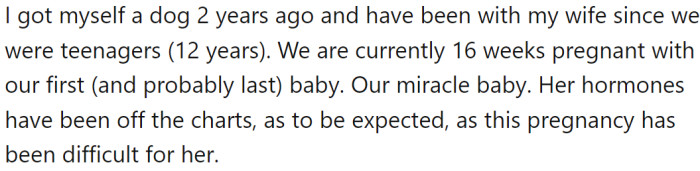
Since the wife became pregnant, the dog has started to whine frequently. The vet believes it is due to anxiety caused by the wife's difficulties and emotions during the pregnancy.
In relationships, nicknames are often seen as tokens of affection that foster intimacy. However, as illustrated in the situation with the Redditor and his pregnant wife, the intended warmth of a nickname can quickly turn into a source of conflict. The wife's reaction to being nicknamed similarly to their dog highlights how such terms can evoke unintended negative feelings. While the Redditor aimed to express endearment, the overlap with their dog's nickname led to frustration rather than connection. This scenario serves as a reminder that what is meant to be cute can sometimes backfire, underlining the need for sensitivity in how we label our loved ones. The emotional weight of names cannot be underestimated, as they can shape our interactions and feelings within partnerships.
In the realm of relationships, nicknames often emerge as symbols of affection and intimacy, intended to strengthen bonds.
The Significance of Nicknames in Relationships
Nicknames can hold substantial emotional significance in relationships, often reflecting intimacy and affection.
OP thought “pupperino” was a sweet, harmless thing to say, until the wife kept walking out every time the dog started whining.
Nicknames often reflect intimacy and familiarity within relationships. Psychological research indicates that the use of nicknames can enhance emotional bonds between partners, fostering a sense of connection and belonging.
However, when nicknames overlap with other associations, as in the case of this Redditor, it can lead to misunderstandings and conflicts.
. OP began referring to the dog as "pupperino" when it whines. Initially, the wife would leave the room when OP used the nickname, but she recently asked OP to stop calling her by her own long-standing nickname, "Baberino."
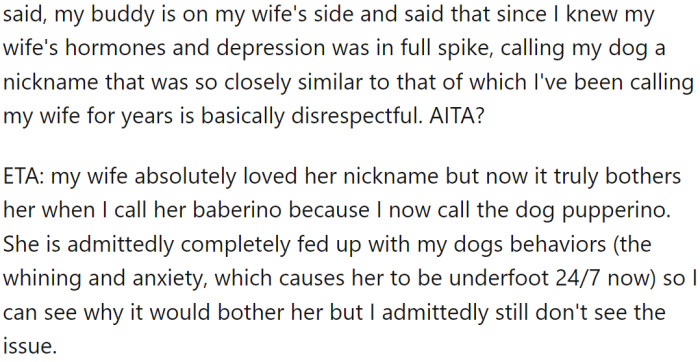
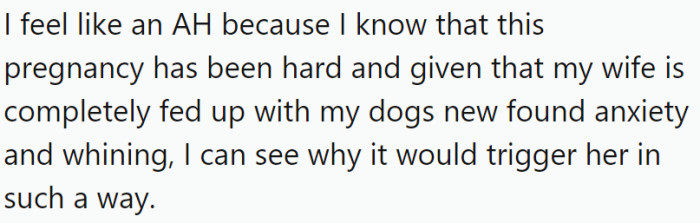
OP has offered the following explanation for why they think they might be the a-hole:
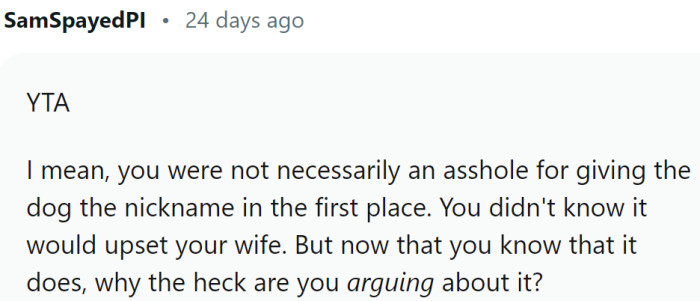
OP didn't know it would upset your wife, but now that he knows...
This situation illustrates how seemingly harmless behaviors can trigger deeper insecurities or conflicts within a relationship. Partners may have different thresholds for what they find affectionate or annoying. When one's affectionate term resembles a pet's name, it can evoke feelings of being belittled or trivialized, leading to resentment.
Understanding these nuances is essential for maintaining healthy communication in a relationship.
Understanding the emotional weight of names and nicknames can reveal underlying relational dynamics. Psychologists suggest that names often serve as symbols of identity and belonging, and when a nickname is perceived as derogatory or trivializing, it can undermine the individual's sense of self.
This highlights the importance of mutual respect in naming conventions within intimate relationships, where both partners' feelings should be considered.
The emotional response to nicknames can be influenced by various factors, including personal history and cultural context.
From a psychological perspective, names and nicknames carry significant emotional weight. The way individuals identify and label each other can influence their perceptions of one another. Research published in the Journal of Personality and Social Psychology highlights that names can evoke certain traits and expectations, which may complicate how partners view each other.
This Redditor has an interesting experience:
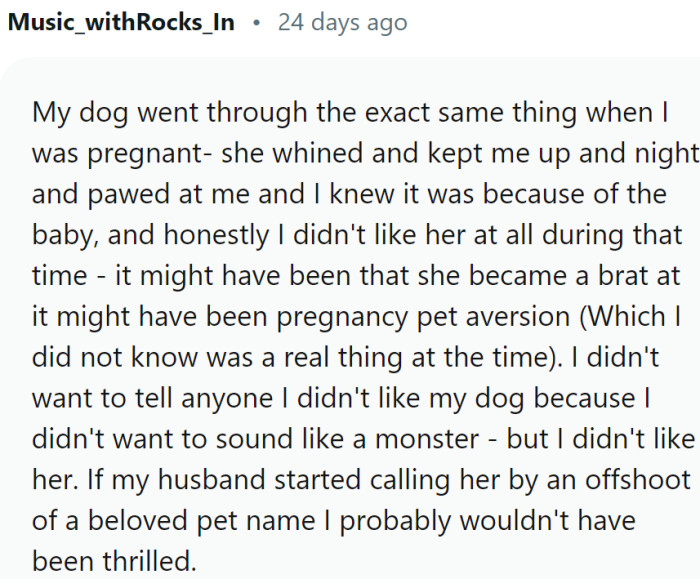
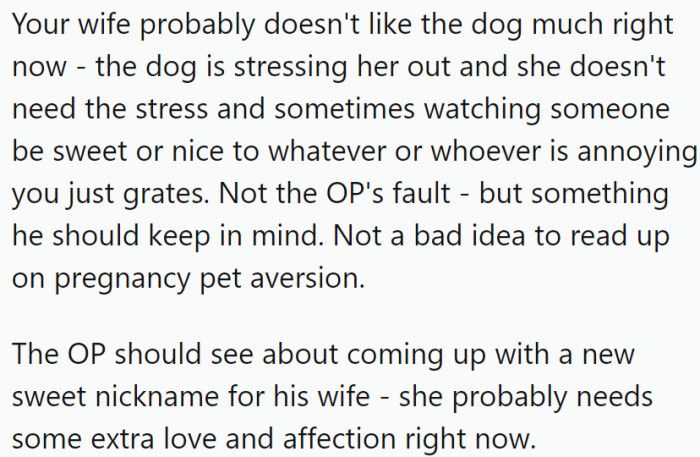
The dog is probably stressing the wife out
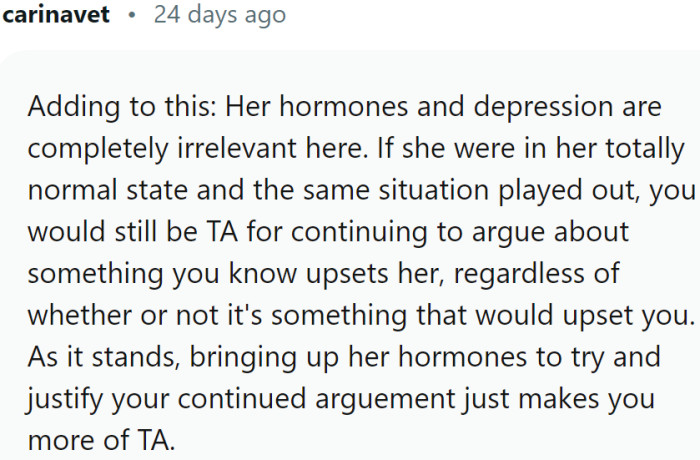
The hormones are not really important here
The whining got worse during pregnancy, and OP’s nickname habit started feeling less like affection and more like a reminder she did not want.
This also echoes the girlfriend who got silent treatment from her BF over the puppy nickname she chose.
Addressing Conflicts Arising from Affectionate Terms
Research in conflict resolution highlights that effective communication strategies can significantly improve relationship satisfaction and reduce misunderstandings. Engaging in constructive dialogues can help couples navigate sensitive topics, ensuring that both partners feel valued.
Communication Styles and Conflict Resolution
Conflicts around nicknames can often be indicative of deeper communication issues within a relationship.
Effective communication is critical in navigating relationship dynamics and addressing conflicts.
When conflicts arise around nicknames, it’s essential to understand the underlying sensitivities involved.
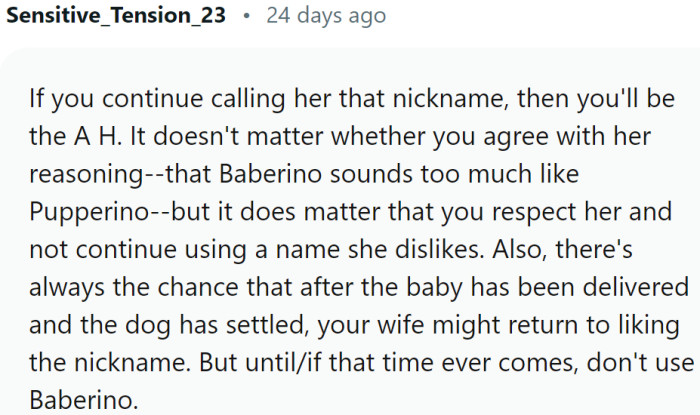
It doesn't matter whether OP agrees with her reasoning
OP is sending the wrong message:
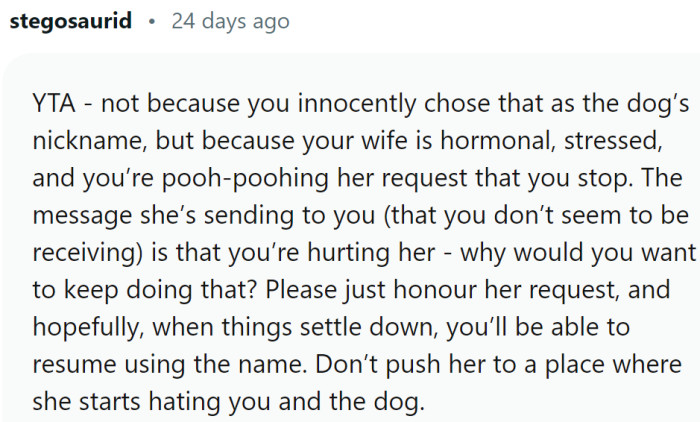
OP should definitely find another nickname
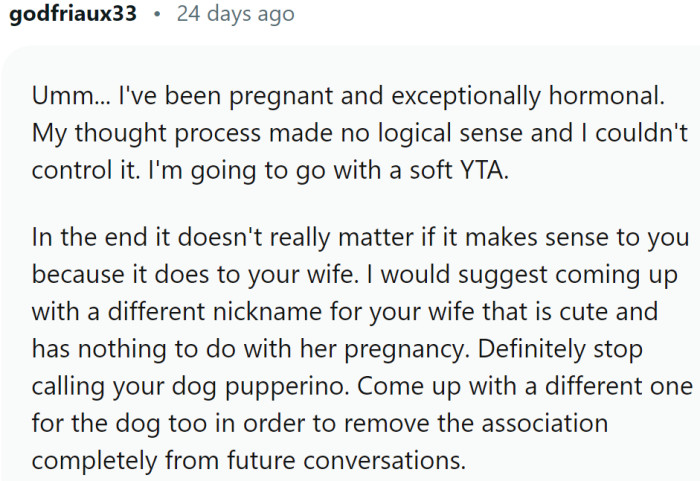
When OP realized the nickname overlap was happening, the wife asked him to stop calling her by something that sounded just like the dog’s.
To prevent similar conflicts in the future, couples should actively engage in discussions about their preferences regarding affectionate names. Setting boundaries around what is acceptable can create a more harmonious environment where both partners feel respected. Additionally, exploring alternative nicknames that resonate positively with both individuals can strengthen their emotional connection and mutual understanding.
Ultimately, fostering open communication and mutual respect is key to navigating the intricacies of affectionate terms in relationships, promoting a healthier dynamic.
Fostering Healthy Communication in Relationships
To address conflicts related to nicknames, couples can benefit from developing healthy communication strategies.
To enhance communication skills, couples can engage in activities that promote active listening and empathy.
Effective communication is critical in addressing conflicts related to nicknames. Couples who practice open and honest discussions about their feelings are more likely to resolve misunderstandings. Research shows that communication patterns significantly influence relationship satisfaction, as highlighted in studies from the Journal of Marriage and Family.
The context is the problem
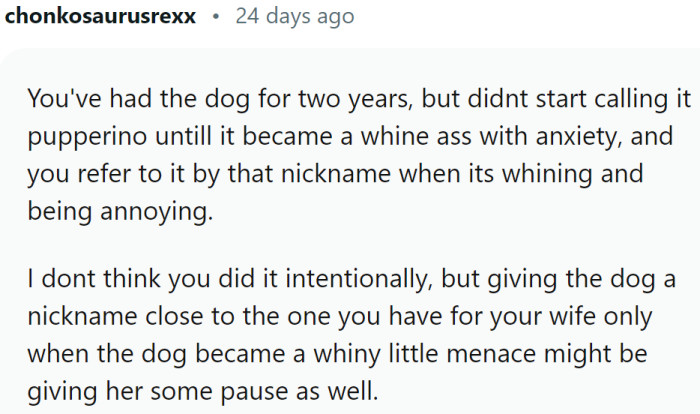
OP should listen to his friend
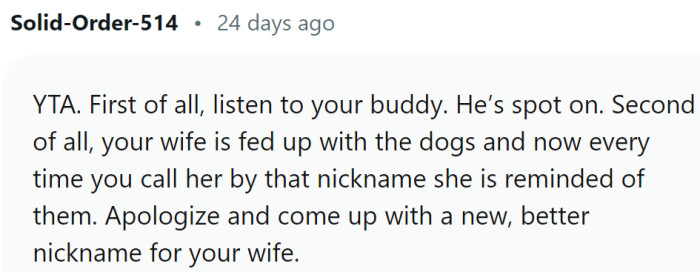
The situation with OP, his wife, and their dog highlights the complexities of interpersonal relationships and the role that nicknames can play in emotional dynamics. While nicknames are often intended as tokens of affection, they can sometimes have unintended consequences and be perceived as insensitive or offensive.
This case serves as a reminder to be mindful of the emotions and preferences of others, particularly during sensitive periods such as pregnancy, when using nicknames or other expressions of endearment.
Now the couple is dealing with pregnancy stress, a whiny dog, and the fact that one word can hit different depending on what you associate it with.
Creating a Supportive Environment
Creating an environment where both partners feel heard and understood is vital.
Furthermore, couples can benefit from establishing boundaries around certain nicknames to ensure both partners feel comfortable.
Understanding individual preferences in naming conventions can also help navigate conflicts. Partners should take time to explore each other’s feelings about names and nicknames. Research published in the Journal of Personality and Social Psychology shows that when individuals engage in discussions about their preferences, they foster greater intimacy and understanding in relationships.
The situation surrounding the choice of nicknames in this story illustrates the intricate emotional landscape of personal relationships. What was meant to be an affectionate gesture quickly turned into a source of conflict, highlighting how easily intentions can be misinterpreted. Couples must recognize the potential sensitivities involved when naming one another, especially when a nickname is reminiscent of a pet's name. Open communication is essential; it allows partners to express their feelings and preferences, which can help prevent misunderstandings.
Humor can be a double-edged sword in relationships, as it can foster connection or create misunderstandings.
Encouraging open dialogue about humor preferences can help couples align their communication styles and reduce misunderstandings.
Conflict is a natural part of relationships, but addressing it effectively is crucial for maintaining a healthy dynamic.
What may seem like an innocent or affectionate choice to one partner can be perceived as disrespectful or trivializing to another. By recognizing the significance of personal feelings and ensuring that both partners feel valued, couples can avoid unnecessary conflicts and foster a deeper understanding of one another.
The situation involving the nicknames highlights the delicate balance of affection and perception in relationships. While the original intention behind the nicknames may have been to express endearment, it is evident that what one person finds charming can easily be perceived as disrespectful by another. When OP's wife reacted negatively to being compared to their dog, it revealed an underlying issue that goes beyond mere words. Addressing such misunderstandings directly can prevent resentment from building up and encourage a more harmonious emotional connection. Couples should take note that open dialogues about feelings and intentions can not only resolve conflicts but also strengthen their bond.
The situation presented in this article highlights the delicate nature of nicknames within intimate relationships.
OP’s “cute” nickname might have just become the exact thing his wife can’t stand right now.
Talk about escalation, read how Lyla’s weird behavior pushed his family to frown after he rehomed her.
Share this article: