
Indus the Wolf-Dog Barked at a Stranger, Then Realized It Was His Military Dad Coming Home

Indus began this homecoming the way many devoted dogs would, by barking at an unfamiliar figure coming up the driveway. Then one scent changed everything.
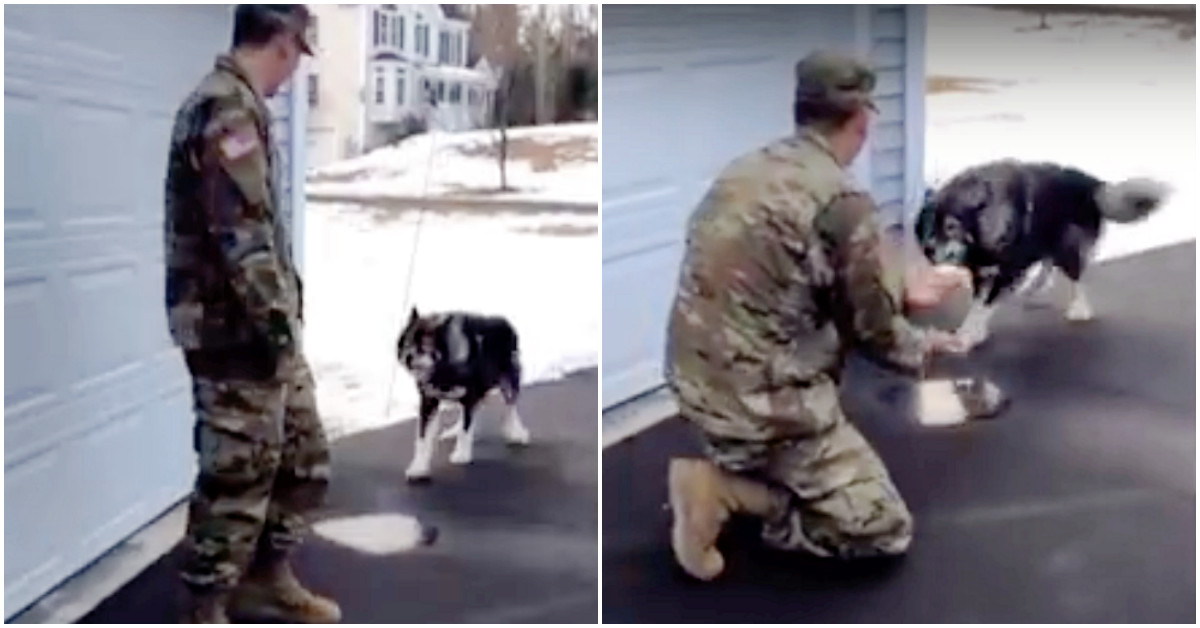
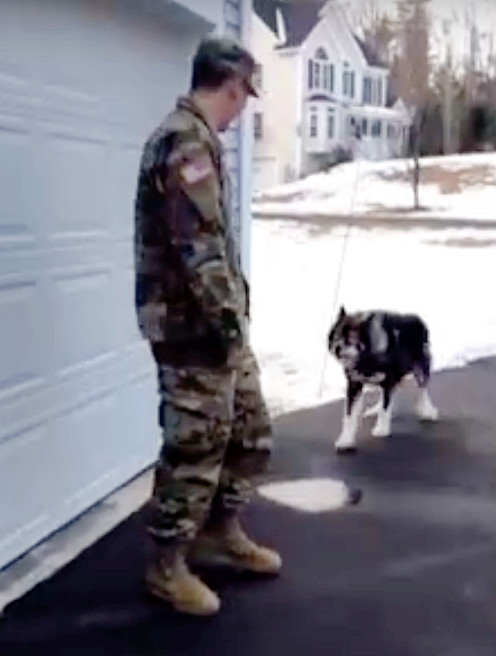
At Devin Ekstom's parents' home in Northwood, New Hampshire, Indus spotted a man approaching and immediately went into watchdog mode. The Husky, Malamute and Timber Wolf mix treated the visitor like a stranger, barking in defense as he came closer.
What Indus did not know was that the man on the driveway was Devin, the military dad he had been missing. The shift came the moment the dog caught his scent. In the clip below, the cautious barking gives way to recognition, and then to pure excitement.
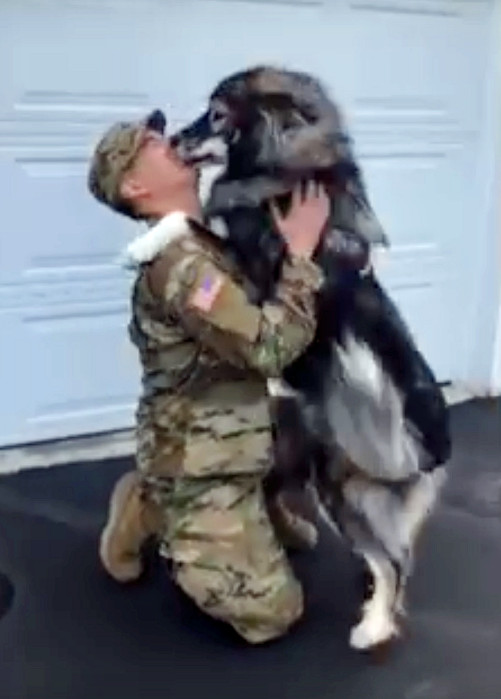
Indus rushed at Devin, pouncing on him and covering him with kisses. He circled around him with his tail wagging as the surprise gave way to a full-body celebration.
A reunion built on 10 weeks apart
Devin had been away for ten weeks completing basic training with the military. He knew he would be coming home for the holidays, but Indus had no way to understand why his favorite person was suddenly gone.
Morgan, Devin's wife, recorded the reunion as it unfolded. What starts as a protective response turns into something much sweeter once Indus realizes exactly who is standing in front of him. For a dog that had deeply missed his best friend, the wait was over in an instant.
Devin later said the moment hit him hard in the best possible way. He shared that he felt humbled and touched by how much love Indus showed him the second recognition set in. The reaction was a simple, powerful reminder of the bond they still shared after weeks apart.
That is what makes this reunion so easy for dog lovers to understand. Indus did not need words, only one familiar scent, and then his dad was home again.
How dogs recognize people
Dogs do not identify people the way humans usually do. Scent is often their first clue, followed by voice, posture, movement, and routine. A familiar person who smells different, wears bulky clothing, carries unusual gear, or moves in an unfamiliar way can briefly seem like a stranger.
That is why some dogs bark, hang back, or act conflicted before recognition clicks in. This does not always mean fear or aggression. It can be a normal pause while the dog gathers information. Older dogs, anxious dogs, and dogs with limited social experience may take longer to sort it out.
If you want to help a dog recognize someone, let the dog approach at its own pace. Keep your body turned slightly sideways, avoid looming over the dog, and speak in a calm, familiar voice. Let the dog sniff before reaching out.
Why reunions can be intense
Big reunions can overwhelm dogs. Excitement, confusion, stress, and relief can all show up at once. Some dogs jump and cry. Others freeze, bark, pace, or circle before settling. A dog that has been apart from a favorite person may also react strongly to changes in household routine, sleep schedule, or energy in the home.
Wolf-dogs can be especially complex. They often combine domestic dog behavior with stronger caution, sensitivity, or independence. Many are less forgiving of novelty than an average pet dog. They usually do best with predictable handling, careful introductions, and secure management. Ownership rules and practical requirements vary by place, so anyone considering one should research local rules and talk with experienced handlers and veterinarians.
Safer, calmer homecomings
For any dog, the best reunion setup is usually calm and structured. Choose a quiet space. Keep other people, pets, and noise low at first. Use a leash or barrier if there is any doubt about the dog’s reaction. Let the dog see, hear, and smell the returning person before close contact.
Skip rough hugging right away. Offer a familiar cue, such as a sit or hand target, and reward calm behavior. If the dog is too aroused to respond, create distance and try again after a short break. Watch for stress signals such as lip licking, tucked tail, hard staring, pinned ears, or repeated barking.
If a dog has a history of fear, guarding, or bite risk, plan reunions with professional guidance. Management is not failure. It is often the safest way to help the dog succeed.
Share this article:





