Allergic Ex-Roommate Yells At Redditor For Adopting Cat After She Moved Out, Contaminating All Her Belongings She Was Storing In Redditor's Home

A 28-year-old woman thought she was just moving on after a roommate left her place, but it turns out the cat situation came with extra baggage. The twist is that the roommate was allergic to cats, so the OP never even considered bringing one in while she was living there.
Instead, the OP kept feeding and caring for stray cats outdoors, quietly doing her thing. Then the roommate moved out, and the OP adopted a cat, which should have been her fresh start. But when the ex-roommate returned to grab the rest of her belongings, she reacted instantly and lost it, yelling that the OP was selfish and inconsiderate.
Now the OP is stuck wondering how one decision about a pet turned into a full-on blowup over stored stuff, one night, and zero conversation.
Here is the OP's concern:

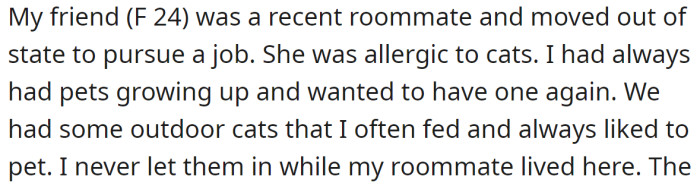
The OP's roommate is allergic to cats, so the OP couldn't have one inside, but she nurtured stray cats outdoors:
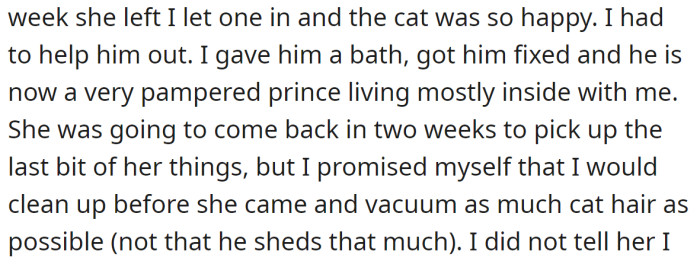
As the OP's roommate moved away, the OP figured out she could actually adopt a cat, and she did so:
Allergic reactions often evoke strong emotional responses that can strain interpersonal relationships significantly. The ex-roommate's vehement reaction to the Redditor adopting a cat illustrates this point vividly. When someone feels their health is compromised, as the ex-roommate did with the introduction of a cat into a space where she stored her belongings, it can lead to heightened defensiveness.
Conflict between roommates can often stem from misunderstandings about personal boundaries and responsibilities.
In this case, the ex-roommate's reaction highlights how past experiences can influence current interactions, creating heightened emotional responses.
Adopting pets often comes with emotional responsibilities that can complicate relationships.
Research indicates that animals provide profound companionship, which can lead to emotional attachments that are difficult to sever.
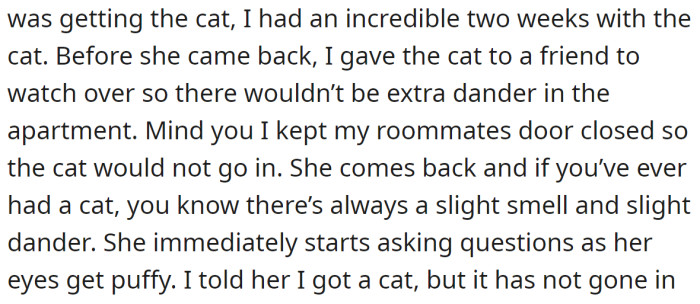
But a conflict appeared when her roommate returned to pick up the remaining things and developed an allergy instantly:
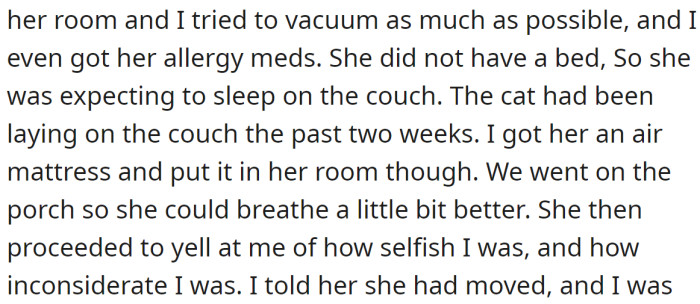
The roommate yelled at the OP, calling her selfish and inconsiderate:
She stayed one night instead of two, and they haven't spoken since:

The moment the OP adopted the cat after her roommate moved out, it basically lit a fuse that had been waiting in the background for months.
Psychological research suggests that health-related anxieties can impact how individuals communicate their needs and boundaries.
This often leads to misunderstandings and escalated conflicts, as seen in this situation.
From a psychological standpoint, this situation exemplifies how unresolved feelings can resurface in interpersonal conflicts. Understanding these triggers can help individuals navigate conflicts more effectively and reduce emotional friction.
When conflicts arise over pets, it often reflects deeper issues of ownership, responsibility, and emotional investment.
This can create a misunderstanding, especially in shared living situations.
A Redditor was curious:
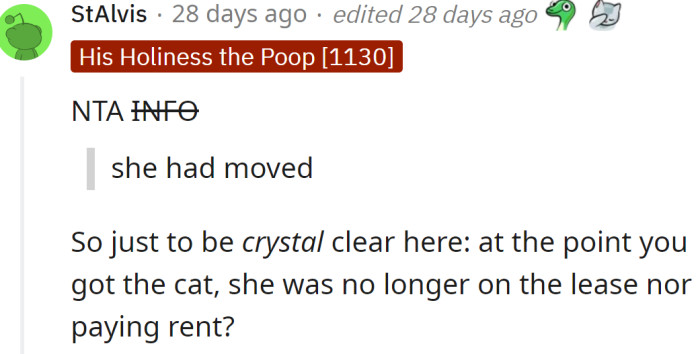
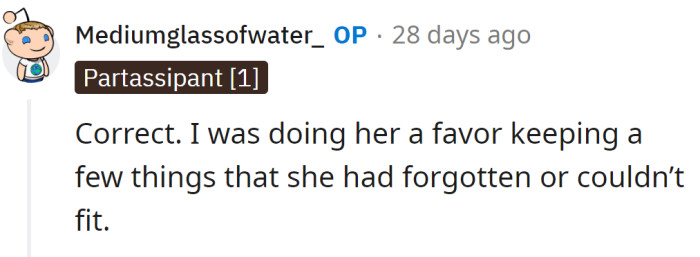
The OP provided more info:
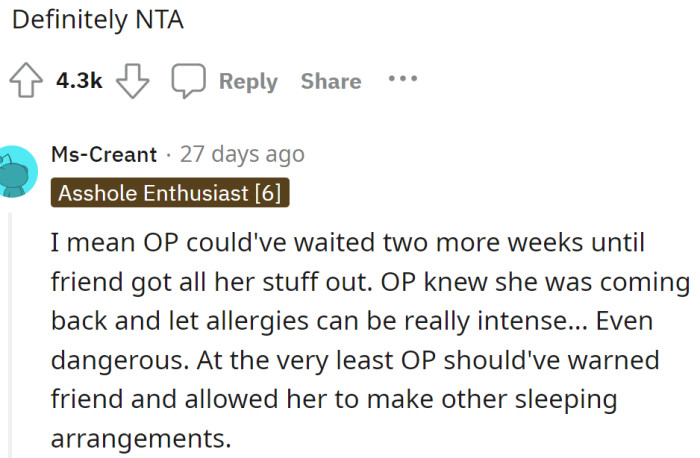
The OP should have warned the friend, giving her a chance to find alternative sleeping accommodations
When the ex-roommate came back to pick up her belongings, the allergy reaction hit immediately, and that is when the yelling started.
In situations where health concerns intersect with personal relationships, such as the case of the Redditor adopting a cat after their allergic roommate moved out, emotional regulation becomes essential. The fallout from this decision illustrates how unmanaged emotions can escalate conflicts. The former roommate's intense reaction highlights the importance of effectively handling emotional responses in order to engage in productive discussions. Without these skills, conversations can devolve into accusations and hurt feelings, as seen in the heated exchange over the cat adoption. This scenario serves as a reminder that navigating personal boundaries and health issues requires a thoughtful approach to communication.
Establishing emotional boundaries is crucial in roommate relationships.
The Dynamics of Shared Spaces
Living with others, especially in shared spaces, requires negotiation and compromise regarding household responsibilities.
Studies published in the Journal of Family Psychology reveal that households with established roles experience lower conflict levels.
This also parallels the argument in the AITA where someone refused to house-sit after learning their friend got a cat.
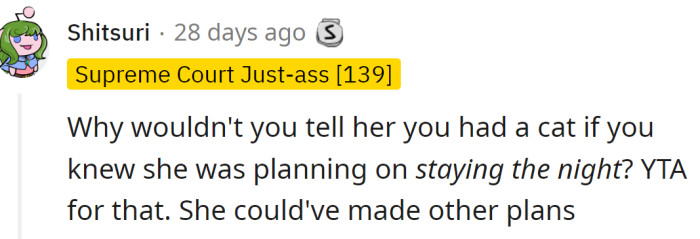
"I guess she should’ve told her"
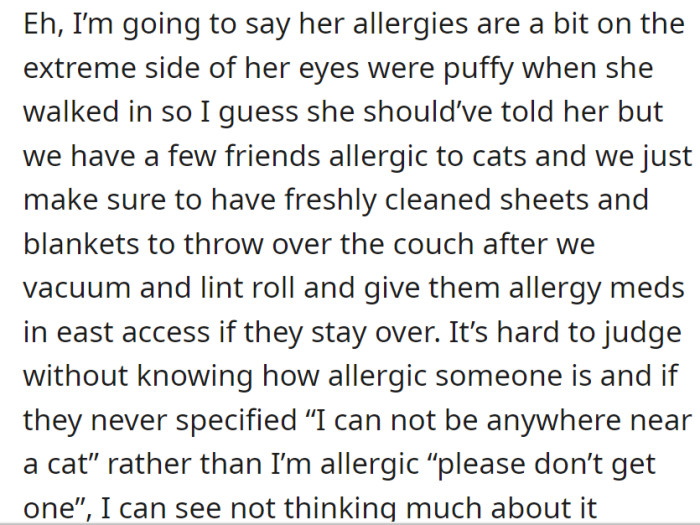
It sounds like a severe reaction to cats
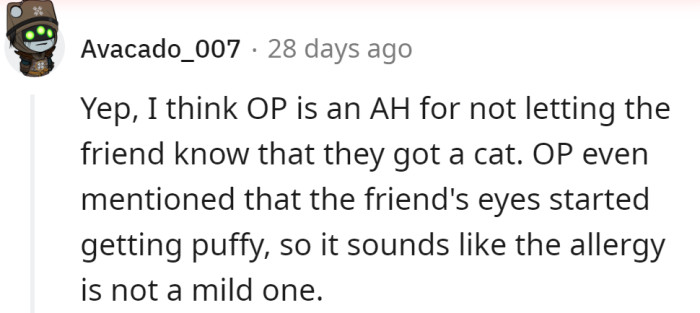
A Redditor asked the OP:
To mitigate conflicts, individuals can benefit from developing skills in emotional awareness and regulation.
Utilizing mindfulness practices can enhance one’s ability to stay calm and focused during difficult conversations, allowing for more effective communication.
Additionally, employing 'I' statements can help express feelings without assigning blame, promoting a healthier dialogue.
To resolve conflicts, it’s essential to engage in open conversations about feelings and expectations. Creating a safe space for dialogue can help both parties express their concerns without fear of judgment, promoting understanding and resolution.
Additionally, seeking mediation from a neutral third party can facilitate these discussions and enhance emotional safety.
To navigate this conflict, it may be helpful to create a mutually agreed-upon pet care plan.
This could include designated areas for the pet, cleaning responsibilities, and guidelines on how to manage allergens.
Establishing these parameters can help both parties feel respected and understood.
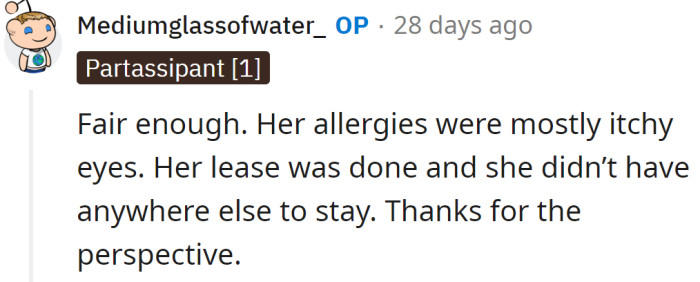
The OP explained her point of view:
"You knew if would be a problem, which is why you bought the allergy meds"
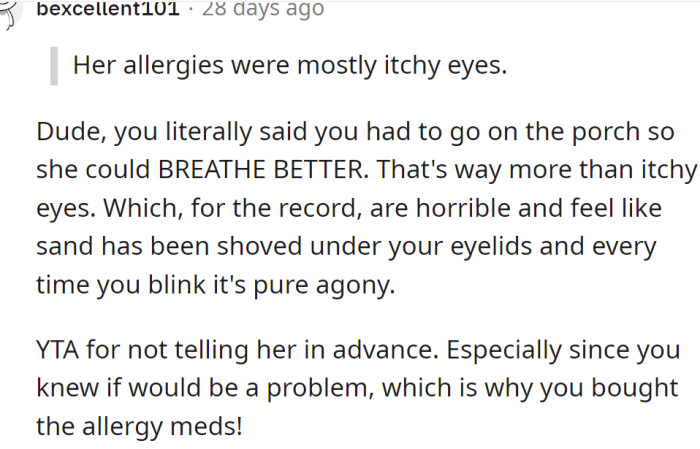
It's inconsiderate to keep such a secret when a friend is allergic
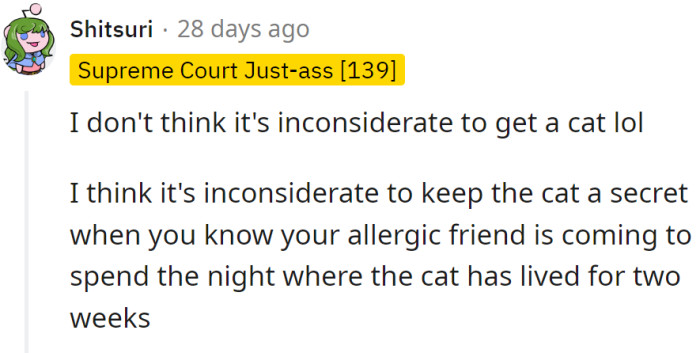
The OP ended up dealing with an overnight stay instead of two, which somehow made the whole “cat and belongings” argument even more personal.
Research in the Journal of Interpersonal Violence indicates that establishing boundaries can prevent conflict escalation and promote mutual respect.
In this case, it would be beneficial for both parties to discuss and agree upon boundaries regarding the cat's presence in shared spaces.
Being aware of emotional triggers can significantly improve conflict resolution. Psychological studies suggest that recognizing personal triggers and their origins can help individuals manage their responses more effectively.
By reflecting on past experiences, individuals can gain insights into their emotional reactions, allowing for healthier interactions with others.
Addressing Emotional Reactions
Emotional responses to pet ownership conflicts often stem from attachment styles developed in early childhood.
This internal response can complicate discussions around pet care, leading to misunderstandings and increased tensions.
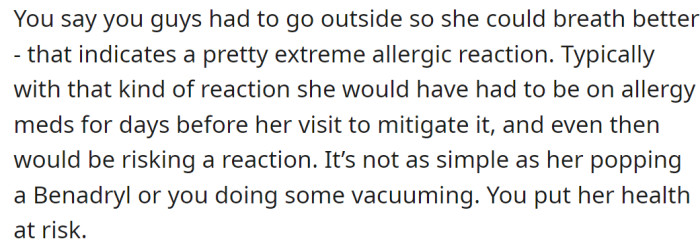
"You put her health at risk"
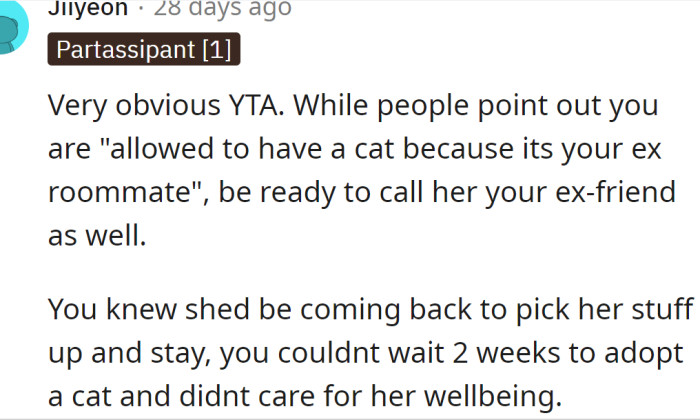
"Very obvious YTA"
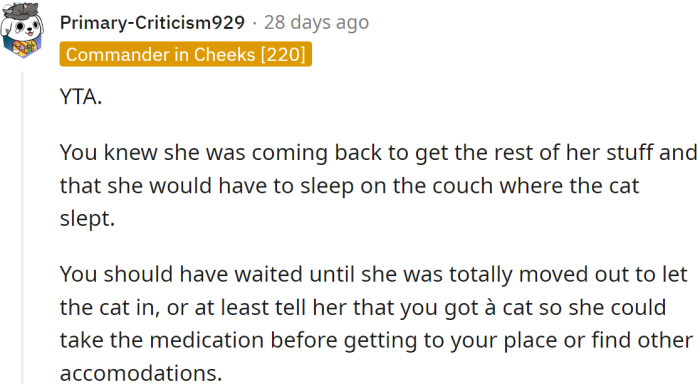
"You should have waited until she was totally moved out"
After that blowup, the silence between the OP and her former roommate says everything, because nobody wants to keep reliving that moment.
Furthermore, exploring compromise solutions can help both parties feel heard and respected.
Offering options such as keeping the cat in specific areas or ensuring regular cleaning can address the ex-roommate’s concerns while maintaining the cat's presence.
Ultimately, fostering an atmosphere of cooperation can lead to healthier interactions and prevent future conflicts.
Encouraging empathy in roommate situations can also foster better communication.
"If you want to salvage the friendship I would suggest an apology"
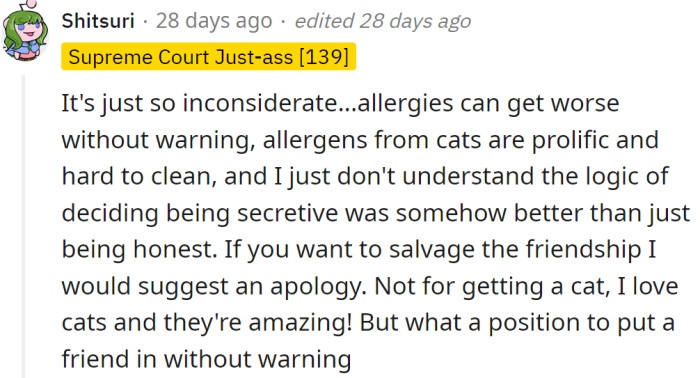
It's selfish

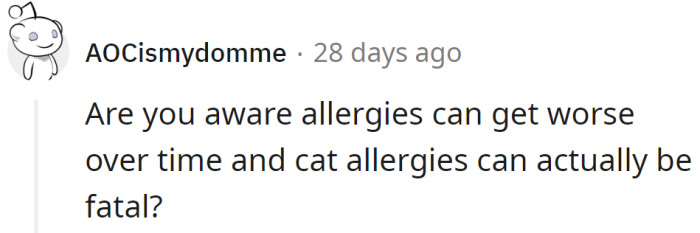
Cat allergies can be fatal
Building Respectful Relationships
Ultimately, fostering respect and understanding in roommate relationships requires effort from both parties.
Cat allergies prevent many people from enjoying the company of these pets. The OP's roommate's situation demonstrates how severe the allergy could be.
The OP has had the right to adopt a cat, but she should have told her roommate she had adopted one while she was away because her silence compromised her friend's health.
This situation highlights the intricate dynamics of pet ownership, especially in shared living spaces.
It’s essential for individuals to recognize that conflicts are a natural part of shared living.
The conflict between the Redditor and their ex-roommate highlights the complexities of shared living situations, especially when personal health issues like allergies are involved. The emotional fallout from adopting a cat after the roommate's departure raises questions about respect for boundaries and consideration for others' wellbeing. This incident underscores the necessity of open communication in shared spaces, as the ex-roommate's anger suggests a lack of dialogue regarding the implications of bringing a pet into the home. Furthermore, the situation illustrates how empathy is crucial in navigating such conflicts, as the ex-roommate’s feelings about their belongings being contaminated reveal a deeper struggle with their allergies and personal space. Ultimately, this scenario serves as a reminder that mutual understanding and collaboration are vital to maintaining harmonious relationships, even after roommates part ways.
This story highlights the complexities of health-related conflicts and the emotional weight they carry. The Redditor's decision to adopt a cat, while seemingly benign, ignited a fierce backlash from an ex-roommate who was left feeling betrayed. The ex-roommate's reaction reveals how unresolved feelings can lead to confrontations that escalate beyond the original issue. Navigating such conflicts demands not only emotional awareness but also a commitment to respectful dialogue, ensuring that all parties feel heard and valued. Ultimately, this incident serves as a reminder of the importance of empathy in maintaining healthy relationships.
The OP didn’t just adopt a cat, she adopted a feud.
Want the same allergy-fueled blowup? See how a lady got roasted for bringing a stray cat home.
Share this article: