Furious Mom Reprimands Redditor Because Their Cats Constantly Steal Her Food

Cats can turn a quiet kitchen into a full-blown crime scene in seconds, and this Reddit story is a perfect example.
One cat owner said their pets keep jumping on the counter and stealing food, which became a bigger issue when the Redditor's mom was making a sandwich and one kitten snatched her ham. She reacted fast, got angry, and told the Redditor the cats should be fed more so they would stop going after every bite in sight.
Now the family is arguing over whether the cats are just being cats, or whether someone needs to take responsibility. Here's the full story.
Here's the OP's concern:

The OP's cats adore stealing food from the kitchen...
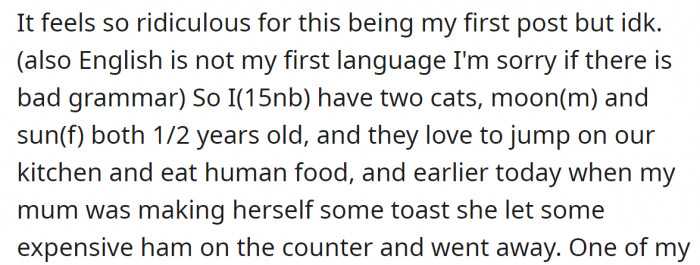
But this time, OP's mom got furious and said some things:
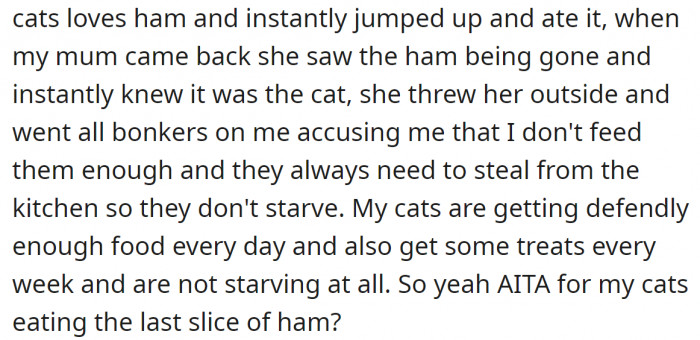
The issue of cats stealing food can be more than just a behavioral nuisance; it often reflects deeper dynamics of ownership and responsibility. This can lead to situations where they engage in food theft, not out of malice, but rather as a manifestation of their exploratory nature.
Pets often become integral members of our families, which can lead to complex emotional dynamics when they misbehave. When pets act out, such as stealing food, it can trigger feelings of embarrassment or frustration in owners, who may perceive this as a reflection of their own capabilities as caregivers.
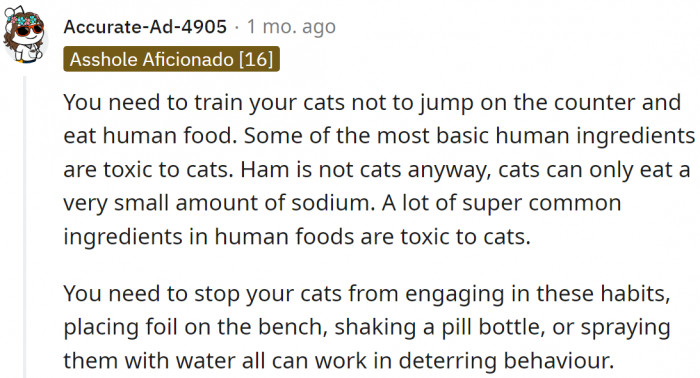
One Redditor advised him to train his cats...
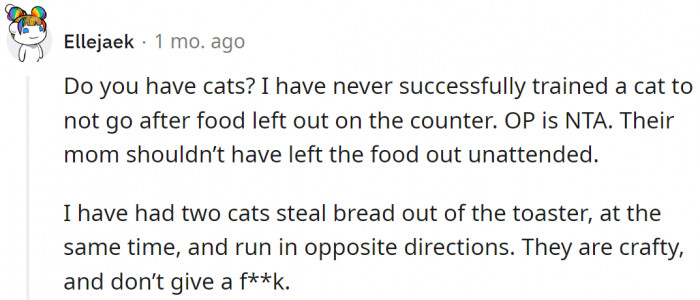
While another one said that it would be an impossible mission:
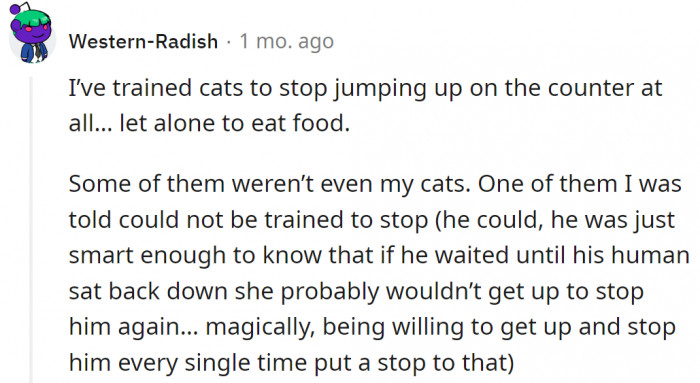
Here's the confirmation that cats can be trained, but they are also incredibly clever and stubborn:
Moreover, pet ownership comes with a set of responsibilities that can sometimes clash with the needs and habits of the pets themselves. This includes recognizing that cats, like all animals, have specific needs that must be met to minimize unwanted behaviors.
Moreover, the emotional investment in pets can lead to defensive reactions from owners when faced with criticism. Research from the University of Michigan suggests that pet owners often anthropomorphize their animals, attributing human-like intentions to their actions.
This can exacerbate feelings of guilt or inadequacy when pets misbehave, as owners may feel they have failed in their responsibilities.
Professional experience:
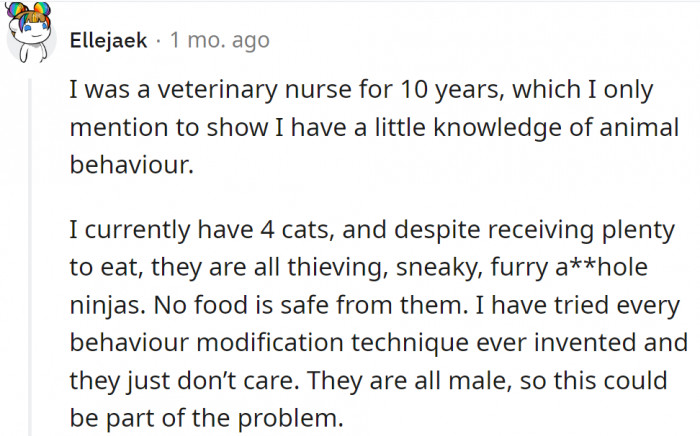
The OP is not, but the cat definitely is.
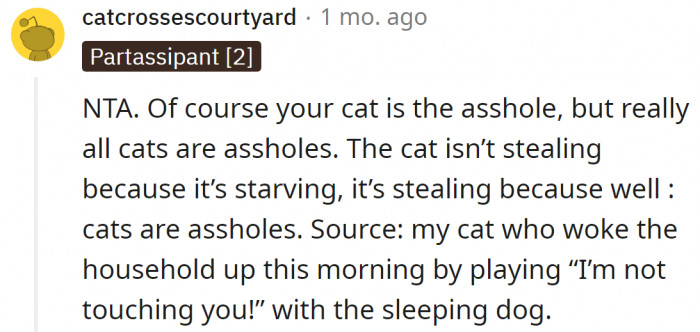
Maybe they are siblings?

The emotional responses from pet owners can vary widely when their pets engage in undesirable behaviors.
The emotional bond between pet owners and their furry companions significantly influences how they interpret their pets' antics, such as the relentless food thievery demonstrated by the cats in this situation. When a cat snatches food from the table, it is not merely an act of mischief but a reflection of the complex relationship the owner has with their pet.
This connection can lead to heightened reactions from the owner, who may see their pet's behavior as a direct commentary on their own abilities as a caregiver. In this instance, the frustration expressed by the mother is rooted in her perception of the cats' actions as not just playful but as a failure on her part to train them properly. Such dynamics highlight the emotional complexities involved in pet ownership, where misbehavior can feel like a personal affront rather than a simple act of feline instinct.
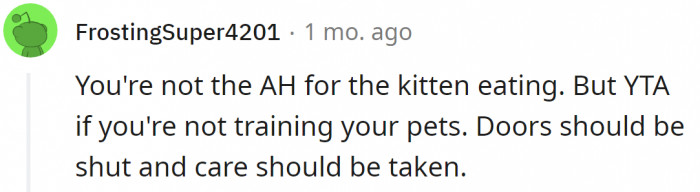
"Care should be taken"
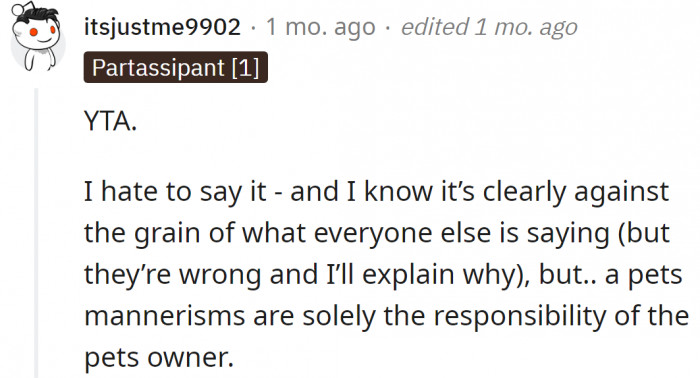
"A pet's mannerisms are solely the responsibility of the pet's owner."
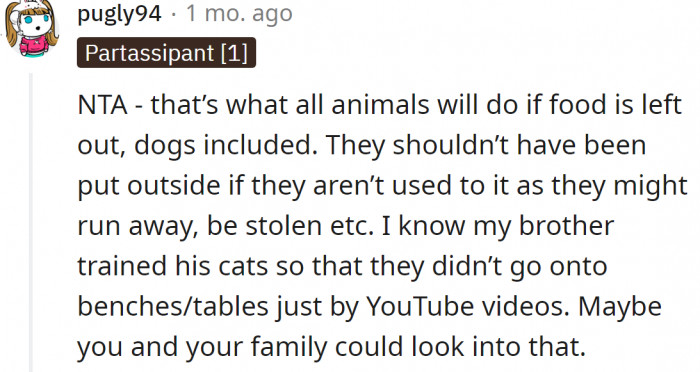
All animals steal food; it's nothing new...
For instance, providing adequate stimulation and enrichment can divert a cat’s attention away from stealing food.
To address these feelings, it can be helpful for pet owners to engage in reflective practices. Keeping a journal about their experiences with their pets can provide insights into the emotional triggers that arise during challenging moments.
Additionally, seeking support from pet-owner communities can help normalize these experiences and offer practical strategies for managing pet behavior. Research indicates that social support can significantly mitigate feelings of isolation and inadequacy.
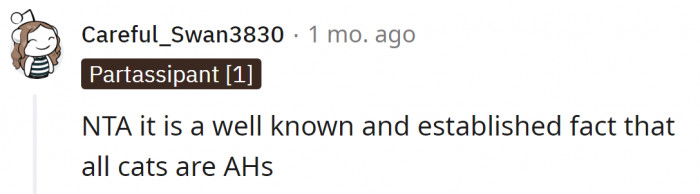
Cats are assholes.
"Feral cats and free-fed house cats consume several small meals in a day. The frequency and size of meals vary between individuals.
They select food based on its temperature, smell, and texture; they dislike chilled foods and respond most strongly to moist foods rich in amino acids, which are similar to meat. Cats reject novel flavors (a response termed neophobia) and learn quickly to avoid foods that have tasted unpleasant in the past." Wikipedia
In the end, the OP thanked everyone for their advice and tips:
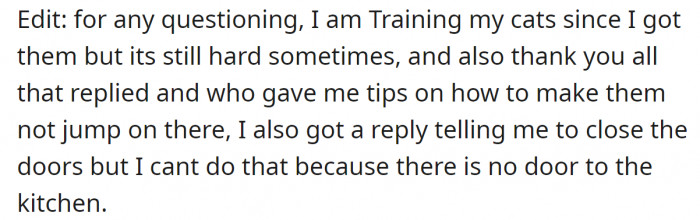
Most replies and tips were about how to train his cats. But some said that some cats will always be assholes and will never stop stealing food and doing what they want to do, and that training won't work anyway.
But still, OP's cats are his responsibility, and he has to try to teach them to distinguish wrong behavior from good. In the meantime, care should be taken :)
When dealing with behavioral issues in pets, it's essential to implement consistent training strategies.
The situation presented in the article highlights the emotional rollercoaster that comes with sharing a home with pets, particularly when their antics cross into the realm of frustration. The mother’s response to the cats stealing her food is not just about the food itself but reflects a deeper emotional investment in her space and belongings. Recognizing these emotional complexities can help us understand why some pet behaviors, like food theft, can trigger such strong reactions.
Improving the dynamics in such households may require a combination of patience and strategic training. By creating a more supportive environment, one where boundaries are clearly established and respected, not only can the cats learn more appropriate behaviors, but the overall emotional climate of the home can also improve, leading to a more harmonious coexistence.
To manage food theft and other undesired behaviors, owners should consider implementing structured feeding routines and behavior modification techniques. Positive reinforcement training can encourage desirable behaviors while discouraging theft. Additionally, consulting with a veterinarian or animal behaviorist can provide tailored strategies to address specific issues.
The situation between the furious mom and the Redditor highlights the complexities of living with cats, whose antics can sometimes lead to frustration. While cats are indeed spontaneous creatures, their food-stealing behavior suggests a need for understanding their motivations. Instead of viewing this as merely a nuisance, pet owners can benefit from exploring how to manage these behaviors with empathy and practical solutions. A successful pet-owner dynamic requires not only affection but also a thoughtful approach to navigating the quirks that come with feline companionship. By recognizing these patterns, owners can foster a more peaceful coexistence, even amidst the chaos that cats often bring into our lives.
For more kitchen etiquette chaos, read how a boyfriend criticized a Redditor’s cats eating from plates.
Share this article: