Frustrated Dad Returns His Daughter's Emotional Support Dog Because She Was Using Her Depression As An Excuse For Neglecting Him

A teenager wanted an emotional support dog, and her dad thought it would help, until the responsibility started slipping through the cracks.
In this Reddit story, a 47-year-old father says his 17-year-old daughter was dealing with depression and anxiety, then asked for a dog to help her cope.
Now the family is split over whether he did the right thing by sending the dog back, and the comments are not exactly gentle.
OP Finally Agreed but Made Sure She Was Getting a Low-Maintenance Dog

The Dog Immediately Bonded with OP's Daughter and His Wife but Didn't Warm Up to Him
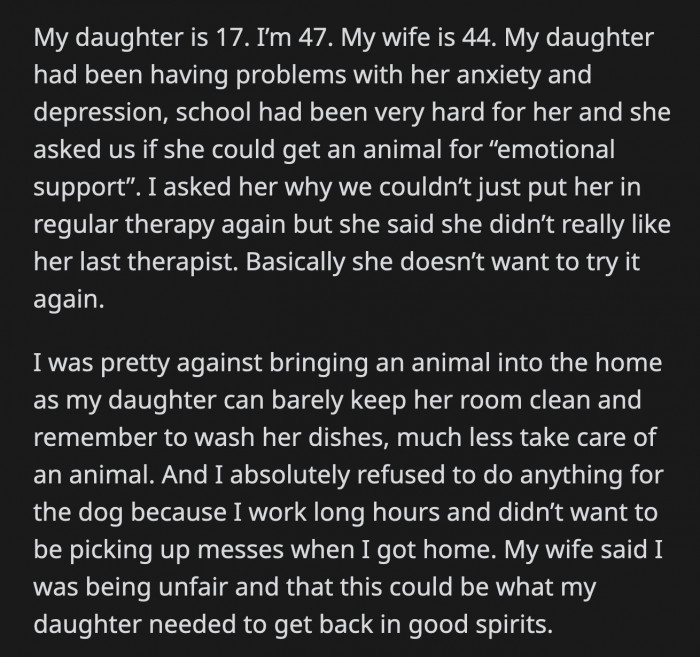
Eventually, He Started Getting Out of His Leash During Walks and Destroying Items at Home. His Daughter Also Neglected Taking Him Out, So OP Came Home to Poop and Pee Staining Their New Carpet.

Emotional support animals can be a big comfort for people dealing with mental health struggles.
But in this house, the dog quickly became part of a much bigger problem.
OP warned his daughter twice that if she kept neglecting the dog, he would take him back to the shelter.
OP Warned His Daughter Twice That If She Continued to Neglect Her Dog, He Would Take Him Back to the Shelter
She broke her promise to do better, and OP grew tired of coming home to a soiled house. He brought the dog back to the shelter when his daughter was out of the house.
She was upset when she got home and didn't see the dog. She told OP that he had brought her severe depression back, and they haven't spoken since.
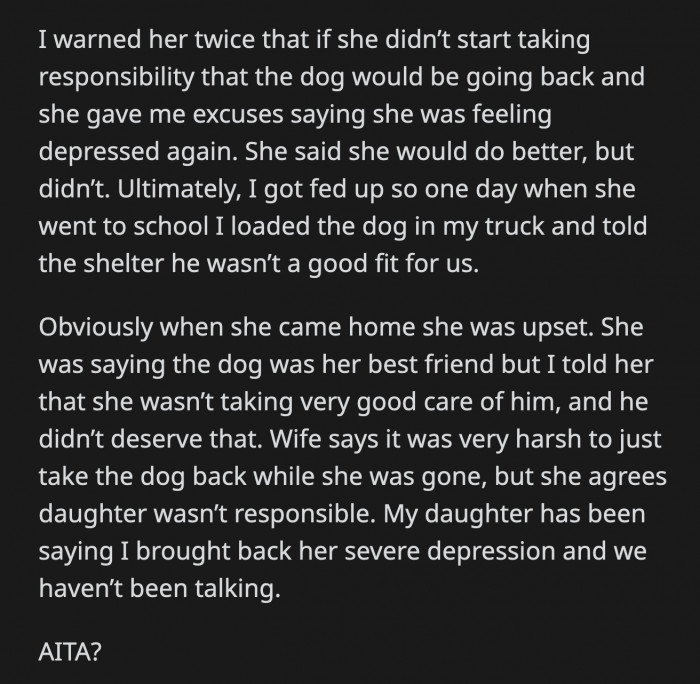
Many Comments Pointed Out That Everyone in the Story Failed the Dog. They Asked OP Why He Agreed to Get the Dog in the First Place.
OP's Wife Assured Him This Was What Their Daughter Needed, and His Daughter Promised to Be Responsible for the Dog She Wanted

The family thought the dog would be a fresh start, but that did not last long.
The father's decision to return the emotional support dog underscores a common struggle faced by individuals with mental health challenges.
Studies show that the pressure to care for a pet can sometimes exacerbate feelings of inadequacy, particularly in those who are already feeling overwhelmed.
Effective coping strategies and professional support are crucial for individuals in this situation to navigate their feelings of guilt and stress.
This is similar to the dad who declined to foster the dog while his daughter and ex-wife moved out, then she got distant.
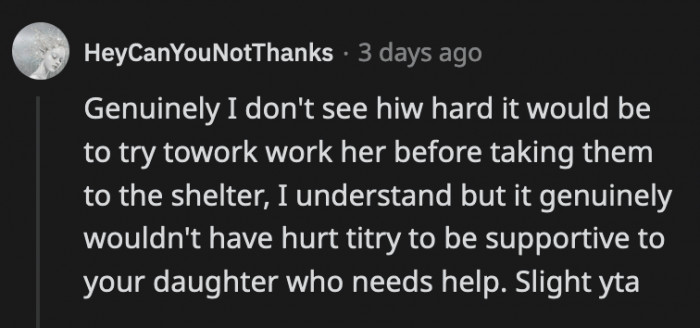
Would One Conversation About Responsibility Change His Daughter's Treatment of the Dog? We Will Never Know, but This Commenter Said It Wouldn't Have Hurt.
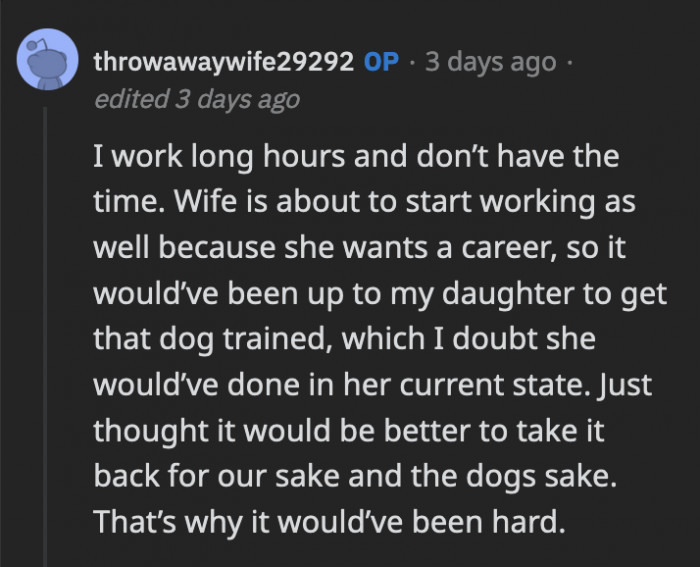
OP Replied That His Daughter Knew the Full Care and Training of the Animal Would Have Fallen to Her Because She Knew How Long OP's Work Hours Are, Plus His Wife Is Also Going Back to Work
Returning the Dog Was Definitely the Right Move. He Wasn't Getting the Time and Attention He Deserved, Hence the Destruction of Items. If OP's Daughter Craves Interaction with Animals, She Can Try Volunteering at the Shelter.
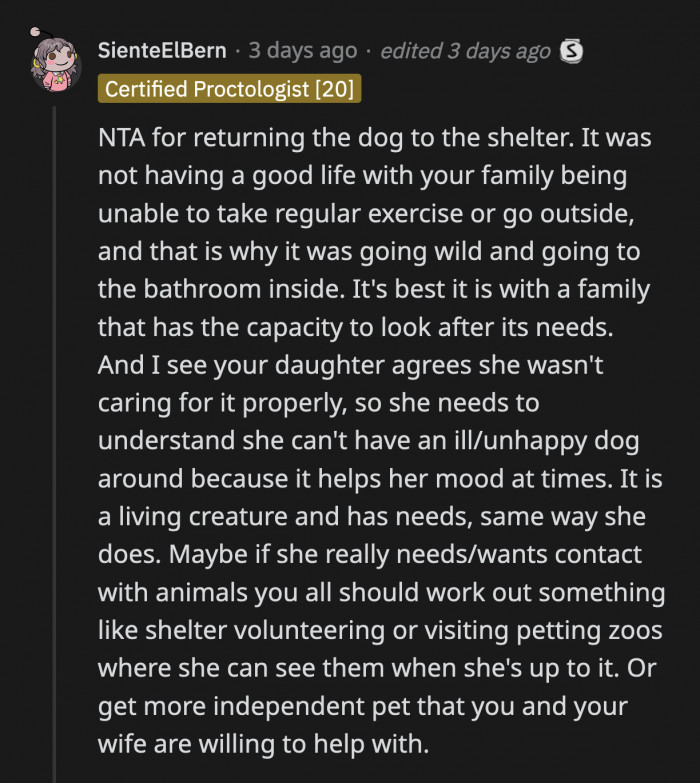
The dog was not getting the care he needed, and that became impossible to ignore.
Therapeutic support can be vital in helping individuals develop the coping skills necessary to manage their mental health challenges.
This therapeutic approach can empower individuals to develop healthier perspectives on their responsibilities and emotional well-being.
However, He Essentially Blindsided Her and Took Away Her Chance to Say Goodbye to the Dog When He Returned It Without Her Knowledge
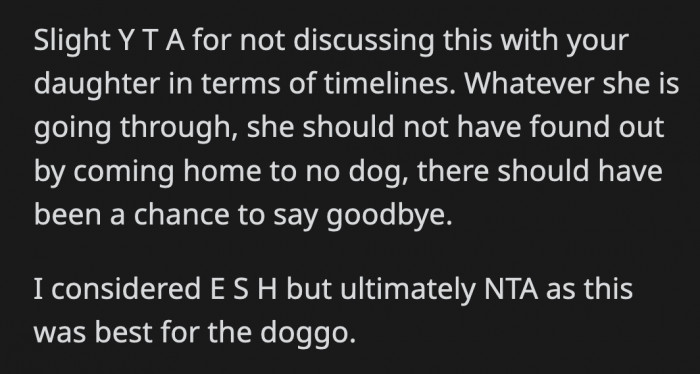
One Thing OP Has to Focus On Is Encouraging His Daughter to Go Back to Therapy. The Dog May Have Helped Her Feel Better for a While, but It Wasn't the Solution to Her Depression and Anxiety.
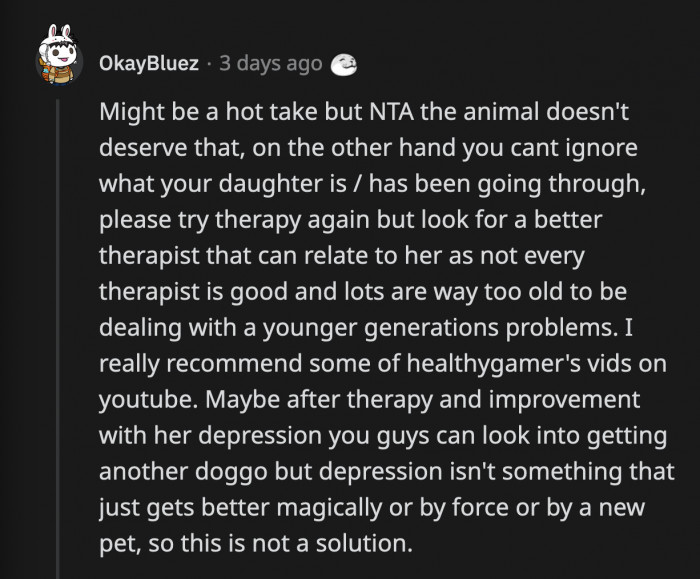
She Is Not Completely Blameless Because She Is Old Enough to Know That the Dog She Claimed Was Her Best Friend and Emotional Support Animal Depended on Her for Its Every Need

Encouraging individuals to seek professional help can be a crucial step in navigating the complexities of emotional support and pet ownership.
Therapists can help clients create realistic expectations regarding pet care, balancing their mental health needs with their responsibilities to their animals.
Support groups can also provide valuable insights and shared experiences, helping individuals feel less isolated in their struggles.
It Couldn't Have Been a Nice Experience for a Dog Living in a House Where He Wasn't Cherished
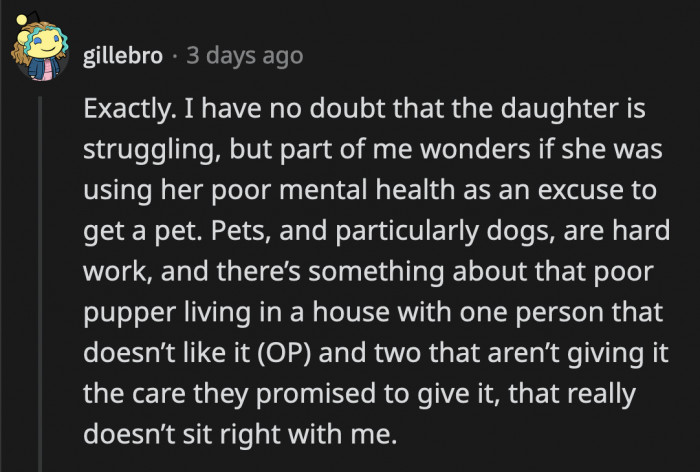
We Can't Deny That OP Handled Things the Wrong Way. He Did Warn His Daughter What Would Happen If She Kept Neglecting Her Dog, but He Shouldn't Have Returned the Dog Without Telling Her.
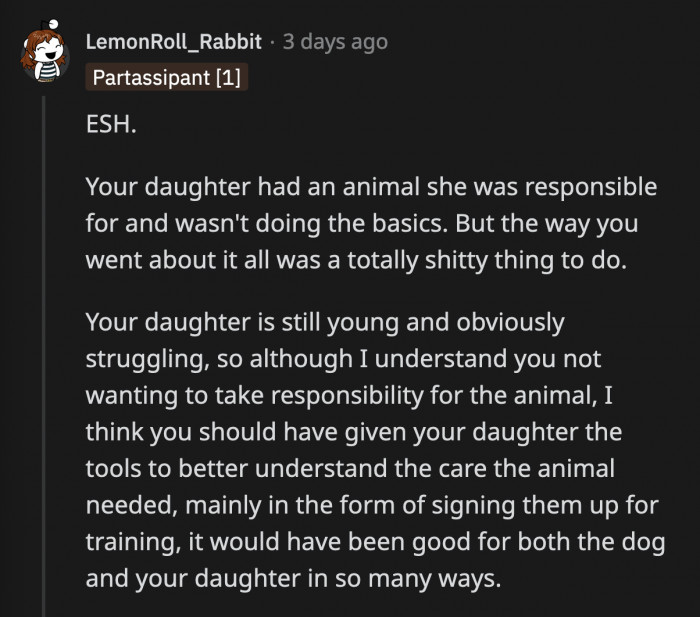
It Appears That No One in Their Family Really Discussed What Goes Into Taking Care of a Dog or Even What They Should Be Doing Collectively Once the Dog Was at Home
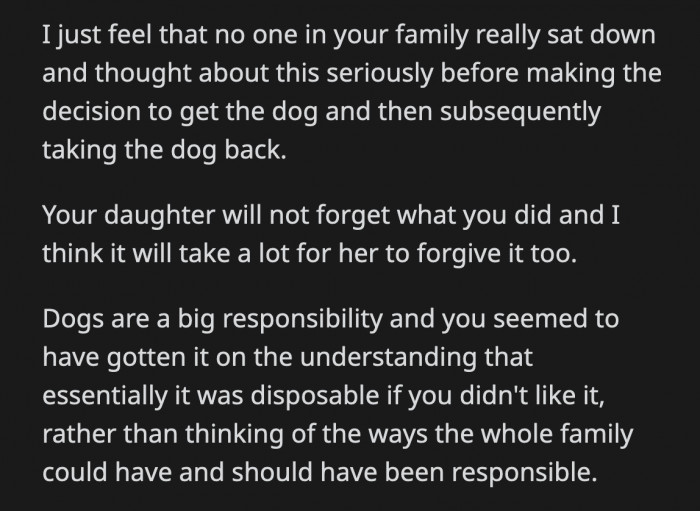
Your mental health does not give you a pass to be a bad person. OP's daughter was wrong to say that she neglected to take care of her dog because she was depressed, a dog is a living being and deserves more than half-hearted attention.
But this isn't really their biggest problem. OP and his wife have to ensure their daughter gets the help she needs, and maybe when she gets better, the subject of fostering a dog can be brought to the table.
The situation described highlights the complex dynamics of emotional support animals in the context of mental health. While these animals can provide significant comfort and stability, they also come with responsibilities that cannot be overlooked. The father's frustrations reveal a deeper issue; his daughter may have seen the emotional support dog as a solution to her struggles, yet neglected the mutual care required in their relationship. This reflects a broader conversation about mental health awareness among teenagers, who, despite facing stigma, must learn to balance their needs with their responsibilities to others.
Before Milo’s golden-years dog drama, see how a father refused his daughter’s request.
Share this article: