Redditor Doesn't Want To Give In To Wife’s Demands About Rehoming The Dog

OP thought he was bringing home a new best friend, but the real plot twist is happening at home, not on the leash. His 1.5-year-old Labrador is the kind of sweet, everyday joy that makes you feel like your life is on the right track.
Then his wife drops the bomb: she never bonded with the dog, regrets getting her, and wants to rehome her so they can travel more. OP has tried different approaches to help their situation, but nothing has shifted her stance, and now they are stuck in a marriage tug-of-war where one person sees a family member and the other sees an inconvenience.
The worst part is that both sides feel justified, and that is how a simple “pet decision” turns into a full-on relationship crisis.
OP asks:

OP and his wife have a 1.5-year-old Labrador Retriever that OP loves, but his wife has never developed a bond with the dog and has expressed a desire to rehome her.
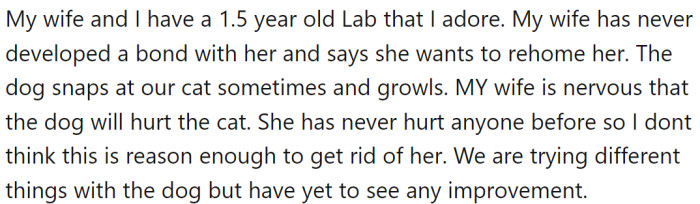
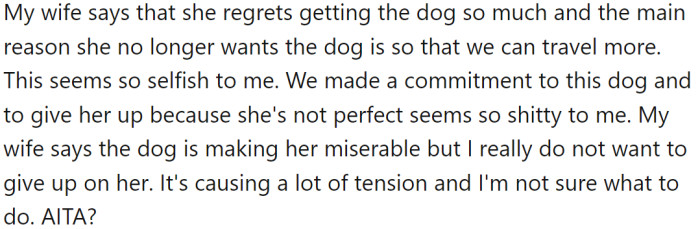
They have been trying different approaches to help the dog, but so far, they have not seen any improvement. OP's wife says that she regrets getting the dog and wants to rehome her so that they can travel more.
The dilemma faced by the Redditor and his wife regarding their Labrador Retriever goes beyond a simple disagreement about a pet. It highlights the complexities of pet ownership in a marriage, where emotional investments and differing levels of attachment can lead to significant conflict. The Redditor's deep bond with the dog contrasts sharply with his wife's lack of affection, illustrating how pet ownership is not merely a lifestyle choice but a profound commitment that requires mutual agreement and understanding.
As the article points out, the emotional weight of rehoming a pet can trigger feelings of guilt and inadequacy, making the decision process even more fraught. The need for both partners to be on the same page regarding their responsibilities towards the dog is crucial. Without this alignment, the potential for resentment and division will only grow, as seen in many such situations where one partner feels overwhelmed while the other remains attached. The story serves as a poignant reminder of the importance of open communication and compromise in maintaining harmony within a household that includes pets.
The Emotional Dynamics of Pet Ownership
Pet ownership can evoke strong emotions and attachments, leading to complex relational dynamics within families. Research published in the Journal of Veterinary Behavior indicates that pets often fulfill emotional needs, serving as sources of companionship and unconditional love.
However, when one partner expresses regret over bringing a pet into the home, it can lead to significant relational strain and conflict, as seen in this case.
The Emotional Bonds with Pets
The bond between humans and pets can be profound, often serving as a source of comfort and companionship. Research in the Journal of Veterinary Behavior indicates that pets can significantly enhance emotional well-being and overall quality of life. In this case, the reluctance to rehome a dog reflects the deep emotional attachments individuals can form with their pets.
Understanding the psychological significance of these bonds is crucial for navigating conflicts related to pet ownership.
OP is stuck watching his Labrador Retriever get treated like a problem instead of a partner in the house.
The Dynamics of Pet Ownership Decisions
Deciding to rehome a pet is a complex emotional decision that reflects deeper psychological principles of attachment and responsibility. Research from the Journal of Animal Ethics indicates that pet ownership involves a significant emotional investment, which can lead to distress when considering rehoming. Individuals often face guilt and anxiety over the decision, particularly if they feel they are letting down their pet.
Understanding these dynamics is vital for individuals navigating this difficult choice.
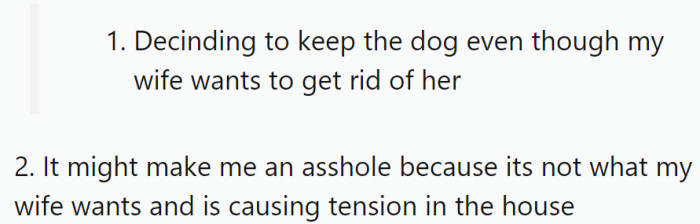
OP has offered the following explanation for why they think they might be the a-hole:
"Rock, meet hard place."
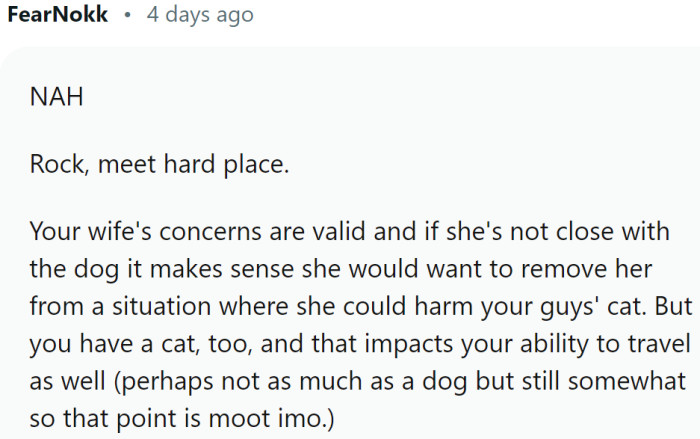
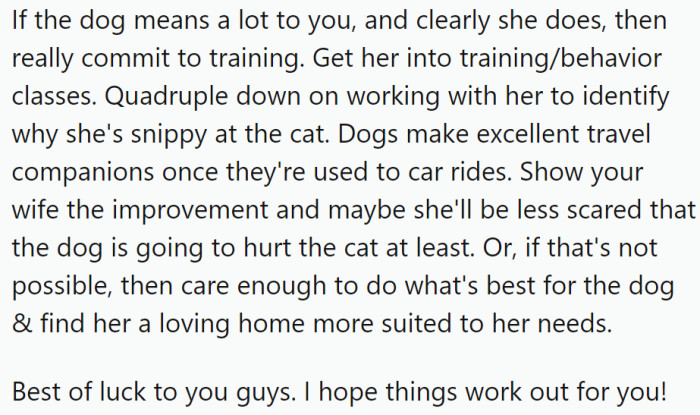
OP should get the dog into training/behavior classes.
This situation underscores the critical importance of open communication between partners, especially when it comes to expectations and responsibilities regarding pet care. The tension between OP and his wife reflects a common challenge in relationships where one partner, in this case, OP, feels a deep attachment to their dog, while the other struggles to accept the presence of a pet in the home. This disconnect can lead to feelings of overwhelm and a sense of being unsupported, as OP's wife may feel burdened by the responsibilities that come with having a dog.
Addressing these feelings through honest discussions is essential to prevent misunderstandings and create a healthier dynamic between them. The article highlights that employing effective communication strategies can enhance relationship satisfaction and mitigate feelings of resentment, pointing to the necessity for both partners to be heard and understood in their differing views on pet ownership.
This situation raises important questions about commitment and responsibility.
Deciding to rehome a pet can evoke feelings of guilt, shame, and anxiety for the owner.
Furthermore, the emotional implications of pet ownership can trigger feelings of inadequacy, especially for individuals who may feel they are not fulfilling their responsibilities.
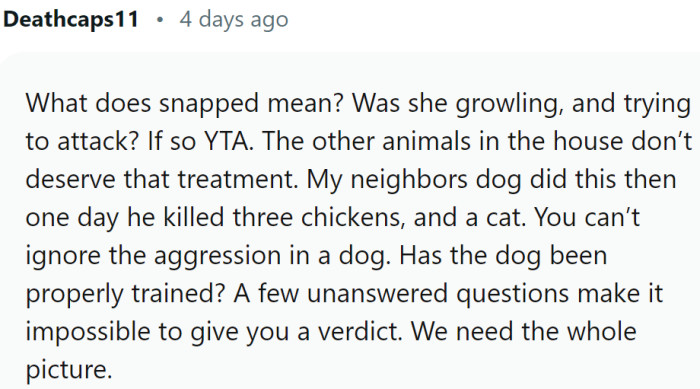
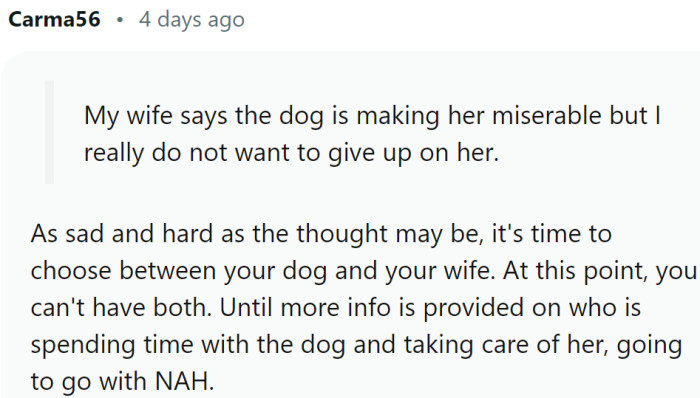
The dog shows some worrying behavior
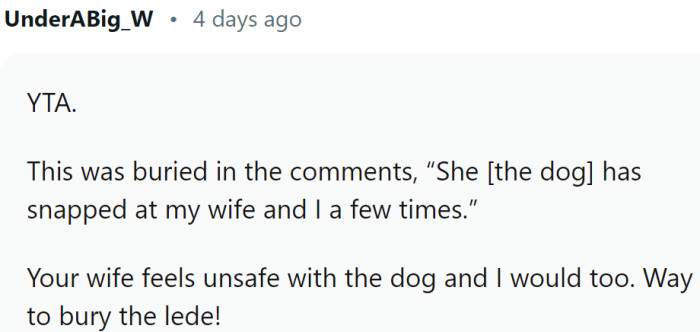
The wife feels unsafe, and it is not hard to understand why
OP has to make some tough decisions
Every time his wife brings up rehoming, OP hears “regret” instead of “compromise.”
This also echoes the wife who refuses to be around dogs after being chased as a kid, while her husband pressures her to let his mom’s untrained Rottweiler move in, see the fight over the mom’s rottweiler.
Exploring the Emotional Dynamics of Rehoming
Rehoming a pet can evoke complex emotions, including guilt, sadness, and relief. these emotions can be compounded by societal expectations surrounding pet ownership. Individuals may feel judged for their decision, leading to increased anxiety and stress.
Understanding these emotional dynamics is crucial for couples navigating the decision to rehome a pet.
Conflict Resolution Strategies for Couples
Addressing conflicts about pet ownership requires effective communication and conflict resolution strategies.
Effective communication is critical in navigating the complexities of pet ownership.
Effective communication is essential when navigating decisions about pet ownership.
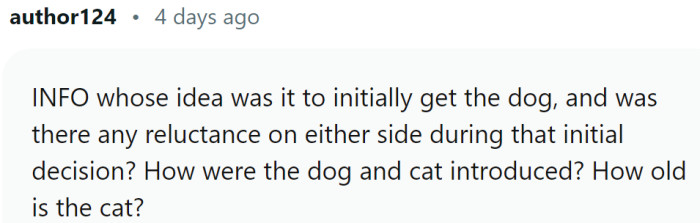
One Redditor asked:
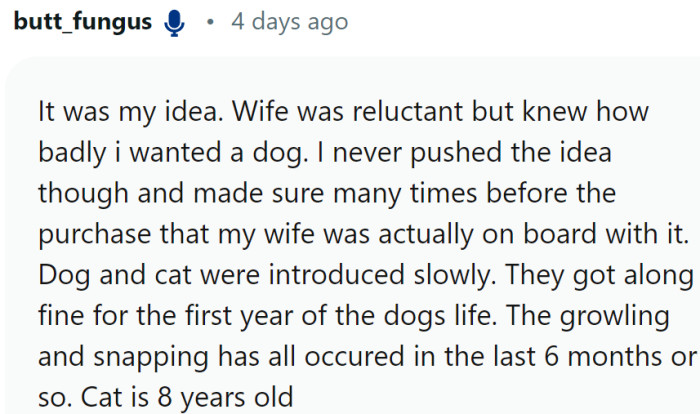
OP responded
There is a solution for one of the problems
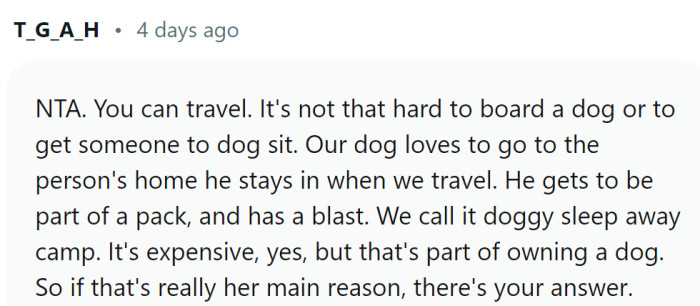
The travel talk makes it feel less like a pet issue and more like the dog is being priced out of their life.
To navigate the decision of rehoming effectively, couples should prioritize open discussions about their feelings regarding pet ownership.
Building Collaborative Decision-Making Skills
To navigate significant decisions like pet ownership, couples can benefit from developing collaborative decision-making skills. Techniques such as brainstorming potential solutions together and evaluating each other's viewpoints can create an inclusive atmosphere and promote shared responsibility.
Research indicates that when both partners feel heard and valued in decision-making processes, they are more likely to reach agreements that enhance relationship satisfaction.
To enhance communication skills, couples can engage in activities that promote active listening and empathy.
Additionally, discussing the implications of pet ownership can help clarify expectations.
This is a pretty good analysis:
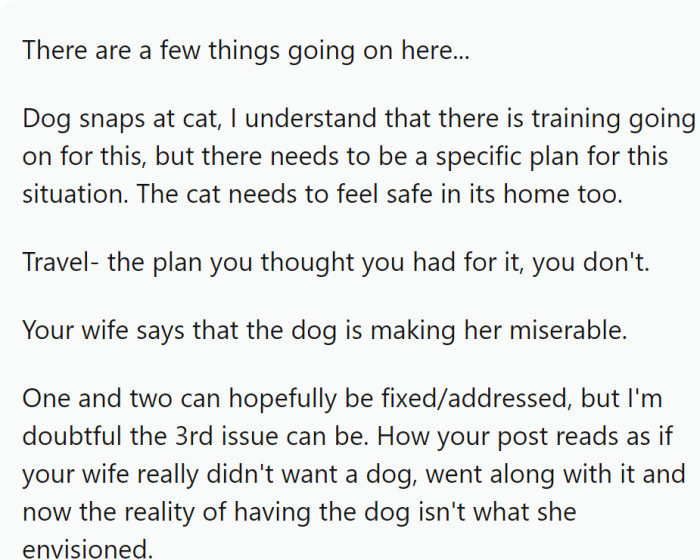
The bottom line is:
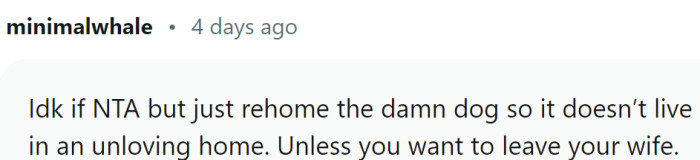
The situation faced by OP highlights the difficulties that can arise when two people in a relationship have differing opinions about a pet. Sometimes, people may allow a pet to enter their homes because their partners push them into it, hoping that they will eventually develop a love for the animal.
However, as the situation with OP's wife shows, this doesn't always happen, and it can lead to tension and conflict.
If one partner is not comfortable with a pet, it's important to have an open and honest conversation about it before bringing the animal into the home. By being honest and proactive, couples can avoid conflicts and ensure that their pets are well taken care of.
Now OP is wondering if the real fight is the dog, or the fact that his wife and him are living with totally different versions of the same household.
Setting Clear Boundaries and Responsibilities
Research indicates that individuals who set agreements about shared responsibilities tend to experience higher relationship satisfaction.
Furthermore, exploring the reasons behind the decision to rehome can also provide valuable insights. Understanding why one partner feels strongly about rehoming can help the other navigate their feelings about the situation.
Fostering a Collaborative Decision-Making Process
Encouraging a collaborative approach to decision-making about pets can enhance relationship dynamics.
The situation between OP and his wife highlights the challenges that often arise in pet ownership, particularly when both partners have differing feelings about the animal in their home. The wife's desire to rehome the Labrador Retriever stems from her discomfort, while OP's deep affection for the dog complicates their dynamic. This discord emphasizes the necessity for open and honest dialogue about each partner's feelings and responsibilities regarding the pet. By engaging in constructive discussions, they can address their differing perspectives and hopefully find a resolution that respects both the emotional bond OP has with the dog and the concerns raised by his wife.
The Emotional Impact of Rehoming Pets
Rehoming a pet can have emotional ramifications for both the owner and the pet.
Encouraging individuals to express their feelings surrounding pet ownership can lead to more constructive outcomes. Providing safe spaces for these conversations can help individuals feel supported and validated, ultimately fostering healthier relationships.
Moreover, promoting a culture of respect and understanding can reduce the prevalence of misunderstandings surrounding pet ownership and create a more harmonious community environment.
Strategies for Navigating Pet Ownership Conflicts
A study published in the Journal of Conflict Resolution found that when individuals articulate their expectations, it decreases the likelihood of conflict.
Encouraging open discussions about pet care responsibilities can also foster a sense of community and cooperation.
The emotional intricacies of pet ownership come to the forefront in the conflict between OP and his wife regarding their Labrador Retriever. Open communication is essential in addressing the differing feelings they have towards their dog. By fostering empathy and understanding, they may find common ground and navigate their differences, ultimately leading to a more harmonious household. This situation underscores the importance of respect for each other's perspectives in the realm of shared responsibilities, especially when it comes to beloved pets.
In the case of the Redditor struggling with his wife's demands to rehome their Labrador Retriever, it is evident that the emotional stakes are high. The love for the dog is at odds with the wife's discomfort, highlighting a common challenge in pet ownership where individual feelings can clash dramatically. The article underscores the importance of open dialogue in such disputes. When partners focus on understanding each other's perspectives, they are more likely to reach a resolution that acknowledges both the dog's needs and the wife's concerns. This situation serves as a reminder that healthy relationships often thrive on cooperation and empathy, especially when it comes to decisions that affect family dynamics.
The dilemma faced by the Redditor highlights the deep emotional ties that come with pet ownership, particularly when one partner feels disconnected from the animal. The article illustrates how the love for a Labrador Retriever contrasts sharply with the wife's discomfort. This disparity can create a significant rift in a relationship if not addressed properly.
Open communication is crucial in this scenario. The Redditor's attachment to the dog is palpable, yet his wife's hesitance suggests a lack of shared understanding. By fostering dialogue about the responsibilities and joys of pet ownership, they can work toward a resolution that honors both perspectives. Ultimately, how they handle this situation could either strengthen their relationship or lead to further discord.
If they cannot agree on what that Labrador means to them, the dog might not be the only one getting moved.
After this “bring the dog everywhere” job interview stunt, you will never look at overattached pet owners the same again, read the owner who brought his dog to job interviews.
Share this article: