Friend Tells Redditor She Can't Bring Her Service Dog To An Event Due To The Jealousy Of Other Guests Not Being Able To Bring Their Pets

A 28-year-old woman ran into a friend problem that sounds small, until you realize it’s about a service dog and whether people understand the difference between “help” and “just a pet.”
It started with an event her friend sets up, one of those familiar get-togethers everyone expects to show up for. OP tried to explain that her dog is trained to perform specific tasks, not to socialize like everyone else’s animals. She even told her friend, straight up, not to invite her if the rules are going to be “no service dog because other guests might feel jealous.”
But the friend still thought OP was wrong, and that’s when the dinner plans turned into a full-on Reddit drama spiral.
OP starts off her post by talking about this friend get-together that they have often, which her friend sets up for them.
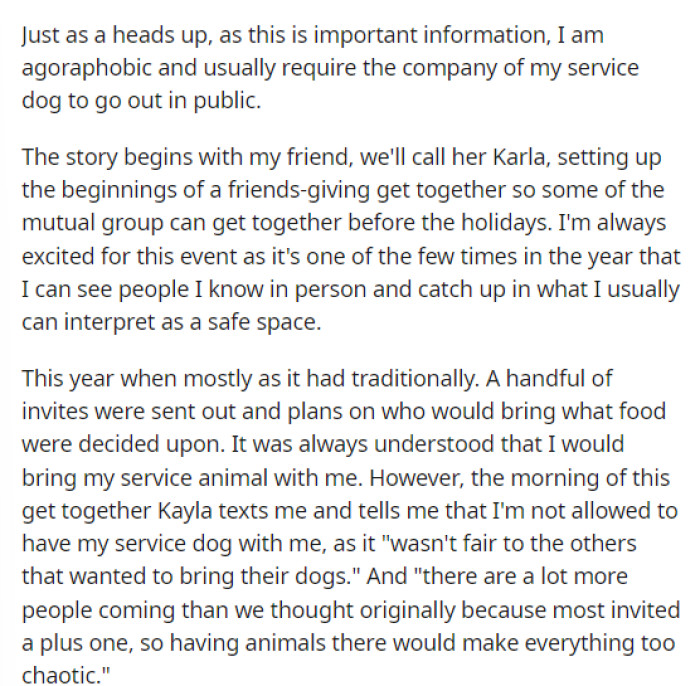
This is when OP tried telling her friend that this wasn't the same type of situation and that her dog is a service dog, not a pet.
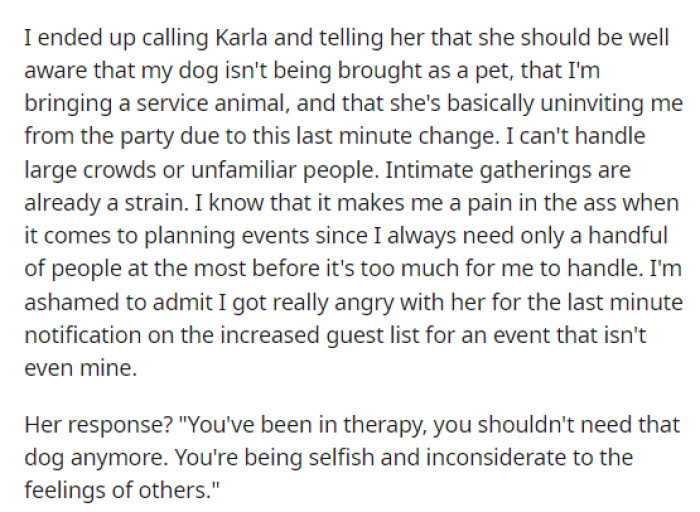
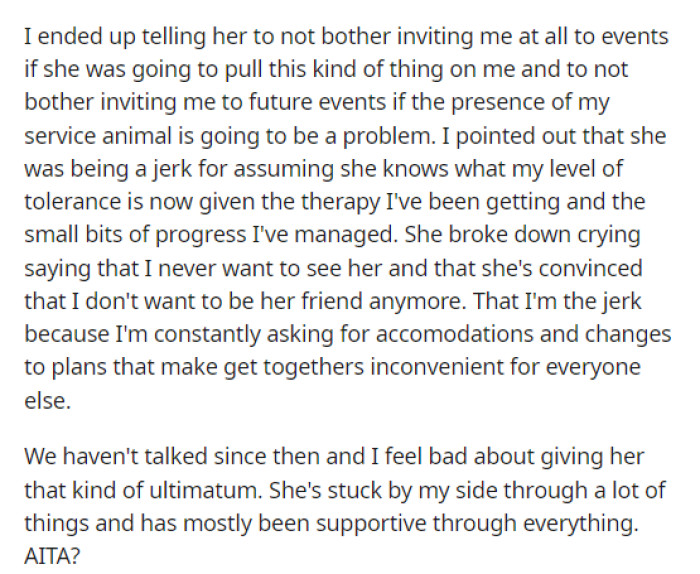
OP even told her not to invite her to events if this is how it is going to be, but her friend thinks she's wrong.
Understanding the difference between service animals and pets is essential, especially in light of the recent Reddit post discussing a friend's objection to bringing a service dog to an event due to the concerns of other guests. Service animals are not just companions; they fulfill critical emotional and practical roles for individuals with disabilities, often enabling them to navigate daily life with greater independence.
Studies indicate that people accompanied by service animals report enhanced quality of life and better mental health outcomes. This context is vital when considering the feelings of the Redditor, who faces a dilemma that highlights the ongoing challenges of societal acceptance and understanding of service animals versus pets. The emotional impact of being denied the support of a service animal at a social gathering cannot be overstated, underscoring the need for greater awareness and empathy in these situations.
The ongoing debate surrounding the presence of service animals versus pets at social events underscores a critical distinction that often gets lost in the shuffle of emotions. In the case presented in the Reddit thread, the friend's concern about jealousy from other guests reflects a common misunderstanding. Service animals are specially trained to aid individuals with disabilities, providing essential support that goes beyond the companionship offered by pets.
The implications of this distinction have been highlighted in various studies, including those from the Journal of Applied Animal Welfare Science. These findings suggest that recognizing the specific roles of service animals can foster greater acceptance in public spaces. The friend’s reluctance to allow a service dog at the event reveals a need for deeper awareness and sensitivity regarding the rights and needs of individuals who rely on these animals. Promoting understanding in such situations is vital for inclusive and compassionate social interactions.
OP’s friend kept insisting her get-together was “the same as any other event,” even after OP explained her dog is doing real work.
Service animals play a vital role in supporting individuals with disabilities, offering assistance that is essential for daily functioning. This distinction is crucial, as it informs the legal rights and responsibilities surrounding service animals in public spaces.
Understanding the significance of service animals can help mitigate misunderstandings and promote empathy among community members.
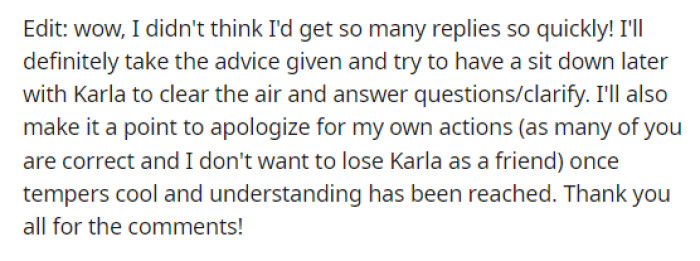
At the end, she gives us an edit to thank everyone and tell us what her plan of action is after this whole situation and post.
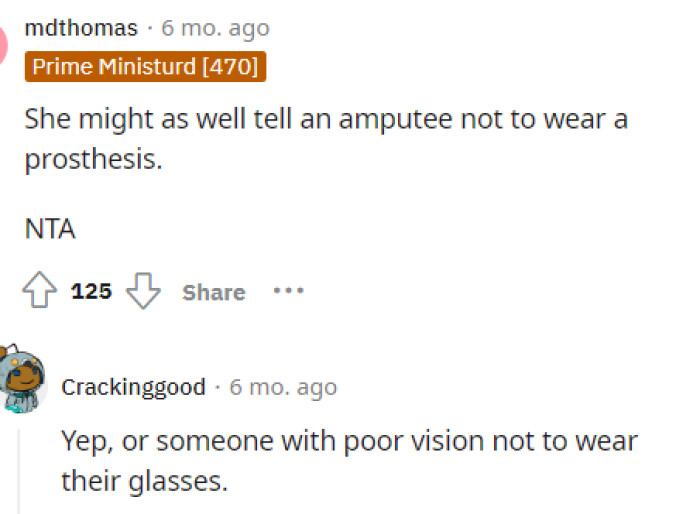
The people in the comments were not okay with what OP's friend did, and they made that very clear in the comments by comparing it to other situations.
Then people had a few questions to clear the air about what was going on, and OP responded to a few, but some went unanswered.

When faced with societal misconceptions about service animals, individuals may experience frustration and anxiety. These reactions are normal responses to misunderstandings that can impede access to necessary support.
Studies show that experiencing stigma can lead to increased stress and social withdrawal, emphasizing the need for education and awareness surrounding service animals.
This scenario touches on the concept of social justice, where individuals with disabilities often face challenges in accessing public spaces with their service animals. Misconceptions about service animals can lead to discrimination and barriers to access.
Raising awareness about the rights of individuals with service animals is essential for fostering inclusivity in community settings.
That’s when OP dropped the hard boundary, telling her friend not to invite her anymore if she’s going to treat a service animal like a pet.
Moreover, studies show that the presence of a service animal can significantly reduce anxiety levels in individuals with PTSD and other mental health conditions. Research published in the Journal of Psychiatric Research indicates that interactions with service animals can produce calming effects, thereby enhancing the individual's ability to navigate social situations. This underscores the importance of accommodating service animals in various settings.
Recognizing the therapeutic benefits of service animals can foster a more inclusive environment for all individuals.
People did give her advice on how to handle the situation, and we think that they had some good advice.

This person even told OP that she should invite her friend to therapy because it sounds like they need it as well.

The biggest problem was her friend's response to the whole situation. Ultimately, she just sounded like a bad friend.

Promoting Inclusivity for Service Animals
To promote inclusivity and understanding of service animals, educational initiatives are essential.
It’s the same kind of messy conflict as the AITA story where someone refused to leave their cat for a friends’ party due to allergies.
Education plays a vital role in bridging the gap between those who understand the significance of service animals and those who do not. Public education campaigns can significantly reduce stigma and promote understanding of service animal roles.
Encouraging community programs that educate the public about service animals can foster a more inclusive environment for individuals with disabilities.
The moment the friend brought up other guests being jealous, OP realized this wasn’t about logistics, it was about acceptance.
Promoting Awareness and Acceptance of Service Animals
Raising awareness about the differences between service animals and pets is crucial for fostering acceptance. Educational initiatives can help community members understand that service animals are not merely companions, but crucial support for those with disabilities. Many individuals mistakenly believe service animals can be treated like pets, which can lead to conflicts in public settings.
Creating educational campaigns can promote understanding and reduce stigma surrounding service animals.
Many people agreed with OP, saying that they too probably wouldn't attend if something like this happened to them.

People had a lot to say, but ultimately they said that OP was NTA and that she had a right to say what she said. Her friend seems to not be on the same page as her, and we agree that she was out of line regarding OP's service dog.
What do you think? What should OP do?
Additionally, encouraging dialogue about the rights of individuals with service animals can empower them to advocate for their needs. Individuals who understand their rights are more likely to assert them effectively. This can lead to a greater sense of agency and control, ultimately enhancing their quality of life and reducing feelings of isolation.
By fostering an informed community, we can create a more supportive environment for individuals who rely on service animals.
The controversy surrounding a friend’s refusal to allow a service dog at an event highlights the ongoing struggle for acceptance of service animals in social settings. In the Reddit thread, the user faces backlash not for the presence of the service dog but rather due to the jealousy of other guests who cannot bring their pets. This situation underscores the need for greater awareness around the unique role service animals play in supporting individuals with disabilities. By acknowledging the essential contributions these animals make to their owners, we can work towards dismantling the stigma and misunderstandings that often arise in such scenarios. Creating an inclusive environment where service dogs are welcomed is crucial for fostering compassion and support in our communities.
Furthermore, the concept of empathy is critical in navigating these discussions.
Now OP is stuck wondering if she’s the one being difficult, while her friend thinks she’s just being dramatic about her service dog.
Practical Strategies for Advocacy
To advocate for the rights of individuals with service animals, community members can engage in awareness campaigns and support local initiatives. Grassroots movements have a positive impact in promoting social change.
Encouraging individuals to participate in advocacy efforts can empower them to contribute to a more inclusive community.
Additionally, fostering open dialogue about the importance of service animals can enhance understanding and acceptance.
Inclusion of service animals in public spaces is crucial for the well-being of individuals with disabilities. Access to public spaces with service animals significantly enhances the quality of life for individuals with disabilities.
Advocating for inclusive policies can create a more equitable society for all individuals, regardless of their needs.
Ultimately, fostering a culture of understanding and respect for service animals is vital. Promoting positive relationships between humans and service animals enhances quality of life.
By prioritizing understanding, communities can create environments that support the rights and needs of all individuals.
The situation presented highlights a crucial misunderstanding regarding service animals and pets, which is vital for fostering inclusive environments at public events. The refusal to allow a service dog due to concerns about other guests feeling left out underscores a growing tension between personal feelings and the rights of those who rely on service animals for assistance. This case calls for a broader awareness and respect for the needs of individuals with disabilities, emphasizing that healthy communities are built on understanding and accommodating diverse needs.
By addressing these misunderstandings, communities can create a more supportive atmosphere for everyone, ensuring that individuals with service animals can fully participate without facing unnecessary barriers.
Engaging in dialogues about the importance of service animals can also help combat misconceptions. Community education can enhance understanding and acceptance of individuals with disabilities.
By encouraging open discussions about the roles of service animals, individuals can contribute to a more inclusive society.
The situation presented in this Reddit post underscores the importance of recognizing the unique role that service animals play in the lives of their owners. The dilemma faced by the poster, who is unable to bring her service dog to an event due to the jealousy of other guests, reflects a broader societal challenge. It is crucial to acknowledge that service animals are not mere pets; they are vital companions that significantly enhance the well-being of individuals with disabilities.
By fostering understanding and education about the needs of service dog users, communities can better support inclusivity. When events prioritize the emotional and physical requirements of those with service animals, they not only respect the rights of individuals but also enrich the overall experience of every attendee, creating a more compassionate environment for all.
The family dinner did not end well, and OP is left questioning whether this friend group actually respects service dogs.
Share this article: