Woman Refuses to Give Back Cat to Friend After Taking Care of It for Five Months

A 28-year-old woman refused to give her former best friend back her cat, even though she’d been taking care of the animal for five straight months. And yes, it started with a cat that was supposed to be temporary, Ted, the kind of pet that quickly turns into family when you’re the one feeding him, soothing him, and living with his daily routine.
OP and her now former friend, Emma, were close through high school and college, so when Emma showed up with Ted and then suddenly moved out without telling anyone, it didn’t feel like a normal mistake. Emma later claimed she couldn’t take Ted because her dad was allergic, but when she finally contacted OP out of the blue to pick the cat up, OP refused, because by then OP and her fiancé were genuinely attached to Ted.
Here’s the full story.
OP Was Quite Close Throughout High School and College with Her Now Former Friend, Emma

Emma Brought Her Cat Ted with Her, but She Left Him Behind When She Decided to Move Out Without Telling Anyone
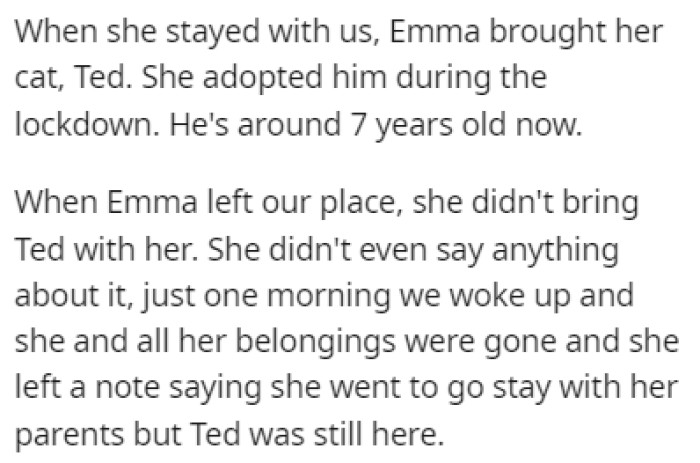
Emma Explained That She Couldn't Take the Cat with Her Because Her Dad Was Allergic
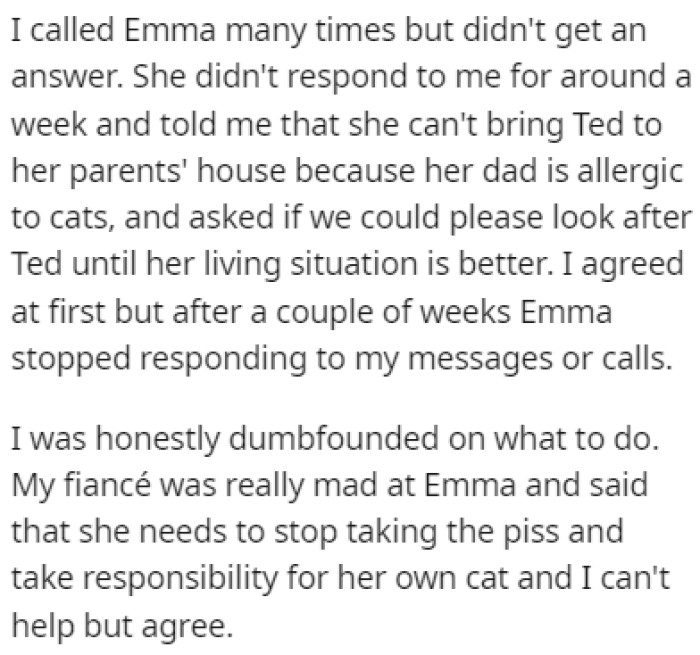
Emma walked out with Ted in the beginning, then disappeared when she moved out, leaving OP to deal with the fallout for months.
The situation surrounding the woman who refuses to return her friend's cat after five months of care illustrates the intricacies of emotional attachment and ownership in pet relationships. Pets often become secure attachments for their caregivers, offering companionship and comfort during challenging times.
In this case, the former friend’s abrupt disappearance and subsequent demand for the cat can evoke feelings of loss and betrayal for the caregiver. This scenario underscores the complicated emotional landscape that often accompanies pet ownership, revealing how deeply intertwined our lives can become with the animals we care for.
The Emotional Bond Between Pets and Owners
The bond between pets and their owners can be profound, often leading to feelings of attachment that are similar to familial connections.
Research in animal behavior and psychology indicates that pets provide emotional support and companionship, which can contribute to their owner's well-being.
When a pet is abandoned, as in this case, it can lead to significant emotional distress for the caretaker.
As Time Went On, OP and Her Fiancé Became Attached to Ted and They Saw Him as Their Cat
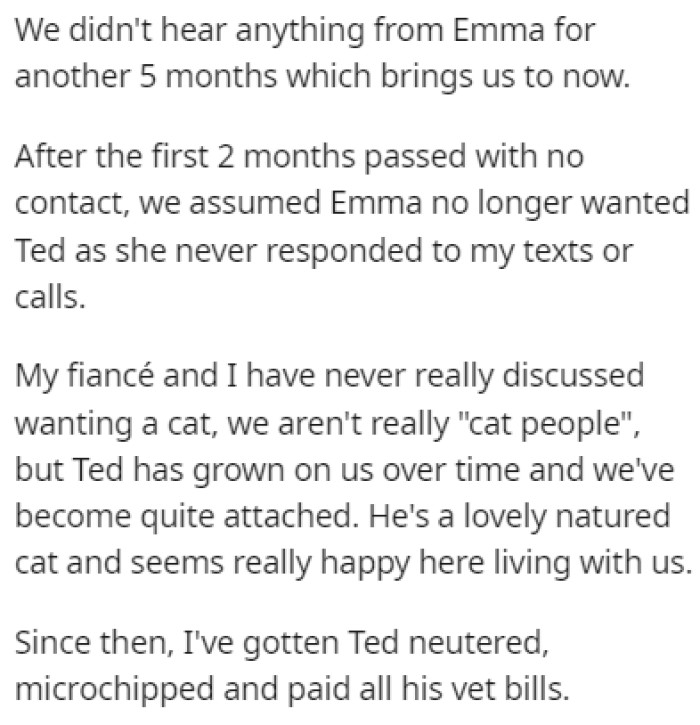
One Day, Emma Contacted OP Out of the Blue and Told Her That She's Coming to Pick Up the Cat
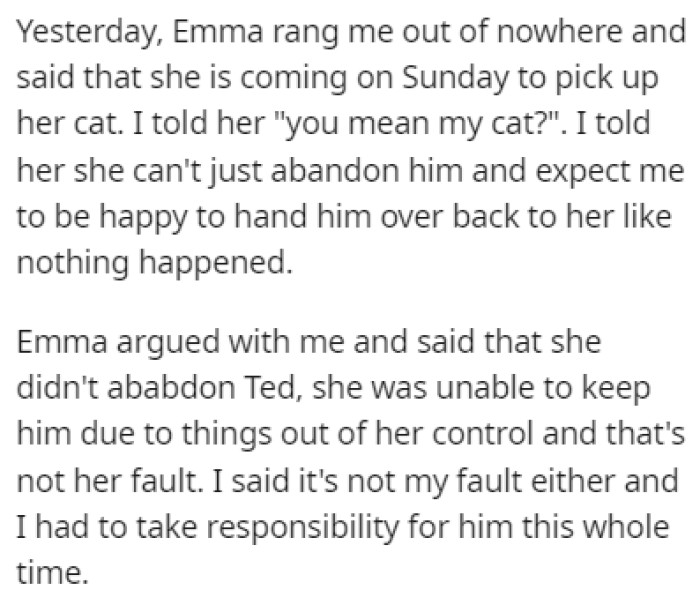
OP Refused to Give Her the Cat Because She Was Attached to Him
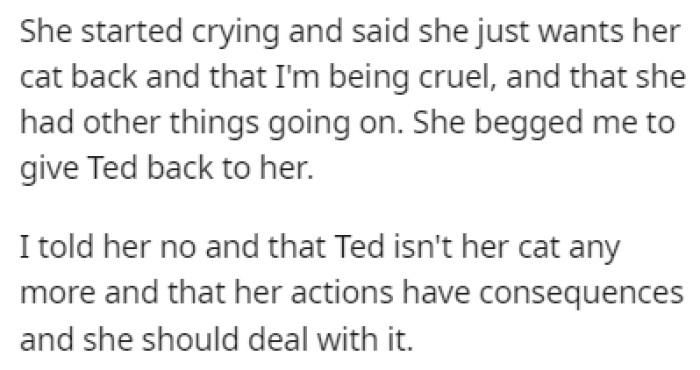
By the time OP’s fiancé and OP settled into life with Ted, the cat wasn’t “Emma’s problem” anymore, he was their routine.
Moreover, studies show that the emotional investment in pets can mirror human relationships, complicating the decision to return a pet.
When someone has nurtured an animal, they often form a strong bond that can feel akin to familial ties, making the request for the pet's return emotionally charged.
This can lead to conflict, as both parties may feel justified in their perspectives.
Understanding the psychological impact of pet ownership can help individuals navigate complex situations related to pet care.
When a friend attempts to reclaim a pet after leaving it, it can evoke feelings of betrayal and loss for the caretaker.
OP Is Now Left Wondering If She Was Too Harsh on Emma

Doesn't Seem Like She Was Worried About Ted at All

It's Clear How Little She Cared About Ted

When Emma popped back up to say she was coming to pick up the cat, OP’s attachment turned into a hard no.
Setting boundaries and expectations regarding pet ownership can prevent misunderstandings and foster mutual respect.
Conflicts around pet ownership often arise from differing expectations and emotional attachments.
We Love to Hear It!
Now it’s basically a standoff between Emma’s surprise demand and OP’s “you left him with us” argument, and Ted is the prize everyone thinks they deserve.
So, the question is: was OP in the wrong for keeping the cat? The people of Reddit believe that OP did nothing wrong, and if Emma cared so much about Ted, she would have done something sooner.
Emma committed to taking care of her cat, and when she was unable to do so, she should have taken steps to find him a new home, not just left him with OP and disappeared. OP did the responsible thing by taking care of Ted, and now she has every right to keep him.
For those involved in pet ownership disputes, seeking mediation or counseling can provide valuable support.
Therapeutic approaches can facilitate discussions about emotional attachments and responsibilities, leading to healthier outcomes.
This situation highlights the profound emotional complexities tied to pet ownership.
Additionally, considering the needs of the pet is crucial in these discussions.
This perspective encourages empathy and understanding, allowing for more amicable resolutions.
The situation surrounding the cat in this article highlights the intricate dynamics of pet ownership and the emotional bonds that develop over time. When the former friend abandoned her pet, she inadvertently set the stage for a conflict rooted in attachment and responsibility. The Reddit user's decision to keep the cat after five months of care underscores how deeply individuals can invest in the animals they look after.
Effective communication and a focus on the pet's needs are crucial in resolving such disputes. In this case, the cat's well-being should take precedence, as it has formed a new bond with the caregiver. The story serves as a reminder that fostering empathy and understanding can lead to more amicable resolutions, ultimately benefiting both the pet and the people involved.
Ted ended up trapped in the middle of a friendship breakup that nobody saw coming.
Want the same kind of “petsit or get stuck” pressure? See what happened when a needy cat put a petsitter on the spot.
Share this article: