Redditor's Roommate Demands Dietary Changes for Her Cat's Safety; She Refuses to Comply

A 28-year-old woman refused to give up her own food habits, and it turned into a full-on roommate war with Haley, the person she used to get along with just fine. It wasn’t a random disagreement either, it was about her roommate’s cat, Eddie, and the rules Haley suddenly decided everyone in the apartment had to follow.
At first, it was small stuff, but Haley’s “for the cat’s safety” demands kept growing, until OP was being told to change her diet too. When OP pushed back, the conversation spiraled fast, with hurtful words flying and the whole vibe in the shared space turning icy.
Now OP is stuck wondering how sharing a home turned into managing someone else’s pet-related food agenda.
OP has a roommate named Haley. The duo initially shared a harmonious relationship until Haley adopted a cat.
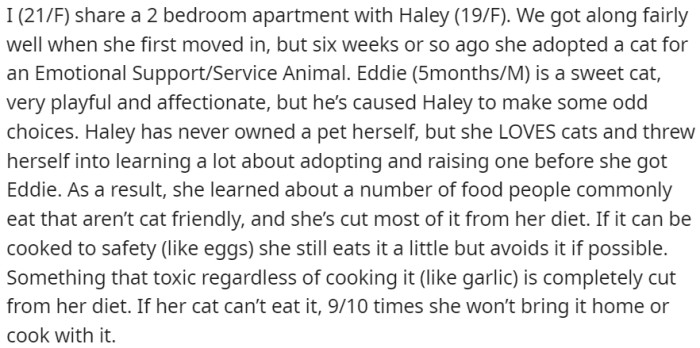
The issue lies in the fact that OP's roommate has now expanded her dietary requirements to OP as well.
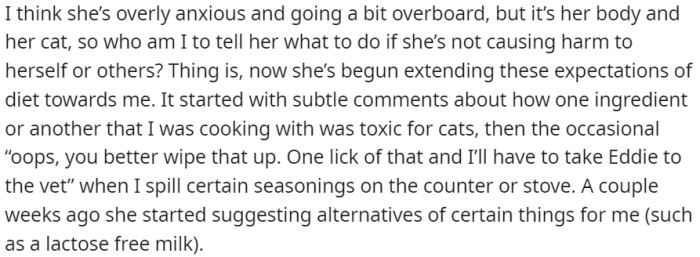
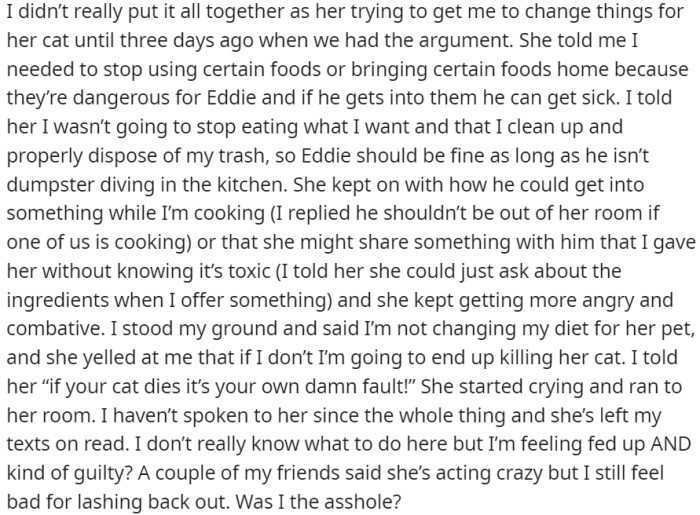
OP refused to change her eating habits or adjust her behavior for the cat's safety, leading to a heated exchange where hurtful words were said.
Anxiety often reveals itself through the need for control, particularly in situations where individuals feel vulnerable.
Haley went from adopting Eddie to acting like OP’s meals were a safety hazard, and the peace they had before vanished overnight.
The situation between OP and her roommate Haley underscores how dietary preferences can ignite tensions in shared living situations. Haley's insistence on specific dietary changes for her cat, Eddie, illustrates the deep emotional connections people have with their pets and how these connections can influence household dynamics. As food is often intertwined with personal identity and cultural practices, navigating such topics requires sensitivity and understanding. The conflict serves as a reminder that respecting each other's choices is essential for maintaining harmony in living arrangements.
"Extreme crazy cat lady vibes."

Roommate caution seems excessive.
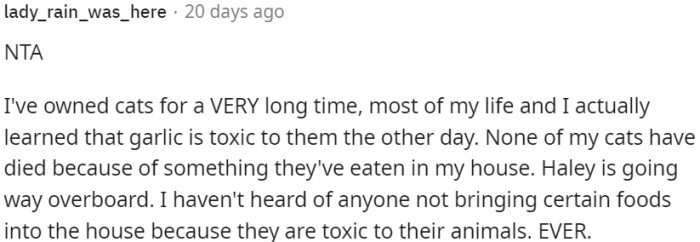
Cats typically show no interest in garlic or citrus due to their strong smells.

The argument really kicked off when OP refused to stop eating what she normally eats, even after Haley framed it as “cat safety.”
Understanding the motivations behind dietary restrictions can foster empathy in interpersonal relationships.
From a psychological standpoint, anxiety surrounding food choices can trigger defensive reactions when challenged.
Also, this echoes the cat mom fighting her severe-allergy boyfriend while trying to keep her cats.
Reasonable precautions for cats include avoiding poisonous houseplants, refraining from using essential oil diffusers, and being mindful of harmful substances.
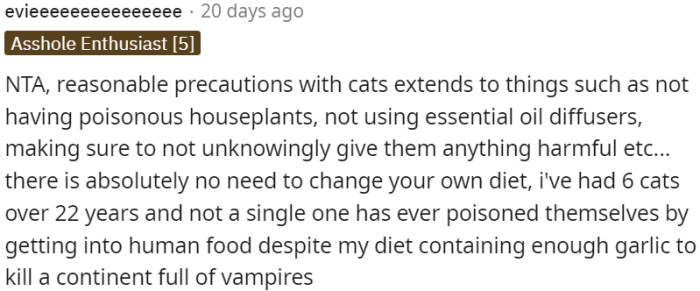
She has the freedom to pursue her interests, but she doesn't have the right to dictate or control your choices.
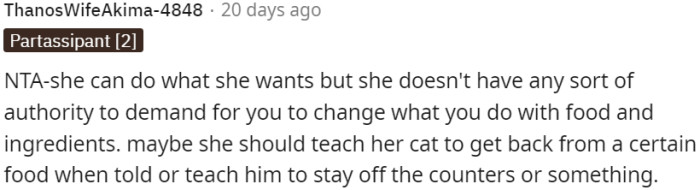
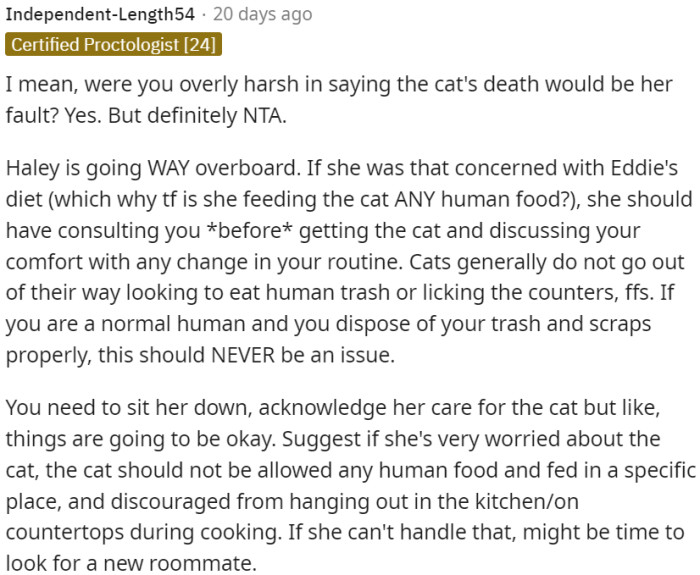
Roommate is being excessive in her concern for the cat's diet and behavior.
Every time Haley brought up garlic and citrus smells, OP took it as another demand, not a reasonable request, and tensions kept stacking.
In the context of shared living spaces, establishing boundaries around dietary choices is essential for maintaining harmony.
Strategies for Respecting Dietary Choices
Creating a shared meal plan that accommodates everyone's needs can foster cooperation and reduce tension.
Common household items like cleaners pose risks, so it's a shared responsibility to keep harmful substances away.
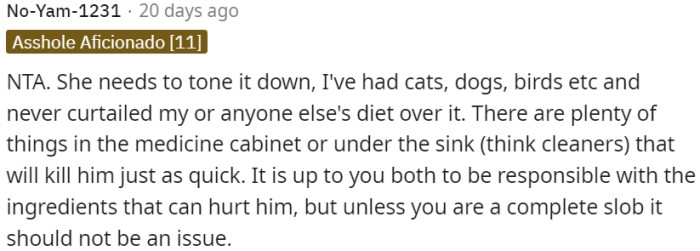
Excessive reading has led to anxiety about cats and food.
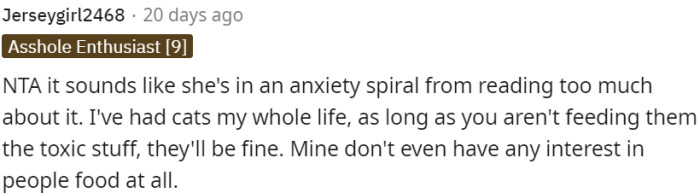
Feeding a cat off your own plate without setting boundaries may lead to the cat eating from someone else's plate and potentially getting sick.

By the time OP snapped back with “extreme crazy cat lady vibes,” it was clear this wasn’t going to be solved with a quick compromise.
It's also essential to encourage flexibility and compromise in shared living situations.
It's fine to take precautions and clean up after yourself, but you shouldn't have to completely alter your diet.
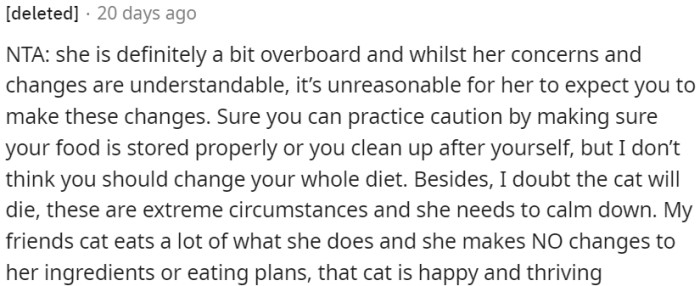
Roommate is unreasonable in expecting you to conform to her ideal image of owning a cat.
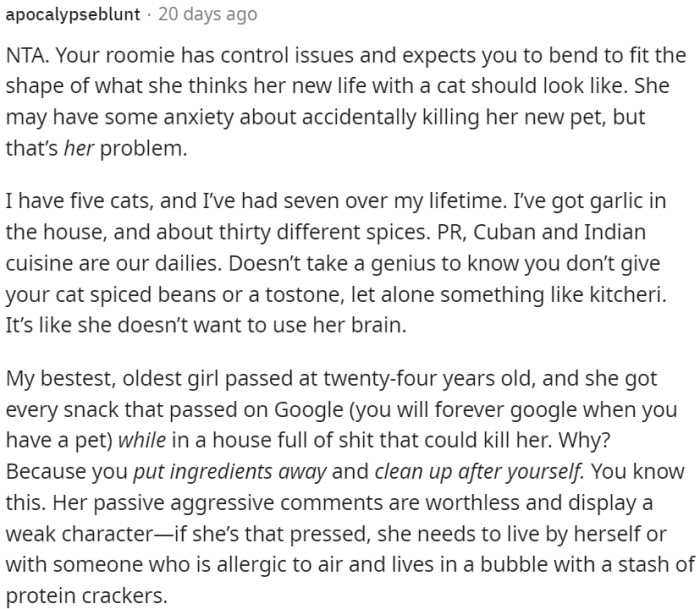
It seems that Haley's concern for her cat, while admirable, has crossed boundaries into unreasonable territory. Expecting someone else to alter their diet for your pet is not a fair demand, particularly when it's not a shared pet.
OP was within her rights to stand her ground.
Haley, on the other hand, has a responsibility to educate herself about how to create a safe environment for Eddie without imposing on her roommate's lifestyle. Yes, OP's words were harsh, but they were a result of frustration over Haley's constant policing and blaming.
Hopefully, this experience will lead to a more open and understanding dialogue between the two roommates, where they can set boundaries and expectations that work for both of them.
In any shared living situation, mutual respect for individual choices is vital to maintaining a peaceful coexistence.
The situation between OP and Haley highlights the complexities of managing dietary choices in shared living spaces, particularly when they intersect with personal anxieties. Haley's insistence on dietary changes for her cat, Eddie, introduces an element of tension that disrupts their previously harmonious relationship. Without these discussions, the potential for resentment and conflict only grows.
Encouraging flexibility and maintaining open dialogue could significantly improve their roommate dynamics, allowing for a more cooperative and less stressful living environment.
The family dinner did not end well, and neither did OP and Haley’s apartment truce.
Before Haley's cat safety standoff, see how a roommate got mad after acting scared of it.
Share this article: