
Devoted Cat Mom Faces Greatest Trial Yet After Falling For Man With Severe Cat Allergies

A 28-year-old cat mom didn’t just fall in love, she fell for the one guy who can’t even tolerate her living room’s air. OP had her cats for years, the kind of bond you build one soft lap at a time. Then she met her partner, and everything got complicated fast.
They moved into a new apartment, and suddenly his allergy wasn’t a rare inconvenience, it was a daily crisis. He went from visiting with steroid shots to telling OP he was seeing an allergist, and if it did not work, they would live apart. For OP, that wasn’t just “relationship logistics,” it sounded like losing part of her family.
Now she’s stuck between choosing the man who loves her and the cats who have been her constant.
Let’s dig into the details

OP has lived with her cats for many years before meeting her partner. Unfortunately, he is allergic to cats but has tried visiting the doctor to get steroid shots for them.
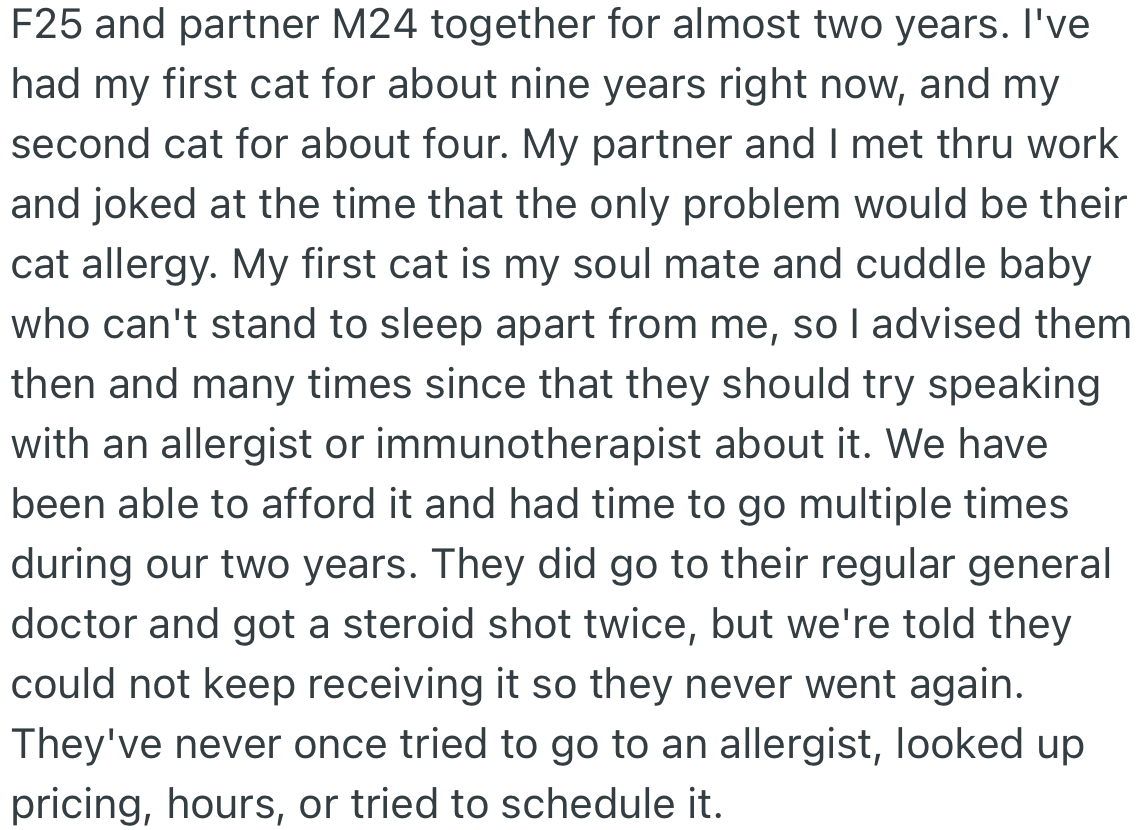
This situation underscores the intricate dynamics of attachment in adult relationships, particularly when a beloved pet is involved. The narrator's profound bond with her cat complicates her romantic relationship, revealing the emotional turmoil that can arise when a partner's severe allergies threaten this connection.
Research supports the idea that pet owners often face intense emotional responses when their pets are at risk, which can create friction in romantic partnerships. The narrator's dilemma is a vivid illustration of this phenomenon, as her love for her cat clashes with her desire to maintain a healthy relationship with her partner.
Moreover, the parallels between pet-owner bonds and human attachment styles add an additional layer of complexity to the conflict. The challenge of navigating these competing attachments makes the narrator's situation particularly poignant, showing just how challenging it can be to balance love for a pet with the demands of a romantic relationship.
OP and her partner moved to a new apartment and the allergy became a constant thing he faced. He finally told OP he was going to see an allergist and if it did not work, they live apart.
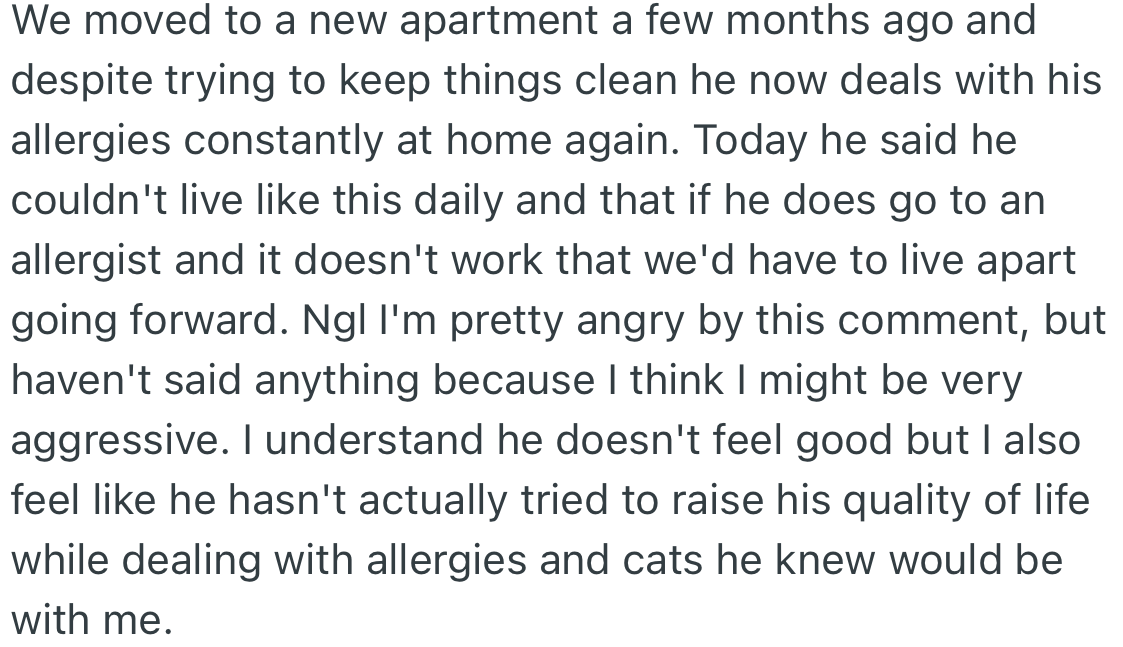
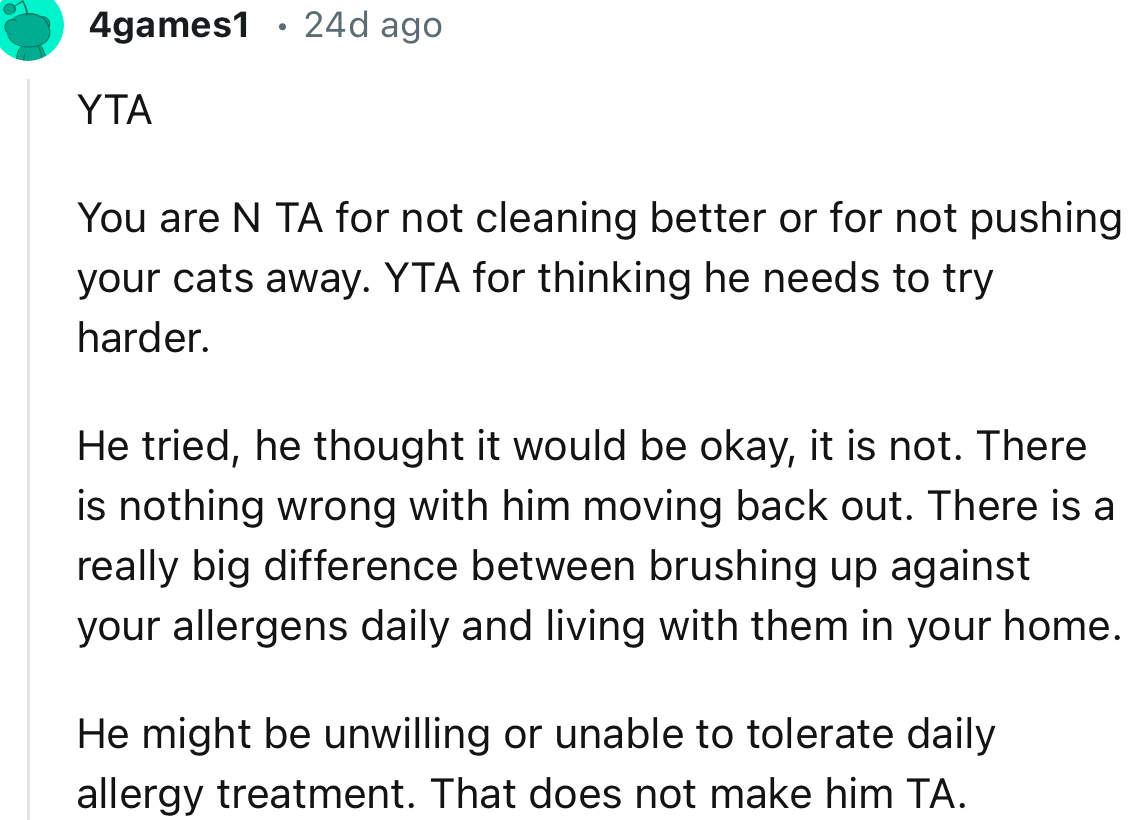
OP was upset about her partner’s comments and wanted to know if she was right.
OP’s partner tried to mask the problem with steroid shots, but the cats still made the apartment feel like a ticking time bomb.
Behavioral analysts suggest that the woman's struggle to balance her affection for her cats with her partner's allergies may indicate a deeper conflict between loyalty and compromise.
This dilemma is rooted in the psychological concept of cognitive dissonance, where a person experiences discomfort from holding two conflicting beliefs or values.
In such cases, individuals may benefit from reflecting on their priorities and considering how they can find a middle ground that honors both their love for their pets and their partner's health.
OP decided to stop replying to comments as she felt she had been attacked.
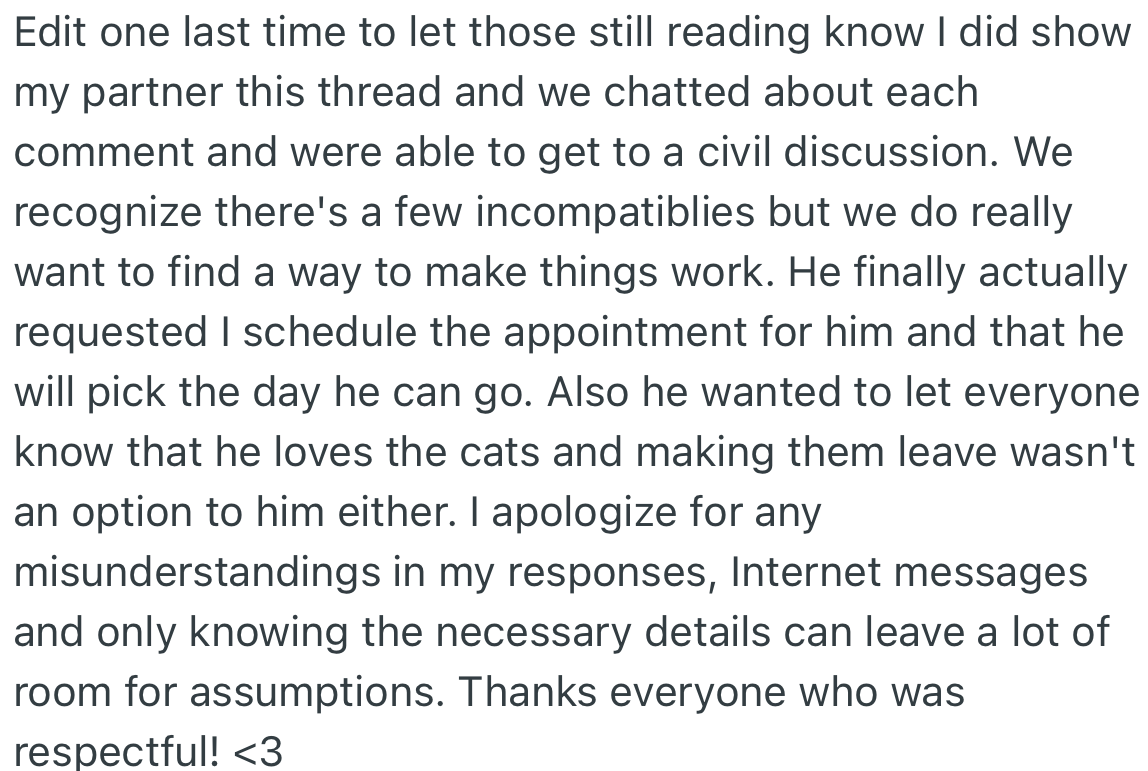
OP claimed to have shown this post to her partner was led to them having a discussion and making compromises for things to work.
That new place turned “he’s allergic” into “he can’t breathe in his own home,” and OP felt like she was being asked to give up her daily life.
This gets even messier like the woman accused by her mother-in-law of faking cat allergies, then adding two more cats.
Practical Solutions for Conflict Resolution
Creating a safe space for both partners to express their feelings and needs can facilitate understanding and compromise.
Check out some interesting comments below:
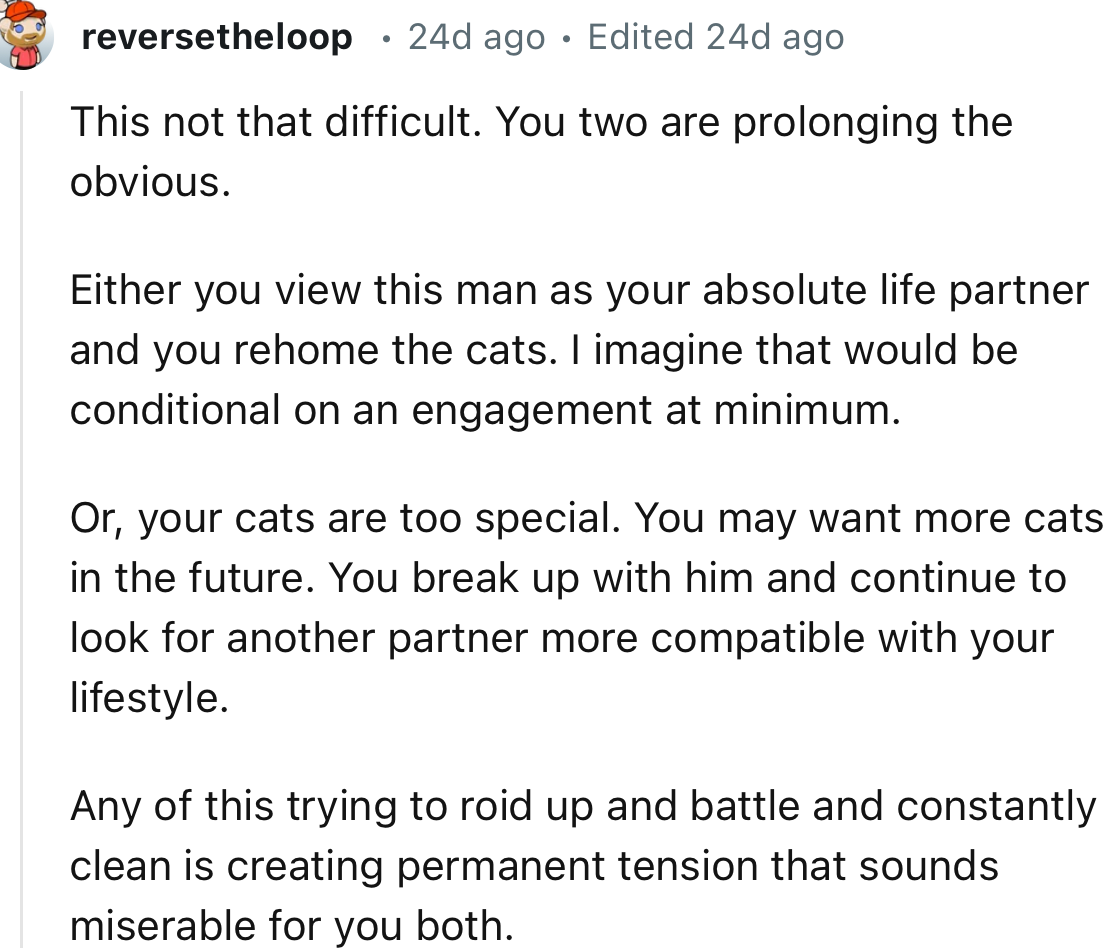
“He tried, he thought it would be okay, it is not. There is nothing wrong with him moving back out.“
When he said he’d see an allergist and threatened separate living if it failed, OP didn’t hear a plan, she heard an ultimatum.
Understanding the underlying reasons for such stress is crucial; individuals may find that their pets fulfill emotional needs that partners must also address.
By recognizing these dynamics, couples can work together to build a supportive environment that nurtures both human and animal bonds.
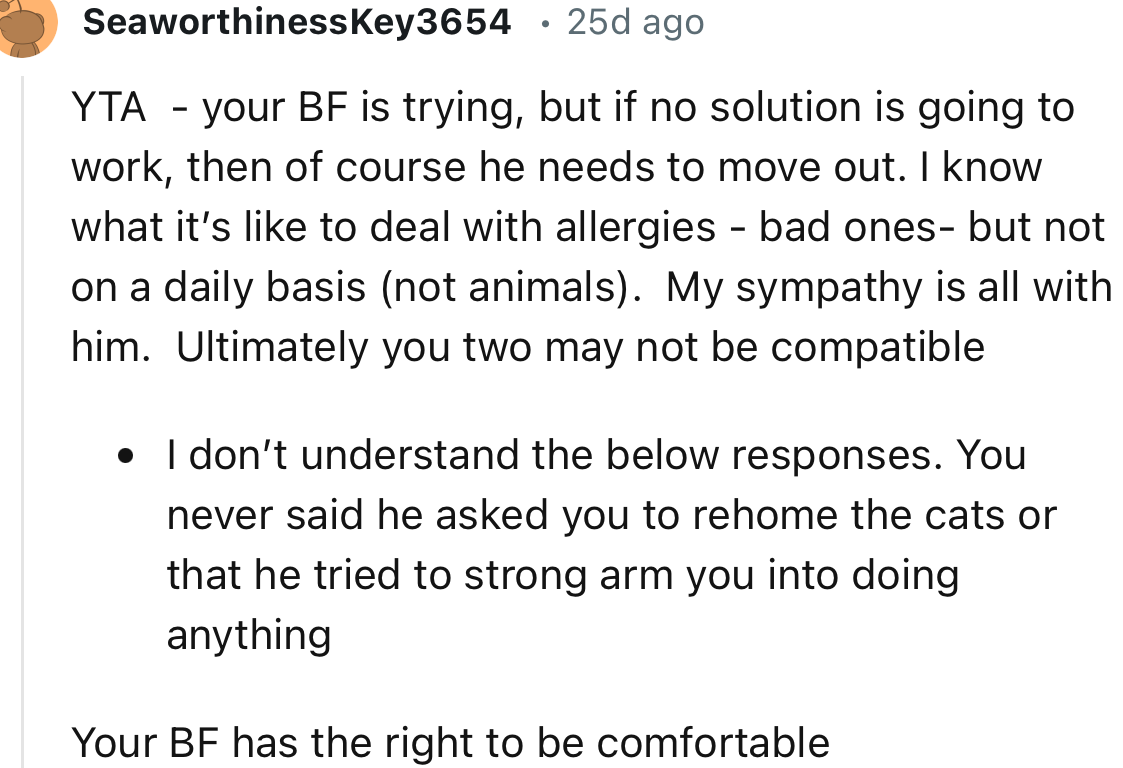
“Your BF is trying, but if no solution is going to work, then of course he needs to move out. I know what it’s like to deal with allergies - bad ones.”
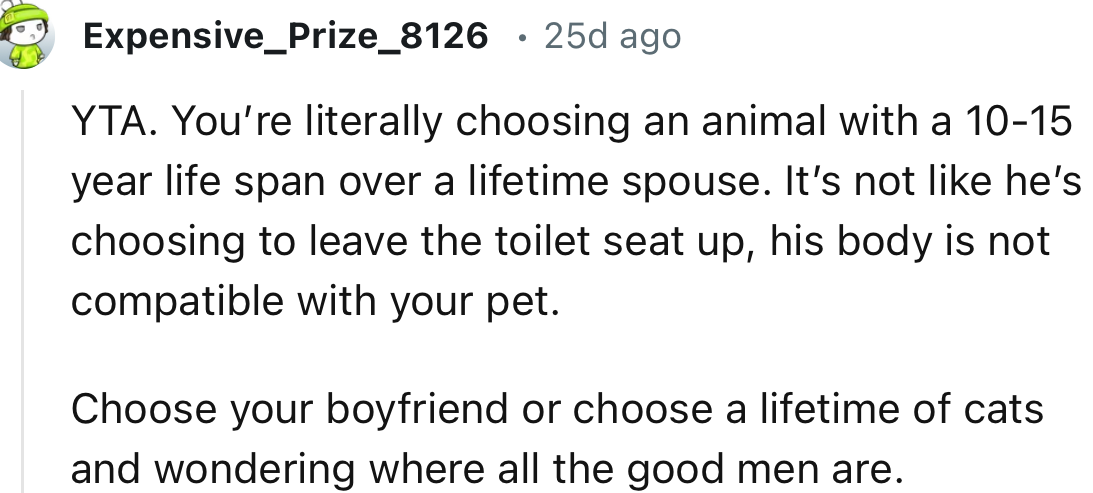
“You’re literally choosing an animal with a 10-15 year life span over a lifetime spouse. It’s not like he’s choosing to leave the toilet seat up, his body is not compatible with your pet.”
And now that the move is already done, the real fight is whether OP’s love for her cats is worth the strain on her relationship.
After sharing her frustrations with the internet, OP finally sat down with her partner for a heart-to-heart. It turns out he was willing to meet her halfway.
He asked her to book that allergist appointment, and promised to make time to go. As for the cats, they were here to stay because despite the sniffles, he loved them too.
They both agree that some incompatibilities exist, but they’re committed to making it work—and that’s all that really matters.
What do you think about this story? Let us know in the comments.
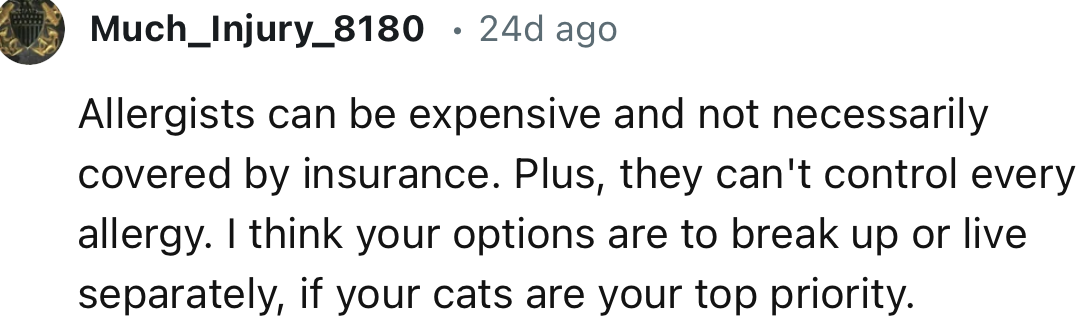
“I think your options are to break up or live separately, if your cats are your top priority.”
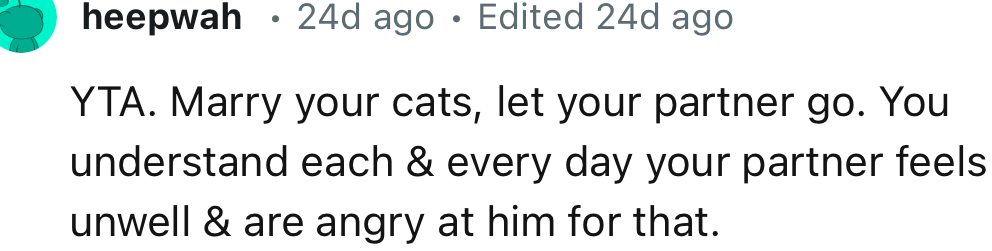
“Marry your cats, let your partner go. You understand each & every day your partner feels unwell & are angry at him for that.”
The story of the devoted cat mom facing the dilemma of love versus her partner's severe cat allergies highlights a critical aspect of relationship dynamics. In such challenging circumstances, validating each partner's feelings becomes essential for navigating the complexities presented. The narrative reveals that when both individuals feel acknowledged, they are more inclined to collaborate on finding solutions rather than retreating into conflict. This case illustrates that practicing empathy and actively listening to one another's perspectives can ease the tension and create a pathway toward a more harmonious living arrangement.
In relationships where pets play a significant role, sensitivity and compromise become essential elements.
He might be happier in a different apartment, but OP’s cats are not the ones who should be displaced.
Want more relationship fallout? See how a girlfriend adoption dream crashed over severe allergies.
Share this article:





