
Giant Maine Coon Cats: Do Giant Maine Coons Really Exist?

“Giant Maine Coon” sounds like a real, official category, until you start digging and realize it’s mostly a vibe. One viral photo makes a cat look like it could fit in a suitcase, and suddenly everyone wants to know if those extra-long bodies are genetic, exaggerated, or just camera magic.
In the middle of all that, people throw around “giant,” “large,” “huge,” and “big” like they mean the same thing, but they don’t always. Some sellers use it for heavily boned males, some breeders hint at lines that trend bigger, and photos can make a full coat look like an entire second cat. Then the breed traits get brought up, rectangular body, hard muscle, broad chest, long tail, tufted feet, which makes the whole “giant” question feel way more complicated than a single number on a scale.
And that’s exactly why Pupperish’s story about an enormous Maine Coon hits so hard, because it shows how “giant” can start as a guess, then become a whole mystery.
What does “giant Maine Coon” actually mean?
Usually, it is descriptive marketing or casual language.
A particularly long, heavily boned male may be called giant. So might a cat whose full coat makes it look enormous in photos. Some breeders use the term to describe lines that tend to produce larger adults, but there is no universal weight or length at which a Maine Coon officially becomes “giant.”
Breed organizations focus instead on proportion.
The International Cat Association describes a large, rectangular, hard-muscled body, broad chest, substantial boning, long tail, and large tufted feet. Those traits matter together. Simply adding body fat does not create a better or more correct Maine Coon.

The moment you see “giant” used like a weight class, the whole idea starts to wobble, especially when the article points out there’s no official line where a Maine Coon becomes “giant.”
How big can a very large Maine Coon get?
Large adult males commonly sit above the average house-cat range, and exceptional individuals can go considerably further in length or weight.
TICA’s current at-a-glance guide places adult males around 18 to 22 pounds. CFA notes that 20 pounds or more is not unusual for a mature male. Beyond that, individual variation becomes increasingly important.
Length can be even more dramatic than weight.
A long torso plus a tail that balances the body creates the stretched-out measurements that make Maine Coons famous. Pupperish’s story about an enormous Maine Coon captures why a cat can look startlingly large even before anyone reaches for a scale.
Giant, large, huge, and big Maine Coon searches usually mean the same thing
Searchers use several words for the same idea.
They want to know whether Maine Coons really get as big as the photos suggest, whether a very large kitten is normal, and whether special “giant” lines exist.
Those questions belong together.
Creating separate explanations for “big Maine Coon,” “large Maine Coon,” and “huge Maine Coon” would add labels without adding much information. The practical answer remains the same: Maine Coons are a naturally large breed, and some individuals sit far above the average.
One Pupperish cat became memorable because the Maine Coon was mistaken for a dog. That reaction says more about the breed’s visual scale than any invented giant category could.
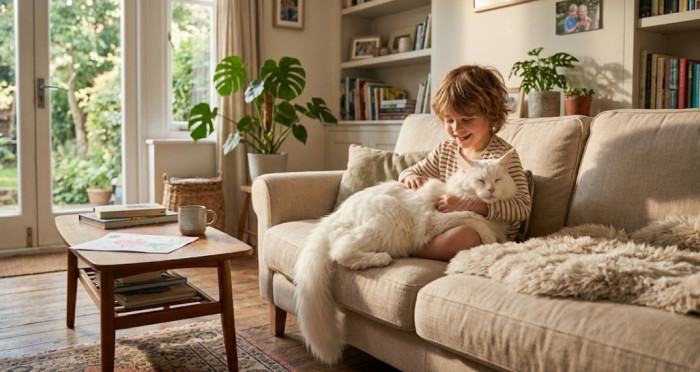
Then it gets messy with the numbers everyone loves, 18 to 22 pounds for adult males in one guide, 20 pounds or more in another, and suddenly “above average” is doing most of the talking.
Can you predict a giant Maine Coon from a kitten?
Only roughly.
Sex and parental size can offer clues. A large male from large parents has a better chance of becoming substantial than a small female from moderate-sized lines. Big paws and a long body can also suggest a large frame.
None of those is a guarantee.
Maine Coons mature slowly, and young cats can develop unevenly. A kitten with oversized feet may eventually grow into them without becoming exceptional. Another may stay lanky for years and then fill out significantly in adulthood.
That uncertainty is why promises of an exact adult weight should be treated cautiously.
To ground the “giant” hype, see average Maine Coon weight by age and sex.
Do “giant Maine Coon” breeders produce a different kind of cat?
Not in the registry sense.
A pedigreed Maine Coon remains a Maine Coon. Responsible breeding should prioritize breed type, temperament, health testing, and genetic diversity rather than maximizing a single measurement.
If a seller’s main pitch is that every kitten will become 25 or 30 pounds, ask for adult weights from the parents and previous litters, pedigrees, registration information, and health-testing documentation.
Numbers without records are easy to advertise.
Pupperish’s collection of very large cats is fun precisely because unusual size catches the eye. Breeding decisions need a higher standard than visual novelty.
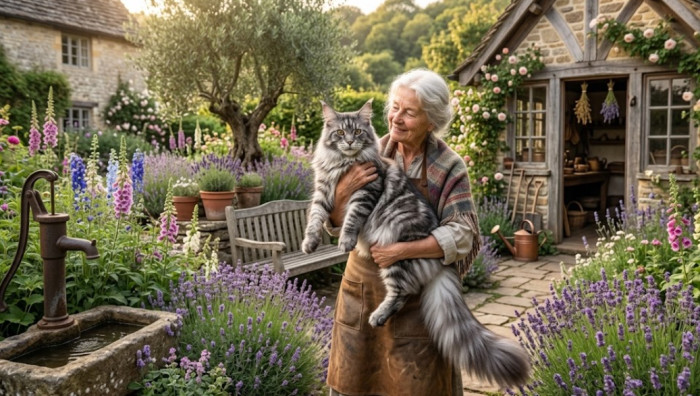
But the article flips the script by stressing length and tail balance, the combo that makes a Maine Coon look stretched out even before anyone reaches for a scale.
Why some Maine Coons look bigger than their actual weight
Three features amplify size immediately: coat, tail, and length.
A winter ruff broadens the neck and chest. Long belly fur hides the body line. The plumed tail can be nearly as visually dominant as the torso. Add large ears and tufted paws and the silhouette becomes much bigger than that of a compact shorthaired cat.
Camera perspective can push it further.
Hold a cat closer to a wide-angle lens than the person behind it and the cat can look absurdly large. Photograph a stretched-out Maine Coon from floor level and the result can feel almost feline-unreal.
That doesn’t mean the cat is small. It means photographs need context.
Is a heavier Maine Coon automatically a giant Maine Coon?
No.
Weight alone does not distinguish a huge-framed cat from an overweight one. Two 20-pound cats can have very different body conditions.
A genuinely large Maine Coon should look substantial because of bone, length, chest, and muscle. Extra fat adds weight without improving those structural traits.
The same applies across species. A large black panther can look like an oversized house cat in the right photograph, but visual resemblance does not erase the underlying differences in build and biology.
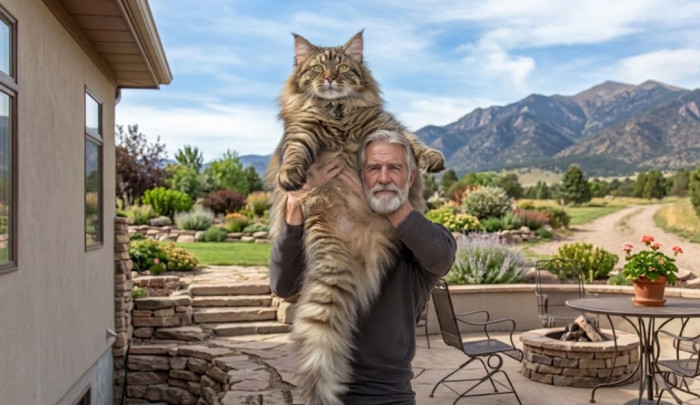
That brings you right back to Pupperish’s enormous Maine Coon, where the photo-ready “giant” look can feel real in the moment, even if the term is doing a lot of marketing work.
So, are giant Maine Coons real?
Yes, if “giant” means a particularly large Maine Coon.
No, if it is being presented as a separate recognized breed, a guaranteed adult size, or a special category with one official weight threshold.
The breed is already large enough to produce spectacular outliers. That is the more interesting answer anyway. A Maine Coon does not need a marketing label to become an exceptionally big cat.
Pupperish’s enormous Maine Coon might be the answer, but “giant” is still the question.
Before you believe every Maine Coon becomes “giant,” check how big Maine Coons really get.
Share this article:





