
Rare Maine Coon Colors: Which Coats Are Actually Uncommon?

Pupperish didn’t just stumble on Maine Coon “rare colors” once, it kept happening, like the internet was turning every unusual coat into a headline. One scroll would show a silver-shaded cat that looked almost white, the next would swear smoke-and-white was basically a unicorn, and suddenly “rare” felt like a marketing word, not a real category.
Here’s the messy part: the Cat Fanciers’ Association actually recognizes a ton of coat colors and patterns, including solids, tabbies, parti-colors, silver, smoke, shaded coats, and combinations with white. So when someone claims a color is rare, it might be rare in their breeder’s program, not rare across the whole population. And that gets extra complicated when a single dramatic photo makes a pale shaded coat look even rarer than the underlying data suggests.
The real twist is that some “rare” claims are about how the coat photographs, while others, like male calico and tortie genetics, are genuinely unusual for a biological reason.
What colors are officially possible?
The Cat Fanciers’ Association recognizes a broad range of Maine Coon colors and patterns, including solids, tabbies, parti-colors, silver, smoke, shaded coats, and many combinations with white.
That matters because some “rare” colors promoted online are simply accepted colors that happen to be less common in one breeder’s program.
Rare locally is not rare globally.
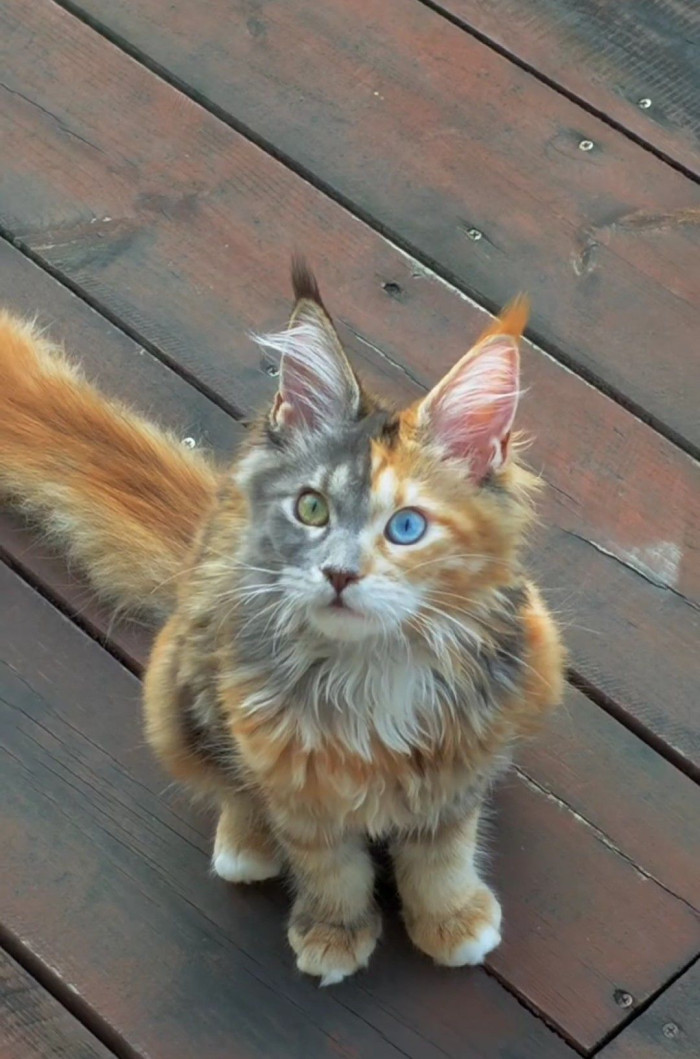
White Maine Coons
White also creates several eye-color possibilities, including blue and odd-eyed cats.
Silver shaded Maine Coons
Shaded silver can look unusually pale because the darker pigment is concentrated toward the tips of the hairs. On a long-coated Maine Coon, the effect can create a silver veil over an almost white-looking body.
Exact shaded combinations may be less common than ordinary silver tabbies.
They are also easy to over-market because they photograph dramatically.
Pupperish has seen that visual effect with animals whose unusual color dominates the entire story. A striking photo can make a color seem rarer than the underlying data supports.
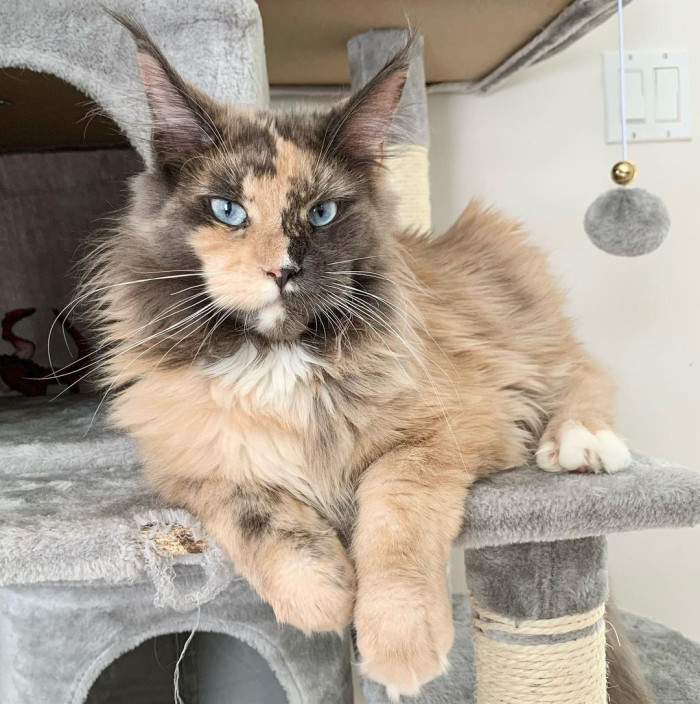
That’s where the “Pupperish has seen” part kicks in, because the silver veil effect can make a shaded cat seem way rarer than it actually is.
Smoke combinations
Black smoke is the most searched smoke variation, but smoke can combine with other base colors and patterns.
Blue smoke, red smoke, cream smoke, tortie smoke, and smoke-and-white combinations can all look more unusual than a standard black smoke because fewer traits have to line up in a familiar way.
Again, uncommon does not automatically mean “rarest.”
The word should be used comparatively, not as a universal ranking.
Calico and tortie combinations
Female calico and tortie Maine Coons are established coat patterns. Male calicos and torties are genuinely unusual because of the X-linked genetics involved.
That is a better example of rarity with a biological explanation.
The CFA’s pattern explainer notes that tortoiseshell and calico are coat patterns rather than breeds, and the genetics behind orange and non-orange coloration help explain the strong sex bias.
Pupperish’s story about Bowie and his unusual eye pigmentation shows a similar principle outside coat pattern: rare-looking traits become notable because the underlying biology is less common, not because every striking photo represents a new category.
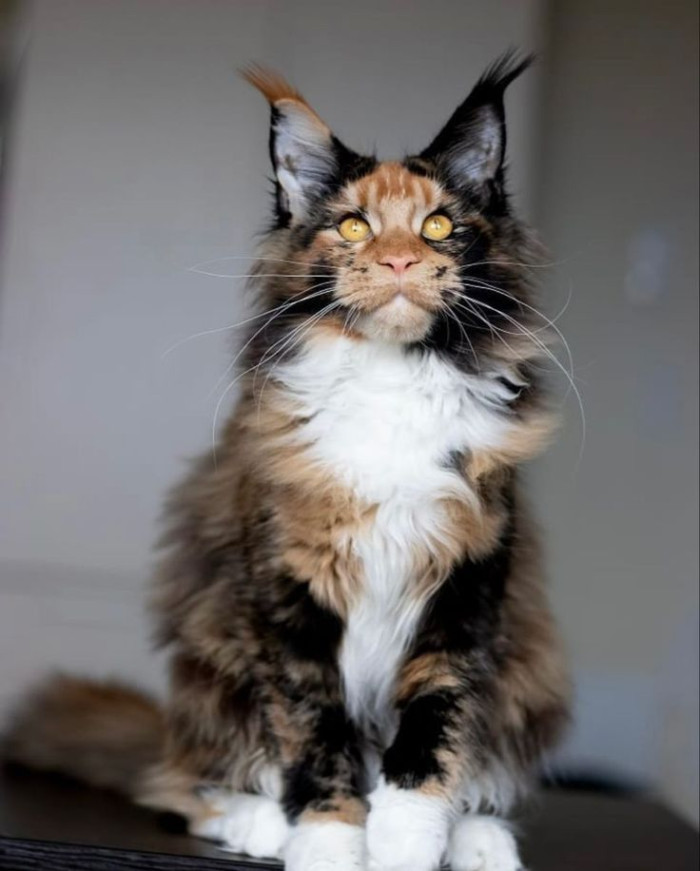
Then Bowie’s story shows up in the background, because male calico and tortie patterns are tied to X-linked genetics, not just breeder luck.
And if you think “rare” means harder to find, calico Maine Coon genetics and why nearly all are female is a perfect reality check.
Van and high-white patterns
High-white Maine Coons can have color concentrated on the head, tail, or limited body areas, creating a very different look from ordinary bicolor cats.
Some breeder guides describe van-pattern Maine Coons as especially uncommon.
That is plausible as a relative observation, but without a large registry dataset, it is safer to say the pattern is unusual rather than attach a precise percentage.
What about gold Maine Coons?
“Golden” is a term that creates a lot of confusion because recognition and terminology differ among registries and breeding communities.
Some breeders use gold or golden for cats with warm, light backgrounds and dark tipping. Not every major Maine Coon standard handles those colors identically.
If a seller advertises a rare golden Maine Coon, ask which registry terminology is being used and what appears on the pedigree.
Names matter here.
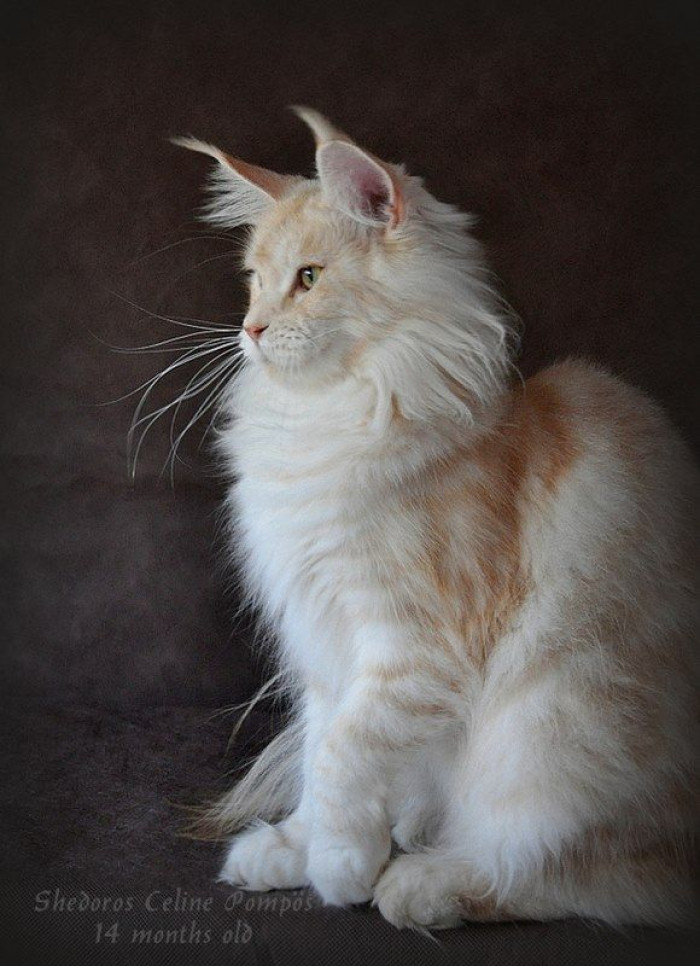
Meanwhile, the smoke section gets messy too, since blue smoke, red smoke, cream smoke, and smoke-and-white can all look more dramatic than plain black smoke.
Are blue, gray, or orange Maine Coons rare?
Not simply because of the basic color.
Blue is an accepted dilution of black. Orange is generally registered as red. Gray may be a casual description for blue, silver, or smoke.
The rare-looking part is often the combination rather than the base color.
For example, a blue smoke-and-white Maine Coon may be much less common than a straightforward solid blue cat.
Rarity should not outrank health or temperament
This is the practical takeaway.
A responsible breeder should be able to explain pedigree, health testing, registration, and the specific color without using rarity as a substitute for quality.
A rarer-looking coat does not make a healthier, friendlier, or more valuable companion by itself.
Pupperish’s rare-fur rescue story is useful in the opposite direction: unusual appearance can draw attention, but the cat’s welfare matters more than the novelty.
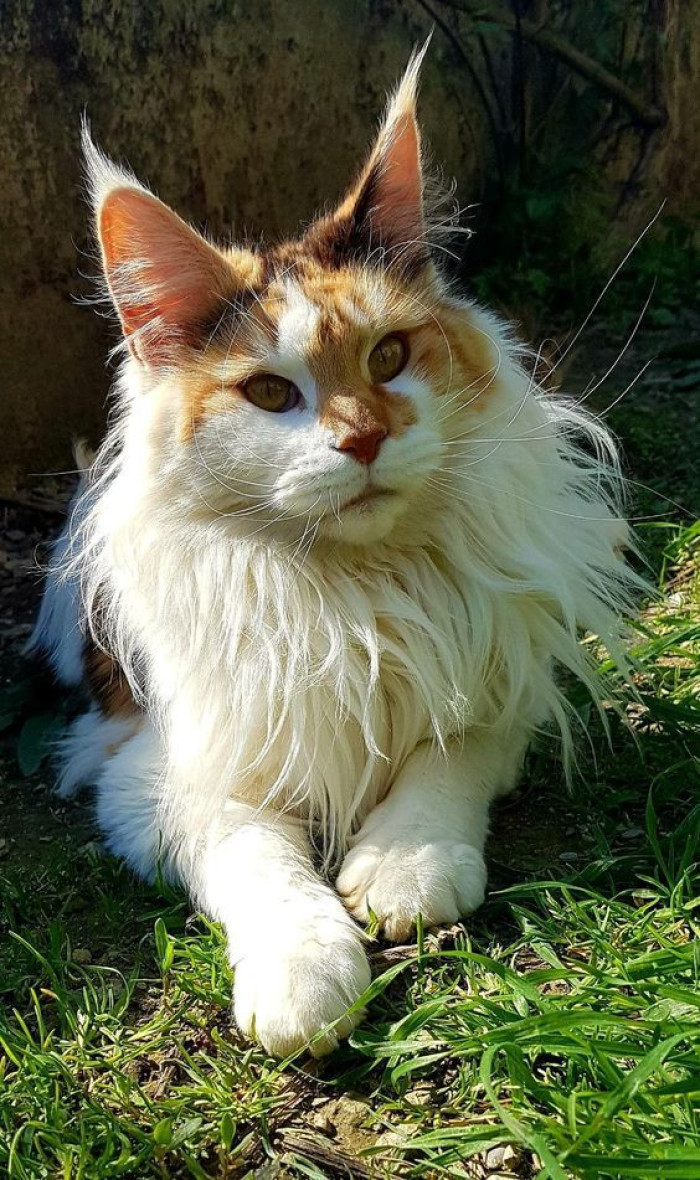
And after all those “rare” searches, it circles back to white coats with blue or odd eyes, proving how easily “uncommon locally” turns into “rare globally” online.
The safest way to talk about rare Maine Coon colors
Use relative language.
Say “less commonly seen,” “unusual combination,” or “harder to find in some breeding lines” when reliable population data is missing. Reserve strong rarity claims for cases where the genetics or registry records actually support them.
That is less dramatic than saying one color appears in one cat out of a thousand.
It is also more accurate.
Maine Coons already come in a huge range of accepted colors and patterns. The rarest-looking cats usually sit at the intersections: silver plus shaded, smoke plus tortie, unusual white distribution, or a sex-linked pattern appearing in a male.
The combinations are where the real variety lives.
The internet keeps calling it “rare,” but for a lot of Maine Coons it’s really just rare in a caption.
Before you chase “rare,” compare silver tabby, shaded, and smoke in this breakdown of Maine Coon silver looks.
Share this article:





