Maine Coon Colors and Patterns: A Practical Guide to the Breed’s Coats

It started the way these things always do, with a Maine Coon photo that just did not make sense. One minute the cat looked jet black, the next minute it was all “silver smoke,” and somehow everyone in the comments had a different answer for what color it really was.
Then came the naming chaos. “Blue” was not bright blue, it was diluted black, “orange” was actually red, and white could show up with almost any combination. Add the breed’s fluffy chaos, long guard hairs, a soft undercoat, a neck ruff, and a full tail, and the same coat can look lighter or darker depending on lighting and the season.
By the time you get to tabbies, the confusion multiplies, because classic swirls, mackerel stripes, and ticked fur can all show up in the same color families.
What colors can Maine Coons be?
White can also appear in combination with many of those colors.
Some names are less intuitive than they sound. A “blue” Maine Coon is not bright blue. In cat-show terminology, blue describes a diluted black coat that appears slate gray. Likewise, what many owners call an orange Maine Coon is generally classified as red.
The breed’s coat is already visually busy. Long guard hairs, a softer undercoat, a neck ruff, a full tail, and fur around the feet can make the same color look lighter or darker depending on lighting and season.
That is why photographs sometimes create confusion. A black smoke cat may look nearly solid black in one photo and silver underneath in another.
That first black smoke photo is where people usually get stuck, because one picture looks solid and the next one reveals the silver underneath.
Solid Maine Coon colors
CFA lists white, black, blue, red, and cream among the solid color classes.
Black Maine Coons can look especially dramatic because the dark coat makes the breed’s heavy ruff and broad outline stand out. Pupperish’s broader collection of black cats shows exactly why a dark coat can make facial structure and body outline look so dramatic online.
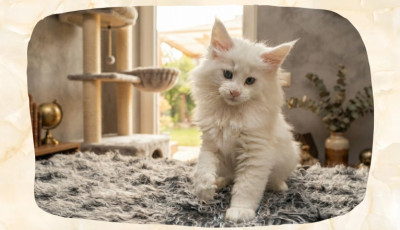
White Maine Coons work the opposite way. Their coat can make the cat’s overall outline look even larger, particularly around the chest and tail. Eye color becomes more noticeable too, especially in white cats with blue or odd-colored eyes.
Blue is cooler and softer in appearance. Red is warmer and is often described casually as orange or ginger. Cream is the dilute version of red.
Simple names. Very different cats.
Tabby patterns are a major part of the breed
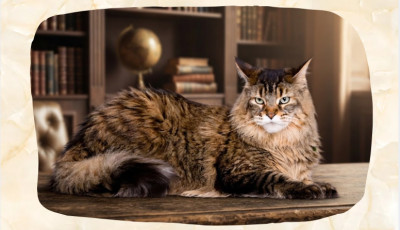
Many Maine Coons people picture first are tabbies. Classic tabbies have broader swirls, while mackerel tabbies have narrower vertical striping. Ticked tabbies have a more finely banded appearance with less obvious body striping.
The Maine Coon Cat Club’s color gallery shows how the same tabby pattern can appear in brown, blue, red, cream, silver, and tortie combinations.
Long fur can soften those markings. On a shorthaired cat, a stripe may look crisp. On a Maine Coon, the same marking can disappear into several inches of moving fur around the belly and sides.
The effect can be striking in photographs. That is one reason unique coat markings attract so much attention even when the underlying genetics are ordinary.

What is a smoke Maine Coon?
Smoke describes a coat in which the outer part of the hair is colored while the base is pale or silver-white. At rest, a black smoke Maine Coon may appear very dark. When the coat moves or parts, the lighter roots become visible.
Black smoke is the best-known version, but smoke can occur with other accepted colors too.
This is not the same as silver tabby. Silver tabbies show recognizable tabby patterning over a pale silver ground. Smoke cats can look much more solid until the undercoat is exposed.

Right after you learn “blue” means diluted black and “orange” means red, the coat suddenly stops being intuitive, and the names start working against you.
If you’re thinking “orange” sounds like Maine Coon show slang, read 12 Red Animals That Bring the Brightest Color Into the Wild for how red can warn, attract, and camouflage.
Once you notice the neck ruff, full tail, and foot fur can change how a solid color reads, even the same cat can seem like a different shade from one season to the next.
Tortie, torbie, and calico Maine Coons
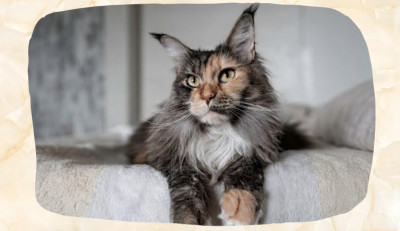
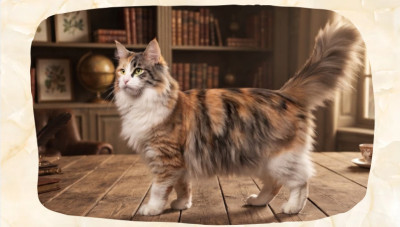
Tortoiseshell coats mix dark and red or cream areas. Add visible tabby striping and the cat may be described as a torbie. Add substantial white and the appearance moves toward calico or tortie-and-white terminology, depending on the distribution.
These patterns are strongly associated with female cats because orange coloration is linked to the X chromosome. For readers comparing coat labels more broadly, Pupperish’s tuxedo-cat facts show how a familiar visual pattern can be mistaken for a breed category when it is really about markings.
Do not use “calico” as a breed name, though. It is a coat pattern. Maine Coon is the breed.
Silver, shaded, and other pale coats
Silver Maine Coons can range from boldly striped silver tabbies to much softer shaded coats. In a shaded cat, most of the hair shaft is pale with darker color concentrated toward the tip, creating a softer veil over the coat.
Long fur exaggerates that effect. A silver Maine Coon in motion can look almost metallic around the ruff and tail.
Pupperish has seen how coat texture changes an animal’s whole silhouette in its gallery of striking furry animals. The Maine Coon’s heavy coat makes those shifts especially obvious.
What is the rarest Maine Coon color?
There is no single official registry ranking of Maine Coon colors by rarity. Claims that one color is “the rarest” often come from individual breeders or from what is uncommon within a particular breeding program.
A better way to think about rarity is combination. Some coat and white-pattern combinations are simply less often seen than classic brown tabbies, blacks, reds, or silvers. Availability also changes by country and breeding lines.
So be careful with percentages that appear online without a registry dataset behind them.

And when tabby patterns roll in, classic, mackerel, and ticked markings can all look different across brown, blue, red, cream, silver, and tortie combos.
Color does not determine personality
Orange cats have memes. Torties have a reputation for “tortitude.” Black cats carry centuries of superstition.
None of that makes coat color a reliable personality test.
A Maine Coon’s behavior is shaped by genetics, early socialization, environment, health, and the individual cat. Color can tell you what the coat looks like. It cannot tell you whether the cat will be cuddly, confident, vocal, or obsessed with the bathroom sink.
The visual variety is enough on its own.
Maine Coons already have one of the most recognizable silhouettes in the cat world. Add dozens of accepted color and pattern combinations, and two cats from the same breed can look almost unrelated at first glance.
Nobody wants to keep arguing about “blue” when the coat was doing exactly what it was built to do.
Want darker fur and skin stories too, like the melanistic big cats in 12 Black Animals With Some of Nature’s Darkest Coats and Skin?
Share this article: