
Tortie Maine Coon: Tortoiseshell Colors, Torbies, and the Genetics Behind the Coat

A tortie Maine Coon can look like a tiny, living paint spill, and that’s exactly why people get confused when they try to name it. One minute it’s “black and orange,” the next minute it’s “smoke tortie,” and somehow everyone is arguing like it’s a courtroom drama.
It gets extra messy because the Maine Coon’s long fur blends color areas that are genetically separate, so a cat that looks like a classic tortie in one photo can reveal torbie striping the moment you see the face, legs, or sides. Then you add the white factor, where calico is basically tortie’s loud cousin, and suddenly “tortie” becomes a moving target. And yes, the gender twist matters too, because most tortie Maine Coons are female, thanks to the X-chromosome patchwork that makes the whole coat possible.
Here’s the full story behind those mottled colors, the torbie clues, and why the genetics refuse to behave like simple labels.
What is a tortie Maine Coon?
“Tortie” is short for tortoiseshell. It describes a coat pattern, not a breed.
The CFA coat-color guide describes tortoiseshell as dark coat color mixed with red patches. In Maine Coons, the same basic pattern can appear in standard tortie, smoke tortie, dilute blue-cream, torbie, and combinations with white.
The long fur can make the colors look blended even when the pigment areas are genetically distinct.
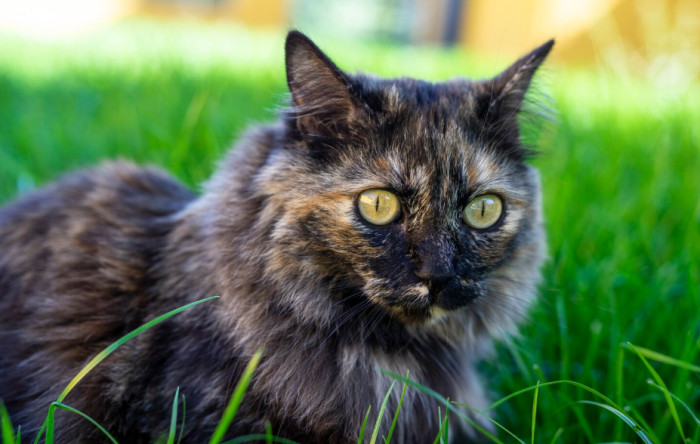
That’s when the “tortie” label starts to wobble, because a Maine Coon’s long fur can smear dark and red pigment into one blended look.</p>
Tortie vs calico Maine Coon
White is the easiest clue.
A classic tortie has little or no white. A calico includes substantial white along with dark and red areas. When white breaks the colors apart, the coat often looks more like separate islands of black and orange.
Tortie colors can look more intermingled.
That rule is useful for ordinary identification, although show registries may use more precise names based on the exact amount and placement of white.
What is a torbie Maine Coon?
A torbie combines tortoiseshell coloring with a tabby pattern.
Look for stripes inside the red and dark areas, especially on the face, legs, and sides. The forehead may show the familiar tabby M, while the body carries a mixture of striping and tortie patches.
Long fur can hide the stripes.
That is why some cats are casually called torties until a closer photo shows obvious tabby markings.
Pupperish’s guide to torbie, tortie, calico, and tabby differences is useful background for the same terminology outside the Maine Coon breed.
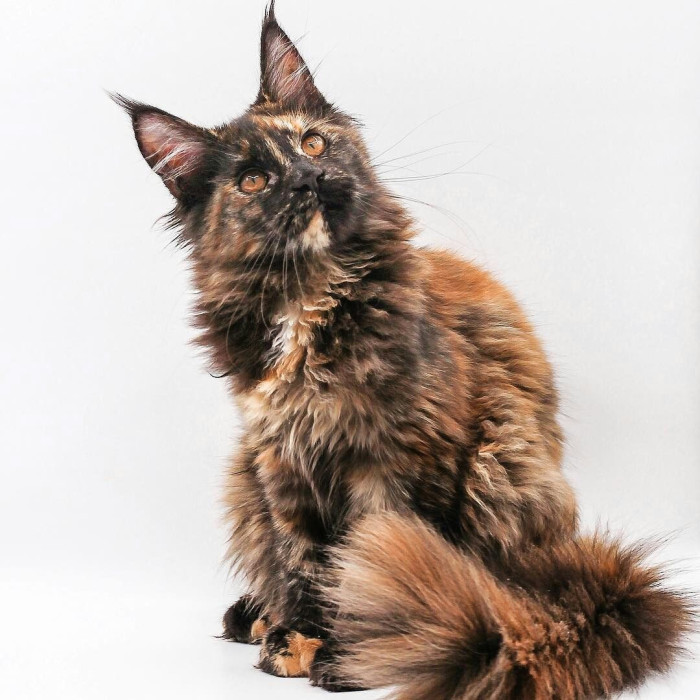
Next thing you know, white shows up like a plot twist, splitting the coat into islands and pushing the cat toward calico territory.</p>
Why are almost all tortie Maine Coons female?
Orange and non-orange coat color are linked to the X chromosome. A typical female cat has two X chromosomes, allowing different cells to express different color instructions. That produces the patchwork effect.
A typical male has one X chromosome, so he generally expresses either orange or non-orange rather than both.
Rare male torties can occur when the cat has an atypical chromosome arrangement or another unusual genetic event.
Rare means rare here.
It does not mean every tortie Maine Coon is unusual. Female torties are a normal accepted part of the breed’s color range.
The CFA Maine Coon color listings include tortoiseshell and related parti-color classes.
For more than just tortie, this overlaps with the practical guide to Maine Coon coat colors and patterns, including smoke, silver, and calico.
What colors can a tortie Maine Coon have?
The best-known version mixes black and red. Other versions include blue-cream, smoke torties, silver-related patched tabbies, and cats with white.
The red areas can be intense or muted. The dark areas can look nearly black or soften depending on dilution and silver effects.
Sometimes one side of the face is dramatically different from the other. Split-face patterns are especially photogenic, but they are not a separate breed trait.
Pupperish’s collection of one-of-a-kind cats and dogs shows why asymmetrical markings attract attention so quickly.
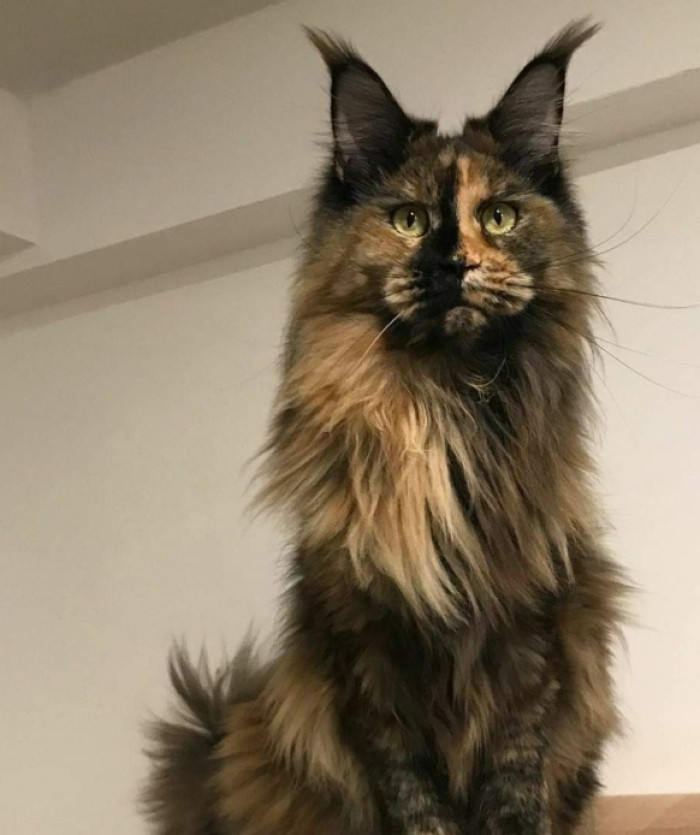
Then the torbie evidence jumps out, stripes tucked inside the red and dark areas, especially around the face and legs.</p>
Do tortie Maine Coons have “tortitude”?
Maybe as a joke. Not as a guarantee.
“Tortitude” is the popular idea that tortoiseshell cats are especially feisty, assertive, or opinionated. Owners certainly tell stories that fit the stereotype, but coat pattern is not a reliable predictor of individual temperament.
Maine Coons are generally described as friendly and social. Some tortie Maine Coons will fit that broad breed description closely. Others will be more independent or intense.
A cat is not a horoscope with whiskers.
Are tortie Maine Coons rare?
Female tortie Maine Coons are not exceptionally rare in the sense that the pattern is genetically extraordinary. It is an established, recognized color pattern.
Specific combinations can be less common. Male torties are genuinely unusual because of the genetics required.
That distinction matters because breeder marketing often uses “rare” loosely.
Ask what exactly is rare: the sex, the color combination, the breeding line, or simply local availability.
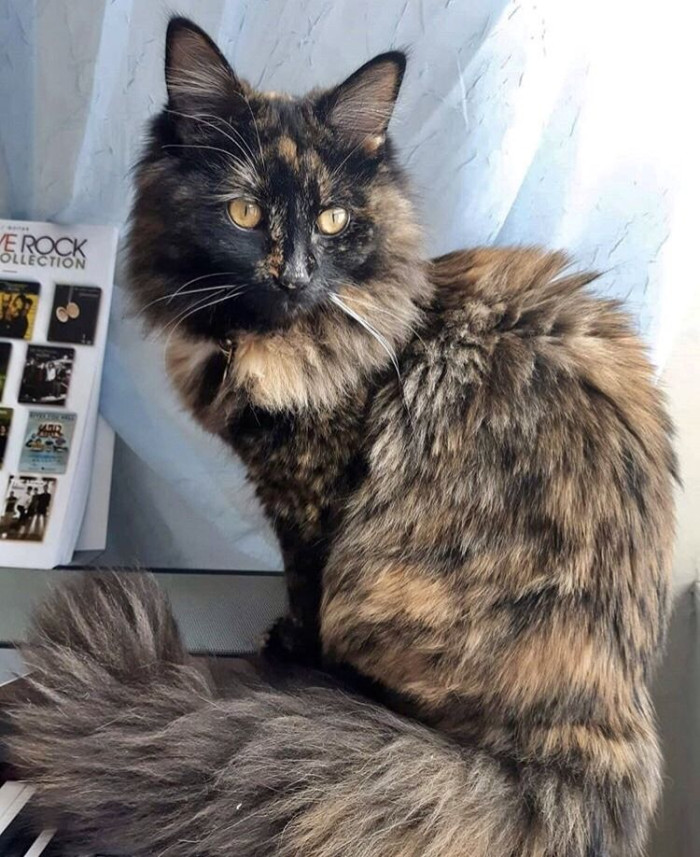
Finally, the X-chromosome explanation closes the case, which is why nearly every tortie Maine Coon you see is female, with rare male exceptions.</p>
Does a tortie coat change as the cat grows?
The basic color pattern remains, but the look can become richer as the adult Maine Coon coat develops.
Longer fur makes patches stretch and overlap visually. A kitten with a sharply divided face can mature into an adult with a much softer transition around the ruff. Seasonal shedding can also reveal or hide parts of the pattern.
The cat’s markings still act like fingerprints. They remain individual, and on a longhaired Maine Coon the same genetic pattern can look radically different from one cat to another because patch size, dilution, white spotting, fur length, and seasonal coat density all change what the eye notices first.
Pupperish has seen that individuality in tuxedo cats with strongly contrasting coats, and torties take the idea even further because the color arrangement is much less predictable.
A tortie Maine Coon is not a separate variety with its own personality or care requirements. It is a Maine Coon wearing one of the most variable coats the breed can produce.
Long fur makes that variability even more obvious. Color patches can stretch through the ruff, break into smaller flecks along the tail, or look almost blended across the flanks. When a photograph is ambiguous, judge the entire coat rather than one cheek or paw.
That is more than enough to make it memorable.
The coat is doing the genetics math in public, and it never uses the label you expect.
Think “red” is simple? See why breeders call orange Maine Coons “red” instead.
Share this article:





