
Gray Maine Coon: Why “Gray” Can Mean Several Different Coat Colors

A 28-year-old woman posted a pic of her “gray” Maine Coon, and the comment section immediately split into two camps: people swore it was blue, others insisted it was silver, and a few went full detective mode like, “Wait, could it be smoke?”
It got messy fast because in everyday life, “gray” is one word, but cat registries treat it like a whole filing cabinet. Major listings often call diluted black “blue,” while “silver” is its own look, and “smoke” can throw charcoal vibes when the lighter roots peek through.
By the time she tried to match the coat to a label, her Maine Coon’s lighting and movement had already started changing the story.
Is gray an official Maine Coon color?
Major cat registries generally use “blue” rather than “gray” for diluted black. The CFA Maine Coon breed page lists blue among the accepted solid colors and also recognizes blue tabby, blue-silver, smoke, and related combinations.
So a solid gray-looking Maine Coon is often technically blue.
But not every gray-looking Maine Coon is blue.
Silver tabbies can look gray because the pale background and dark markings blend at a distance. Black smoke cats can appear charcoal or gray when the pale undercoat shows. Blue smoke adds another soft gray effect.
One visual word. Several possible coat descriptions.
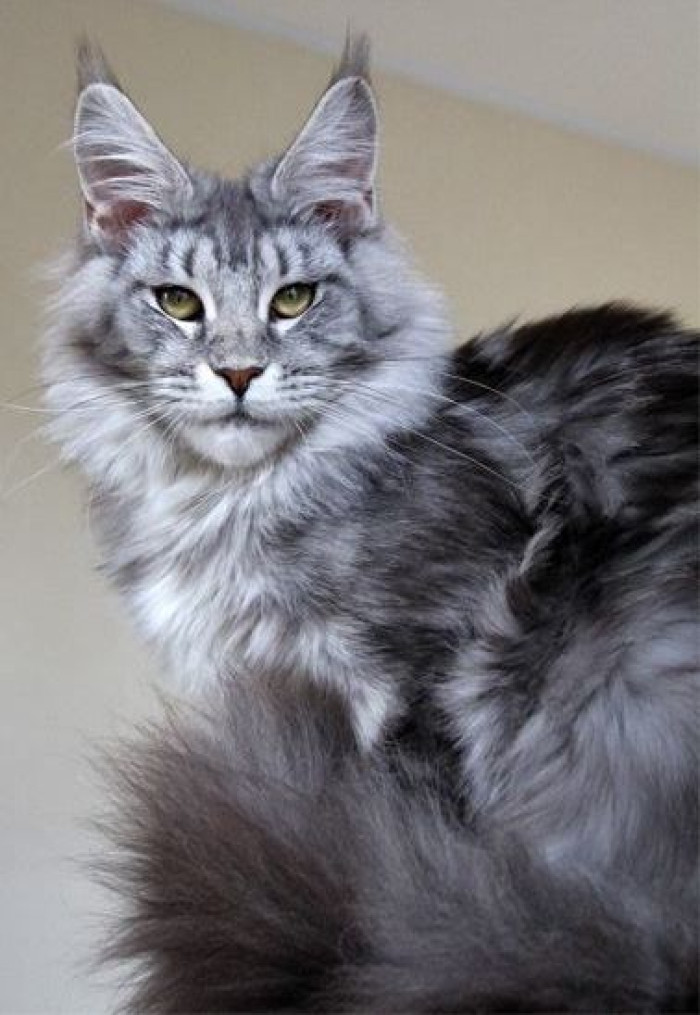
That first photo, the one she snapped in daylight, made the coat look uniformly cool, which is exactly how people convince themselves it’s blue.
Gray Maine Coon vs blue Maine Coon
In casual speech, these terms often overlap heavily. If a cat is uniformly cool gray, “blue” is likely to be the more precise breed-color term.
The difference becomes useful when a reader is trying to understand a pedigree, breeder description, or show classification.
A breeder saying “blue” is not claiming the cat has a fantasy-colored coat. They are using standard cat-fancy terminology.
That same language appears across breeds, which is why blue British Shorthairs and Russian Blues are gray to the average viewer.
Gray vs silver Maine Coon
Silver describes a different effect.
A silver tabby Maine Coon has a pale silver ground with visible tabby markings. The coat can look bright, high-contrast, and almost metallic in strong light.
A solid blue Maine Coon should look more evenly gray without the same silver-tabby pattern.
The confusion comes from distance and photography. Long fur blurs stripes, and bright light can wash a blue coat into a silvery shade.
The CFA color chart separates blue, silver tabby, blue-silver tabby, and smoke classes, showing that these are not interchangeable registry labels.
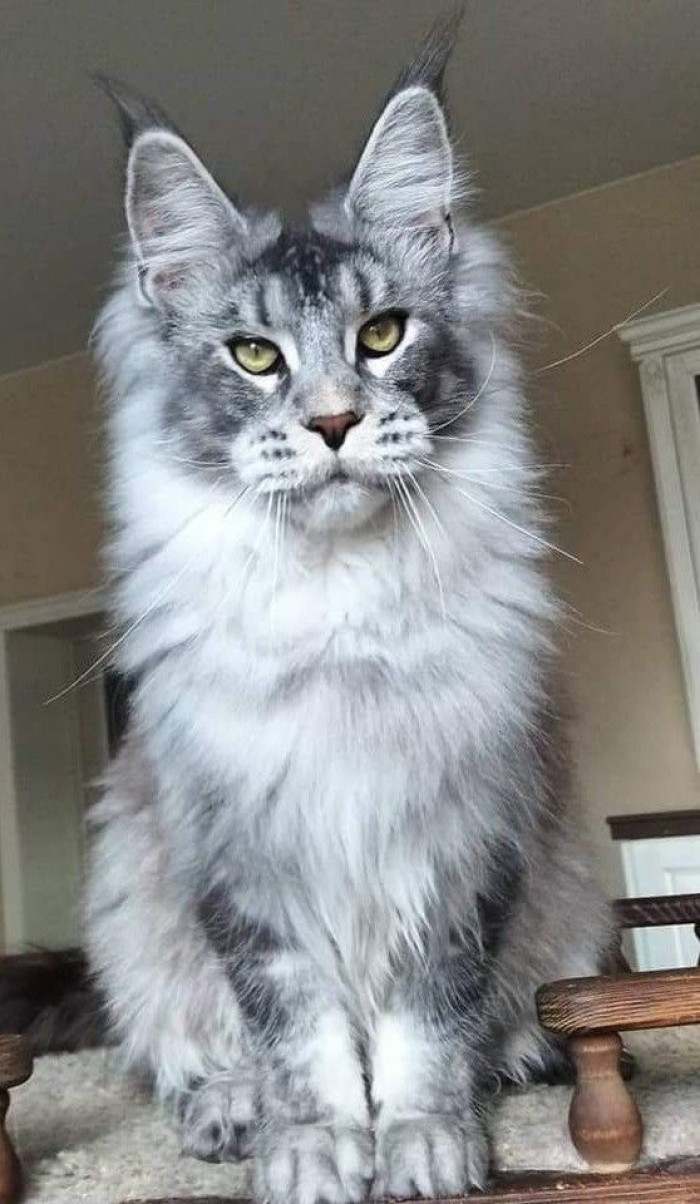
Then came the close-ups, where the pale ground and darker tabby markings made her “gray” cat suddenly read like silver.
Could a gray-looking Maine Coon actually be smoke?
Yes.
Black smoke Maine Coons can look charcoal gray when the pale roots show through. If the cat moves and a much lighter base appears beneath dark outer fur, smoke becomes a strong possibility.
Part the coat gently and look near the roots. That tells you more than a phone photo.
A solid blue coat should not suddenly reveal the same white or silver base characteristic of smoke.
It gets even trickier once you factor in smoke and silver patterns, like the coat combinations explained in Maine Coon Colors and Patterns: A Practical Guide to the Breed’s Coats.
What patterns can gray Maine Coons have?
A gray-looking Maine Coon may appear:
- solid blue
- blue tabby
- blue-and-white
- blue silver tabby
- blue smoke
- black smoke
- silver tabby
The list explains why a generic “gray Maine Coon” image search can look inconsistent. The pictures may show several technically different colors.
Pupperish’s story about a cat with unusual eye and coat genetics is another example of why visual traits do not always fit neatly into casual labels.
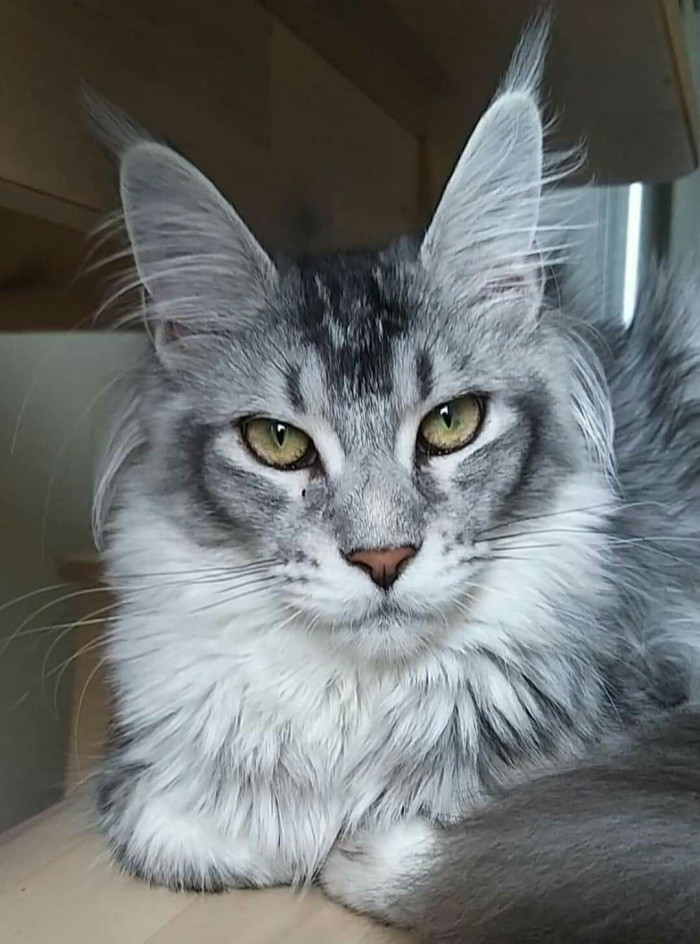
After she watched the cat pace, the undercoat showed through, and everyone started saying “smoke” because charcoal can masquerade as gray.
Are gray Maine Coons rare?
Gray-looking Maine Coons are not one single genetic category, so there is no meaningful breed-wide rarity percentage for “gray Maine Coon.”
Some specific combinations may be less commonly produced than others. That varies by breeding program and region.
If a seller uses “rare gray Maine Coon” as a price argument, ask for the registered color and pedigree rather than relying on the marketing word.
Specific beats vague.
Do gray Maine Coon kittens change color?
Their basic genetic color stays the same, but the appearance can change considerably as the coat develops.
Maine Coons grow a fuller adult coat over several years. The tail becomes heavier, the neck ruff develops, and seasonal density changes. A kitten’s smooth gray coat may later show more contrast, pattern, or pale undercoat.
Light matters too. Slate indoors. Silver-looking outdoors. Darker after the coat gets wet.
The camera adds its own interpretation.
Pupperish has also followed an orphaned kitten whose coat grew back gray, a useful example of how age and coat condition can change the color a photograph seems to show.
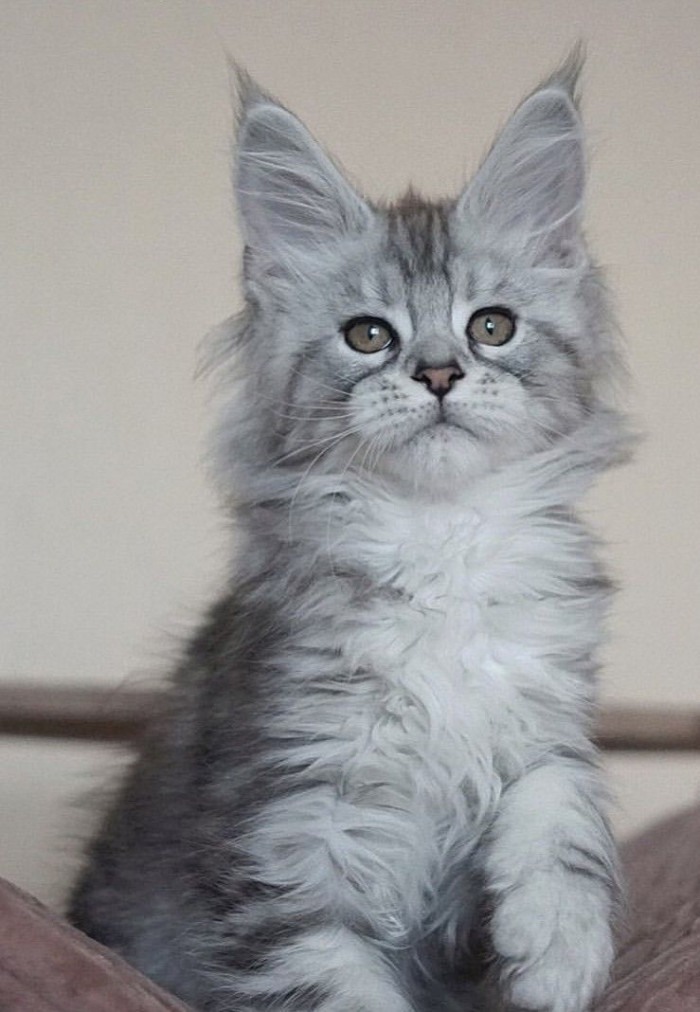
By the time the breeder-style wording got tossed around, the whole thread was arguing over whether the same cat could fit multiple registry descriptions.</p>
Gray coat, ordinary Maine Coon personality
A gray Maine Coon is not known to have a special temperament because of coat color. If the cat is pedigreed, breed tendencies are more relevant than whether the fur looks gray, silver, or blue.
Individual personality remains individual.
The cleanest answer to the “gray Maine Coon” question is therefore slightly counterintuitive: yes, Maine Coons can absolutely look gray, but “gray” may not be the technical color written on the pedigree.
Check for tabby markings. Check the roots. Check whether the coat is even or silvered.
Lighting deserves one more check too. A gray description based on one phone photo may therefore be less precise than it sounds. Pupperish’s story about a stray gray cat who became a daily visitor shows how ordinary gray fur can shift noticeably from image to image depending on the setting.
The practical rule is simple: use gray as a visual description, then use blue, silver, smoke, or the registered pattern when precision matters.
Then the gray starts to make sense.
Her gray Maine Coon was never “just gray,” it was a whole coat-color plot twist.
Think you found the “gray” Maine Coon? See how “blue” can mean slate-gray in solid and tabby coats.
Share this article:





