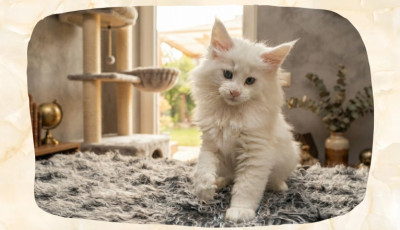
Black Smoke Maine Coon: Why the Coat Changes So Much in Motion

It starts with a cat that looks like it’s wearing charcoal, then suddenly it doesn’t, and nobody can explain why. A black smoke Maine Coon can go from “solid black” to “silver underneath” the second it moves, like the coat is flipping a hidden switch.
The confusion gets messy fast, especially when people are comparing photos taken in different light, or when they’re trying to tell a black smoke from a solid black or a silver tabby. One minute the ruff looks dark, the next minute the pale base flashes through, and suddenly everyone’s arguing about whether it’s really smoke color or just a lighting trick.
Here’s the real giveaway, and it’s not what you see first, it’s what you uncover when the fur separates.
What is a black smoke Maine Coon?
In a smoke coat, the hair is colored toward the outer portion while the base is much lighter. With black smoke, the visible tips are black and the lower portion is silver-white or pale.
The CFA Maine Coon standard recognizes smoke colors within the breed’s accepted color classes.
The key is the hair shaft, not simply whether the cat looks gray in a photograph.
Part the coat gently. A true smoke effect should reveal a noticeably lighter base beneath the darker outer fur.
That makes black smoke very different from a black cat whose coat is merely reflecting bright light.
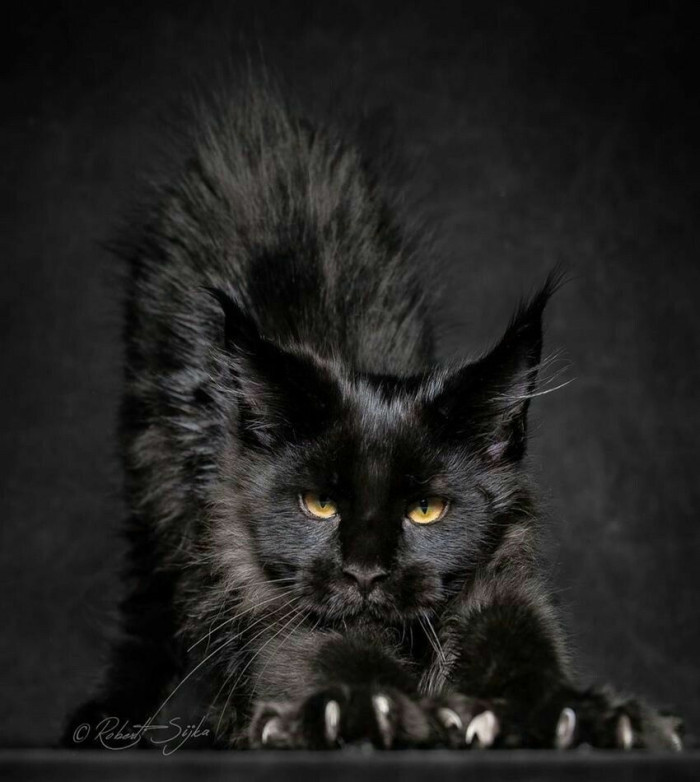
That’s when the coat-parting test matters, because a true smoke effect shows a noticeably lighter base under the darker outer tips.
Black smoke vs solid black Maine Coon
A solid black Maine Coon should have dark color extending much more consistently through the coat. Black smoke has contrast between the dark outer portion and pale roots.
From across the room, the difference may be subtle. In motion, it can become obvious.
This is particularly dramatic around the ruff, sides, belly, and tail because Maine Coons carry so much fur there. The undercoat flashes through as the longer hairs separate.
Pupperish’s collection of black cats photographed in natural light shows how much lighting alone can change a dark coat. Smoke adds a real structural color difference on top of that lighting effect.
Black smoke vs silver tabby Maine Coon
These two are commonly confused because both can show a strong silver component.
A silver tabby has a visible tabby pattern. You should see striping, swirls, or other tabby markings over the pale silver ground.
A black smoke Maine Coon can look much more solid. The silver is concentrated at the base of the hair and appears when the coat separates.
No clear body pattern? Check the roots.
That simple step solves a lot of online color debates.
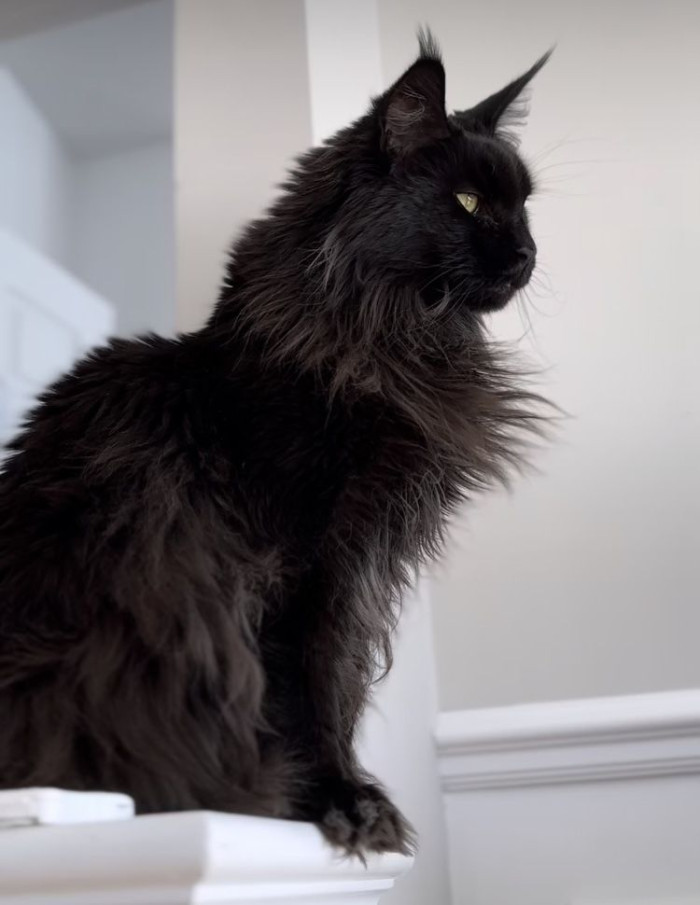
Pupperish’s black-cat photos in natural light make the contrast feel even more confusing, since lighting can fool your eyes before the fur even moves.
Do black smoke kittens change color as they grow?
Their appearance can change substantially. Kittens have shorter coats, and their adult ruff, tail, and body coat are not fully developed. The contrast between dark tips and pale roots may become more visible as the fur lengthens.
Season also matters. Maine Coons can carry a heavier winter coat and a lighter summer coat, so the amount of pale undercoat that shows can shift over the year.
Do not assume that every dark gray kitten will mature into a black smoke adult, though. Correct color identification should be based on the actual coat structure and, in pedigreed cats, breeder and registry records.
This “black smoke” effect is similar to how nature produces surprising dark coat variations across black animals.
Can black smoke Maine Coons have white markings?
Yes. Smoke can appear with white, depending on the cat’s genetics and registry classification.
White on the chest, paws, face, or belly creates another layer of contrast. A black smoke-and-white Maine Coon can therefore show three very different visual areas: dark outer coat, pale smoke base, and true white patches.
That is part of why Maine Coon color naming can become so detailed.
The CFA color prefix chart lists numerous Maine Coon color classes, including blue smoke and other smoke-related combinations, showing how specific registry terminology can get.
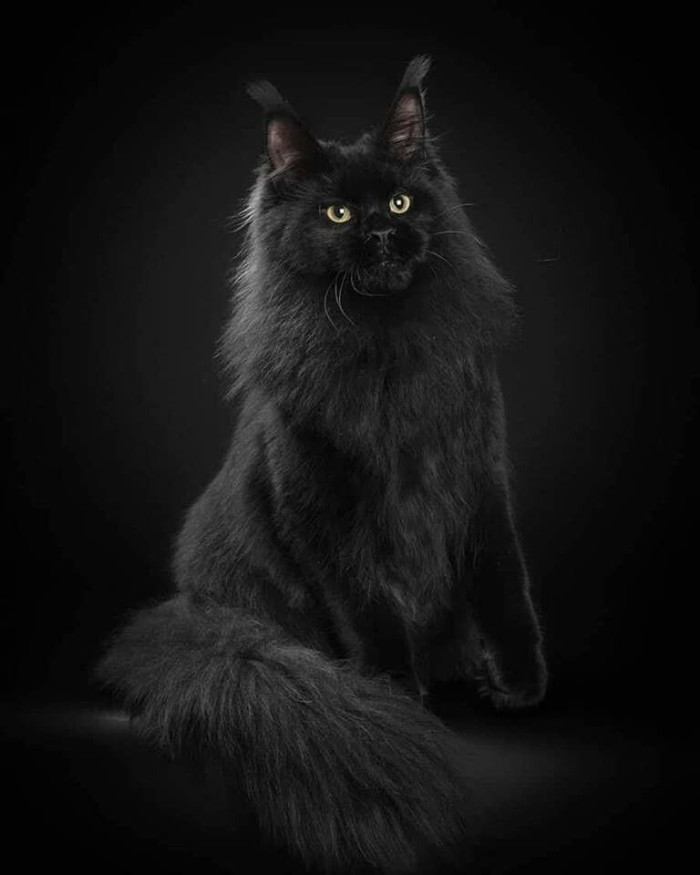
And then the ruff, sides, belly, and tail step in, because those thick Maine Coon zones flash the undercoat when the cat shifts positions.
Are black smoke Maine Coons rare?
Breeder websites often call a color rare because it is uncommon in their own lines. That is not the same as a population-level statistic.
Better wording: black smoke is distinctive and not as frequently seen as some traditional Maine Coon colors.
Avoid invented precision.
Does black smoke change the cat’s personality?
No.
Coat color does not turn a Maine Coon into a more mysterious, calmer, wilder, or more affectionate cat. The internet loves personality stereotypes for dark cats, but those stories belong to culture rather than coat-color science.
Pupperish has spent plenty of time showing how black cats get wrapped in myths. A black smoke Maine Coon deserves the same separation between appearance and personality.
Breed tendencies can be discussed. Individual behavior still wins.
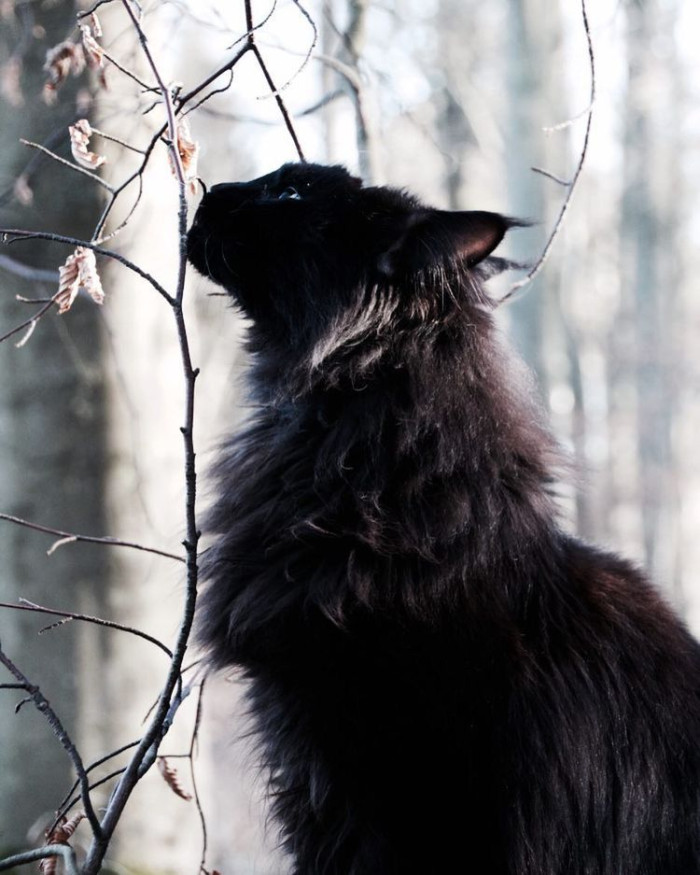
Finally, when you’re staring at a kitten, the whole “does it change?” question hits, because shorter baby coats make the dark tips and pale roots look totally different from adulthood.
Why black smoke Maine Coons photograph so differently
This is one of the few cat colors where a video can sometimes explain more than a still image.
In one frame, the coat lies flat and the cat looks black. In the next, it turns its body and the pale base opens up along the sides. Bright sunlight can push the smoke effect even further, while dim indoor lighting can almost erase it.
The long coat amplifies everything.
That is also why black-cat photography can be difficult. Cameras often lose detail in dark fur. With a smoke Maine Coon, losing shadow detail can hide the feature people are trying to photograph.
A black smoke Maine Coon is best understood at hair-root level. Dark tips create the first impression. The pale base creates the surprise.
And once you know what to look for, it becomes much easier to tell smoke from ordinary black.
Nobody stays convinced until the coat separates and the smoke finally shows its silver base.
Want more than just smoke, silver, and black tips, read this practical guide to Maine Coon colors.
Share this article: