Orange Maine Coon: Why Breeders Call the Color Red

It started with a simple search, someone typing “orange Maine Coon” like it was one clean, easy answer. Then the results hit back, breeders talking about “red,” listings calling the same cat “ginger,” and suddenly everyone is arguing over shade like it’s a family feud.
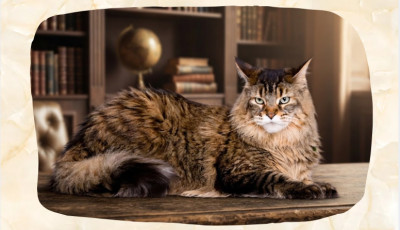
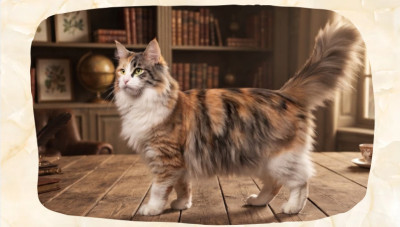
Because the Maine Coon coat does not care what you call it. That “orange” look can land anywhere on the red spectrum, from pale ginger to deep rusty red, and it can show up as red tabby, red smoke, red-and-white, or a dilute cream version. Even the “solid orange” cats often show tabby clues on the face and legs, while the long fur quietly blurs the rest.
Here’s the twist: when you chase the word “orange,” you might be chasing the wrong label, and that is exactly how the confusion sticks.
What color is an orange Maine Coon officially?
The CFA Maine Coon standard uses red rather than orange. Red can appear as a solid-class color and in tabby, smoke, silver, and white combinations.
In practice, the coat can range from pale ginger to deep rusty red depending on genetics, pattern, lighting, and coat density.
Cream is the dilute version of red. It looks much paler and softer.
So an orange-looking Maine Coon could be red, red tabby, red silver, red smoke, red-and-white, or another related classification.
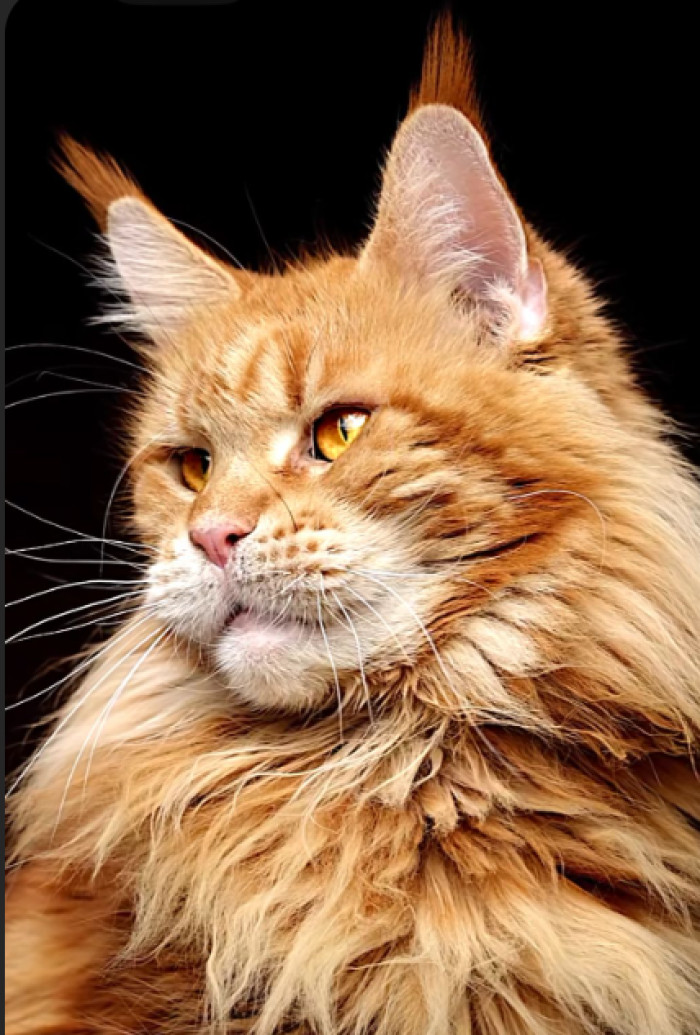
That’s when the breeder terms start showing up, with “red” replacing “orange” in the CFA-style labels for the same exact coat.
Why do orange Maine Coons usually look tabby?
The orange gene interacts with tabby pattern expression in a way that makes striping visible even when the cat may be described casually as “solid orange.”
Look closely at the face and legs. You will often see the classic M-like forehead marking, rings, or faint striping.
On a long-haired Maine Coon, body stripes may be harder to see because the fur breaks up the pattern. The face and tail usually give more clues.
That is why “orange Maine Coon” works as a search phrase but does not tell you the cat’s full registered color.
Red Maine Coon vs orange Maine Coon
Usually, this is terminology rather than a meaningful biological difference.
A breeder may say red. A pet owner may say orange or ginger. Search engines see all three.
Do not split them into different cat types.
The CFA color prefix chart includes Maine Coon classes for red, red tabby, red tabby-and-white, cameo, and related shades. It does not use “orange” as the formal color label.
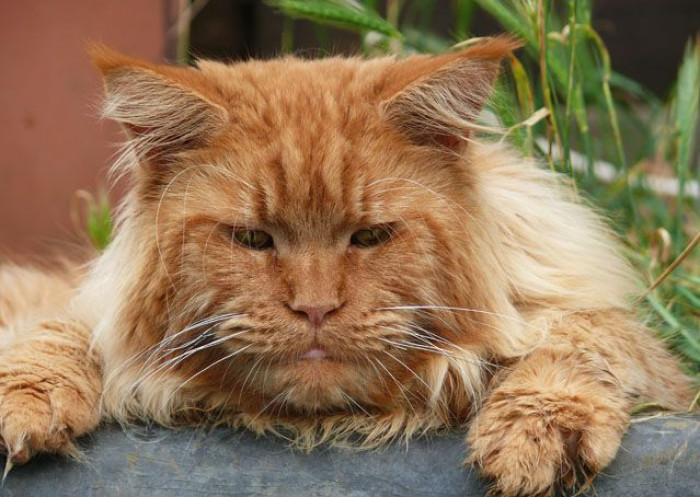
Meanwhile, the “solid orange” cats keep giving themselves away, the M-shaped forehead and faint striping on the face and legs doing all the talking.
Are male orange Maine Coons more common?
Orange coloration is sex-linked, so male cats are more likely than female cats to be orange. The same genetic system is why tortoiseshell and calico coats are overwhelmingly female.
That does not make female orange Maine Coons impossible. They simply need the orange-color instruction on both X chromosomes rather than one.
This is genetics, not personality.
Pupperish’s gallery of orange cats contains exactly the kind of range people imagine when they hear “ginger,” from pale peach to deep orange.
And if you’re wondering about color masking, the White Maine Coon with odd eyes is the perfect comparison.
Do orange Maine Coons have a special personality?
The internet would like the answer to be yes.
Orange cats are stereotyped as chaotic, affectionate, hungry, silly, or unusually friendly. Those descriptions are entertaining, but coat color is not a reliable personality test.
A Maine Coon’s temperament depends on individual genetics, early experiences, socialization, environment, and health. The breed may have broad tendencies, but orange does not guarantee a comedian.
That is why Pupperish’s fluffy orange-cat stories work as individual moments rather than proof that every orange cat behaves the same way.
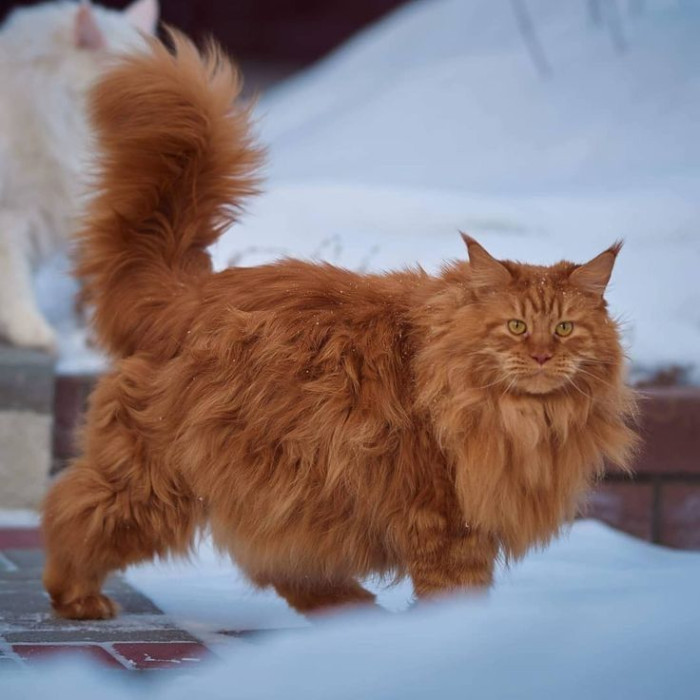
Then the paperwork gets messy, because “orange” never appears as the formal color label, even when search engines treat it like one.
Can orange Maine Coons have white markings?
Yes. Red-and-white and red-tabby-and-white Maine Coons are recognized combinations.
White may appear on the face, chest, belly, legs, and paws in varying amounts. High-white patterns can make the orange areas look even brighter.
Again, the full color name depends on how the red pigment, tabby pattern, and white spotting combine.
What eye colors do orange Maine Coons have?
Eye color is not dictated by the orange coat alone. Maine Coons can have green, gold, copper-toned, or other accepted eye colors depending on the cat and registry rules.
Blue eyes are mainly associated with white or high-white situations rather than ordinary red Maine Coons.
A deep copper eye next to red fur can make the whole cat look warmer. Green creates more contrast.
Neither changes the underlying coat classification.
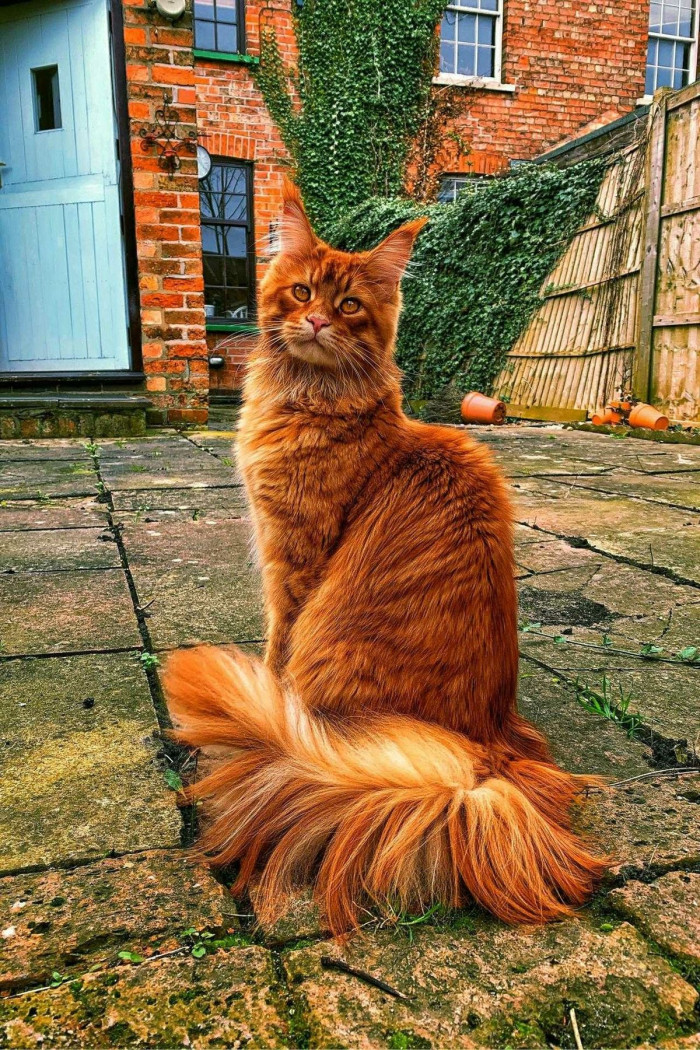
And if you notice more orange males than females, the genetics behind it explains why the pattern feels lopsided in the first place, not why anyone’s cat is “different.”
Does the orange coat change with age?
The genetic color remains red, but the way it looks can shift as the Maine Coon develops its adult coat.
Longer guard hairs, a fuller ruff, and seasonal coat changes affect how saturated the color appears. Sunlight can also make red fur look brighter or more faded.
Kittens may show sharper tabby markings because their coat is shorter. As the fur grows, the pattern can look softer across the body.
Pupperish’s story of an orange cat traveling an unexpected distance shows why “orange” works as an instantly recognizable visual label, even when it says nothing about pedigree.
Is an orange Maine Coon rare?
Red is a recognized Maine Coon color and not an extraordinary mutation. Some exact red combinations may be less common in particular breeding programs, but broad claims that orange Maine Coons are extremely rare are not supported by a universal registry percentage.
If rarity is being used to justify a high price, ask for the pedigree, registered color, health testing, and breeder credentials.
The color is attractive. It does not need inflated scarcity claims.
An orange Maine Coon is best understood as a red Maine Coon in formal color language, often with visible tabby patterning and sometimes with white, silver, smoke, or cream-related effects. The coat can be dramatic.
The personality still belongs to the cat.
The next time someone says “orange,” you’ll know they might be talking about red, tabby, smoke, or something in between.
For more coat chaos beyond red, see Maine Coon Colors and Patterns.
Share this article: