
Maine Coon Size: How Big Do Maine Coons Get?

Some cats look big because they are big. Maine Coons look big for a whole other reason: their bodies are built like a long, muscular rectangle, and their tails and coats add extra drama to every photo.
So when someone sees a 15-pound Maine Coon and thinks, “Wow, that’s huge,” they are not totally wrong. But the real complication is that weight is only part of the picture. Breed standards talk about broad chests, substantial bone, large feet, and a tail that has to match the back, and that silhouette can make one cat seem larger than another cat with the same number on the scale. Even the male versus female averages can blur when winter coats and neck ruffs show up.
A story about a Maine Coon mistaken for a bigger animal is basically the perfect reminder that size is a moving target with this breed.
How big do Maine Coon cats get?
A Maine Coon’s size is better understood as a combination of weight, body length, height, bone, and coat rather than one number on a scale.
Breed standards emphasize a long rectangular body, broad chest, substantial bone, large feet, and a long tail. That silhouette creates much of the visual impact. A 15-pound Maine Coon with a long frame can look larger than a more compact cat of similar weight.
The Governing Council of the Cat Fancy describes Maine Coons as weighty and muscular and notes that males can reach roughly 18 to 20 pounds. It also requires a tail at least as long as the back, another feature that adds to the breed’s overall length.
Pupperish has seen that effect in real cats. A story about a Maine Coon so large he was mistaken for a much bigger animal shows why visual estimates can be misleading once the coat and tail enter the picture.
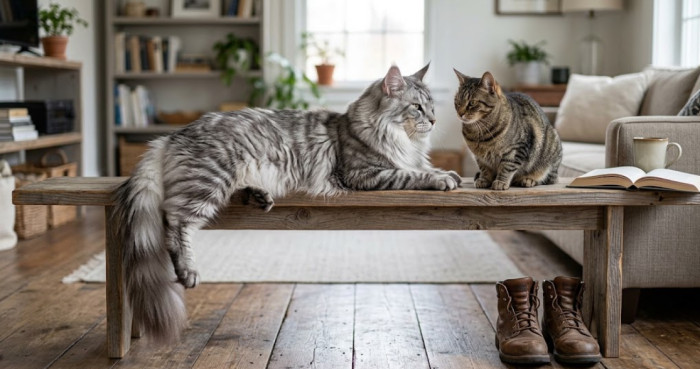
That long rectangular body and broad chest are why a 15-pound Maine Coon can photograph bigger than a more compact cat with the same weight.
Male vs female Maine Coon size
Sex is one of the clearer influences on average adult size.
TICA’s current at-a-glance ranges put adult females at about 12 to 15 pounds and males at about 18 to 22 pounds. Those ranges should be treated as useful reference points rather than hard limits because individual cats can fall outside them.
Males also tend to develop a heavier overall frame. A large neck ruff and broader chest can make the difference look even greater in photographs.
Females are not small cats, though.
A 12-pound female with a long rectangular body, full tail, and winter coat can still dwarf a compact domestic shorthair. The breed standard is about proportion and substance, not simply producing the heaviest possible cat.
How long do Maine Coons grow?
Maine Coons mature later than many people expect.
TICA says they may not achieve full size until three to five years old. CFA gives a similar picture, describing them as a slow-maturing breed that can take up to three years to reach full growth. Different organizations frame the timeline slightly differently, but both agree on the important point: a one-year-old Maine Coon may still have substantial development ahead.
That makes kitten comparisons especially unreliable.
A lanky adolescent may gain muscle, chest width, coat, and overall substance long after it has stopped looking like a tiny kitten. Pupperish’s time-lapse story following Freya from kittenhood is a useful visual example of how dramatically a young cat’s proportions can change.
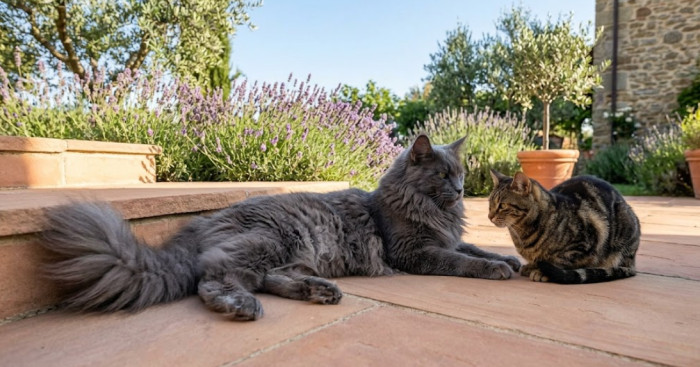
Once you factor in the tail requirement, the “is he really that big?” moment gets even messier, especially when the coat is full and fluffy.
This is similar to the way white Maine Coons can show gold, green, blue, or odd eyes.
Does paw size predict how big a Maine Coon will get?
Big paws are part of the breed’s look, but they are not a precise adult-size calculator.
Maine Coons are supposed to have large, well-tufted feet. A kitten may therefore look as if it needs to “grow into” its paws, yet paw size alone cannot tell you its eventual weight or length.
Pedigree and parental size are more informative when those records are available. Nutrition, sex, individual genetics, and body condition also affect adult weight.
Still, those oversized feet are hard to ignore. They are one reason tiny kittens can look oddly out of proportion before the rest of the body catches up.
Why do Maine Coons look even bigger than they weigh?
The coat does a lot of work, especially on a mature male whose ruff, belly fur, hindquarter coat, and plumed tail extend the visual outline in several directions while a long rectangular skeleton keeps the underlying body genuinely substantial.
Adult Maine Coons carry a semi-long, shaggy coat that becomes fuller around the ruff, belly, hindquarters, and tail. A winter coat can add considerable visual volume without adding anything comparable on the scale.
Then there is posture. A stretched-out Maine Coon can occupy an impressive amount of sofa.
Long whiskers, tall ears, a broad chest, and a tail that can balance the length of the back all extend the outline. In a close-up photograph, those features can make an ordinary large Maine Coon look record-breaking.
That is why King Aslan’s substantial Maine Coon frame is easier to appreciate in context than through a single isolated number.
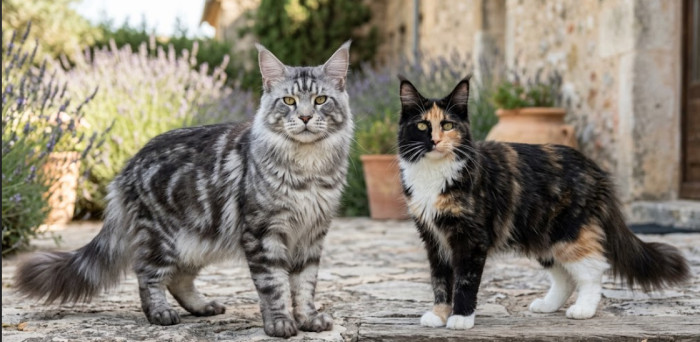
And when you compare male averages around 18 to 22 pounds to females around 12 to 15 pounds, the neck ruff and winter fluff can make the gap look wider than it is.
Then there’s the slow-maturing timeline, because a Maine Coon that looks nearly grown at first can keep stretching out until about three to five years old.
What is a healthy Maine Coon size?
Bigger is not automatically better.
Breed standards reward balance, muscle, bone, and proportion. They do not call for obesity. An overweight 22-pound cat is not a more impressive Maine Coon than a lean, muscular 16-pound cat simply because the scale reads higher.
Body condition matters more than chasing a target weight. Ribs should not be buried under excessive fat, and a veterinarian can assess whether an individual cat is carrying an appropriate amount for its frame.
This is also why “How can I make my Maine Coon huge?” is the wrong goal. Growth should be supported with appropriate nutrition, not pushed through overfeeding.
Is every very large longhaired cat a Maine Coon?
No. Large size is only one trait. Norwegian Forest Cats, Ragdolls, Siberians, mixed-breed longhairs, and large domestic cats can all be substantial.
Maine Coon identification also depends on body shape, head and muzzle, ears, coat texture, tail, and documented ancestry when pedigree matters. Size can start the question. It cannot finish it.
The useful benchmark is therefore simple: Maine Coons are among the largest recognized domestic cat breeds, mature slowly, and often look even bigger than their weight suggests. Individual variation is wide enough that one viral giant should never become the standard every other Maine Coon is expected to meet.
Nobody’s guessing right until the tail, coat, and slow growth finally stop playing tricks on their eyes.
Want a bigger color contrast, check out why breeders call orange Maine Coons “red”.
Share this article:





