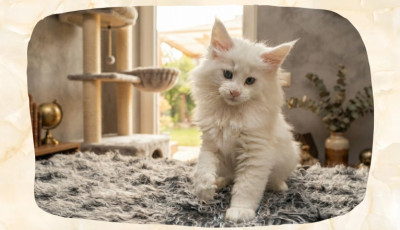
Calico Maine Coon: Colors, Genetics, and What Makes the Pattern Different

A 28-year-old woman refused to stop talking about her neighbor’s new calico Maine Coon, even after the first “that’s just a tortie” argument turned into a full-on color debate. Because on a Maine Coon, the coat is never just “a little patchy,” it’s long, shaggy, and loud, with that big ruff and tail that makes every color break look intentional.
Here’s the complicated part, though: the calico pattern has no template. One side of the face can lean dark, the other can lean orange, and a white chest can split into black on one shoulder and red on the other. Then you add the curveball, dilute calico, where black turns blue-gray and red turns cream, so the whole thing looks softer and more pastel.
By the time the conversation reached “why are most calico Maine Coons female,” even the people who thought they were just looking at a cat had to admit, this story is basically genetics with fur.
What does a calico Maine Coon look like?
The classic calico look includes white plus distinct areas of black and red. On a Maine Coon, those colors sit on a long, shaggy coat with a prominent ruff, large tail, and fur between the toes.
The pattern is not symmetrical. One side of the face may be dark while the other is orange. A white chest can break into black on one shoulder and red on the other. No template controls the layout.
That randomness is the appeal.
A dilute calico uses softer versions of the same basic colors. Black becomes blue-gray, while red becomes cream. The result looks more pastel than the high-contrast classic calico.
The CFA coat-color guide treats calico as a parti-color pattern rather than a breed. Maine Coons are among the pedigreed cats that can display it.
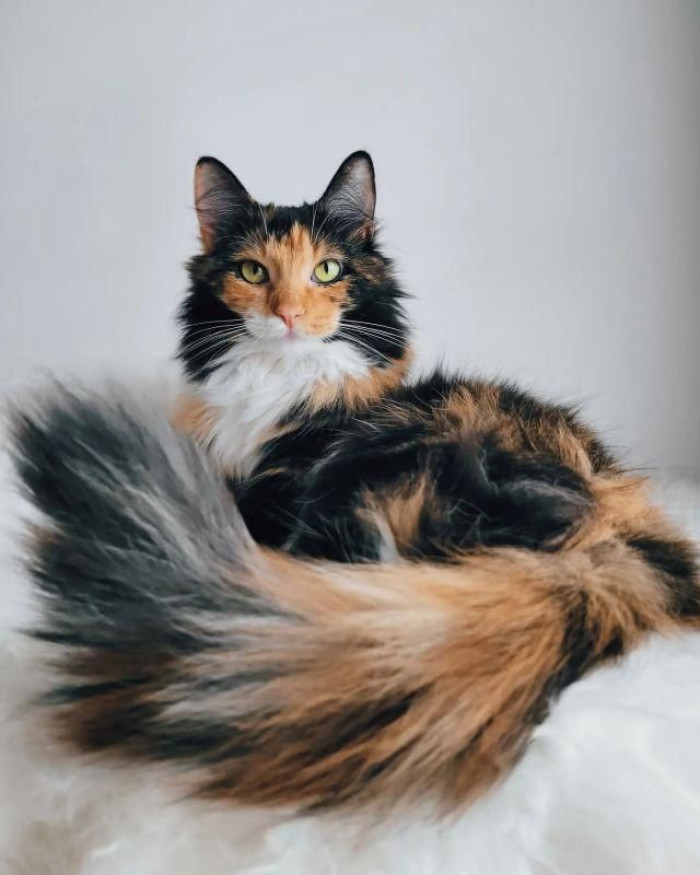
That’s when the neighbor’s cat stopped being “cute” and started being evidence, with every patch on the face and shoulders proving the pattern is chaotic, not symmetrical.
Calico vs tortie Maine Coon
The easiest distinction is white.
A tortoiseshell Maine Coon is primarily a mixture of dark and red or cream color. A calico has substantial white in addition to those colors. The white often makes the colored areas look more like separate patches rather than a fine mixture.
There are edge cases. Cat-color terminology is detailed, and different registries can use more specific class names for show purposes.
For a general reader, the visual rule works well: lots of white plus red and dark patches points toward calico. Little or no white points toward tortoiseshell.
Pupperish’s calico rescue story shows how recognizable the three-color pattern can be even outside a breed-specific context.
Why are most calico Maine Coons female?
Orange and non-orange coat color are linked to the X chromosome. Female cats generally have two X chromosomes, which allows different cells to express different color instructions. That creates the patchwork of orange and dark color associated with torties and calicos.
Male cats generally have one X and one Y chromosome, so they usually do not have the same two-color X-linked setup.
Rare exceptions happen.
A male calico may have an atypical chromosome combination such as XXY, or another unusual genetic mechanism may be involved. The reason male calicos become newsworthy is exactly that: they are uncommon.
The CFA’s explanation of coat patterns also stresses that calico and tortoiseshell describe patterns, not breeds.
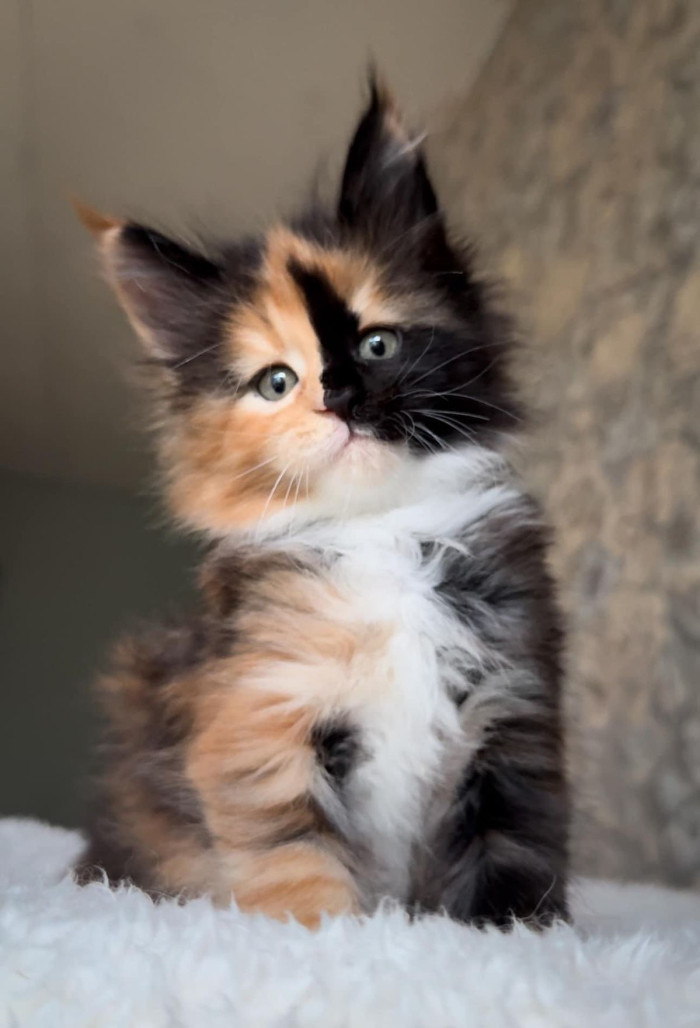
Then the tortie vs calico argument got real, because the white was the giveaway, and the colored areas looked like separate patches instead of a blended mix.
Genetics gets even wilder when you see how every blue-eyed person descends from one single mutation-holder.
Are calico Maine Coons rare?
That means claims such as “only X percent of Maine Coons are calico” should be treated cautiously unless the source explains where the population data came from.
Male calico Maine Coons are a different story. The chromosome combination needed to create the pattern in a male is genuinely unusual.
The coat itself is not evidence that a cat is purebred, either. Domestic longhair cats can be calico too.
Can a calico Maine Coon be tabby as well?
Yes. If the colored areas show clear tabby striping, people may use terms such as torbie-and-white or patched tabby-and-white depending on the registry and exact pattern.
This is where casual color names and show terminology separate.
For an owner, “calico” may be enough to describe the look. For a pedigree or show entry, the classification can be much more precise.
That difference is similar to what Pupperish has covered in calico cats living alongside lynx: the eye catches the broad color pattern first, while finer classification comes later.
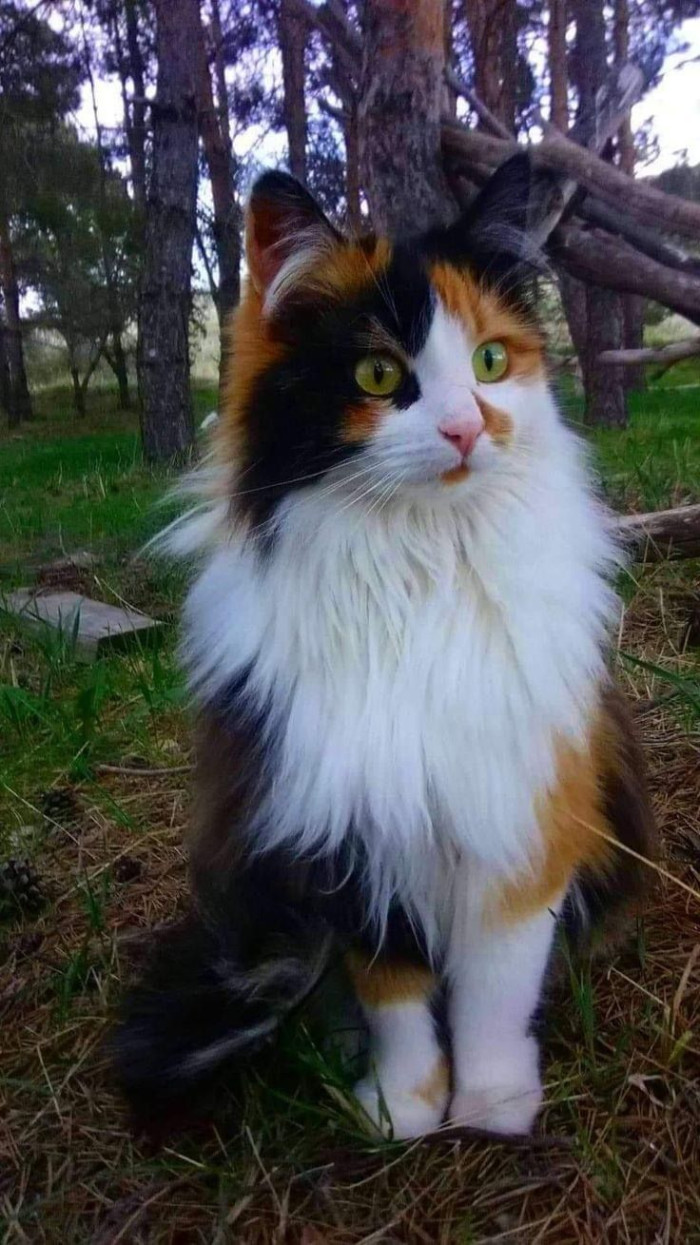
After that, the dilute calico detail threw everyone off, since blue-gray and cream can make the whole coat feel pastel, not high-contrast.
Finally, when the group landed on the X-chromosome explanation for why most calico Maine Coons are female, the “random” patchwork suddenly sounded a lot less random.
Does a calico coat affect temperament?
No coat pattern guarantees a personality.
Tortoiseshell and calico cats are often described online as bold, spicy, or opinionated. The nickname “tortitude” has turned into a cultural shorthand, but a coat is not a personality diagnosis.
Maine Coons are generally described by breed organizations as friendly and social, yet individuals vary widely. A calico Maine Coon can be outgoing, reserved, clingy, independent, playful, or some mixture of all of those.
Judge the cat in front of you.
Why the pattern looks especially dramatic on Maine Coons
Calico stands out on any cat. On a Maine Coon, the scale changes the effect.
The colored patches stretch across a larger body and continue through a long coat, full tail, chest ruff, and breeches. A small patch on a shorthaired cat can become a long streak on a Maine Coon because the fur itself is longer.
Movement changes the picture too. The undercoat shifts, the tail spreads, and the ruff frames the face differently from one angle to another.
That is why two photos of the same calico Maine Coon can almost look like two different cats.
Pupperish has another example of a calico’s visual impact in the story of Dusya and Linda, where the coat is instantly identifiable even in an unusual setting.
A calico Maine Coon is not a separate breed, not automatically rare, and not guaranteed to have a particular temperament. What it does have is one of the most variable color layouts possible on one of the largest, shaggiest domestic cat breeds.
Plenty of visual drama. No extra mythology required.
The family dinner did not end well, but nobody forgot the calico pattern.
Want another cat-breeds conflict, read about the AITA argument over choosing British Shorthair?
Share this article: