
Blue Maine Coon: What “Blue” Really Means in Cat Color Terms

It started with a “blue” Maine Coon listing that looked exactly like every gray cat photo you have ever scrolled past. The coat was that cool, smoky gray, the ruff and tail looked lighter, and the whole thing screamed “yep, that’s blue,” right?
Then the confusion hit, because the same cat could be described as blue, gray, blue tabby, silver, smoke, or even “blue-and-white,” depending on who wrote the caption and what registry they were using. One person swore the tabby markings were obvious, another said the smoke effect was the real story, and suddenly “blue” stopped being a color and started being a guessing game.
Here’s the part where the coat looks simple, but the naming is not.
What does a blue Maine Coon look like?
A solid blue Maine Coon has a cool gray coat without obvious black striping. Because the breed has long fur, the color can look lighter around the ruff, belly, and tail where the coat separates and catches more light.
Blue can also combine with tabby patterns, silver, white, cream, and smoke effects.
So “blue Maine Coon” is sometimes a broad visual description rather than the cat’s full technical color name.
A blue tabby, for example, still has visible tabby markings. A blue smoke has pale roots under darker blue outer fur. A blue-and-white Maine Coon has clear white areas added to the blue coat.

That gray-looking Maine Coon listing got people arguing fast, because the ruff and belly can catch light and make “blue” read lighter than it really is.
Why is a gray cat called blue?
In cat breeding, “blue” traditionally describes diluted black pigment. The dilution gene changes how pigment is distributed in each hair, making black appear much lighter.
The result is gray to human eyes.
This naming is not unique to Maine Coons. Russian Blues and British Shorthairs are famous examples of cats commonly described as blue.
Pupperish’s story about a tiny Russian Blue gives a good visual reference for how “blue” is used as a color word in the cat world even though the coat reads as gray.
Blue Maine Coon vs gray Maine Coon
For breed terminology, many cats casually called gray would be registered as blue. Online searches, however, show that people use both phrases.
That means the useful distinction is not “blue versus gray” as if they were always separate genes. It is whether the cat’s actual registered color is blue and whether another pattern, such as silver or smoke, is involved.
A gray-looking Maine Coon might be blue. It might also be black smoke, silver tabby, blue silver, or another combination that photographs gray.
Look past the first impression.
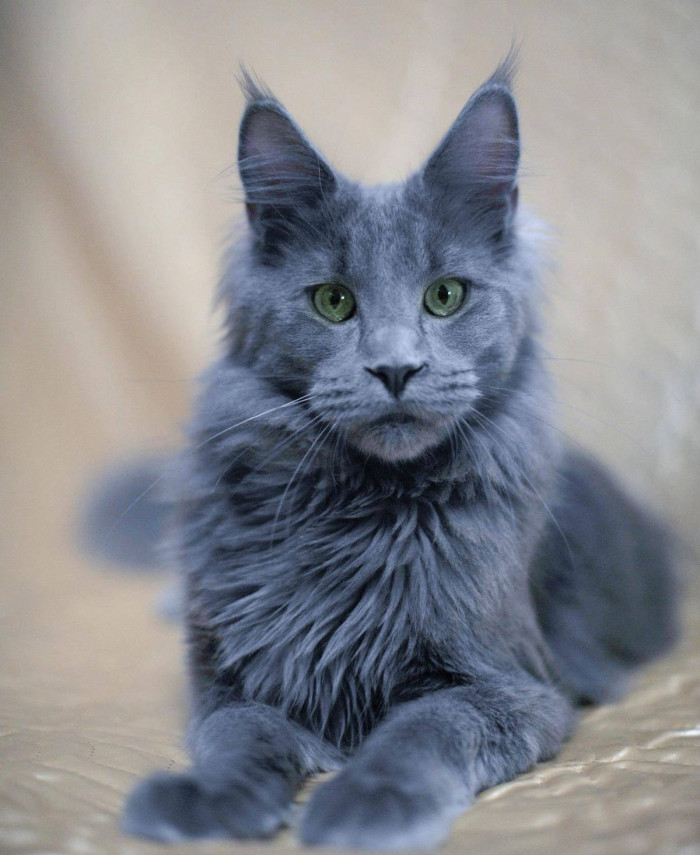
Then someone brought up the actual breeding term, where “blue” means diluted black pigment, and the whole “gray versus blue” debate got louder.
Can blue Maine Coons be tabbies?
Absolutely. Blue tabbies can have classic, mackerel, or other accepted tabby patterns depending on the registry.
On a long-coated Maine Coon, those markings can look soft and blurred around the flanks. Kittens may show them more sharply before the adult coat fills out.
Pupperish has featured a blue tabby cat in a photography story, which shows how a cool gray coat and tabby pattern can exist together without the cat appearing remotely “blue” in a literal sense.
This is similar to the black smoke Maine Coon that looks solid black until it moves.
What eye colors do blue Maine Coons have?
Maine Coon eye color is not determined simply by having a blue coat. Breed standards allow a range of eye colors, and the relationship between coat and eye color depends on the exact color class.
Blue eyes are especially associated with white or high-white cats rather than ordinary solid blue Maine Coons.
That distinction prevents another common misunderstanding: a blue Maine Coon refers to coat color, not eye color.
The CFA color prefix chart lists blue Maine Coons separately from blue-eyed white Maine Coons, making the terminology easy to see in registry form.
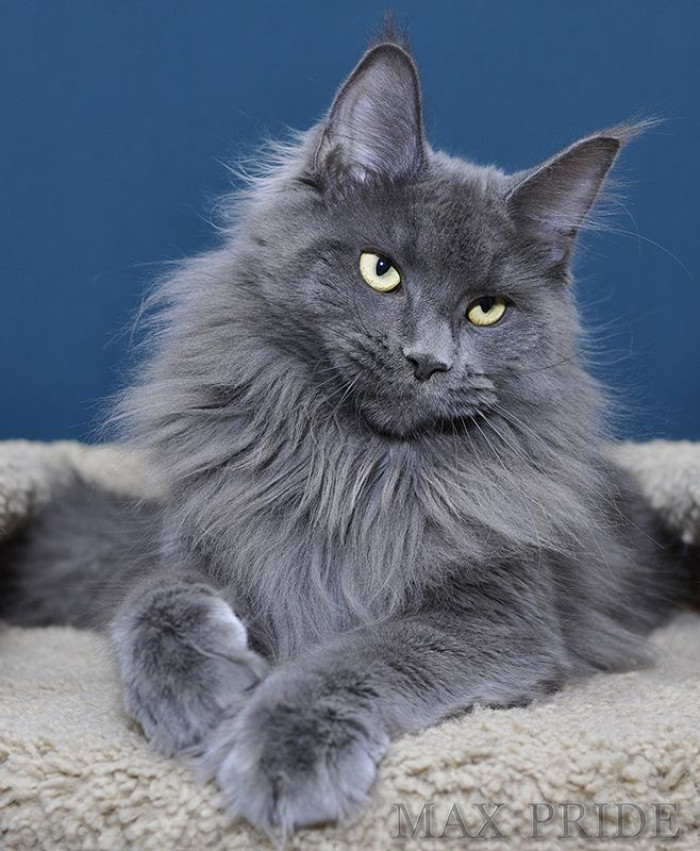
After that, the talk shifted to how a “blue tabby” can still show classic or mackerel markings, even when the long fur blurs the edges in photos.
Are blue Maine Coons rare?
Blue is recognized and established within the breed. It is not an impossible mutation or a newly created color.
Whether it is common in a particular region depends on breeding lines and what local breeders produce. That makes broad rarity claims difficult to support.
The better question is often whether a specific combination is unusual. Solid blue may be easier to find than a particular blue smoke, blue silver, or blue-and-white pattern in one local market.
Does the coat change as a blue Maine Coon grows?
The genetic color does not turn into a different basic color, but the way it looks can change.
Maine Coons mature slowly. Their coat becomes longer and fuller, the ruff develops, and seasonal shedding changes density. Those changes alter how light moves through the fur.
A kitten that looks evenly gray may become much more textured as an adult.
The same coat can also look steel-gray by a window and almost silver in direct sun.
Cameras make the shift even stronger. Pupperish’s close-up photographs of cat eyes and fur show how lighting and magnification can change the apparent color of a cat’s features.
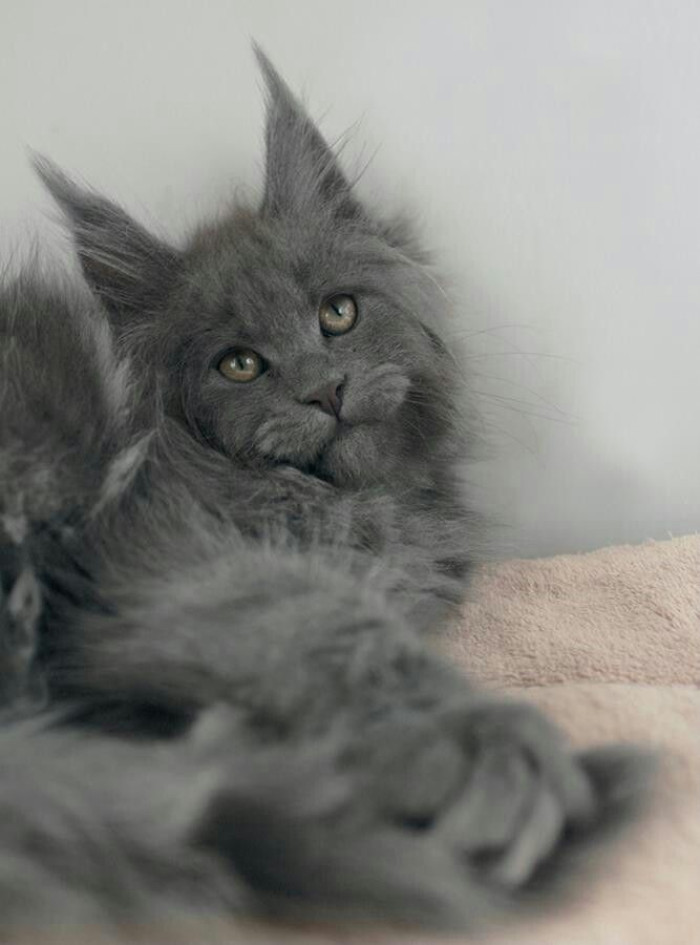
Finally, the listing’s details, like whether it was blue smoke or blue-and-white, became the deciding factor for what the cat should be called.
Blue is a color, not a personality
A blue Maine Coon is still a Maine Coon. The coat color does not reliably predict whether the cat will be calm, cuddly, vocal, playful, or independent.
That is worth saying because color stereotypes spread quickly online.
Choose a cat based on health, temperament, responsible breeding or rescue history, and fit with the household. Let the blue coat be the visual bonus.
Blue also appears in other established cat breeds, so the word itself is not a Maine Coon marker. Pupperish’s guide to cat breeds often discussed by allergy-conscious owners includes the Russian Blue, a useful visual comparison for the same cat-fancy color term appearing on a very different body and coat type.
Once the terminology clicks, the color is easy to understand: “blue” is the cat-world name for a diluted black coat. On a Maine Coon’s long fur, that dilution can produce one of the softest-looking versions of an already dramatic breed.
The coat may look gray, but the label depends on what’s hiding underneath the “blue.”
Still unsure if “blue” is actually smoke, silver, or tabby? Check out this practical guide to Maine Coon colors and patterns, including smoke, silver, and tabby.
Share this article:





