Dog Owner Asks Why His Golden Retriever Randomly Plays Dead In The Middle Of Their Walks

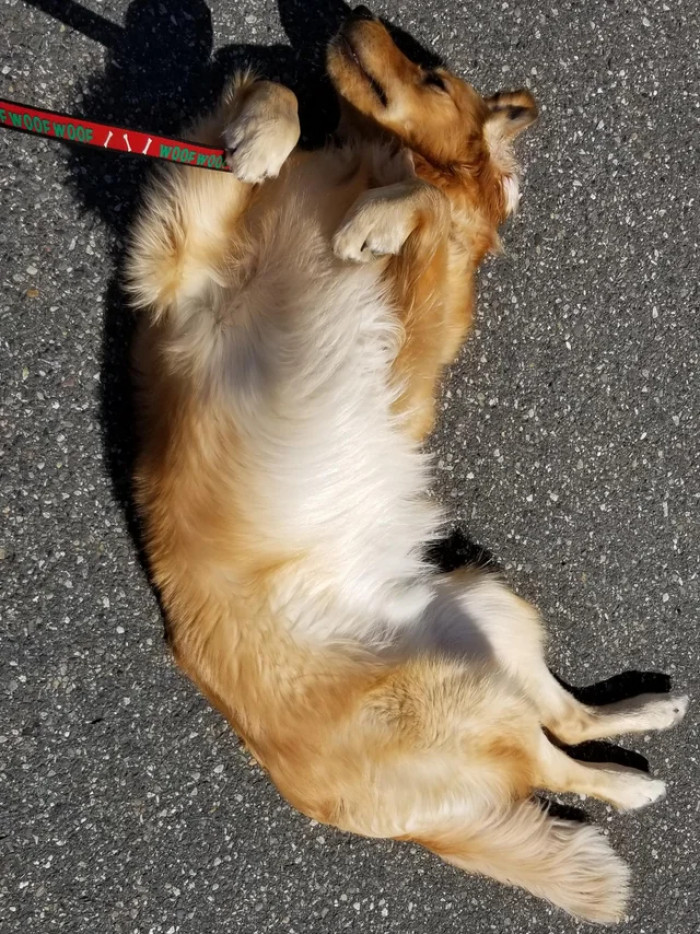
Some dogs make walks look effortless, and then there is Riley, a Golden Retriever who apparently has a very different idea of exercise. One minute he is out on the sidewalk, the next he is stretched out like he has called it quits.
A Reddit user shared the odd behavior in a Golden Retriever forum, saying Riley keeps playing dead in the middle of walks and his owner cannot figure out why. The post quickly drew a wave of reactions, from people joking about the pup to others guessing what might be behind the dramatic flop.
Now the internet is trying to solve the mystery of a dog who seems perfectly happy to stop, drop, and refuse to budge. Read on.
All dog owners have at least one question concerning their furry pup's inexplicable behavior

Is Riley trying to steal some precious nap time in the middle of walks? It's odd since most dogs can't wait to go outside.
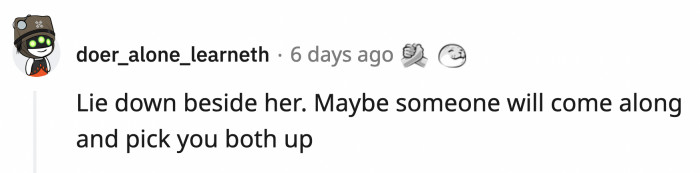
In order to understand Riley, OP has to act like Riley. Maybe OP can try lying beside Riley to figure out why he loves the hot pavement so much?
One explanation for a Golden Retriever playing dead during walks could be related to learned behavior, where the dog has associated this action with gaining attention or receiving treats from its owner.
This phenomenon is often linked to the principles of operant conditioning, where behaviors that are reinforced tend to be repeated. In this case, if the dog receives a positive response when it plays dead, it may continue to do so, even in contexts where it seems unnecessary.
That theory would explain why Riley keeps making the same move.
Research indicates that dogs often engage in playful behaviors that mimic survival tactics, which can be both entertaining for them and an opportunity for bonding with their owners.
In fact, these behaviors can serve as a way for dogs to express their emotional state and invite interaction.
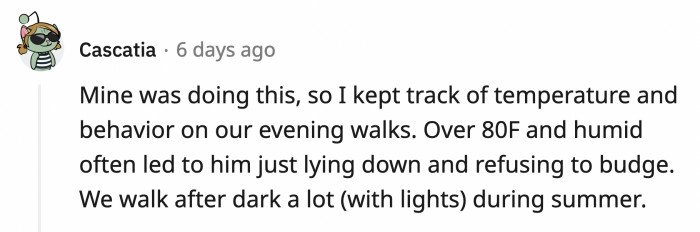
Judging from the picture, OP and Riley are outside in the middle of the day. The high temperature could be too much for Riley's little toe beans.
OP is a young gentleman pup, so it's probably not about aches and pains.
We second this request. It could stop Riley from playing dead every few steps. Also, it would be adorable.

A study conducted by researchers at the University of Pennsylvania found that dogs who lack sufficient mental and physical stimulation are more likely to display unusual behaviors, such as sudden playfulness or lethargy. This suggests that a dog playing dead could be a way to cope with boredom during walks.
To address this, owners are encouraged to incorporate varied activities into their dog's routine, such as interactive toys, agility training, or socialization with other dogs. This not only keeps the dog engaged but also strengthens the bond between the owner and pet through shared experiences.
Sometimes the simplest explanation is the one that fits best.
Interestingly, some behaviors that may appear random can often be linked to specific stimuli in the environment.
And if Riley’s “play dead” is confusing you, this matches the Redditor who refused to recall his dog after it bothered someone at the beach.
Riley looks at home down on the pavement, refusing to budge.
Could Riley simply be asking for belly rubs in the middle of his afternoon walks?

OP can try sitting with Riley and see what's so appealing about the pavement that he prefers it over walks. Plus, if it's too hot for OP, then it would mean it's too hot for Riley as well.
Research conducted by the Animal Behavior Society indicates that dogs are particularly adept at social learning, meaning they can learn behaviors by observing others. This capacity can sometimes lead to behaviors that may appear random or confusing to their owners. For instance, if the Golden Retriever has seen another dog play dead, it might mimic this behavior in hopes of receiving similar rewards, such as laughter or attention from its owner.
This type of learning underscores the importance of social interactions for dogs. Owners can harness this social learning by demonstrating desired behaviors and rewarding them, reinforcing positive actions and discouraging those that are deemed out of context.
Riley may have picked up the drama somewhere along the way.
Effective training techniques can help harness and redirect unwanted behaviors.
Methods like clicker training not only reinforce good behavior but also enhance the dog's confidence and responsiveness.
It will depend on how well-trained a puppy Riley is; otherwise, it could cause a new set of problems for OP.
Advice from a fellow Golden Retriever owner whose dogs also lay down when they sensed their walk was almost over.
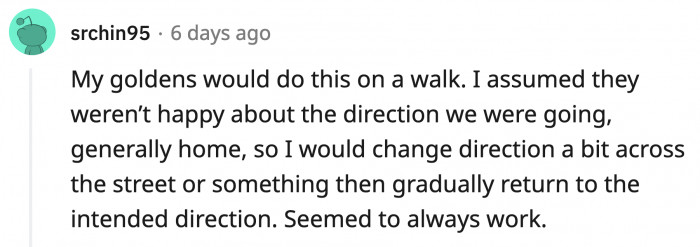
If OP is up for it, he can try carrying Riley until they get home, but that won't answer why it keeps happening.

In examining the psychological well-being of pets, it's crucial to consider how a pet's behavior reflects its emotional state. Dogs that are well-adjusted and emotionally secure tend to display more stable behaviors. Conversely, unexpected behaviors, such as playing dead, can indicate underlying stress or a need for reassurance.
To create a supportive environment for the dog, owners should ensure a consistent routine, provide safe spaces for the dog to retreat, and engage in regular training sessions that foster trust and communication. This not only enhances the dog's emotional health but also improves overall behavior.
That is one very committed sidewalk performance.
Moreover, consistency in training is critical for behavioral modification.
Creating a routine for training sessions can significantly enhance the learning process, ensuring that the dog understands what is expected of them.
It could either be caused by the hot temperature, or Riley wants to be carried like a baby.
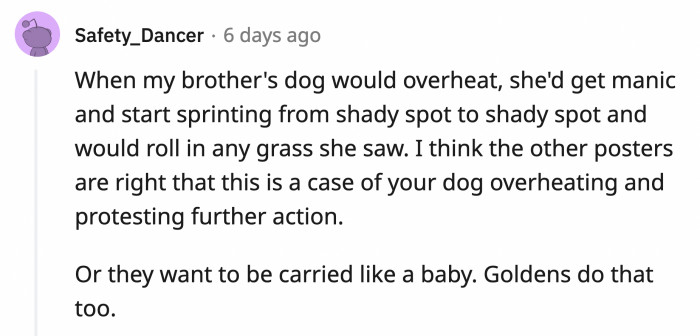
OP should explore both hypotheses. They can try walking when it's cooler and the sun is not shining so brightly, buy Riley shoes, or just carry him all the way home.
Unfortunately, OP hasn't shared any updates about Riley's walking habits. I do think the people suggesting that it's too hot are onto something. Or Riley just really wants to be carried.
The curious case of a Golden Retriever playing dead mid-walk raises interesting questions about the role of socialization in canine behavior. The article highlights that socialization is not just a trend but a fundamental part of a dog's development that shapes their interactions with the world around them. A well-socialized dog is typically more comfortable in various environments and less prone to anxiety or behavioral issues.
This Golden Retriever's playful antics may suggest a strong bond with its owner and a level of comfort in their shared experiences. Such behaviors, even when puzzling, are often rooted in the dog's social experiences and the way they have been exposed to different stimuli. The importance of these interactions cannot be overstated, as they are essential in helping dogs navigate their surroundings effectively and confidently.
The peculiar behavior of a Golden Retriever playing dead during walks highlights the intricate relationship between dogs and their owners. This incident invites a deeper exploration into canine psychology, suggesting that understanding such quirky behaviors can significantly enhance the bond shared. By examining the motivations behind this playful act, owners can transform what may initially seem like a nuisance into an opportunity for deeper engagement and enrichment in their dog's life. Recognizing these actions as more than mere antics paves the way for a more harmonious relationship, where both dog and owner can thrive in their shared experiences.
Ultimately, the behavior of pets can often mirror the psychological complexities of their environments and interactions.
Wondering about neighbor drama too, read how people debated rights to keep dogs indoors during outdoor activities.
Share this article: