
15 Types of Owls With Pictures and Identification Clues

Some people don’t recognize a favor, and this owl guide proves it fast. One minute you’re staring at a “mystery bird” in the yard, the next minute you’re convinced it has the wrong face, the wrong eyes, and the wrong vibe.
It started with a simple problem: you tried to identify what you were seeing using only a quick glance. The clues kept playing tricks, barn owls look almost heart-shaped from the right angle, barred owls can look horrifying when they’re tucked or sleeping face down, and snowy owls can look almost white in open northern light.
Now you’re stuck trying to match posture, ear tufts, and chest patterns before the owl roosts again.
Fast Owl Identification Tips
- Heart-shaped face and dark eyes usually point toward a barn owl.
- Large ear tufts and a heavy body suggest a great horned owl or Eurasian eagle-owl.
- No ear tufts, dark eyes, and horizontal chest bars fit a barred owl.
- Long legs on open ground are a strong clue for a burrowing owl.
- White plumage with dark spotting indicates a snowy owl, especially in open northern habitat.
15 Types of Owls From Around the World
List:
1. Barn Owl
Barn owls have white or pale heart-shaped faces, dark eyes, long legs, and slim bodies. Their call is a harsh screech rather than the classic hoot. They hunt over fields and often roost in barns, towers, hollow trees, and other sheltered structures.
Pairs and siblings can also appear unusually close. Images of barn owl sisters resting together show the narrow face and pale plumage of barn owls from angles that a standard side profile misses.

2. Great Horned Owl
The great horned owl is a powerful, bulky owl with large ear tufts, yellow eyes, and a white throat patch. Its plumage varies by region but usually combines gray, brown, and black barring. It occupies forests, deserts, wetlands, suburbs, and city parks across the Americas.

3. Snowy Owl
Snowy owls are large, pale, and adapted to open Arctic landscapes. Adult males may become almost white, while females and younger birds carry heavier dark bars. Unlike many owls, they can hunt in daylight, especially during long northern summers.

4. Barred Owl
Barred owls have rounded heads, dark eyes, and no ear tufts. Horizontal bars cross the upper chest, while vertical streaks run lower down. Their well-known call is often written as “Who cooks for you?”
Posture can mislead observers. Young owls may rest in positions that look alarming, and young barred owls have been photographed sleeping face down. A stretched body, lowered head, or compressed feathers can temporarily hide the normal silhouette.

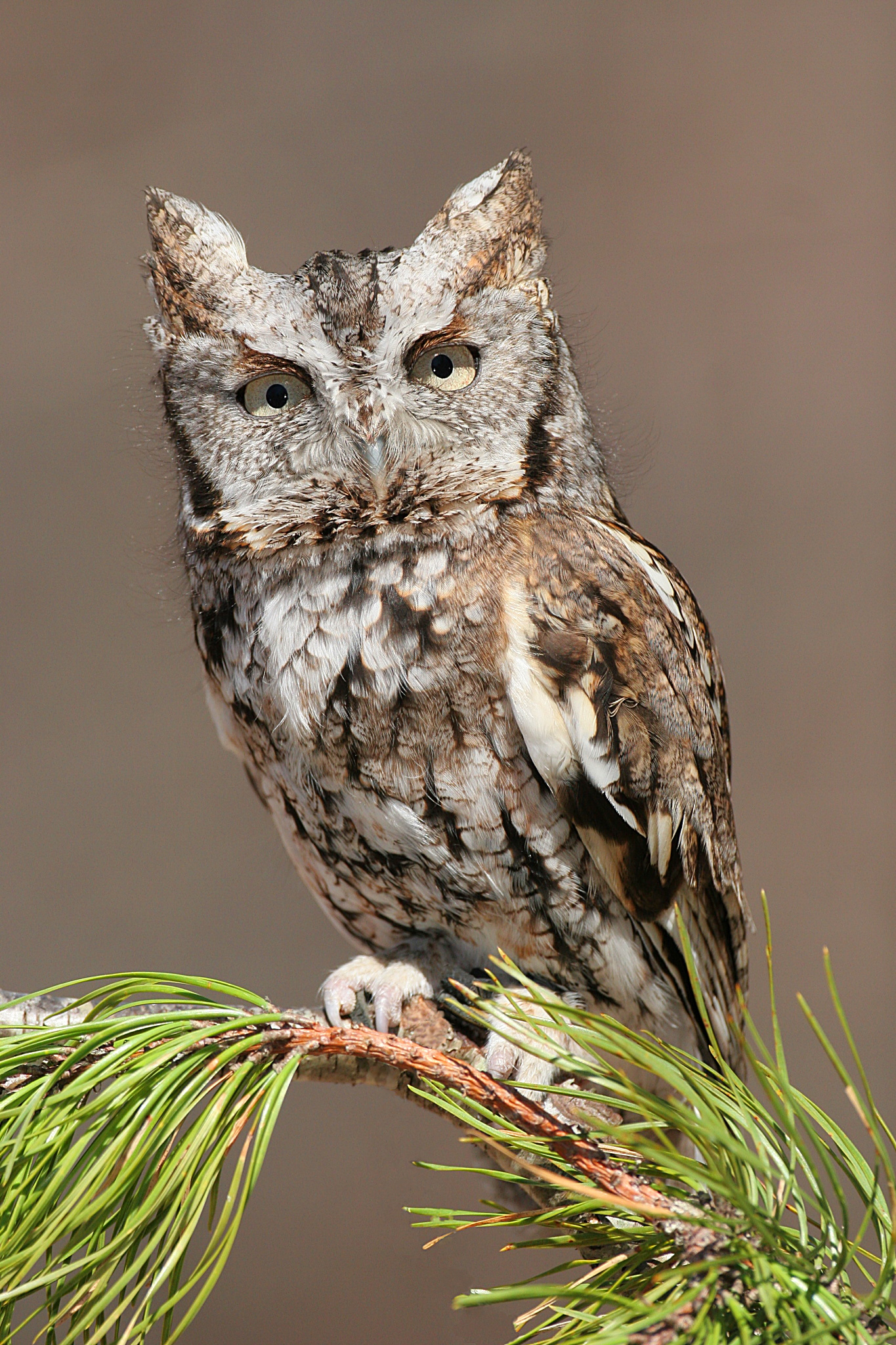
5. Eastern Screech-Owl
Eastern screech-owls are small, compact owls with ear tufts and yellow eyes. They occur in gray and reddish color forms, which can make color-based identification unreliable. Their trilling and whinnying calls are better clues.
6. Western Screech-Owl
Western screech-owls resemble their eastern relatives but occupy western North America. They tend to show stronger dark streaking and lack the bright red form seen in the East. Range and call usually settle the identification.

7. Burrowing Owl
Burrowing owls break the tree-perching stereotype. They have long bare-looking legs, yellow eyes, spotted brown plumage, and a habit of standing near underground burrows in grasslands and deserts. They are frequently active during daylight.
Ground-level hunting puts some owls in habitats used by types of snakes, especially in grasslands and desert regions.

8. Great Gray Owl
The great gray owl looks enormous because of its dense feathers and broad facial disk, although its body is lighter than that of some smaller-looking owls. A white “bow tie” below the bill and small yellow eyes help confirm the species.
Wildlife photographs can show those relationships directly. A photographer who gained the trust of woodland owls and fox cubs captured two groups that are usually far easier to hear or glimpse than to approach.

And if you want another “spot the killer” comparison, see filter-feeding giants versus deep-sea oddities in the shark lineup.
9. Long-Eared Owl
Long-eared owls are slim, cryptically patterned birds with tall ear tufts and orange eyes. They often roost close to tree trunks where vertical streaks break up the outline. Their long wings and light build suit hunting over open ground.

10. Short-Eared Owl
Short-eared owls favor marshes, grasslands, tundra, and other open country. Their ear tufts are tiny and often invisible. A dark patch at the bend of each pale wing is useful when the owl is flying low over a field.

11. Northern Saw-Whet Owl
The northern saw-whet is a tiny forest owl with a large round head, yellow eyes, and white facial streaks. Its size can be surprising. During migration, these secretive owls may pass through wooded areas without being noticed.

12. Boreal Owl
Boreal owls have square-looking heads, yellow eyes, and white spots across the crown. They inhabit northern and mountain conifer forests. Compared with a saw-whet owl, the face looks more sharply bordered and the body slightly larger.
Forest and wetland ranges may also overlap with several types of deer, though deer presence is only a habitat clue.

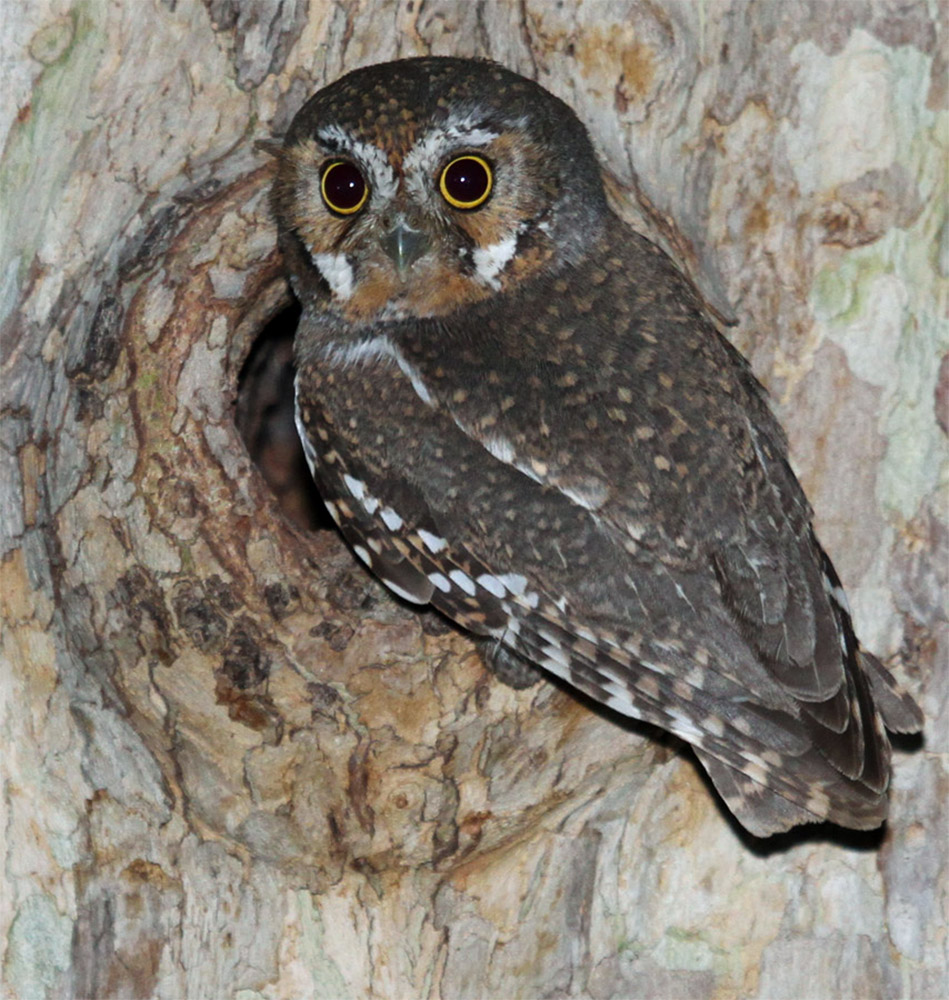
13. Elf Owl
Elf owls are among the smallest owls. They have round heads without ear tufts, yellow eyes, and short tails. In desert regions they may nest in old woodpecker holes in cacti and trees.
14. Eurasian Eagle-Owl
The Eurasian eagle-owl is one of the world’s largest owls. Orange eyes, heavy ear tufts, and a powerful barrel-shaped body make it difficult to confuse with smaller European species. It occupies cliffs, forests, rocky slopes, and open hunting areas across Eurasia.

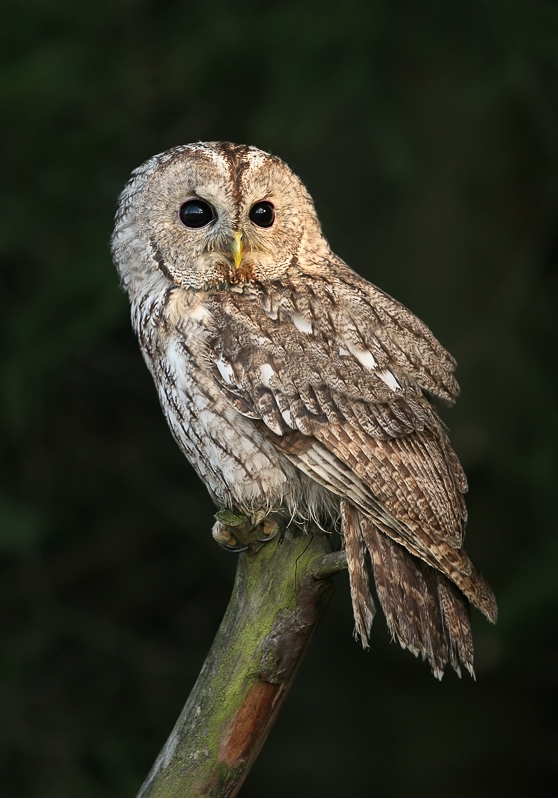
15. Tawny Owl
Tawny owls are stocky woodland owls with rounded heads and dark eyes. Their plumage ranges from gray-brown to richer reddish brown. The familiar two-part male and female calls are common night sounds across much of Europe.
That’s when the barn owl “harsh screech” detail matters, because the call is what keeps those pale, heart-shaped faces from getting misread.
Meanwhile, the great horned owl’s big ear tufts and yellow eyes are the whole reason your “forest ghost” guess doesn’t hold up.
Then the barred owl throws you off, because no ear tufts and horizontal chest bars are easy to miss when it’s stretched out like it’s trying to scare you.
Finally, the snowy owl twist hits, white plumage with dark spotting plus open Arctic habitat is the giveaway when everything else looks too bright to be real.
Why Some Owls Look Different in Photographs
Lighting changes owl plumage quickly. Reflected light can also make eyes appear red, as seen in photographs of the Stygian owl’s reflected eyes. That effect is not the owl’s normal eye color.
Rare color conditions create another problem. A white screech-owl with red eyes may not match a standard field guide image, yet its shape and proportions still reveal the species.
How Many Owl Species Are There
The total changes as taxonomists split and combine populations. Regional lists are therefore clearer than a single fixed global number. A 2026 Audubon guide to North American owls covers 19 species found in the United States, while global lists include many tropical forest and island owls rarely seen in North American guides.
Habitat narrows the options. A tiny owl beside a desert burrow is likely a burrowing or elf owl. A huge pale bird on tundra points toward a snowy owl. A heart-shaped face in a farm building points toward a barn owl.
Owls and Other Animal Groups
Start with the face. Then check the eyes, tufts, chest pattern, size, and habitat. Calls confirm what photographs cannot.
Most owl identifications are won by details.
You might finally stop second-guessing every owl you spot, once the face, bars, and ear tufts stop “changing their story.”
Still not sure barn owls vs other predators, check out the snow-white Arctic hunter and desert foxes with ears almost bigger than their heads.
Share this article:





