
Fun Facts About Crocodiles From Powerful Tails to Protective Mothers

A 28-year-old woman refused to believe the river was “just a river,” until she watched a crocodile slice through the water like it owned the place. The scary part was how normal everything looked from the bank, calm surface, quiet ripples, and then this sudden, close-range strike that made the whole scene feel like a trap.
It gets worse when you picture what was going on below, the throat valve sealing water out, the nictitating membrane guarding the eyes, and that powerful side-to-side tail that turns a waiting predator into instant motion. And if you think that’s intense, the story of those five brothers during a cheetah river crossing makes it even more complicated, because speed on land does not matter when crocodiles are already positioned under the surface.
By the time the mouth closes and the death roll starts, you realize crocodiles do not “hunt,” they decide.
Crocodile Facts About Their Bodies
- Crocodiles belong to the order Crocodylia with alligators, caimans, and gharials. True crocodiles form their own family within that group.
- Most crocodiles have a narrower, more V-shaped snout than alligators, but snout shape varies with species and diet.
- The upper and lower jaws are similar in width. When the mouth closes, teeth from both rows often remain visible.
- Eyes and nostrils sit on top of the head. A crocodile can observe the surface while most of the body remains below water.
- A transparent nictitating membrane protects each eye underwater. A throat valve helps keep water out while the mouth is open.
- The tongue is held against the floor of the mouth by a membrane. Crocodiles cannot stick it out like many lizards can.
- Bony plates called osteoderms strengthen the skin and can help exchange heat with the environment.
- Crocodile teeth grip rather than chew. A report about a hunter killed by a crocodile reflects the speed and force of a close-range strike.
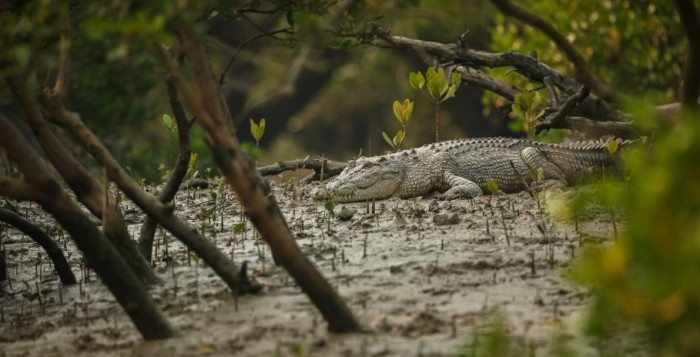
That’s when the body facts stop being trivia and start sounding like a playbook, starting with those V-shaped snouts and teeth that stay visible when the jaws shut.
Swimming, Walking, and Hunting
- The tail drives swimming through powerful side-to-side movement. Legs fold close to the body to reduce drag.
- Crocodiles can perform a high walk with the belly lifted from the ground. Some species can also gallop briefly.
- The estuarine, or saltwater, crocodile is the largest living reptile. Large males can exceed five meters, with exceptional individuals growing longer.
- Functional salt glands on the tongue help crocodiles tolerate brackish and marine water better than alligators.
- Crocodiles are ambush predators. Stillness and concealment reduce the energy needed before a sudden attack.
- The death roll helps tear pieces from prey or overpower an animal that cannot be swallowed whole.
- Metabolism is relatively slow. A large crocodile can survive long periods between major meals.
- River crossings are dangerous even for fast mammals. Five brothers in a cheetah river crossing faced crocodiles below the surface.
Crocodile Communication and Parenting
- Crocodiles communicate with bellows, grunts, hisses, head slaps, body postures, and vibrations in the water.
- Embryos call before hatching. The sounds can synchronize the clutch and alert the mother that digging should begin.
- Females guard nests and may carry hatchlings to water inside the mouth. The same teeth used for hunting require precise control.
- Gharial fathers can guard large groups of young. Images of a crocodilian carrying babies on his back show an unusual male parenting role.
- Another documented gharial family with roughly 100 young became widely shared because the babies covered the father’s body.
- Nest type varies. Some crocodiles dig holes in sand or soil, while others build mounds of vegetation.
- Incubation temperature influences sex in crocodilians. A small temperature shift can change the balance of males and females.
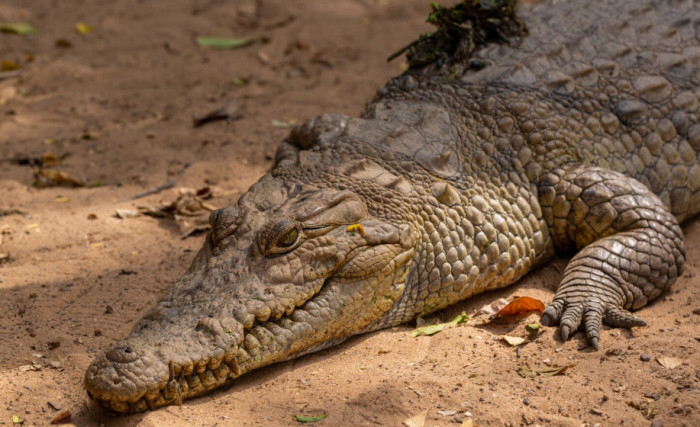
Right after that, the tail story hits, because the side-to-side drive and the high walk explain how a predator can look slow until it is not.
This is similar to snakes that hear without external ears and replace old skin for survival.
Then the saltwater angle matters, since the estuarine crocodile can reach over five meters and those salt glands let it patrol places alligators would struggle with.
Different Crocodiles and Their Long History
- American alligators and crocodiles can be compared by snout shape, visible teeth, color, habitat, and salt tolerance.
- Crocodiles eat fish, birds, mammals, turtles, and snakes depending on species, age, and opportunity.
- Young crocodiles can fall prey to birds, fish, mammals, larger crocodilians, and even large foxes in overlapping habitats.
- Cuban crocodiles are unusually agile on land, with strong legs and reduced webbing between the toes.
- Gharials have long, narrow snouts lined with interlocking teeth suited to catching fish.
- Taxonomy continues to change as genetic research separates populations once treated as one species. Scientists recently proposed two crocodile species near Quintana Roo.
- Crocodilians and birds are living members of the archosaur lineage. A crocodile is therefore more closely related to a bird than to a snake or lizard.
What These Facts Reveal
Crocodiles are often presented as one generic giant predator, but species differ sharply in size, snout design, habitat, agility, diet, and conservation status. A fish-eating gharial and a saltwater crocodile do not use the same body in the same way.
Parenting behavior adds another correction to the stereotype. Guarding nests, responding to calls, and carrying hatchlings require timing and control, not constant aggression.
Many crocodile populations still face habitat loss, entanglement, hunting, and conflict with people, especially where rivers and coastlines support both wildlife and livelihoods. Power is only part of their biology.
The broader crocodile story includes specialized fish hunters, compact forest species, island populations, and giant estuarine animals. Treating them as interchangeable hides the adaptations that make each species vulnerable in a different way, from altered river flow to coastal development and accidental fishing deaths.
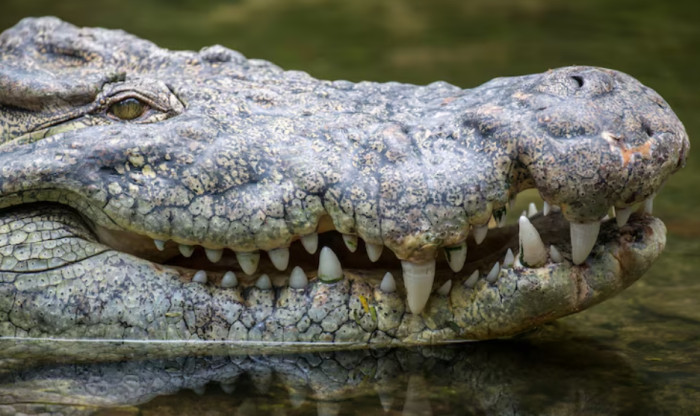
Finally, the cheetah river crossing turns the whole thing into a nightmare, because those five brothers learned that “fast” means nothing when the danger is hidden under the water.
Common Questions About Crocodiles
Do crocodiles cry?
Their eyes produce fluid for protection and lubrication, especially out of water. The tears do not indicate human-like sadness.
Are crocodile mothers protective?
Yes. Many guard nests, respond to hatchling calls, uncover eggs, carry young, and remain near nursery areas.
Can crocodiles live in saltwater?
Several species tolerate salt well, especially estuarine crocodiles. They still use rivers, wetlands, and freshwater areas for much of their life cycle.
The river did not just hold crocodiles, it held timing, and timing is what ruined everything.
Want more jaw power and gator-hole surprises, like how alligators protect and guard nests? Check out these facts about alligators.
Share this article:





