Facts About Spiders - From Silk to Super-Sized Brains

It started the way a lot of backyard misunderstandings do, with someone calling a spider an “insect” and then acting shocked when it refused to behave like one. Spiders are arachnids, they have eight legs, two main body regions, and no wings or antennae. Instead, they use sensory hairs to read the world through touch, vibration, air movement, and chemical signals, like tiny living antennas that never stop listening.
Then the whole thing got weird fast. One minute you’re watching silk come out of spinnerets at the rear of the abdomen, and the next minute you realize not every spider even bothers with a web. Wolf and jumping spiders hunt, crab spiders ambush, and some species sling silk like a weapon, with bolas spiders swinging a sticky line at moths while ogre-faced spiders throw a net over whatever wanders close.
And just when you think you’ve got the pattern, the spider’s “superpower” turns out to be its body itself, from molting because the outer shell cannot keep stretching to leg extension powered by hydraulic pressure.
Spider Facts About Anatomy and Silk
- Spiders are arachnids, not insects. Adults have eight legs and two main body regions rather than six legs and three body sections.
- They lack antennae and wings. Sensory hairs on the legs and body detect touch, vibration, air movement, and chemical signals.
- Silk emerges from spinnerets at the rear of the abdomen. Different glands can produce silk suited for draglines, egg sacs, wrapping prey, or webs.
- Spider silk can be tougher than steel by weight, although strength varies by species and silk type.
- Not every spider builds a prey-catching web. Wolf spiders, jumping spiders, crab spiders, and many others hunt actively or wait in ambush.
- Spiders molt because their external skeleton cannot expand continuously. A newly molted spider is soft and vulnerable until the body covering hardens.
- Leg extension partly relies on hydraulic pressure. Muscles flex the joints, while fluid pressure helps straighten them.
- The Goliath birdeater is one of the largest spiders by mass. Despite the name, the giant spider usually eats insects and small vertebrates rather than birds.
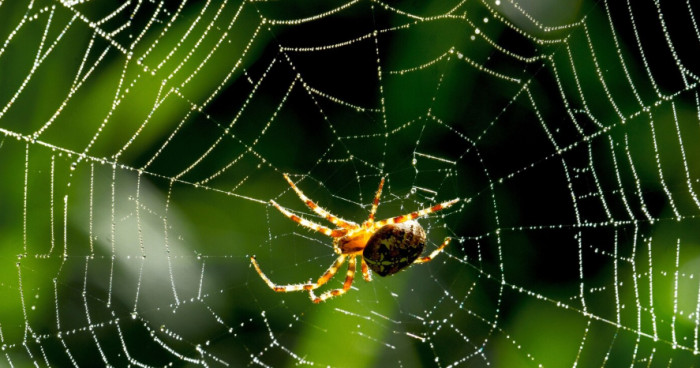
Right after someone insists spiders are “just insects,” the eight-leg detail hits, and suddenly the whole comparison falls apart.
How Spiders Hunt
- Most spiders use venom to subdue prey, but the overwhelming majority are not medically dangerous to humans.
- Digestive fluids begin breaking down food outside the mouth. The spider then draws in the liquefied material.
- Jumping spiders have excellent vision and can plan precise leaps while secured by a safety line of silk.
- Some jumping spiders see ultraviolet wavelengths that humans cannot perceive.
- Bolas spiders swing a sticky silk line toward moths. Some also imitate the chemical scent of female moths to lure males closer.
- Ogre-faced spiders hold a small net between their front legs and throw it over passing prey.
- Fishing spiders detect ripples at the water surface and can seize insects, tadpoles, or small fish.
- A huntsman can vanish against bark, walls, and outdoor furniture. One camouflaged huntsman spider was almost invisible during a cranberry harvest.
Spider Behavior and Family Life
- Most spider species live alone, but some form colonies containing hundreds or thousands of individuals.
- Web vibrations carry information. A spider can distinguish struggling prey from wind, debris, a potential mate, or a predator.
- Many orb-weavers eat damaged web material and recycle the silk proteins before building again.
- Wolf spider mothers carry egg sacs attached to the spinnerets. After hatching, spiderlings ride on the mother’s abdomen.
- New World tarantulas can kick irritating hairs from the abdomen toward a threat. Keeping a pet tarantula still requires species-specific care and secure housing.
- Ant-mimicking spiders copy body shape, movement, and sometimes chemical signals. The disguise may deter predators or help approach prey.
- Spiders are not always visually frightening. Close galleries of charming spider photos show peacock spiders, jumping spiders, and tiny orb-weavers in detail.
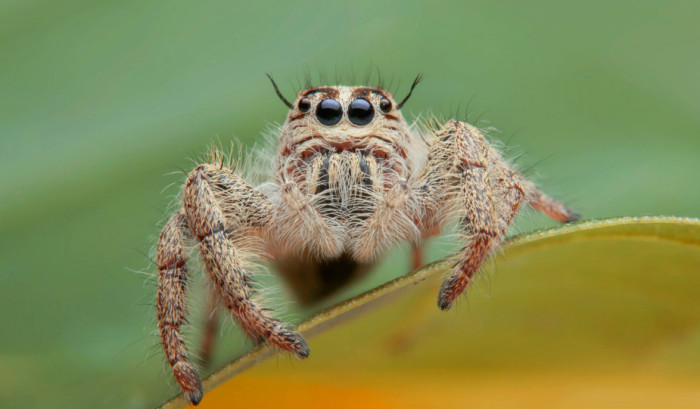
The moment you picture silk as one thing, the article ruins that idea, draglines, egg sacs, wrapping prey, and webs all use different glands.
Spider silk is wild, but it’s not the only “no ears” surprise, see how snakes hear without external ears.
When the discussion shifts from web-builders to hunters, like wolf spiders waiting in ambush or huntsman spiders vanishing on cranberry-harvest walls, you realize the rules change by species.
Strange Spider Abilities
- Young and small spiders can travel by ballooning, releasing silk that catches air currents and electric fields above the ground.
- The diving bell spider spends much of its life underwater inside an air-filled silk chamber.
- Color and body shape can create convincing visual tricks. One tiny cucumber spider resembled a baby watermelon closely enough to confuse its discoverers.
- Large orb webs may stretch across paths and open spaces. A giant golden orb-weaver web can look oversized without belonging to the world’s largest species.
- Spider silk and butterfly scales solve very different problems.pupperish.com/facts-about-butterflies" rel="noopener noreferrer" target="_blank">butterflies.
- Both spiders and snakes use venom, but the chemicals, delivery systems, and evolutionary histories differ.
- In the smallest spiders, the brain can fill much of the body cavity and extend into the legs. Miniaturization has a physical cost.
What These Facts Reveal
The word spider covers tens of thousands of species using very different hunting methods, habitats, body sizes, and silk systems. A web-building orb-weaver and a stalking jumping spider solve the same problem with almost opposite strategies.
Their ecological role is less visible than the fear they provoke. Spiders consume enormous numbers of insects and become food for birds, reptiles, mammals, and other arthropods.
Most interactions with people are harmless and brief. Understanding the animal does not require handling it, only replacing assumptions with accurate distance and identification. Small predators do large work.
Their diversity also makes broad claims unreliable. Web shape, eyesight, venom, movement, and behavior can differ sharply from one spider family to another.
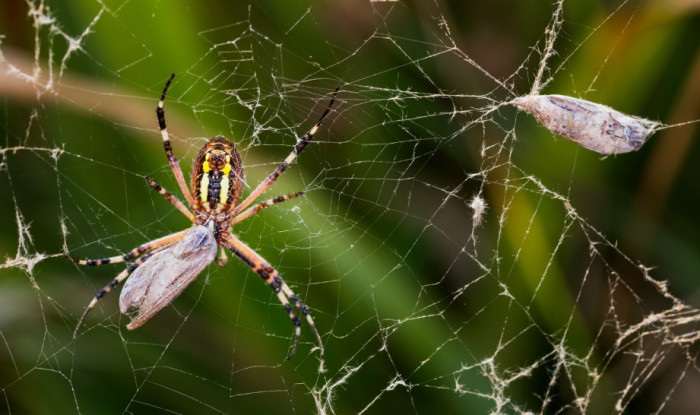
Then the behavior gets even stranger, venom and external digestion are doing the heavy lifting, while jumping spiders plan leaps with a safety line and ultraviolet eyes humans never get.
Common Questions About Spiders
Are spiders insects?
No. Spiders are arachnids with eight legs and two main body regions. Insects have six legs and three main body sections.
Are all spiders venomous?
Most use venom on prey, but very few species have venom that creates serious medical risk for humans.
Do all spiders make webs?
All spiders produce silk, but many do not build webs to catch prey. They may hunt, ambush, burrow, or use silk for shelter and eggs.
The spider you thought you knew is basically running a whole different playbook.
Wait, butterflies can taste with their feet and wear wing scales by the thousands, check out these fun butterfly facts.
Share this article: