19 Types of Monkeys With Pictures and Clear Differences

Some people don’t recognize a favor, and it shows up fast when a “monkey selfie” turns into a full-on identification showdown.
It starts with a casual moment, someone spots a capuchin with that dark cap and pale face, then another person insists it’s a squirrel monkey because of the white mask. Before long, the group is arguing over nostrils, tail grip, cheek pouches, and leaf-eating stomachs, all while trying to match what they see to the list: capuchins, squirrel monkeys, spider monkeys swinging like living bridges, and howler monkeys whose calls shake the forest.
By the time the debate lands on woolly monkeys versus spider monkeys, the real question is simple: can you tell them apart before the next photo?
How to Identify Major Monkey Groups
- American monkeys generally have wider, side-facing nostrils and live in the Americas.
- Afro-Eurasian monkeys generally have closer, downward-facing nostrils and live in Africa or Asia.
- Prehensile tails occur in some American groups, including spider and howler monkeys.
- Cheek pouches are common in macaques, baboons, vervets, and several other Afro-Eurasian monkeys.
- Leaf-eating monkeys often have specialized stomachs and long bodies suited to processing foliage.
19 Types of Monkeys From Around the World
List:
1. Capuchin Monkey
Capuchins are compact American monkeys with expressive faces and dexterous hands. Many have a dark cap above a pale face. They eat fruit, insects, seeds, and small animals and may use objects while foraging.
Playful collections of monkeys taking objects and posing for cameras show their curiosity, yet close contact with tourists can create conflict and disease risks. Feeding wild monkeys usually makes the problem worse.

2. Squirrel Monkey
Squirrel monkeys are small, fast-moving canopy monkeys with white facial masks and yellow or orange limbs. Their long tails help with balance but are not fully prehensile. They often travel in large social groups.

3. Spider Monkey
Spider monkeys have extremely long arms, slim bodies, and powerful prehensile tails. Reduced thumbs allow the hands to function like hooks during rapid swinging. Their silhouette is among the easiest monkey shapes to identify.

4. Howler Monkey
Howler monkeys are heavy-bodied American monkeys known for deep calls that travel through forest. An enlarged throat structure amplifies the sound. Their tails are prehensile and often show a bare gripping pad underneath.

5. Woolly Monkey
Woolly monkeys have dense fur, rounded heads, and muscular prehensile tails. They move through South American forests in search of fruit and other foods. Their heavier build separates them from more angular spider monkeys.

6. Marmoset
Marmosets are tiny American monkeys with claw-like nails on most fingers and specialized teeth for gouging tree bark. Many species have ear tufts, crests, or bold facial markings. Gum and sap form an important part of the diet.
Young primates need prolonged care. An orphaned monkey may cling to a surrogate object, as happened when an abandoned infant used a stuffed orangutan. That behavior reflects a need for security, not a preference that replaces normal social development.

7. Tamarin
Tamarins are close relatives of marmosets and share their small size and claw-like nails. They are often identified by extravagant facial hair, including the emperor tamarin’s white mustache and the cotton-top tamarin’s pale crest.

8. Uakari
Uakaris have short tails, shaggy coats, and striking faces. The bald uakari is especially recognizable for its red skin and nearly hairless head. These monkeys live in flooded and river-edge forests of the Amazon region.

9. Saki Monkey
Saki monkeys have thick coats, bushy tails, and strong jaws suited to hard fruits and seeds. Some males show sharply contrasting pale faces. One rare saki became the subject of a rediscovery report after fears of extinction.

10. Night Monkey
Night monkeys are the only truly nocturnal monkeys. Large eyes and rounded heads help identify them. Their quiet nighttime movement through Central and South American forests differs sharply from the daytime activity of most other monkeys.

And if you like pinpointing differences, Arctic hunters with snow-white coats versus desert foxes with near-too-big ears is a great contrast.
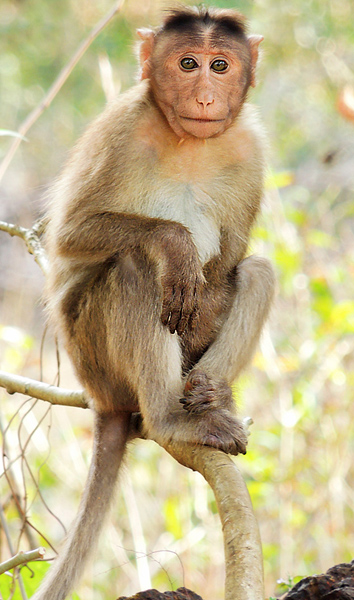
11. Macaque
Macaques are adaptable Afro-Eurasian monkeys with sturdy bodies, cheek pouches, and variable tail lengths. The group includes rhesus, Japanese, long-tailed, and Barbary macaques.
12. Baboon
Baboons have long dog-like muzzles, powerful bodies, and a strongly terrestrial lifestyle. They live in complex troops across African savannas, woodlands, and rocky country. Males are much larger than females in several species.
Open woodland and grassland monkeys sometimes share landscapes with types of deer, especially across parts of Asia and Africa.

13. Vervet Monkey
Vervets are gray-green African monkeys with black faces framed by pale fur. They are agile, social, and comfortable on both the ground and in trees. Their alarm calls vary with the type of predator detected.

14. Colobus Monkey
Colobus monkeys are leaf-eaters with reduced thumbs and long limbs. Black-and-white species have dramatic mantles and tails, while red colobus monkeys show warmer coats.
The Primate Conservancy profiles document numerous colobus species and their conservation status.

15. Langur
Langurs are slender Asian leaf-eating monkeys with long tails and limbs. Gray langurs have pale coats and dark faces, while other species can be black, gold, gray, or mixed. Their multi-chambered stomachs help process leaves.

16. Proboscis Monkey
The proboscis monkey is unmistakable. Adult males have large hanging noses, reddish coats, pale limbs, and rounded stomachs. The species lives in mangroves and river forests on Borneo and is an able swimmer.
Riverbanks and flooded forests can also hold several types of turtles, adding useful habitat context when a photograph includes the surrounding environment.

17. Mandrill
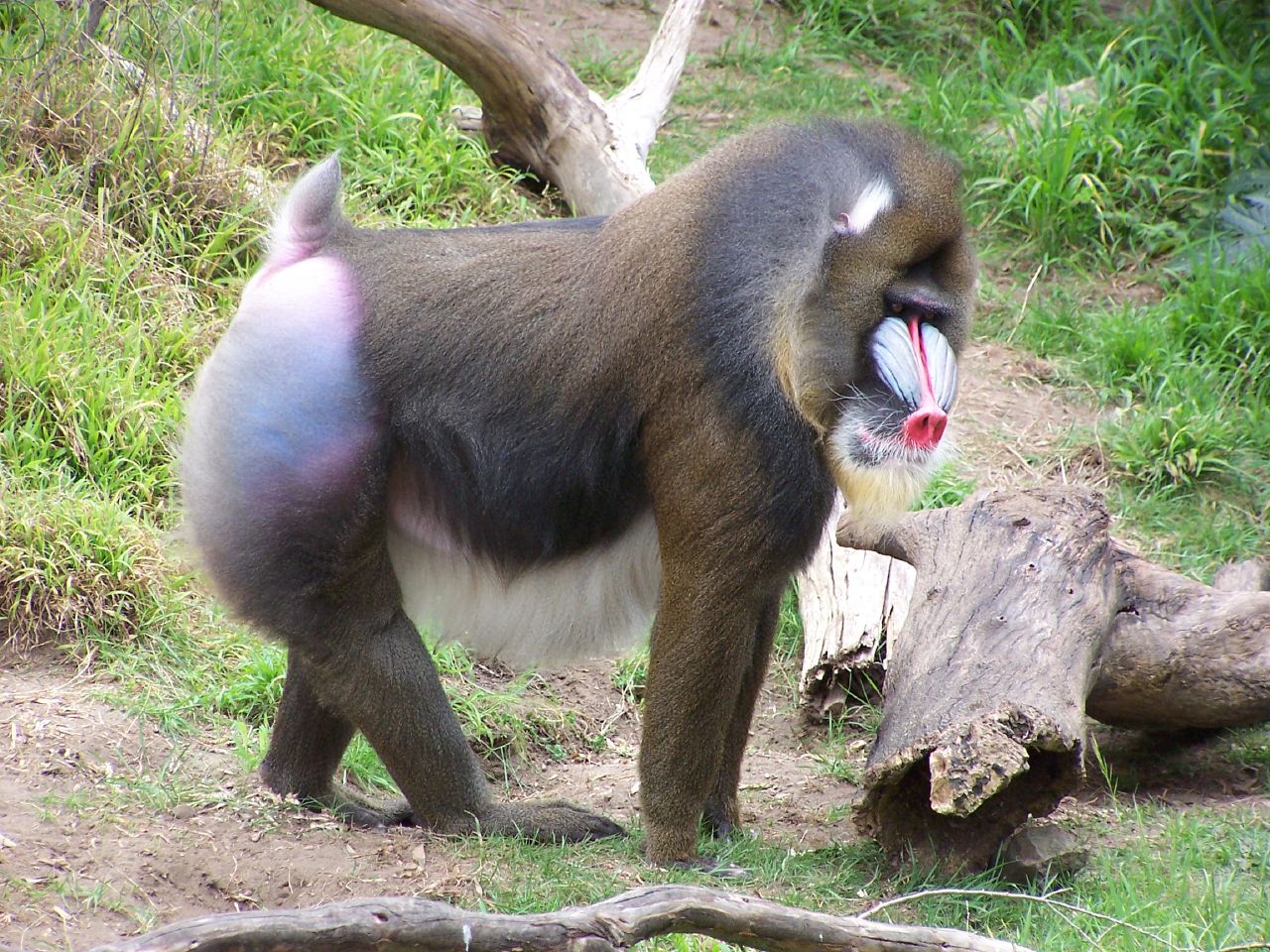
Mandrills are the largest monkeys by body mass. Adult males display blue and red facial ridges, yellow beards, and vivid coloring around the rump. Despite the baboon-like appearance, mandrills belong to a separate genus.
18. Patas Monkey
Patas monkeys are long-legged ground specialists of African grasslands and dry woodland. Their light build supports rapid running. A reddish back, pale underside, and dark facial pattern help distinguish them from vervets.

19. Gelada
Geladas live in the Ethiopian highlands and spend much of the day eating grass. Males grow heavy golden manes, and both sexes have a bare chest patch. Their short fingers and strong thumbs suit plucking blades and digging for roots.

That’s when the capuchin versus squirrel monkey argument gets loud, because the “mask” looks similar until you notice the limbs and the tail details.
Then someone points at the long-arm silhouette and suddenly everyone is swinging their arms around like they’re spider monkeys, insisting the prehensile tail is the giveaway.
After the howler monkey detour, the group stops talking and starts listening, because that deep forest call is the only thing drowning out the “wait, it’s not that one” comments.
Finally, the woolly monkey versus angular spider monkey debate hits the table, and the whole photo session turns into a “spot the fur and the build” race.
Monkeys, Apes, and Lemurs
A chimpanzee, gorilla, orangutan, or gibbon is an ape, not a monkey. Apes lack tails and generally have different shoulder anatomy. Lemurs are primates from Madagascar with their own evolutionary history.
The distinction matters in conservation and reporting. A domestic setting is unsuitable for almost every primate, and the rescue of a baby monkey kept as a pet shows how quickly social, dietary, and behavioral needs can be misunderstood.
Why Monkey Faces and Coats Vary So Much
Color can signal species, age, sex, or social status. A mandrill’s bright face differs from a bald uakari’s red skin, while young monkeys may carry coats unlike adults.
Scientific work can also create unusual images. A cloned rhesus monkey study may look like a standard macaque photograph, while the biological context changes the meaning entirely.
Monkey Behavior in Photographs
A still image can make a social interaction look human, but interpretation requires caution. Monkeys may bare teeth as a threat or submissive signal rather than a smile. Grooming maintains bonds as well as cleaning fur.
Monkeys Within Wider Wildlife Habitats
The quickest identification route is geographic. Once the continent is known, check the nostrils, tail, body shape, facial markings, and movement. That sequence removes most false matches.
A tail can start the answer. It should never finish it.
The next time someone says “it’s definitely one of those,” you’ll know whether they’re right, or just confidently guessing.
Think rare animals are easy to spot, then check out Amazon creatures hiding in flooded forests, dark rivers, and canopies.
Share this article: