
16 Types of Foxes With Pictures and Key Differences

It started with a simple “which one is it?” moment, when a 28-year-old woman tried to settle a backyard argument by pointing at a fox in the yard like it was a pop quiz.
Her roommate swore it was a red fox, the neighbor insisted it was “one of those gray ones,” and the whole thing got messy fast because the markings looked close enough to argue about, but not close enough to agree on. Add in the fact that fox color can shift by season, and suddenly everyone was staring at the ears, tail tips, and habitat like it was courtroom evidence.
By the time they compared what they saw to the different fox types, they realized the real clue was never just the color.
How to Identify Different Fox Species
- Check the ears. Desert foxes usually have larger ears that release heat and detect small prey.
- Look at the tail tip. A red fox commonly has a pale tip, while a gray fox often shows a dark stripe and black tip.
- Use habitat as evidence. Arctic tundra, African grassland, Asian steppe, and North American desert support very different foxes.
- Expect seasonal coat changes.
- Do not treat color as a species by itself. Red foxes occur in red, silver, cross, and dark color forms.
16 Types of Foxes Found Around the World
List:
1. Red Fox
The red fox is the most widespread fox and one of the most adaptable carnivores. Most have reddish coats, dark lower legs, pointed faces, and bushy tails with pale tips, although color varies considerably. The Canid Specialist Group red fox profile describes a range spanning much of the Northern Hemisphere.
For a closer look at wild fox behavior and family life, photographs of a red fox family growing through a season show how much the animals change from small dark cubs to long-legged juveniles.

2. Arctic Fox
Arctic foxes have compact bodies, short muzzles, small rounded ears, and fur-covered feet. Those proportions reduce heat loss. Their winter coat may be white or blue-gray, while the summer coat is usually darker and thinner.

3. Fennec Fox
The fennec is the smallest true fox and the easiest to recognize. Huge ears, pale sand-colored fur, and a delicate body suit life in North African deserts. Thick fur on the feet protects the pads from hot sand.

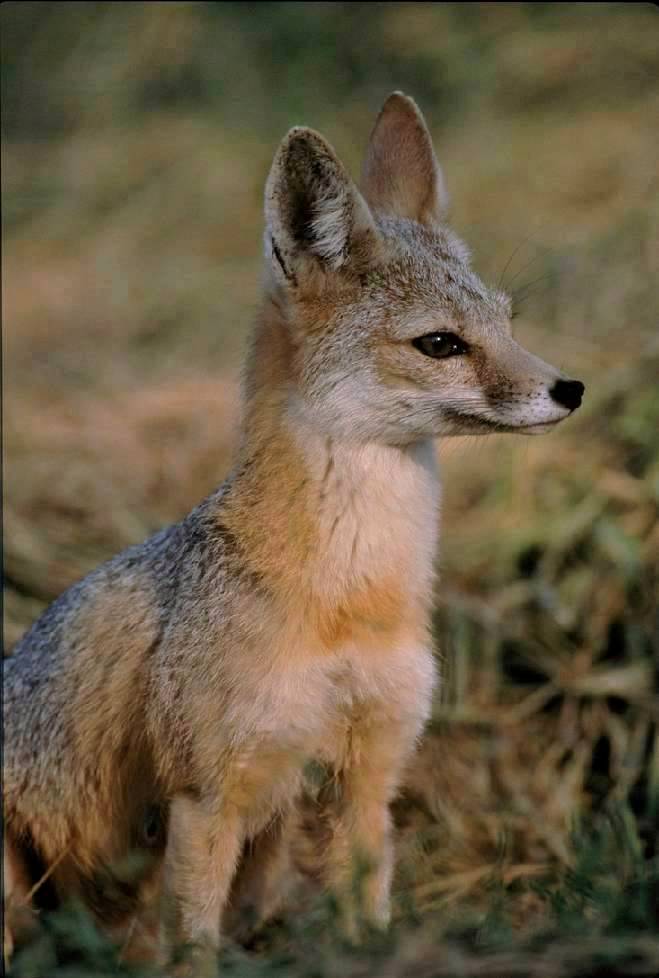
4. Kit Fox
Kit foxes live in dry parts of western North America. They are small, slim, pale, and large-eared, with a dark tail tip. Their nocturnal habits keep them away from the worst daytime heat.
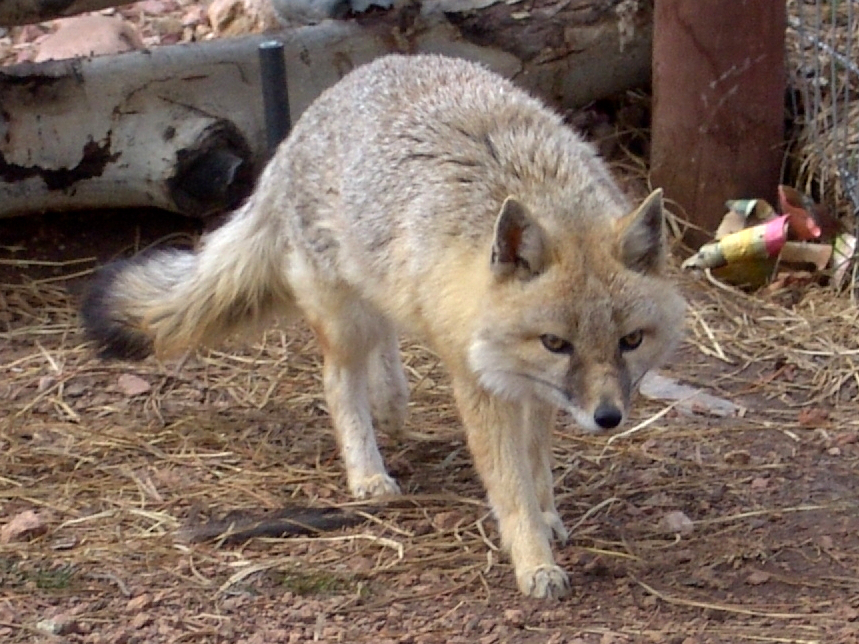
5. Swift Fox
The swift fox is a compact prairie species of North America. It resembles the kit fox but tends to have a shorter tail and a more easterly grassland range. Its name reflects its quick movement across open ground.
6. Corsac Fox
Corsac foxes inhabit the steppes and semi-deserts of Central Asia. Their gray-yellow coat becomes thicker and paler in winter. Unlike the red fox, the corsac usually lacks a strongly contrasting white tail tip.

7. Tibetan Fox
A broad, almost square face gives the Tibetan fox a distinct expression. It lives on high plateaus where dense fur protects it from cold and wind. Pikas make up an important part of its diet.

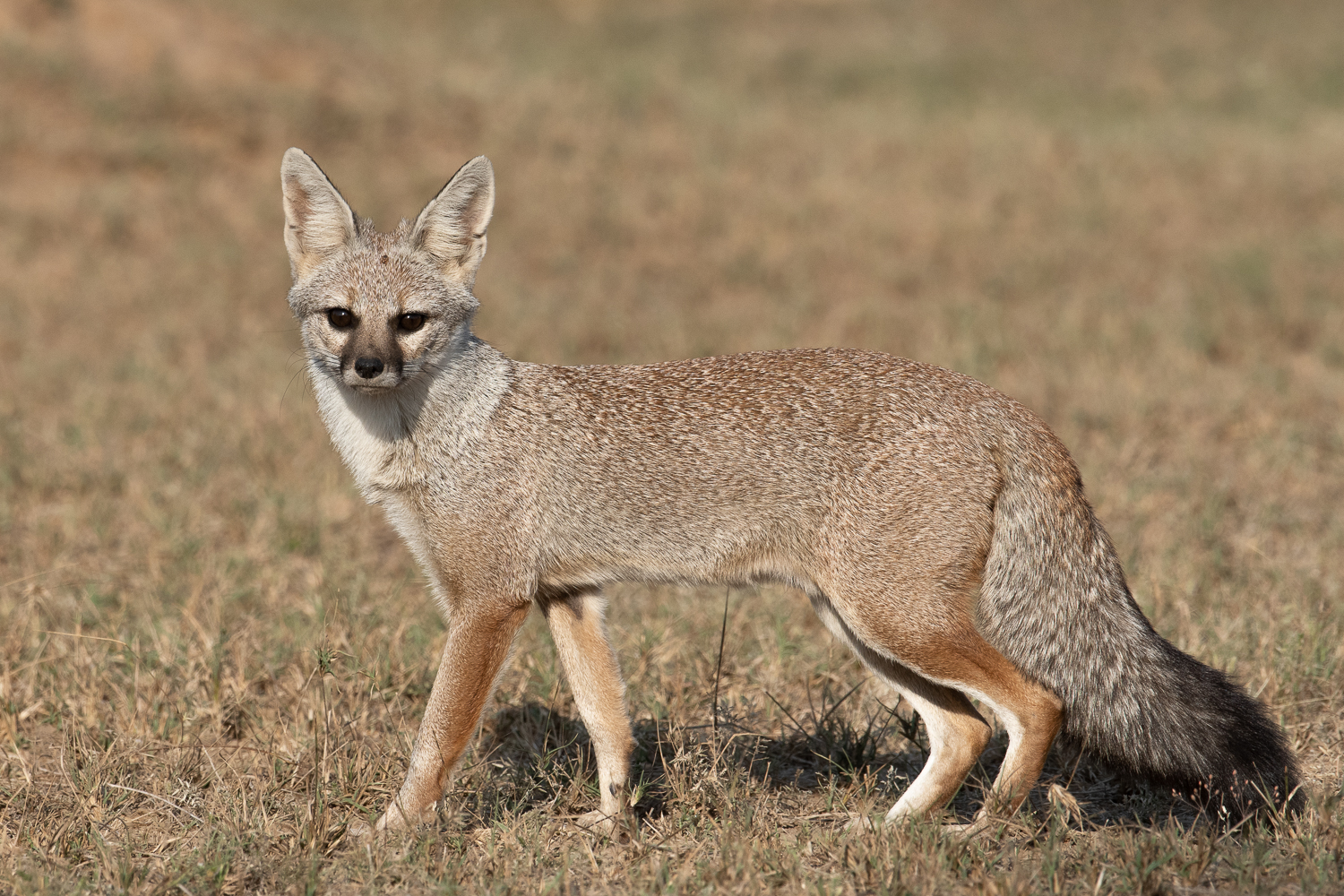
8. Bengal Fox
The Bengal fox, also called the Indian fox, has a slender build, large ears, and a long tail with a dark tip. It favors open grassland and scrub across parts of the Indian subcontinent.
Foxes are not the only small predators shaped by nocturnal hunting. Different types of owls may use the same grasslands and woodland edges.
And if you’re comparing canids, coyotes adjusting desert trails and city routes will help you spot the differences.
9. Rüppell’s Fox
Rüppell’s fox is a pale desert species of North Africa and the Middle East. Its large ears, narrow muzzle, and furred feet resemble other heat-adapted foxes, but a black tail tip is a useful field mark.

10. Pale Fox
Pale foxes occupy the semi-arid Sahel south of the Sahara. They have long legs, large ears, pale coats, and bushy tails. They are rarely as well known as fennecs, although both are adapted to dry environments.

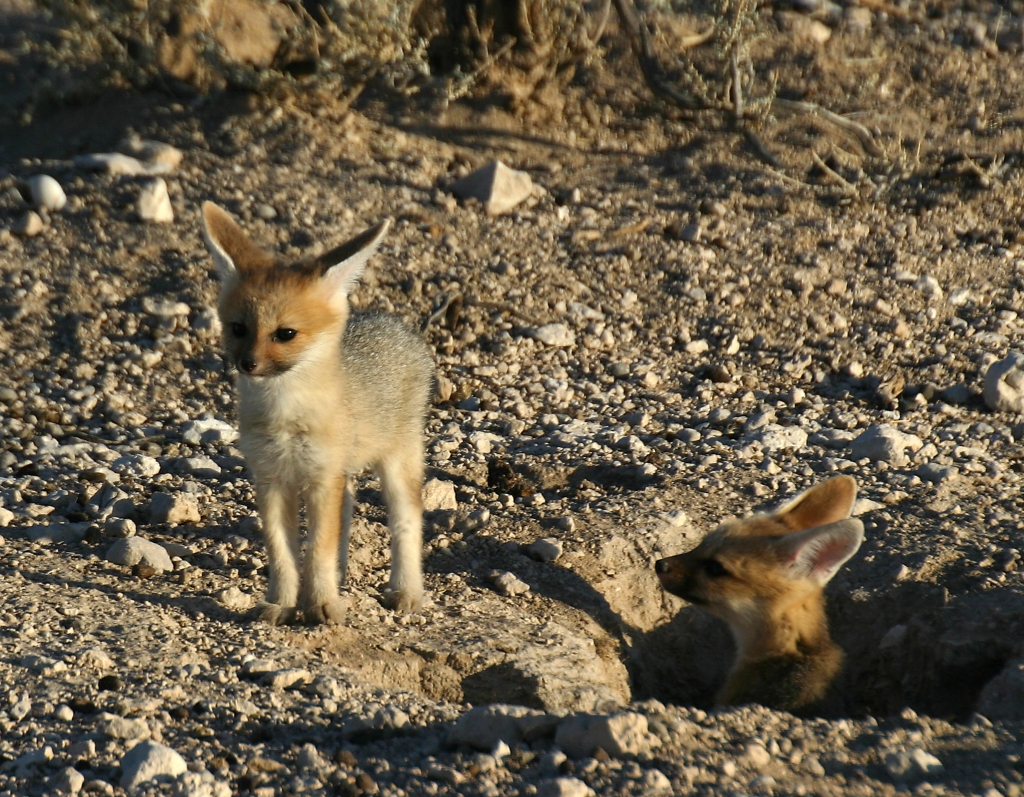
11. Cape Fox
The Cape fox is the only true fox native to southern Africa. It has a silver-gray back, tawny sides, and a dark-tipped tail. Dry grassland, shrubland, and semi-desert make up much of its range.
12. Blanford’s Fox
Blanford’s fox is a small, agile species of rocky deserts and mountains from the Middle East into Central Asia. Its long tail aids balance, while its relatively short legs and broad ears suit movement among cliffs and boulders.
Dry grasslands and scrub can also support several types of snakes, another reason location should be checked before coat color.

13. Gray Fox
Gray foxes are not true foxes in the genus Vulpes. They have grizzled gray backs, reddish sides, and a dark stripe running along the tail. Unusually for a canid, they can climb trees, using curved claws and rotating wrists.

14. Island Fox
The island fox is a small relative of the gray fox found only on California’s Channel Islands. Different island populations developed separately, producing distinct subspecies. Its compact size is an example of island dwarfism.

15. Bat-Eared Fox
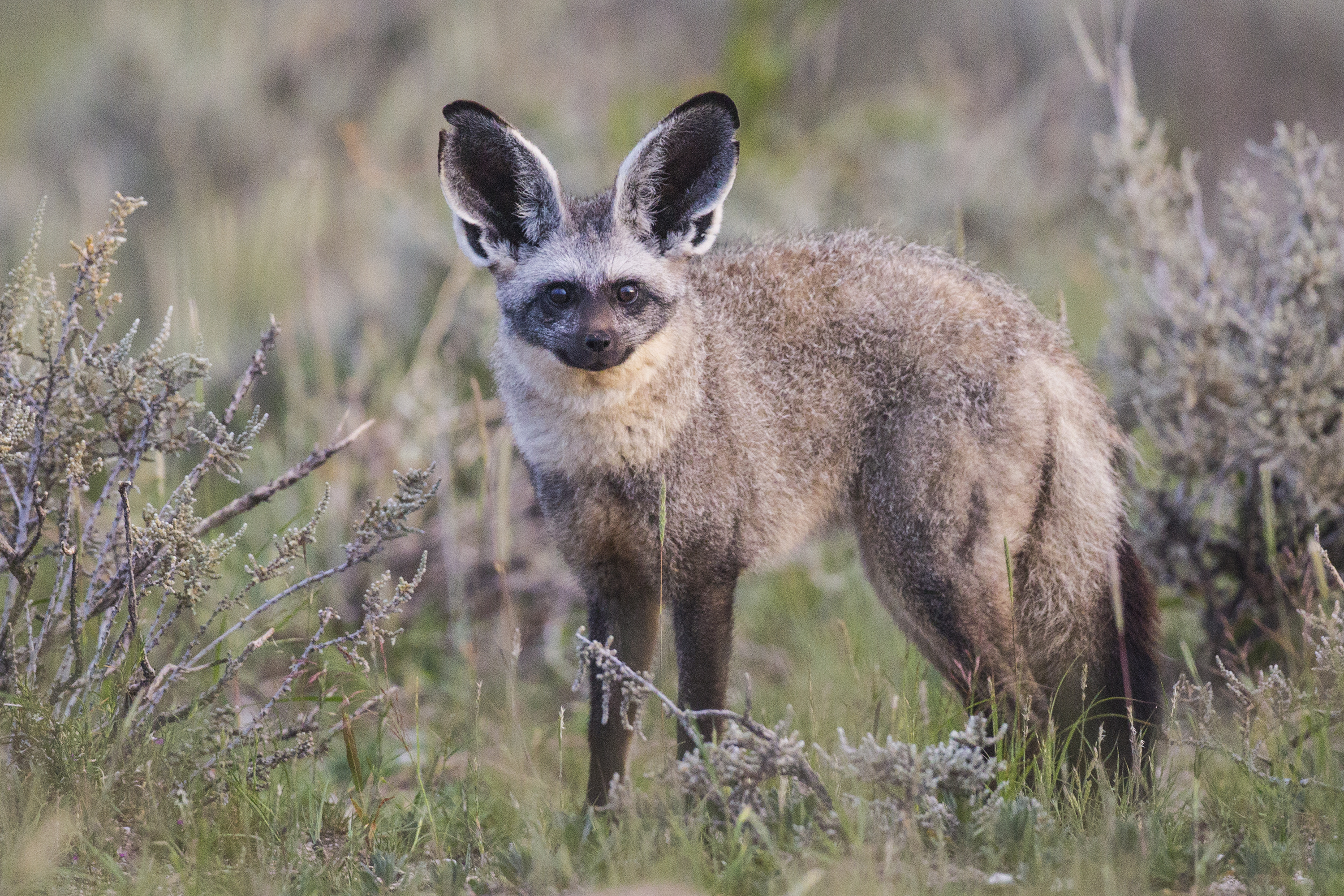
Bat-eared foxes have oversized rounded ears, dark facial markings, and a diet dominated by insects. They occur in eastern and southern Africa. The name fits perfectly, although the animal belongs to its own genus rather than Vulpes.
16. Crab-Eating Fox
The crab-eating fox lives across much of South America in woodland, savanna, wetland, and farmland. Its gray-brown coat and dark legs can look understated beside a red fox. Despite the name, it eats a broad omnivorous diet.

That’s when the roommate started obsessing over the ears, because desert foxes have bigger ones built for heat and tiny prey detection.
Then the neighbor zoomed in on the tail tip, claiming a red fox’s pale tip looked “totally different” from a gray fox’s dark stripe and black tip.
After that, they argued about habitat, since arctic tundra, African grassland, Asian steppe, and North American desert all host very different foxes.
Finally, they hit the part about seasonal coat changes, and the whole debate flipped from “what color is it?” to “what traits match the type?”
Fox Colors Are Not Always Separate Species
Red foxes alone can appear red, silver, nearly black, or marked with a dark cross across the shoulders. Photographs of foxes with different fur colors show why coat color should not be used without checking body shape and range. The same warning applies to seasonal Arctic fox coats.
Cross foxes are color variants of red foxes, not a separate species. The rare black and red fox photographs are visually distinctive, but their taxonomy does not change with the coat.
Where Fox Species Live
Foxes occupy tundra, desert, mountain, grassland, forest, coast, and city edges. Arctic foxes survive open tundra, while Blanford’s foxes handle rocky cliffs. Red foxes also settle near farms and suburbs and appear in deep winter snow.
Geography can settle a difficult identification. A small fox on the Channel Islands is an island fox. A square-faced fox on the Tibetan Plateau points toward the Tibetan fox. A tiny pale animal in the Sahara is more likely a fennec or Rüppell’s fox than a kit fox from North America.
Some discoveries complicate familiar labels. The so-called Corsican cat-fox drew attention because its appearance did not fit a simple household category. Visual resemblance alone is never enough for scientific classification.
Foxes Within the Wider Animal Family
Foxes share the canid family with wolves, coyotes, jackals, and domestic dogs, but they are not miniature versions of those animals. Their lighter bodies, narrow faces, large ears, and long tails reflect a different set of hunting strategies.
Fox identification becomes easier when the process stays simple: locate the animal, compare its ears and tail, check the coat pattern, and use habitat to rule out unlikely species.
Color catches the eye. Shape usually gives the answer.
The family dinner did not end well, but at least nobody will confuse a fox’s tail tip again.
Want more fox chaos from snow pounces to city sidewalks, see these fun fox facts.
Share this article:





