
Sheep Eyes vs Goat Eyes: Is There Any Difference?

A shepherd once insisted it was “obvious” whether he was looking at a sheep or a goat, just by the eyes. He wasn’t totally wrong, but he was also missing the point, because both animals pull off the same clever trick: horizontal pupils built for scanning the ground and the horizon at the same time.
Now add real-life complications. When you’re standing near a grazing flock, the light changes, the pupils open and close, and the faces can look wildly different depending on breed, pigmentation, and even eyelids and surrounding markings. Meanwhile, those wide peripheral views mean the animal might be watching you from the side, then suddenly not at all when you step into a blind spot behind the body.
So the real story is less “sheep eyes vs goat eyes” and more “why their eyes work the way they do,” even when they look similar.
Do Sheep and Goats Have the Same Pupils?
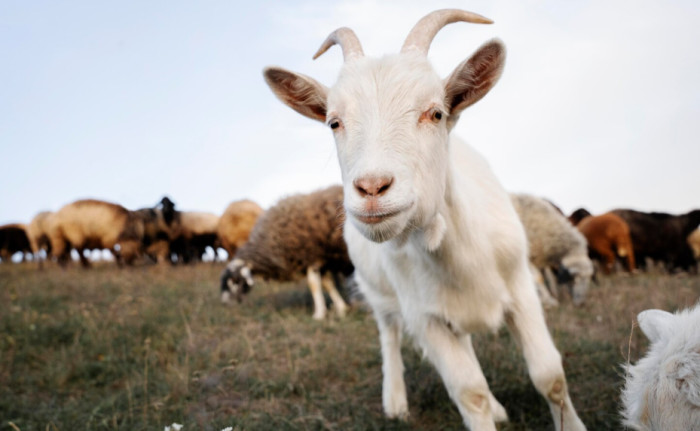
Both sheep and goats have horizontal, rectangular or oval pupils. The exact shape changes with light because the pupil opens and closes.
The similarity is functional. Both are ground-feeding herbivores that benefit from scanning the horizon while keeping the ground in view.
A major study published in Science Advances, Why do animal eyes have pupils of different shapes?, examined sheep, goats, horses, deer, and other animals with lateral eyes and horizontal pupils.
Why Are the Pupils Horizontal?
A horizontal pupil expands the effective field of view across the ground. It admits more light from the front, back, and sides while limiting bright light from above.
That supports two urgent tasks at once: finding food and detecting approaching danger.
The eyes also rotate as the animal lowers its head, helping keep the pupils aligned with the horizon. That is the clever part. The pupil does not simply tip sideways when the animal grazes.
While the shepherd is staring at the pupils, the light shifts and the horizontal shape stretches and tightens, making “proof” feel slippery.
Field of View
Sheep and goats can see a broad area around their bodies without turning their heads. Estimates vary with anatomy and measurement, but both have much wider peripheral vision than people.
There are still blind areas, particularly directly behind the body and very close to the nose. Handlers should approach where the animal can see them and avoid sudden movement from a blind zone.
Washington State University's goat care guidance notes panoramic vision and recommends approaching from a direction other than directly behind.
Are Goat Eyes Different From Sheep Eyes?
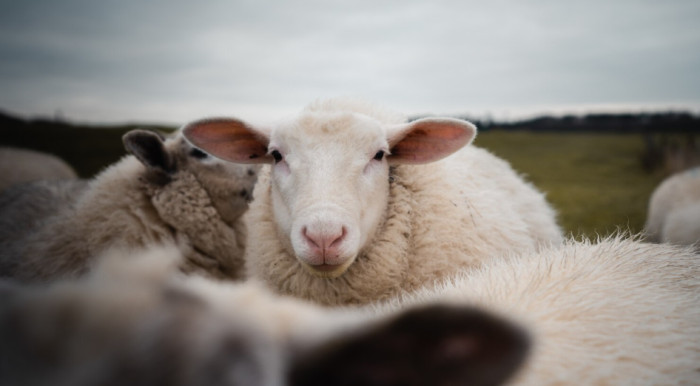
The overall visual plan is very similar. Differences can appear in iris color, surrounding facial structure, eyelids, eyelashes, and breed-specific pigmentation.
Goat eyes may look more striking because many goats have pale irises that make the dark horizontal pupil stand out. Sheep often have darker or more shaded faces, though this varies widely.
The pupil shape alone is not a reliable way to tell the species apart.
Eye Color
A pale iris does not mean poor vision. Cloudiness, redness, discharge, swelling, squinting, or asymmetry are more important health signs.
Do Sheep and Goats See Color?
Both can distinguish colors, but their color perception differs from human trichromatic vision. They are generally understood to have dichromatic color vision, with stronger discrimination in blue and green-yellow ranges and poorer separation of reds.
Color still affects handling. Strong contrast, shadows, glare, and unfamiliar floor patterns may cause hesitation even when the handler sees no obstacle.
The moment the animal lowers its head to graze, the eyes keep lining up with the horizon, so your best guess based on appearance gets thrown off.
Depth Perception
Side-positioned eyes maximize panoramic coverage but reduce the broad binocular overlap people use for precise depth judgment. Sheep and goats still judge distance through several cues, including motion, head movement, texture, and the smaller region where both eyes' views overlap.
This can explain hesitation at dark doorways, shadows, puddles, or changes in flooring. The animal may be assessing a visual uncertainty, not refusing for entertainment.
And if you are wondering whether a lamb counts as its own animal, lamb vs sheep vs goat breaks down the naming confusion.
Night Vision
Sheep and goats function in low light better than people. Their large eyes and reflective structures help gather available light.
They still need safe lighting around steps, gates, loading areas, and unfamiliar handling systems. Sudden bright lights can create glare and deep shadows.
Why Do Their Eyes Look Creepy to Some People?
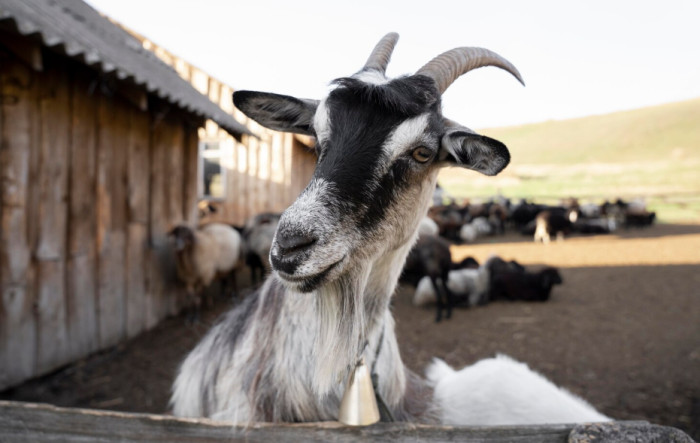
The pupil is a dark horizontal bar in a face people otherwise read as familiar and mammalian. Human brains associate round pupils with normality and horizontal pupils with something alien.
The reaction is aesthetic, not biological. The design is highly practical.
Pupperish's collection of goat selfies makes the pupils hard to ignore. Close-up photos exaggerate the contrast.
When you start testing your luck by approaching from different angles, the blind areas near the nose and directly behind the body make the whole “which one is which” game harder.
How Vision Affects Handling
Good handling uses the animal's field of view rather than fighting it.
- Approach from the side-front, not directly behind.
- Avoid sudden movement near the head.
- Reduce harsh shadows and glare.
- Let the animal inspect unfamiliar floors and gates.
- Move groups calmly, using flock or herd movement.
A sheep separated from companions may focus more on reunion than on the handler. The goat appearing in a panorama fail found a moving social anchor.
Eye Position and Predator Detection
Predators such as cats often have forward-facing eyes, which support binocular depth judgment. Grazing prey animals often have eyes farther to the sides, increasing environmental coverage.
The distinction is not absolute. Ecology is not a cartoon chart. Still, pupil shape and eye placement reflect different visual priorities.
Common Eye Problems
Sheep and goats can develop pinkeye, corneal injuries, eyelid problems, infections, foreign-body irritation, and other ocular disease. Signs include tearing, squinting, redness, cloudiness, light sensitivity, swelling, or keeping one eye closed.
Eye problems can worsen quickly. Veterinary diagnosis matters because treatment depends on the cause, and some conditions spread through a flock or herd.
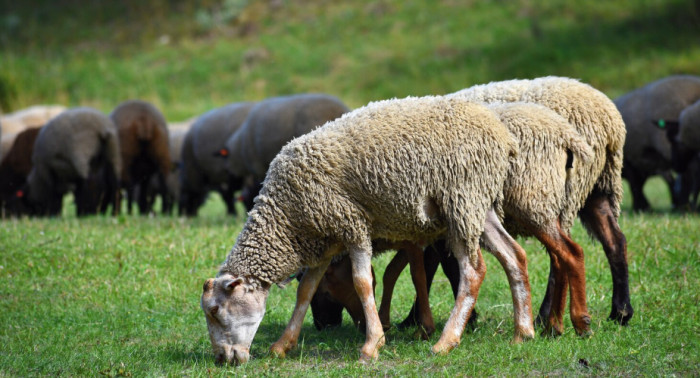
Then the iris color steals the spotlight, because pale goat irises can make that dark pupil look extra dramatic, even when sheep are doing the exact same job.
Can You Tell Health From Pupil Shape?
Both pupils should respond appropriately to light and appear reasonably symmetrical. Unequal pupil size, a fixed pupil, cloudiness, sudden vision loss, or abnormal eye movement needs veterinary attention.
Do not use a social-media photo to diagnose an eye.
Sheep Eyes vs Goat Eyes for Identification
Use body features first:
- Goats usually carry the tail upward; sheep tails hang down.
- Goats browse shrubs and stand on objects; sheep more often graze low.
- Sheep may have wool; goats have hair, cashmere, or mohair.
- Goat faces are often narrower; sheep bodies often look heavier.
See sheep vs goat for the full comparison and lamb vs sheep vs goat for terminology.
A lamb begging for cuddles and a goat stuck while seeking food show different behaviors more clearly than their eyes do.
Where These Animals Fit on a Farm
Sheep and goats are both small ruminants but may serve different purposes. Sheep commonly provide meat, wool, milk, or grazing. Goats provide milk, meat, fiber, or brush control.
For context, use farm animals list and types of farm animals.
The Answer
Sheep and goat eyes are more alike than different. Both use horizontal pupils and side-set eyes to maintain a wide ground-level view while feeding.
The visible differences usually come from iris color, face shape, and breed. The underlying visual strategy is shared.
The eyes might look different in the moment, but they’re doing the same grazing-and-watch duty, and that’s the twist.
Sheep graze and flock, while goats browse and investigate, so check out the key differences in appearance, behavior, and care.
Share this article:





