Horse vs Donkey vs Mule: How to Tell Them Apart

A 28-year-old woman refused to trust her own eyes when she saw a “mystery horse” at the edge of a field, because the ears looked too long for a horse and the body didn’t quite match a donkey. The animal stood there like a riddle, half familiar, half wrong, and everyone around her had a different guess.
It got messy fast, because the details that matter are buried in parentage: a mule is the cross where the father is a male donkey, called a jack, and the mother is a female horse, called a mare. And then there is the rarer reverse cross, the hinny, where the father is a male horse, called a stallion, and the mother is a female donkey, called a jenny or jennet, which makes people even more confident and more wrong.
By the time the animal brayed, the crowd was already arguing, and now they had to figure it out without guessing.
The Parentage Difference
A horse has two horse parents. A donkey has two donkey parents.
A mule is produced by:
- Father: male donkey, called a jack
- Mother: female horse, called a mare
A hinny is the less common reverse cross:
- Father: male horse, called a stallion
- Mother: female donkey, called a jenny or jennet
Oregon State University's 4-H horse material defines the mule as a cross between a horse mare and a donkey jack.
Quick Comparison
Mules vary because horse mothers range from ponies to draft mares.

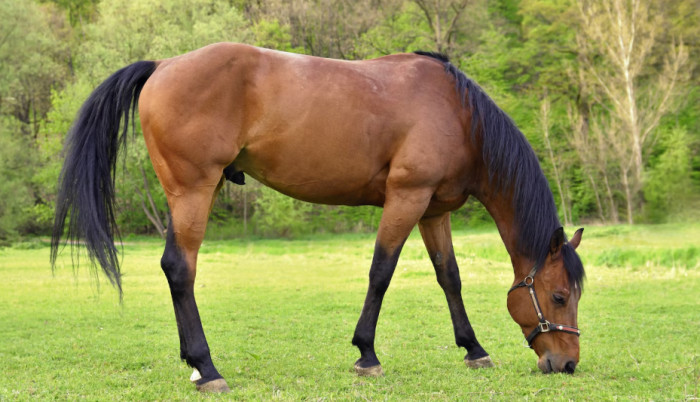
Horse Appearance
Horses generally have shorter ears, a mane that falls, a long full tail, prominent withers, and broader rounded hooves. Their bodies vary enormously by breed.
A light Arabian and a draft horse are both horses despite looking less alike than some horses and mules.
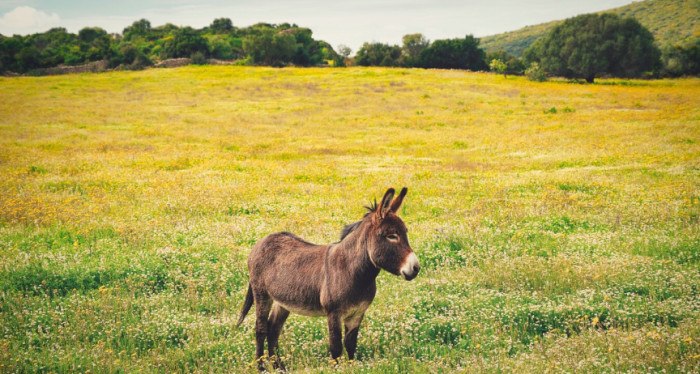
Donkey Appearance
Donkeys typically have very long ears, a short upright mane, a tail with a terminal tuft, compact upright hooves, and flatter withers. Many have a dark dorsal stripe and shoulder cross, though color patterns vary.
The physical distinctions are covered further in donkey vs horse.
Pupperish's gallery of adorable baby donkeys shows how early the long ears and upright manes become visible.
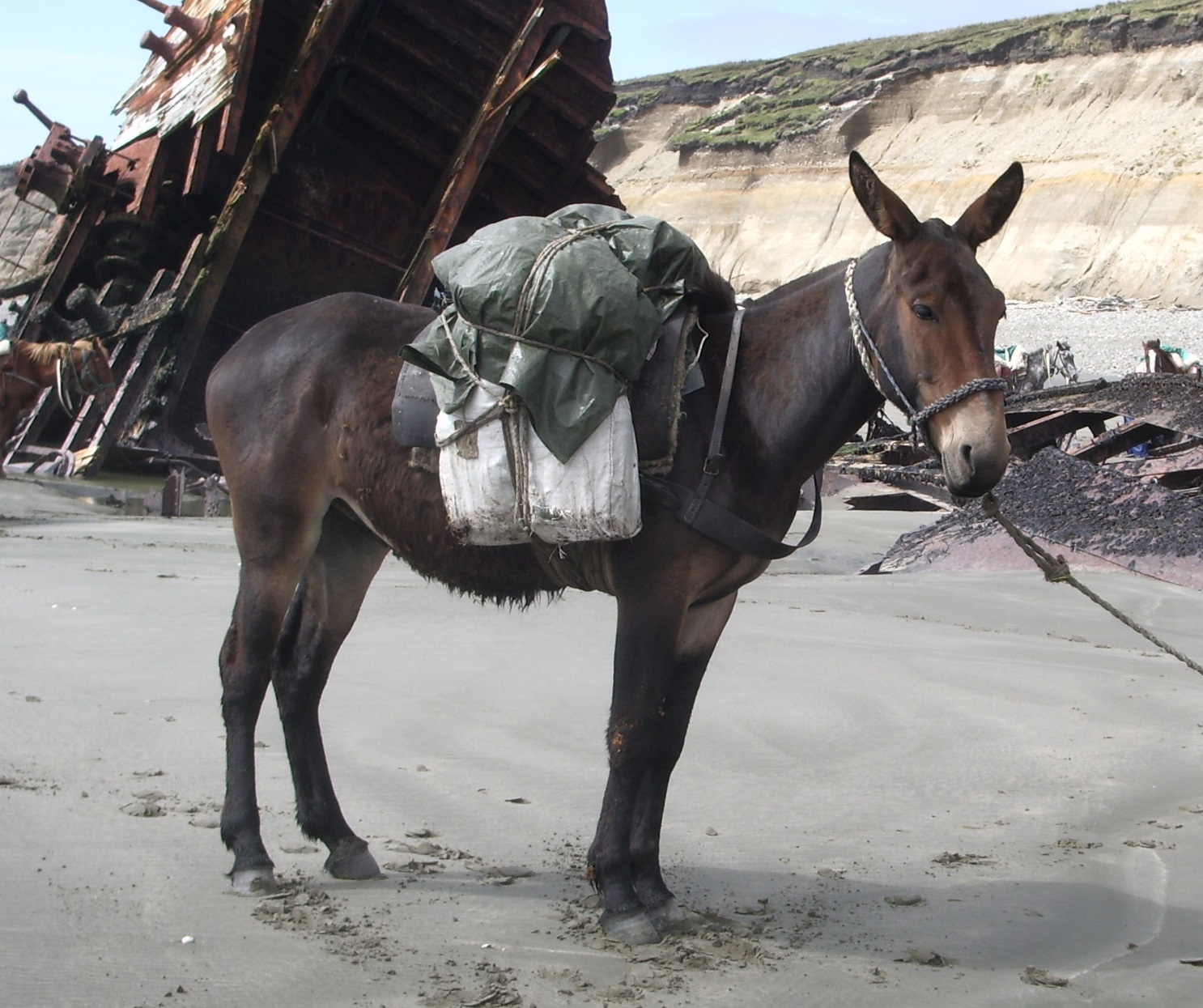
Mule Appearance
Mules usually inherit long ears and strong, compact hooves from the donkey side, with height and body mass influenced by the horse mother. The mane may be short and upright or partly falling. The tail is often fuller than a donkey's but not identical to a horse's.
No single mule look exists. A mule from a pony mare can be small. One from a draft mare can be enormous.
That’s when the “two horse parents vs two donkey parents” rule starts sounding less like trivia and more like the only clue anyone has.
Voice
Horses neigh or whinny. Donkeys bray. Mules often produce a mixed sound that begins like a whinny and ends with a bray.
The voice can identify an animal even when the body is partly hidden.
Then you notice how the mule’s long ears and compact hooves lean donkey, while the height and body mass lean whatever horse showed up as the mare.
Why Are Mules Usually Sterile?
Horses have 64 chromosomes, and donkeys have 62. Mules usually receive 63, an odd number that complicates normal chromosome pairing during reproduction.
As a result, male mules are sterile and female fertility is extremely rare. Mules are still typically castrated because testosterone can influence behavior even when reproduction is not possible.
The University of Georgia's donkey overview explains both mule and hinny parentage and notes that hybrids are usually sterile.
This parentage guide works like a quick refresher on horse facts, including how horses sleep standing and communicate through tiny movements, in these 30 fun facts about horses.
Behavior
Horses often respond to sudden danger by fleeing. Donkeys are more likely to stop and assess. Mules can combine the horse's athletic ability with the donkey's caution.
That caution is sometimes called stubbornness. More often, the animal has not accepted that the route, load, surface, or request is safe.
Force can turn hesitation into conflict. Calm training works better.

Intelligence
Mules and donkeys are often praised for self-preservation and memory. Horses excel in complex athletic and social training.
A horse that learned a knot-tying trick shows how flexible equine learning can be. The skill does not rank the entire species.
Strength and Endurance
Horses provide speed and broad athletic capacity. Donkeys are efficient, sure-footed, and durable under appropriate loads. Mules are valued for combining power, endurance, heat tolerance, and caution on difficult terrain.
The phrase “strong as a mule” has a practical basis. It is not permission to overload one.
Safe load depends on body condition, conformation, conditioning, tack, terrain, temperature, duration, and health.
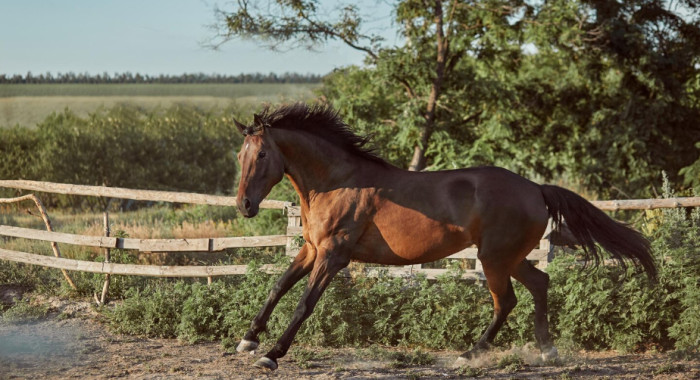
The argument shifts again when someone points out that no single mule look exists, because a pony mare can make one tiny, and a draft mare can make one enormous.
Hoof Care
Horses, donkeys, and mules all need regular hoof care. Their feet should not be trimmed to an identical template.
Donkey and mule hooves are often more upright and compact. Farriers need to respect species and individual conformation rather than forcing a horse shape.
Feeding
Donkeys and many mules use calories efficiently. Rich pasture and concentrated feed can cause obesity and laminitis. Horses vary widely depending on breed and work.
All three need forage, clean water, salt, dental care, and diets matched to body condition. A mule's horse-like body does not guarantee horse-like energy needs.
Shelter
Donkeys and mules may need more protection from prolonged rain because their coats can be less water-resistant than many horse coats. Dry shelter, shade, and mud control are essential.
Horses also need weather protection. Breed and acclimation matter.
Can They Live Together?
Yes, compatible horses, donkeys, and mules can share space. Introductions should be gradual, and feed should be separated when dietary needs differ.
Individual bonds can become intense. An owner who reunited two horses after years apart saw how strongly equines remember companions.
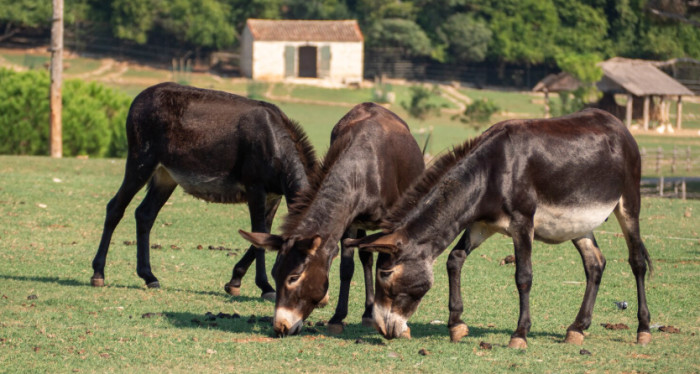
Finally, the bray helps settle it, since mules often make a mixed sound that starts like a whinny and ends like a bray.
Which Is Best for Riding?
Horses offer the widest range of riding types and available trainers. Mules can be excellent trail, ranch, and packing mounts when trained well. Donkeys can carry riders only when body size, conditioning, conformation, and load are appropriate.
A beginner should choose a safe, trained individual with expert support rather than choosing by species stereotype.
Which Is Best for a Small Farm?
A horse may fit riding and ranch work. A donkey may fit packing, companionship, light draft, or selected guardian work. A mule may fit trail and work roles requiring endurance and sure-footedness.
See miniature farm animals for small equines, farm animals list for other options, and types of farm animals for working-animal categories.
The police officer who escorted a loose donkey dealt with a calm individual. Any loose equine can become a road hazard, regardless of ear length.
The Fast Identification Rule
Shorter ears and a full tail suggest horse. Very long ears, an upright mane, and a tufted tail suggest donkey. Long ears combined with a more horse-like body suggest mule.
Then check the records. Parentage settles what appearance cannot.
The family stopped arguing only after they realized the “mystery horse” was a mule, not because of vibes, but because of who its parents were.
Want another animal face-off, see how sheep flock while goats browse and investigate in this sheep vs goat showdown.
Share this article: