
Cow vs Buffalo: Appearance, Behavior, Milk, and Uses

It started with a tiny misunderstanding, the kind that happens fast when someone says “buffalo” and means “cow,” or worse, assumes they’re basically the same animal. But once you zoom in on cattle, water buffalo, and bison, the differences hit hard, from the way they look to what ends up on the dinner plate.
Picture a family argument that begins at the grocery store. One person insists buffalo milk is just “richer cow milk,” another points to mozzarella di bufala like it proves something, and someone else brings up American bison, because “buffalo” is what they’ve always called them. Then the conversation spirals into horns, body types, and why a photo can totally mislead if you do not know the breed or age.
By the time the label gets read out loud, you realize the real mix-up is not the food, it’s the animal everyone thinks they recognize.
Cow, Cattle, Buffalo, and Bison
- Cattle: domesticated animals in the Bos taurus and Bos indicus groups
- Cow: adult female cattle, and sometimes an adult female of other large mammals
- Water buffalo: domesticated or wild bovines in the genus Bubalus
- Bison: animals in the genus Bison, including American and European bison
In North America, American bison are commonly called buffalo. That usage is traditional but creates biological confusion.
Quick Cattle vs Water Buffalo Comparison
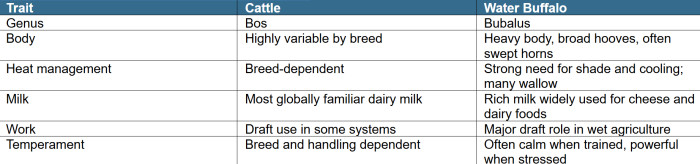
That grocery-store label is where the “buffalo” talk goes sideways, especially when someone compares buffalo milk to regular cow milk like it’s a simple swap.
Appearance
Cattle vary from small dairy breeds to large beef and draft animals. Horn shape, coat color, hump, ear size, and body type change dramatically by breed.
Water buffalo usually have dark skin, sparse hair, broad splayed hooves, a heavy body, and horns that may sweep outward or backward. River and swamp buffalo differ in type and traditional use.
A photograph alone can mislead if breed and age are unknown.
Size
Both cattle and water buffalo can become very large. Mature weight depends on breed, sex, feeding, and production system.
Neither belongs in a small yard. Strong fencing, handling facilities, transport plans, and herd company are basic requirements.
Milk
Cow milk dominates many dairy markets. Water buffalo milk is especially important in South Asia and is used for products such as traditional mozzarella di bufala.
Buffalo milk is generally richer in fat and total solids than typical cow milk, which affects texture, yield, and flavor. It is not automatically better for every diet.
The University of California Agriculture and Natural Resources notes the major role of water buffalo in dairy production, including their importance alongside cattle in India.
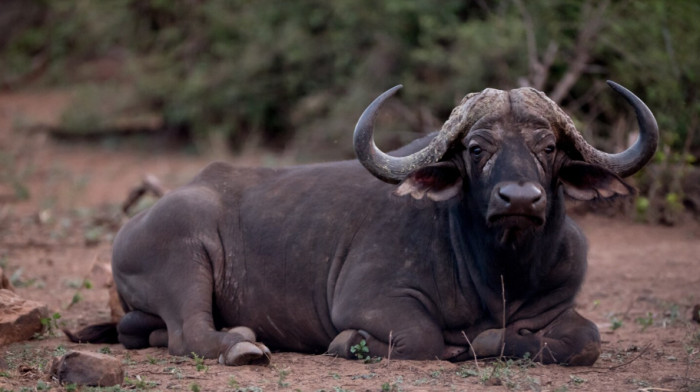
The next conflict lands on appearance, because cattle breeds can look wildly different, and water buffalo have that unmistakable dark, heavy, swamp-and-river vibe.
Meat
Cattle provide beef. Water buffalo meat may be called buffalo meat or carabeef in some markets.
Flavor and tenderness depend on age, breed, feeding, handling, processing, and cut. The species name alone does not predict the eating experience.
Work and Draft Use
Cattle, especially oxen, have long been used for draft. Water buffalo are strongly associated with plowing and transport in wet fields because their broad hooves and strength suit those environments.
Mechanization reduced draft roles in many regions, but animal power remains important in others.
For a quick refresher, see this farm animals list with names, pictures, and short facts.
Behavior
Both are social herd animals. They learn routines, recognize handlers, establish social relationships, and respond strongly to handling quality.
Water buffalo are often described as calm when accustomed to people, but unfamiliar or poorly handled animals can be dangerous. Cattle behavior also varies by breed, sex, age, maternal state, and experience.
Pupperish's story of a cow joining a bison herd shows that social attachment can cross species. It does not make cattle and bison the same animal.
Cooling and Wallowing
Water buffalo have relatively sparse sweat glands and often use water or mud to cool themselves in hot conditions. Shade, water, ventilation, and heat planning are critical.
Cattle also suffer heat stress, especially high-producing dairy animals and heat-sensitive breeds. Some zebu-influenced cattle handle hot climates better than many European breeds.
A wallow is not dirty neglect when it is clean, managed, and used for cooling. A stagnant contaminated pit is another matter.

Then the argument jumps to size and handling, when the same people who cannot tell horns apart suddenly act like either animal belongs in a small yard.
Feet and Terrain
Water buffalo have broad hooves that can support movement over soft, wet ground. Cattle hooves vary but are generally less adapted to deep mud.
Neither species should be forced to stand in manure or wet bedding. Foot disease and lameness reduce welfare and production. A report about a cow giving birth to four calves also shows why cattle facilities must be ready for rare reproductive emergencies.
Horns
Many water buffalo have prominent horns. Cattle may be horned, polled, or dehorned depending on breed and management.
Horn shape cannot identify every bovine. It does change feeder, gate, transport, and handling design.
Water Buffalo vs American Bison
Water buffalo are domesticated livestock in many parts of the world. American bison are a different species native to North America and may be raised under specialized ranching systems.
Bison are faster, more athletic, and less domesticated than cattle. A blind bison bonding with a bull is an individual sanctuary story, not a safe handling model.
Pupperish also covered a buffalo flipping a lion, but that animal was an African buffalo, another separate species. The common name covers several very different bovines.
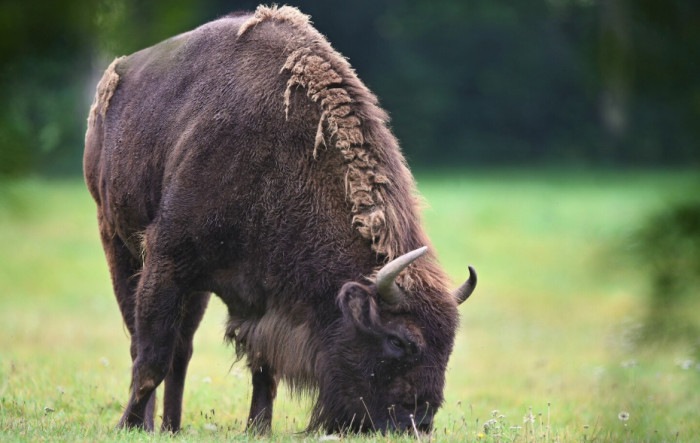
Finally, meat and work get dragged into it, since cattle are known for beef and draft use, while water buffalo meat and traditional draft roles complicate the whole “same thing” claim.
Can Cattle and Water Buffalo Crossbreed?
Cattle and water buffalo are genetically distinct and do not produce ordinary viable hybrids. Beefalo, by contrast, is a managed cross between domestic cattle and American bison.
That is another reason not to treat “buffalo” as one biological category.
Which Is Better for a Farm?
Cattle are usually easier to source in the United States, with broader veterinary, market, feed, and equipment infrastructure. Water buffalo may suit warm, wet regions, specialty dairy, draft work, or niche meat markets when expertise and legal requirements are addressed.
The University of Maryland's beginning farmer livestock manual treats water buffalo as non-amenable livestock in meat-inspection context, showing how processing rules can differ from conventional cattle.
Before choosing either, read types of farm animals, farm animals list, and best farm animals for beginners. Water buffalo also belong in the wider unique farm animals discussion in regions where they are uncommon.
The Clear Difference
A cow is an adult female, usually of domestic cattle. Water buffalo are a separate bovine species used for milk, meat, and work. American bison and African buffalo are different again.
The common names overlap. The animals do not.
The family dinner did not end well, because nobody agrees which “buffalo” they were actually talking about.
Want more farm surprises beyond cow and buffalo? Check out these unusual and exotic livestock you can raise.
Share this article:





