
Beluga Whale Steals The Show At Georgia Aquarium Engagement

Gavin Hulberg didn’t just pop the question, he staged it at the Georgia Aquarium with the kind of audience you can’t rehearse: a beluga whale named Qinu.
Olivia Walsh, a beluga trainer intern who’d been working with Qinu for three months, was already expecting something sweet, but she still couldn’t believe how thoughtful it was. Her supervisor, Katie Lorenz, said Gavin reached out to a team member to help plan the moment, and then the rest was pure, unpredictable Qinu energy. Even better, Qinu’s window behavior was spontaneous, not a trained “reaction,” which is why the whole thing felt so real.
And yes, the beluga stole the show.
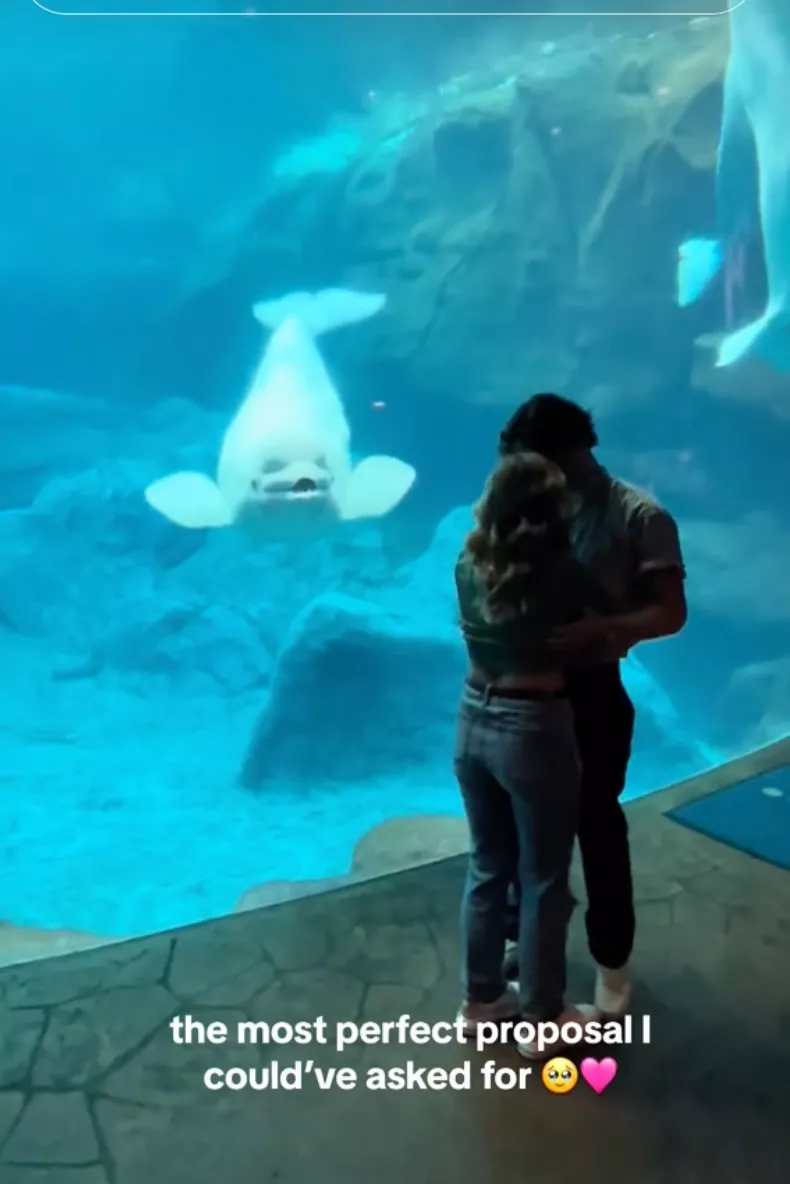
Gavin Hulberg and Olivia Walsh share a hug while Qinu, a beluga whale, observes nearby.
Walsh, who had been interning as a beluga whale trainer at the Georgia Aquarium for the past three months, explained in her caption that the proposal was beyond anything she could have imagined. Her supervisor, Katie Lorenz, shared that Hulberg had contacted a team member to help plan something special, knowing how much Walsh loved the belugas and her work at the aquarium.
Lorenz, an associate curator of mammals and birds at the aquarium, further explained that Qinu’s behavior was spontaneous and not part of any specific training.
"Qinu’s behavior at the window was her own — she was not intentionally trained to have any type of 'reaction,'" Lorenz said.
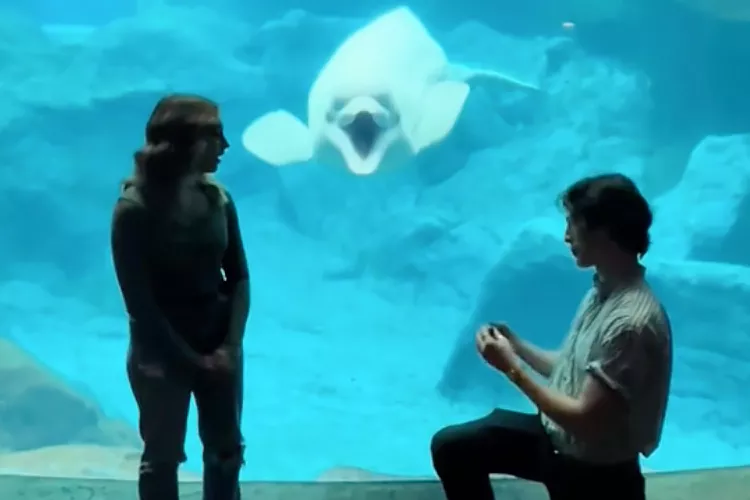
Gavin Hulberg pops the question to Olivia Walsh while a beluga whale named Qinu looks on.
Those interested in seeing Qinu and the other beluga whales at the Georgia Aquarium can visit in person or enjoy the experience through the aquarium’s live beluga whale webcam.
Fans can also follow the aquarium’s social media accounts on TikTok and Instagram for more behind-the-scenes moments and adorable clips of the belugas.
That’s when the hug between Gavin and Olivia landed right in front of Qinu, like the whale knew exactly what was going on.
Although proposals at the Georgia Aquarium are not uncommon, especially for staff members, Qinu’s reaction made this one stand out. The TikTok video received thousands of comments from viewers touched by the beluga’s genuine response.
Some viewers jokingly suggested that Qinu should be invited to the wedding, with one comment saying, “The beluga has to be invited to the wedding 🦭,” while another suggested, “The beluga NEEDS to officiate the wedding now.” The playful suggestions continued with another comment stating, “The beluga has to be a bridesmaid at this point.”
"I’ve been interning with the beluga training team for the last 3 months, so this was the most thoughtful way he could’ve done it 🦭"
The enchanting presence of the beluga whale during the engagement at the Georgia Aquarium underscores the profound emotional and psychological benefits that come from interacting with animals. The joy and connection felt by the couple, heightened by the playful antics of the whale, exemplify how these experiences can enrich our lives. They serve as a reminder of the vital role nature plays in our mental health.
Katie Lorenz explained that Qinu was not cued to react, which made the beluga’s timing feel even more wild.
The enchanting encounter between the beluga whale and the engaged couple at the Georgia Aquarium highlights the profound emotional connections that can arise in such unique settings. As the couple shared their special moment, the presence of the beluga added an unexpected layer of joy and wonder, making the proposal even more memorable. This interaction serves as a reminder of how these magnificent creatures can foster feelings of empathy and compassion, enriching our lives in ways we may not anticipate.
Moments like proposals are already unique but become unforgettable when an animal unexpectedly adds charm to the occasion.
For Olivia Walsh and Gavin Hulberg, their engagement isn’t just about their love for each other—it’s also about the delightful role Qinu played in the moment. Their story captures how love and joy can intertwine with nature to create a unique and lasting memory.
And speaking of viral animal charm, meet Wally the emotional support alligator, who went to the Phillies game and stole hearts.
The Psychological Appeal of Animal Interactions
Interactions with animals, like those seen with the beluga whale at the Georgia Aquarium, tap into some fundamental psychological needs. These positive emotional responses are often linked to the release of oxytocin, a hormone associated with bonding and affection, highlighting the therapeutic potential of animal interactions.
The TikTok video went viral because viewers couldn’t stop talking about Qinu’s genuine response at the aquarium window.
Moreover, the phenomenon of a beluga whale capturing public attention reflects our innate fascination with nature and animals. This connection is often rooted in evolutionary psychology, where humans are drawn to creatures that exhibit intelligence and social behaviors similar to our own.
Thus, seeing a beluga whale interact with visitors can evoke deep-seated emotions that resonate with our fundamental need for connection and community.
Emotional Benefits of Animal Encounters
Encounters with animals provide a unique opportunity for emotional regulation. In this case, the beluga whale not only entertains but also offers visitors a chance to experience joy, reminding them of the beauty of the natural world. Such interactions can serve as a form of emotional release, which is vital for mental health.
The social dynamics observed during the beluga whale's performance also highlight the communal aspects of experiencing nature. Shared enjoyment of such moments fosters social bonding among onlookers, enhancing feelings of belonging and community. These shared experiences can lead to lasting memories and strengthen social ties, demonstrating that emotional connections are not just individual experiences but can also be collective.
Comments piled in, with people joking that Qinu should officiate, be a bridesmaid, and basically run the whole wedding.
The recent engagement at the Georgia Aquarium, highlighted by a beluga whale's playful antics, underscores the profound emotional impact that animal interactions can have on individuals. Such moments not only create lasting memories but also foster a sense of connection that is vital for emotional health. The joy and surprise of having a beluga whale steal the show during a proposal perfectly illustrate how engaging with animals can enhance feelings of empathy and compassion. These experiences, found in structured programs at aquariums, have been shown to boost emotional resilience, allowing participants to leave with a heightened sense of well-being. This engagement serves as a reminder of the therapeutic benefits that arise from these unique interactions with marine life, extending far beyond the confines of a single visit to the aquarium.
Lastly, it's important to recognize the role of storytelling in shaping our experiences with animals.
The presence of the beluga whale at the Georgia Aquarium during the engagement highlights the unique emotional connection that can be formed between humans and animals. The joy and excitement of the proposal were undoubtedly intensified by the whale's playful interaction, creating a memorable backdrop for this significant moment.
Such experiences remind us of the profound impact that wildlife can have on our emotions, with interactions like these serving as a catalyst for feelings of joy and connection. The beluga's charm not only captivated the couple but also reinforced the importance of emotional bonds in our lives.
The recent engagement at the Georgia Aquarium serves as a shining example of how joy can be amplified through the presence of animals. In this unique setting, the couple's proposal became a memorable event not just because of the love shared, but also because of the unexpected involvement of a beluga whale. Such interactions highlight the powerful impact that animals can have on our emotions. Engaging with these magnificent creatures can elevate mood and reduce stress, providing a therapeutic experience that lingers well beyond the moment. This incident underscores the idea that positive experiences with animals can foster happiness and resilience, leaving lasting impressions on our lives. The beluga whale, in its playful and curious nature, added an enchanting layer to the engagement, demonstrating how moments of joy can be enriched in the company of animals.
The proposal was adorable, but Qinu got the final vote.
Want more sweet animal chaos? Watch the wild dolphin kiss its dog friend after swimming up to a boat.
Share this article:





