
Blind Dog Found After Night Alone in Arizona Desert Gets a Second Chance

By the time someone spotted Copper in the Arizona desert, the most dangerous part of his ordeal was still ahead. The blind dog had already spent a night alone outside Buckeye, and rescuers say that finding him early the following morning may have spared him from extreme daytime heat and given him a path to safety.
A blind dog alone in unfamiliar desert
Copper was discovered after apparently being abandoned near someone else’s property outside Buckeye, Arizona. For any dog, being left in an unfamiliar place would be risky. For Copper, the danger was even greater because he is blind.
Rescuers said he cannot see at all. That meant he had no way to visually locate shelter, find water, recognize approaching vehicles, or understand what surrounded him. A dog used to indoor life was suddenly outside in the desert, left to navigate with scent, sound, and the ground under his paws.
He survived the night and was noticed early the next morning. That moment changed everything. Instead of facing the desert on his own, Copper was brought into the care of Desert Tails Rescue, where the focus turned from simple survival to immediate safety and treatment.
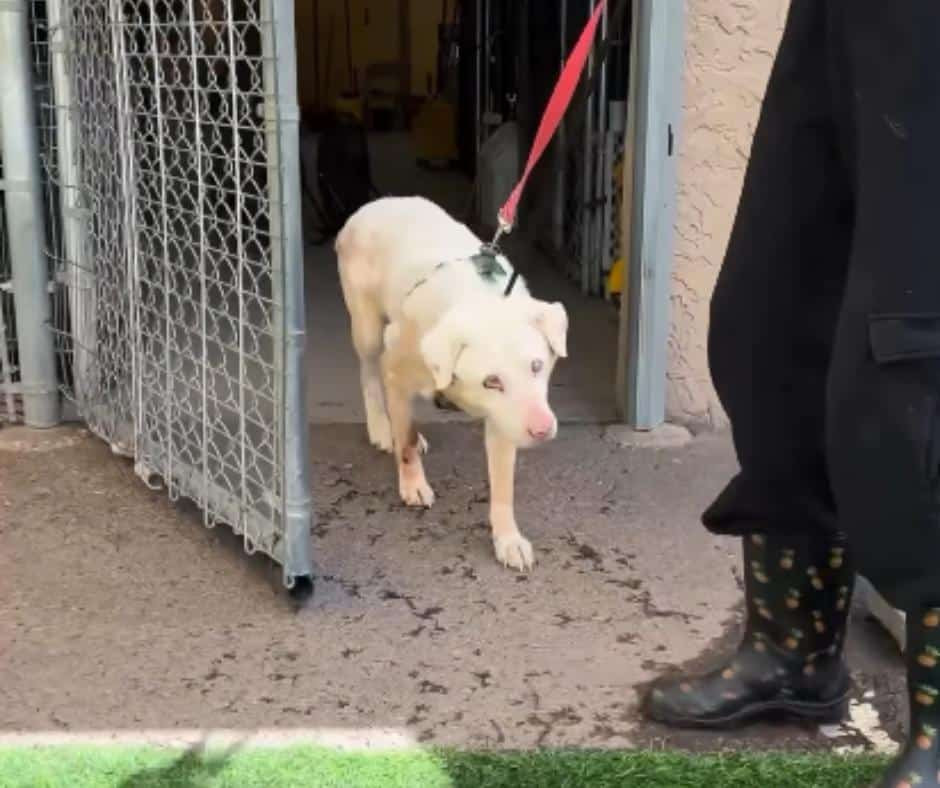
Why the timing mattered so much
The rescue said the timing of Copper’s discovery was critical. Desert temperatures can become dangerous quickly after sunrise, and Copper had already been exposed overnight.
Had he remained outside through the day, the conditions could have become far more serious. Rescuers said temperatures in the area can reach about 115 degrees. For a blind dog, those conditions carry obvious additional risks. He would not have been able to see shade, water, traffic, or other hazards as the day heated up.
The rescue could only imagine how disoriented a blind dog might be in that setting. Every sound would be unfamiliar. Nothing around him would offer the visual cues most dogs use to understand where they are. By the time he was found, Copper had already endured that confusion for hours. Being picked up when he was likely prevented him from having to face the worst of the desert heat.
A case that reflects a larger problem
As striking as Copper’s story is, the rescue said it was not an isolated case. Less than six months earlier, the same organization dealt with another abandonment involving a senior dog with major vulnerabilities: a 12-year-old Great Dane who was left tied to the rescue’s front doors at about 3 a.m. That dog was also deaf and blind.
According to the rescue, abandonment cases have become more concerning as shelters face limited space and increasing demand. When facilities are full, people trying to surrender pets may be forced to wait longer before a rescue or shelter can take an animal in.
The organization said those pressures can push people toward desperate choices, but stressed that safer options do exist. People who are struggling to keep a pet can reach out to multiple shelters and rescue groups, submit surrender applications early, and ask whether a courtesy adoption post can be created. Those posts can help introduce a dog to possible adopters even if a rescue does not currently have room.
The rescue also suggested another route for animals who are suitable for adoption: taking them to appropriate dog-friendly community spaces while they wear an Adopt Me vest. That can help dogs meet potential families directly. The rescue’s message was simple. There are better ways to seek help than leaving a vulnerable animal alone or tied outside.
Copper’s medical needs come first
Once Copper was safe, the next step was understanding his condition and beginning the care he needs. He was scheduled for a veterinary evaluation, blood work, wound treatment, vaccinations, microchipping, and other routine medical attention. He will also need to be neutered.
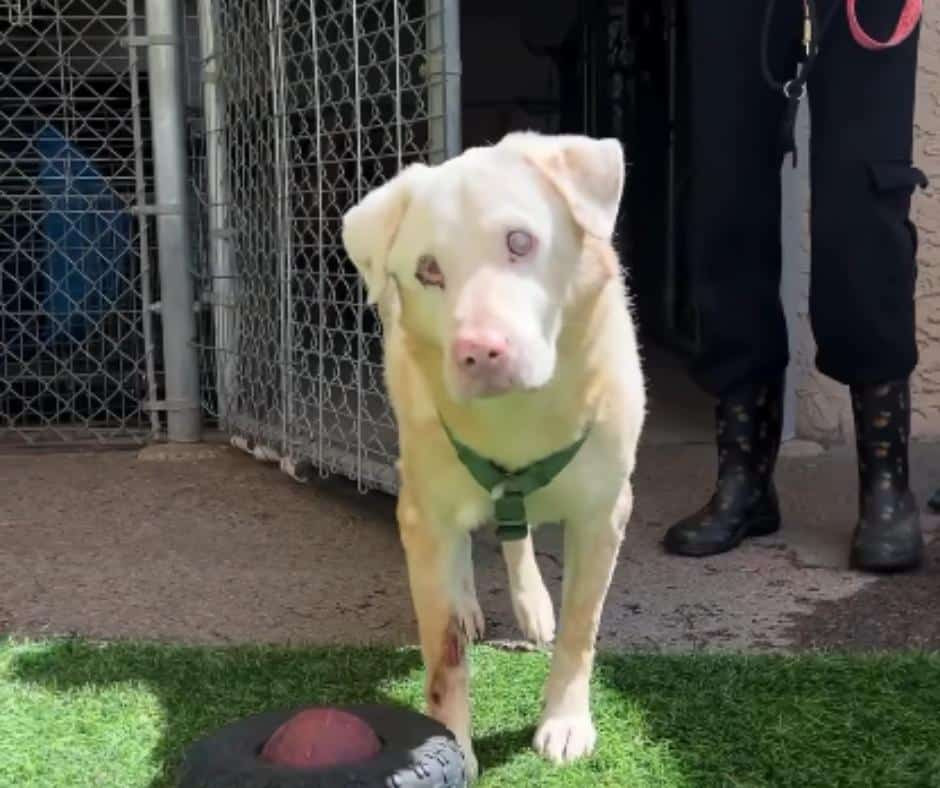
One of the biggest medical concerns involves his eyes. The rescue said Copper was expected to undergo surgery to remove both eyes and permanently close them, a procedure meant to address the problems affecting them.
There was also some encouraging news. Aside from the issues that brought immediate concern, the rest of Copper’s condition appeared relatively good. That matters for any rescue dog, but especially for one arriving after a night alone in such a dangerous environment.
Blindness will remain part of Copper’s life, yet the rescue noted that dogs can adapt well when they are given stable surroundings and patient care. Predictable routines, familiar scents, consistent sounds, and time to learn a space can help a blind dog move through the world with more confidence. In Copper’s case, that process is only beginning, but he is no longer trying to figure things out by himself in the open desert.
From survival to the possibility of home
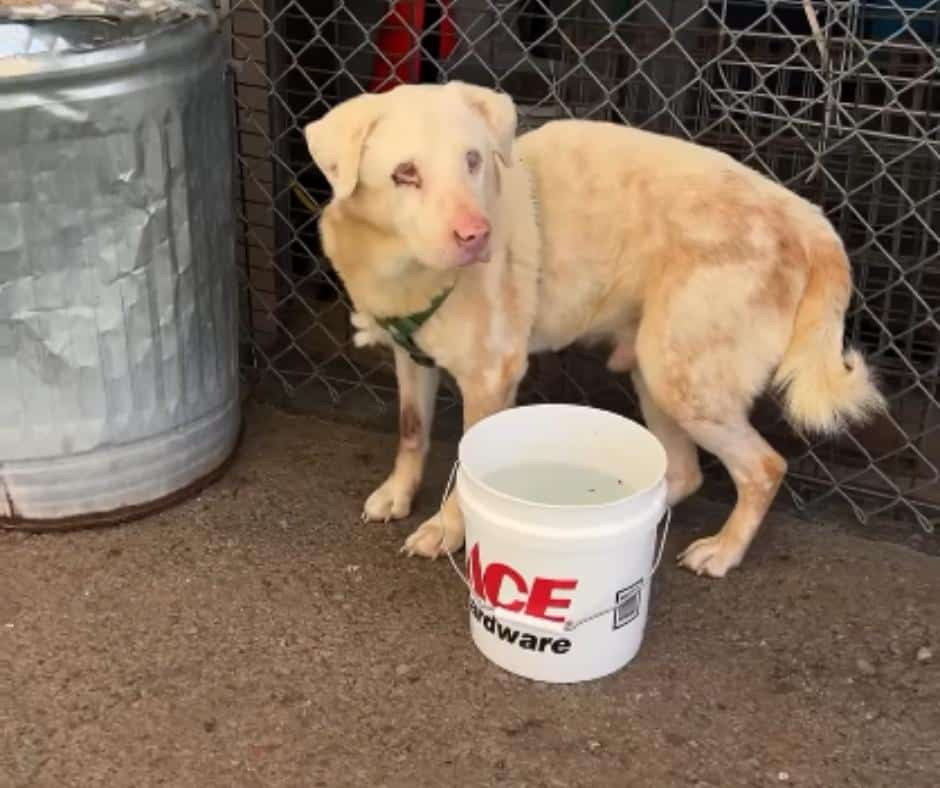
For now, Desert Tails Rescue is giving Copper time to settle in while his medical treatment moves forward. The dog who was left outside is now in a place where people are watching his health, helping him navigate, and making sure his needs are met.
The rescue said he is starting to relax little by little. That may be one of the clearest signs of how much has changed. The circumstances that once put him in danger have been replaced by routine care, human attention, and a slower introduction to new voices, scents, and surroundings.
Copper still has important steps ahead of him before he can move on to the next chapter. His surgery and the rest of his medical care must come first. After that, the rescue expects he will eventually be available for adoption.
His story remains shaped by the fact that he was abandoned in an unforgiving place. But it is no longer defined only by that night. Copper made it through the dark, through the uncertainty, and into the hands of people prepared to help him heal. If all goes as planned, the blind dog who survived alone in the Arizona desert will get something much safer and more lasting next: the chance at a family that understands exactly what he needs.
Share this article:





