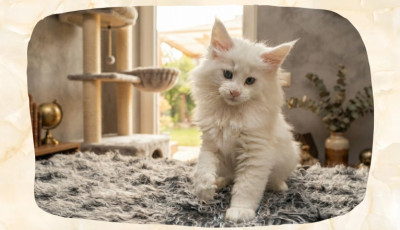
Viral Cat Chopper Covers His Eyes and Decides No One Can See Him

The joke lands instantly. A cat named Chopper has his whole face covered, hears his owner calling for him, and appears completely convinced that if he cannot see anyone, nobody can see him either. That simple moment turned into a viral hit, with viewers flocking to watch Chopper’s committed version of hide-and-seek.
The video was shared to Instagram on July 27 through the account @chopper__daily. In the clip, Chopper is shown with his face fully hidden by a garment, creating the kind of accidental comedy cats seem to specialize in.
Rather than reacting to the sound of his name, Chopper keeps up the act. His owner can be heard calling to him, but the cat appears more interested in staying tucked away and ignoring the summons. The result is a funny little standoff: one human trying to get a response, and one cat behaving as though perfect invisibility has been achieved simply by blocking his own view.
The caption that accompanied the post summed up the appeal with a playful assessment of the pet at the center of it all: Chopper might not be the brightest, it said, but he is the funniest.
Why the clip struck a chord
Viewers clearly agreed. The post has collected more than 764K likes on Instagram, and the response in the comments shows why the video traveled so far.
Many people treated Chopper’s logic as instantly recognizable cat behavior. One person joked that, from the cat’s perspective, there was nobody there to find him. Another imagined his thought process in even simpler terms: if he could not see them, they could not see him. Someone else said their own cats play hide-and-seek in much the same way, while another admirer wrote that cats are especially cute when they do things like this.
That mix of silliness and familiarity is what gives the clip its staying power. Nothing dramatic happens. A cat hides badly, ignores being called, and somehow turns the whole scene into a performance. For the many people who watched, that was more than enough. Chopper’s disappearing act may not have fooled anyone at home, but it made plenty of strangers laugh.
Why cats cover their eyes
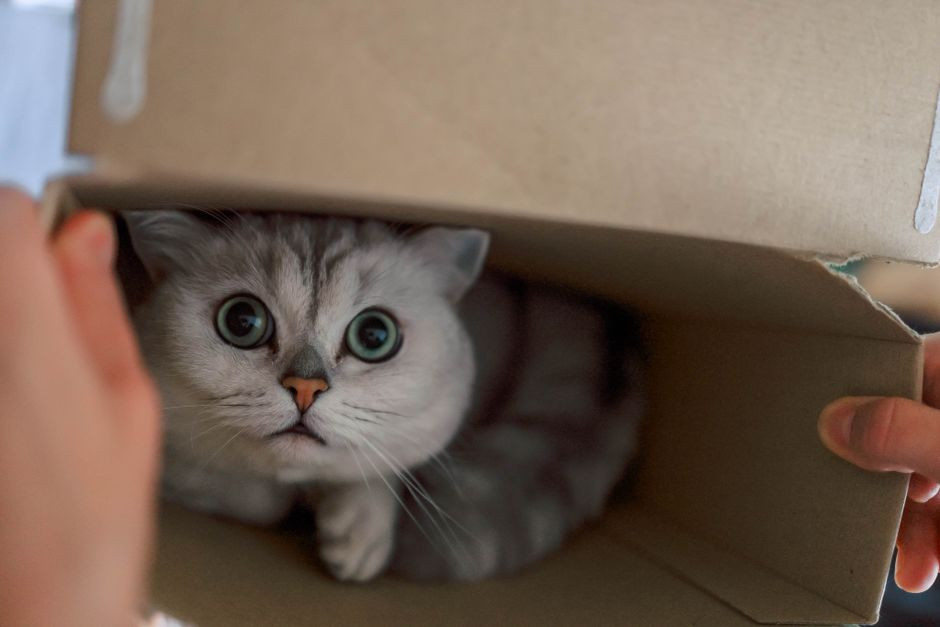
Cats often hide their faces behind paws, blankets, furniture, or a person’s arm. It can look like a joke, but the behavior usually has simple roots in normal feline instincts. Cats are both hunters and animals that prefer not to be noticed when they feel unsure. Hiding the face can be part of settling down, blocking light, reducing stimulation, or creating a small sense of safety.
Some cats also seem calmer when part of their body is tucked away. A covered face can make a resting spot feel more enclosed, much like a box, a cave bed, or a space under a chair. It does not mean a cat truly believes it has become invisible. It is better understood as comfort seeking and low key concealment behavior.
What the body language can tell you
Look at the whole cat, not just the paws over the eyes. A loose body, slow blinking, normal ears, and relaxed breathing usually point to contentment or sleepiness. A tense body, flattened ears, a tucked tail, wide pupils, or sudden freezing can mean stress or fear.
Context matters. A cat may cover its face during a nap, after play, when bright light is bothering it, or when the room feels busy. In a new home or shelter setting, hiding can be a coping tool. Dogs can show a related need for distance too, although they are less likely to hide their eyes in the same way. For both species, retreat behavior is often a request for space rather than an invitation to be handled.
How to respond helpfully
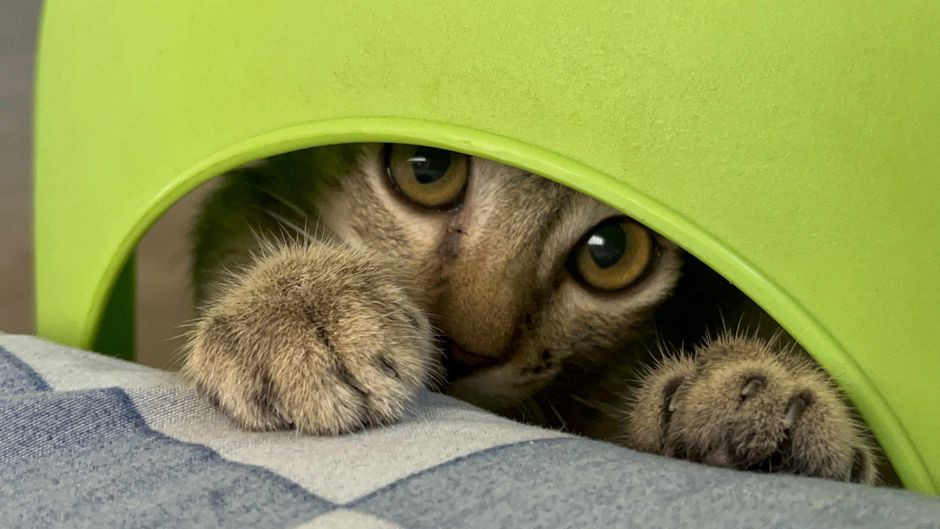
If a cat is resting with its face covered, the best response is often to let it rest. Avoid pulling paws away, lifting blankets, or leaning in for photos if the cat seems overstimulated. Offer quiet, shade, and a predictable place to retreat.
Practical setup helps. Give cats access to covered beds, boxes, high perches, and rooms with low traffic. Keep food, water, and litter easy to reach without forcing the cat into busy areas. If children or dogs share the home, teach them not to corner or stare at a hiding cat.
If face hiding is new and comes with squinting, rubbing, discharge, sneezing, appetite changes, or withdrawal from normal activity, a veterinary check is sensible. Comfort behavior is common. Sudden behavior change deserves attention.
Share this article: