
Cat-Sitter Attempts To Decode His Cat's Different Vocalizations, As Redditors Weigh In With Their Own Meow Stories

One cat-sitting favor turned into a full-on meow mystery, and Reddit was more than ready to help crack the code.
A dad stepped in to watch a cat, then quickly realized the kitty had a whole vocabulary of different sounds. That confusion led to a wave of Reddit replies, with cat owners sharing their own stories about the strange, specific ways their pets talk to them.
Some of those meows are funny, some are bossy, and some sound way more dramatic than they should. Read on.
One Redditor with the username, u/brownedelish, made a post about her dad's confusion while cat-sitting her furball

Apparently, her dad was trying to figure out what her cat was trying to say
If you're a cat owner, we're sure you've been in this state of confusion at least once.
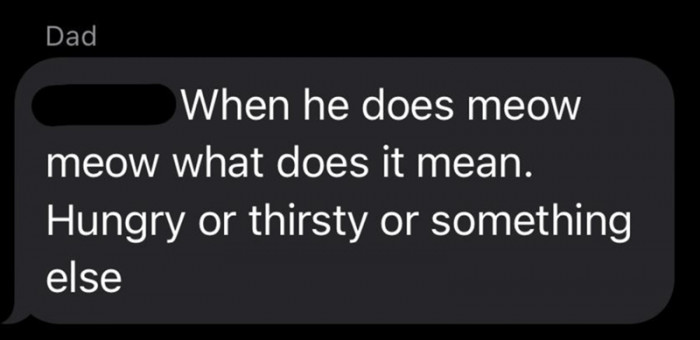
The post, which has since viral, garnered over 25k upvotes, prompting hundreds of Redditors to chime in with their own meow experiences.
Keep scrolling; you'll love what people had to share about their cats.
Emotional regulation is a crucial aspect of pet ownership, and understanding a cat's vocalizations can play a significant role in this process. This effect underscores the importance of recognizing and responding to a cat's vocalizations as a means of enhancing this emotional support.
For cat owners, practical strategies to improve emotional regulation include spending quality time with their pets, providing a comforting environment, and practicing mindfulness during interactions. By being attuned to their cats' vocalizations and responding sensitively, owners can create a nurturing atmosphere that supports both their emotional well-being and that of their feline companions.
1. A cat of few meows
We respect this cat. Few meows, maximum effect.

Understanding feline vocalizations can be quite fascinating, as it taps into the larger concept of interspecies communication. Studies in animal behavior have shown that animals, including cats, have developed specific vocalizations to express their needs and emotions to humans, a phenomenon known as 'social referencing.' By paying attention to these vocal cues, cat owners can foster a deeper bond and respond more effectively to their pets' needs.
Moreover, recognizing and interpreting these vocalizations can enhance the human-animal bond, leading to better emotional well-being for both parties. The more owners engage with their cats' vocalizations, the more attuned they become to their pets' emotional states, which research shows can lead to reduced anxiety and increased feelings of companionship in both cats and humans.
2. When your cat is the boss at home

3. How To Get Attention 101
“Nobody is looking at me? I'll have to meow to get a little attention.”

4. This cat has different meows for different people
Well, we can't fault her for being smart now, can we?

Just as children form attachment bonds with their caregivers, pets form attachments with their owners, which can significantly affect their behavior and communication styles. Understanding the attachment styles of cats can help owners recognize when their pets are seeking comfort or when they might be feeling threatened. By fostering a secure attachment through consistent care and communication, owners can encourage their cats to express themselves more freely, resulting in a more harmonious living situation. Practical steps include maintaining a routine, providing safe spaces, and engaging in interactive play, all of which can help enhance the emotional security of feline companions.
This is basically like the girlfriend telling him to stop “yelling” at the litter box, in the owner vs. cat litter anxiety argument.
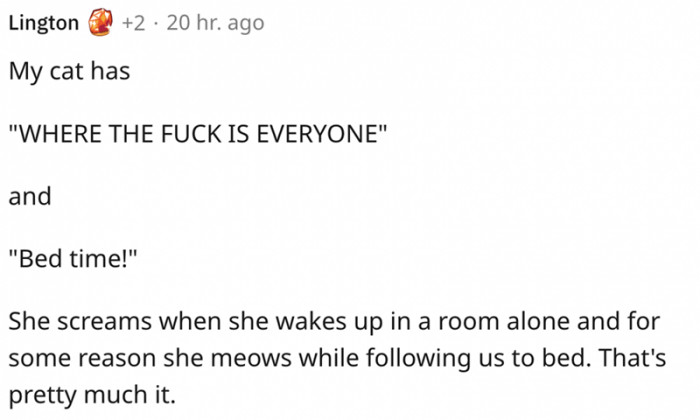
5. Two meows in the vocabulary
If she wakes up alone, you know everyone is going to be in trouble.
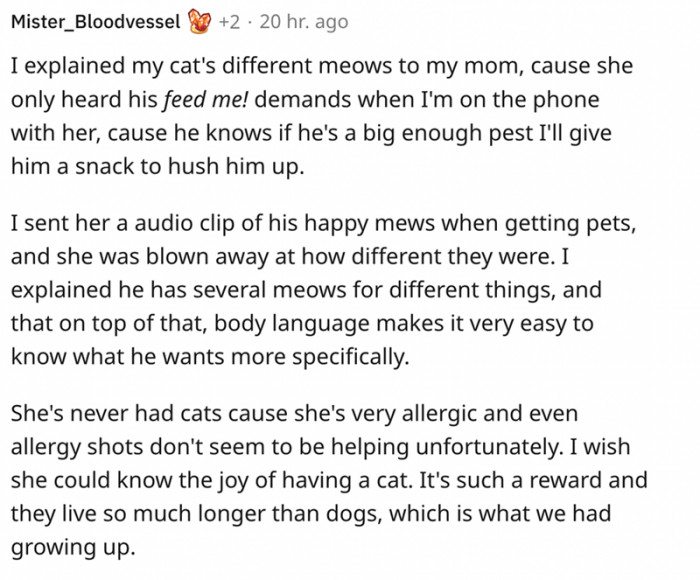
6. "Feed me" meows seem to be more aggressive
Indeed, cats are the most precious little creatures to have.
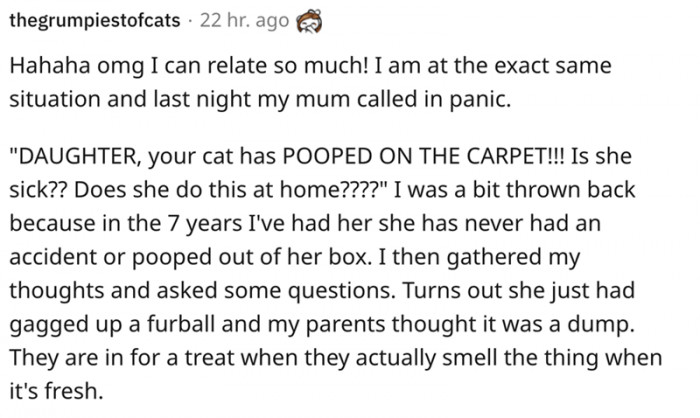
7. A novice mistake
We can't wait to see the look on their faces when they find out it's a gift, not poop.
The phenomenon of cat vocalizations can also be linked to emotional intelligence, an area of psychology that examines how we recognize and manage emotions in ourselves and others. Research shows that pet owners often develop a heightened sense of emotional awareness through their relationships with their animals.
This emotional growth can be particularly beneficial during stressful times, as interacting with pets has been shown to reduce cortisol levels and promote feelings of well-being. Therefore, encouraging cat owners to engage actively in understanding their feline friends' vocalizations not only enriches the bond but also serves as a form of emotional regulation for the owner.
8. This cat owner has mastered the feline language
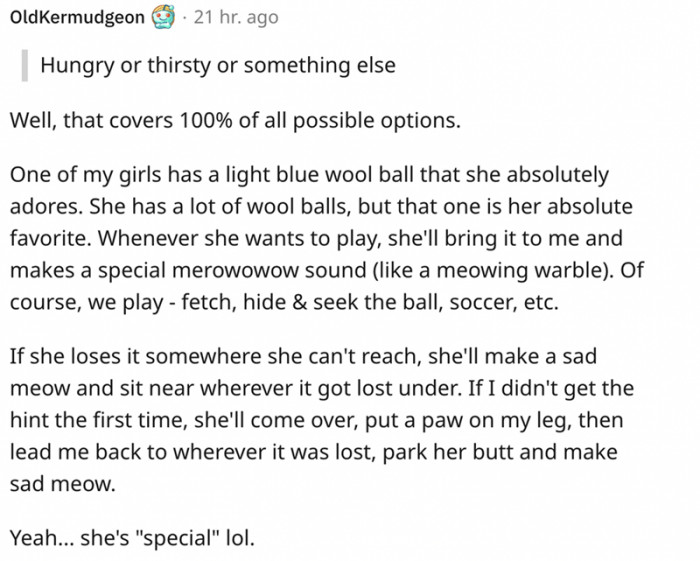
9. This hilarious misdiagnosis
This was the first time dad heard a cat purr. Haha, that went well.

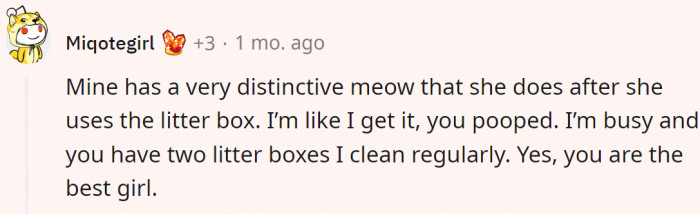
10. She just wants to let you know so you can clean up after
This principle can be applied to understanding how cat sitters and owners learn to interpret vocalizations from their cats. Research indicates that when owners observe the responses of their cats to various stimuli, they begin to notice patterns in vocalizations that correspond to specific emotions or needs. A study published in the Journal of Veterinary Behavior shows that both owners and sitters who engage in observational learning can improve their interactions with cats, leading to better communication and care.
To apply this practically, cat sitters can keep a journal of different vocalizations they encounter, noting the context in which they occur and the cats’ behaviors. Over time, this practice can help develop a more profound understanding of individual cats, allowing sitters to cater to their specific needs more effectively.
After reading all these experiences, we're pretty sure the cat-sitting dad got some information that helped him understand the cat's meows better.
We are confident this will not be his last time cat-sitting because how could anyone ever sit a cat and not want to return? It's practically impossible.
Can you decipher between the different meows your cat makes? Please share your personal meow stories in the comment section!
We might be lucky to find a meow expert among us.
Decoding the vocalizations of cats is more than a mere curiosity; it unveils a deeper understanding of their emotional worlds. The Redditor's efforts to interpret his cat's various meows resonate with the idea that each sound carries significance, reflecting the intricate communication that exists between felines and their human companions. This exploration not only enriches the bond shared but also highlights the importance of being attuned to the emotional cues our cats provide.
As the article illustrates through shared anecdotes, engaging with these vocalizations can lead to a transformative experience in pet ownership. This interaction fosters empathy and awareness, ultimately enhancing the mental well-being of both cats and their owners. By listening closely to their feline friends, cat sitters and owners alike can cultivate a partnership that honors the unique needs of these beloved pets, while also enriching their own emotional lives.
Want the full “meowing conversation,” where his partner calls him an AH, read this cat-chat showdown.
Share this article:





