
Overbearing Dog Dad Badgers His Girlfriend For Not Coddling His Dog The Way He Does

Some couples argue about money, chores, or family plans, but this one is all about a dog that one partner treats like a baby. OP says her boyfriend recently brought home a dog he thought was a corgi, and from the start, he has been completely obsessed with it.
She does care for the dog, but she does not want to hover over it all day or act like every nap needs a full celebration. The tension really started when her boyfriend kept calling her at home to show off the dog, and she finally said what she actually thought.
Now the whole thing has turned into a bigger relationship fight, and the comments have plenty to say about his behavior. Read on.
"This seems so stupid to me..."
"This is his baby."
"I personally like my space."
The scenario described reflects a common psychological phenomenon known as 'relationship strain,' particularly when partners' values and priorities diverge significantly. Research published in the Journal of Social and Personal Relationships indicates that differing attitudes toward pet ownership can lead to conflict, especially when one partner views the pet as a family member while the other sees it merely as an animal. This divergence often results in feelings of frustration and resentment, as the partner who values the dog’s emotional needs may feel unsupported or dismissed by their significant other.
Moreover, studies show that such conflicts can exacerbate underlying relationship issues, leading to broader dissatisfaction in the partnership.
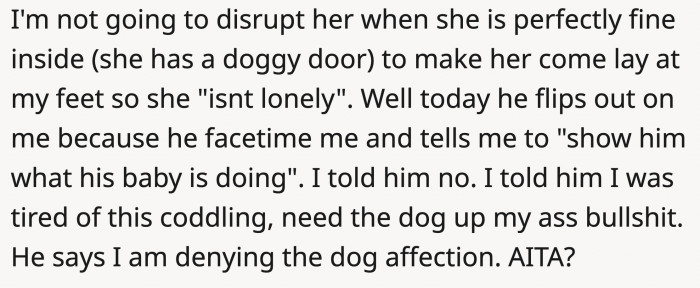
"I can't even hear my thoughts."

Him: "SHOW ME THE PUPPY"
"What is my BABY doing?"
Attachment theory provides a valuable lens through which to view the relationship between pet owners and their dogs. Many dog owners develop a secure attachment to their pets, which can mirror the bonds they hold with human relationships. This attachment can be particularly strong for individuals who may lack fulfilling connections elsewhere, leading to what researchers call 'pet-parenting' behaviors. This kind of attachment can create a protective reaction in the pet owner, reinforcing the need for validation and support from their partner. Understanding these dynamics can help couples address emotional needs in their relationships more effectively.
No one is blaming the dog, for those who start with this argument. It’s between OP and her boyfriend’s differences.
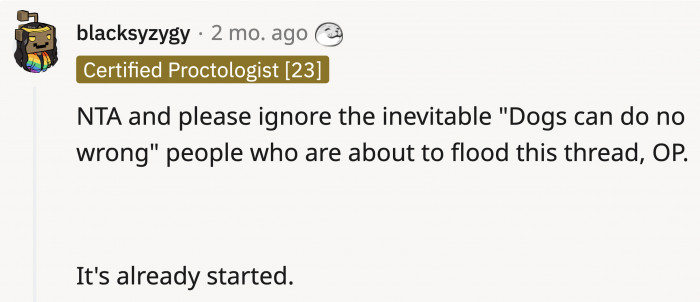
Let’s hear it from dog lovers and owners

They’re thinking that his actions are crossing borders that are more unusual

Partners should engage in discussions that focus on understanding each other's emotional attachments and perspectives.
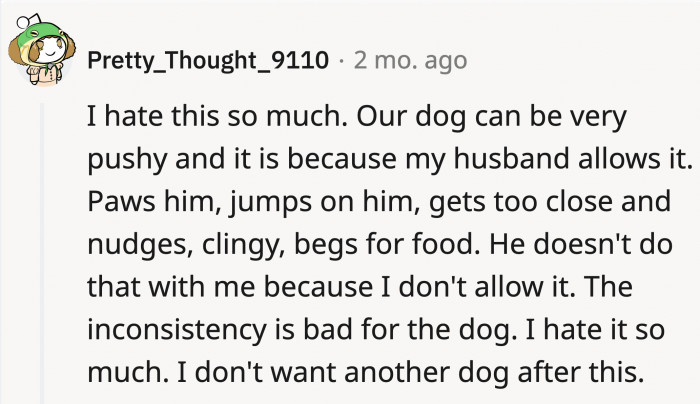
This is an insight from someone who is dealing with a similar situation as OP

Dogs thrive with routine, and if someone is allowing them more than what the other can give, it can result in confusion
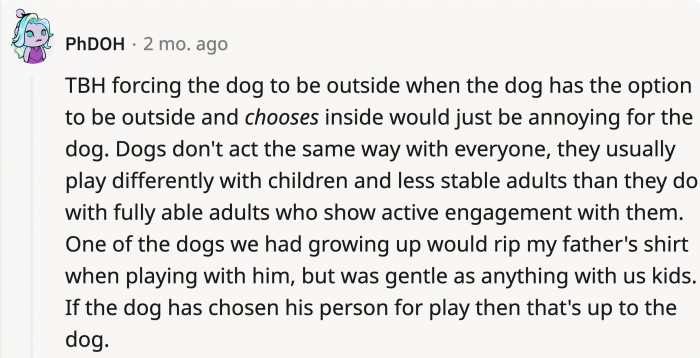
Dogs also have their own perspectives which should be acknowledged
From a behavioral perspective, the frustration expressed by the dog owner can be linked to the concept of cognitive dissonance, a psychological phenomenon where a person experiences discomfort due to holding conflicting beliefs or values. In this case, the dog dad feels an internal conflict between his role as a devoted pet owner and his girlfriend's lack of enthusiasm, leading to stress and possible resentment.
Research by Festinger (1957) highlights that individuals will often seek to resolve dissonance by either changing their beliefs or rationalizing their behavior. Therefore, it may be beneficial for the dog dad to explore why his girlfriend's approach bothers him and whether he can adjust his expectations. Engaging in self-reflection and seeking to understand the underlying reasons for his emotional responses can lead to healthier coping strategies.
This is like the breakup that started when he refused to puppy-sit for his girlfriend.
When a dog is spoiled, it usually means giving them what they want or letting them choose. In OP’s case, the dog is being smothered even though they have the option to rest.
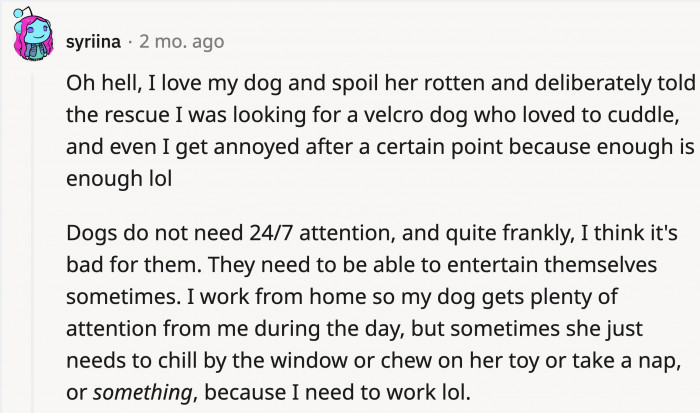
Since OP doesn’t believe that the dog is a Corgi breed,
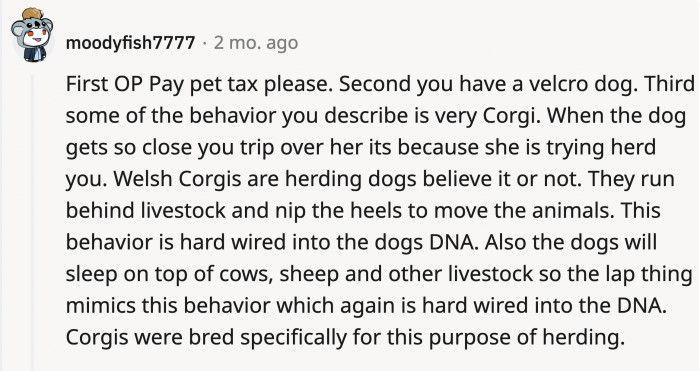
these facts might help
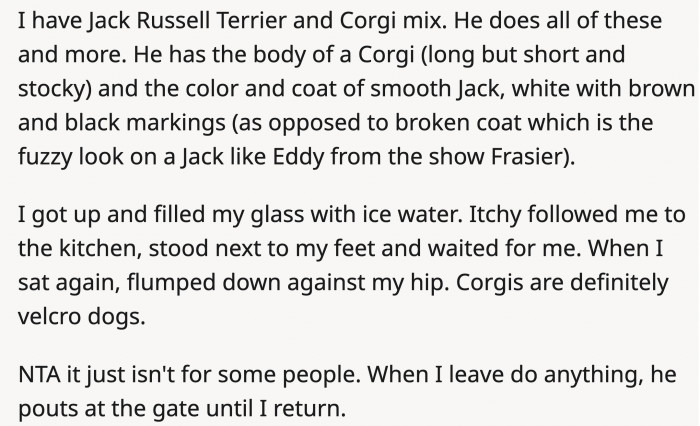
Personality traits significantly influence how individuals relate to their pets and each other.
It all boils down to the compromise both of them would make
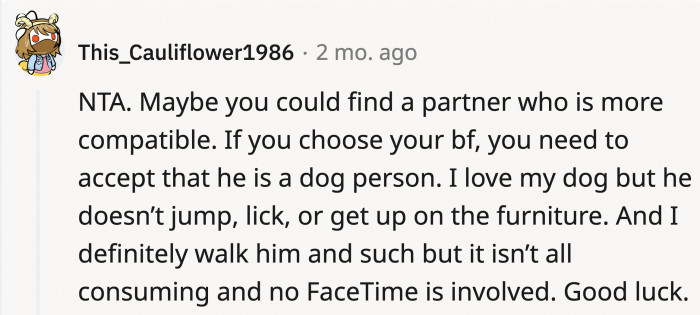
The boyfriend may need to understand that there might be harm in what he’s doing

No matter how adorable the dog is, they need to know what space is

Attachment styles also play a crucial role in how individuals engage in relationships, including those with pets.
There are boundaries that they need to learn in order to properly co-exist with their owners

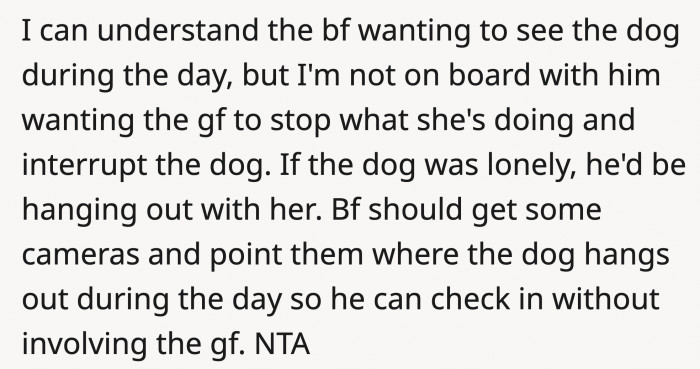
This Redditor is all for not pushing other people past what they're comfortable with

It's like he doesn't trust either of them to get along well enough
Empathy is fundamental in navigating the complexities of differing attitudes toward pet ownership.
There are dog lovers and people who think that animals, in general, are okay. There are also different levels of dog lovers.
Some coddle their pets to the point of having no boundaries, while for others, the first trick they train their dogs is to 'go away'.
Still, if you live with someone and you have different levels of affection for pets, you should never push someone to match what you willingly do, especially if they aren't comfortable with it and are content with how they coexist with the pet.
This article highlights the intricate dynamics that can arise in romantic relationships when partners have conflicting views on pet care. The scenario of an overbearing dog dad pressuring his girlfriend to coddle his dog underscores the potential for tension when one partner’s devotion to a pet clashes with the other’s more reserved approach. The need for effective communication becomes paramount in such situations, as understanding each other’s values regarding animal companionship can help bridge the gap between differing perspectives.
Rather than attempting to alter one another's beliefs, the focus should be on fostering a mutual understanding that honors both partners' feelings. Engaging in open dialogue about their varying comfort levels with the dog can lead to a more harmonious coexistence, benefiting both their relationship and the well-being of their canine companion.
Wait until you see how her boyfriend’s aggressive dog-sitting demand backfired.
Share this article:





