
Mom Keeps Nagging Her Stepdaughter To Replace Her Cats' Toys Because The Stepdaughter's Dog Keeps Destroying Them

A mom is stuck in a very specific kind of family battle, the kind where the mess is cute, the stakes are petty, and everyone feels personally attacked. Her stepdaughter is staying with them because things are tight, and the “helping out” part quickly turns into a daily headache.
Here’s the issue: the stepdaughter’s puppy destroys the cats’ toys, like it’s on a mission. The mom keeps nagging her stepdaughter to replace the toys every time they get wrecked, while the OP feels overwhelmed just trying to keep the household running with yet another dog in the mix.
So when the family calls her petty and she asks Reddit for a verdict, the real question becomes who should pay, who should train, and who’s actually overstepping in this house of cats, dogs, and blended-family tension.
After her family told her that she was being petty, the OP decided to ask the AITA community.
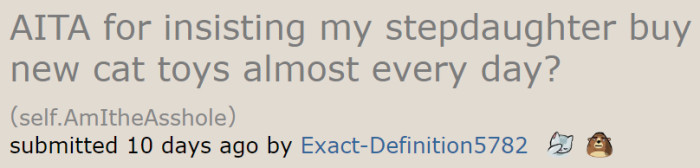
The OP's stepdaughter is staying with them because the economy isn't doing well nowadays.
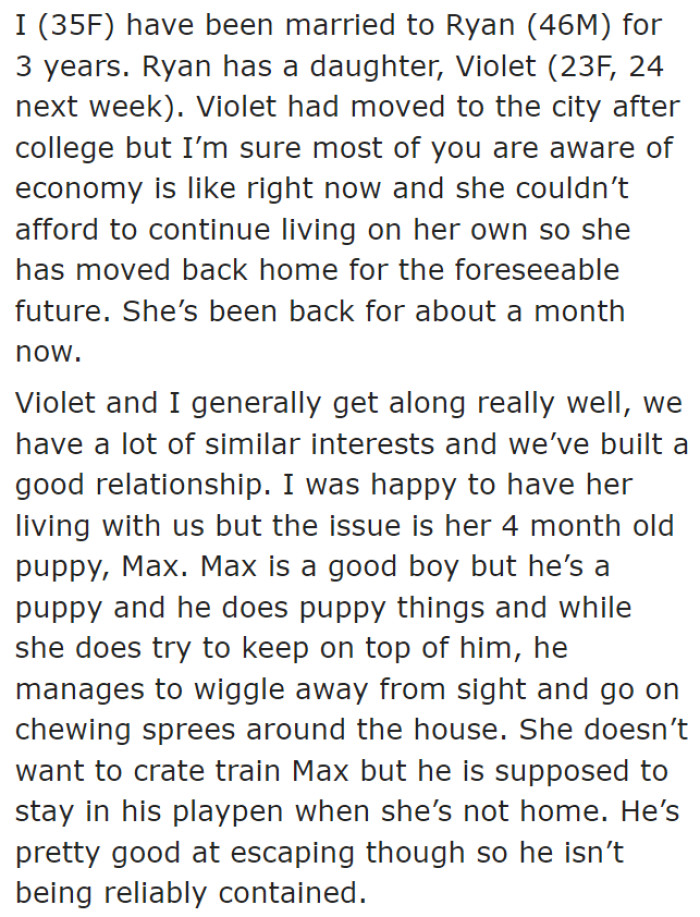
Her stepdaughter has a puppy that destroys the cats' toys.
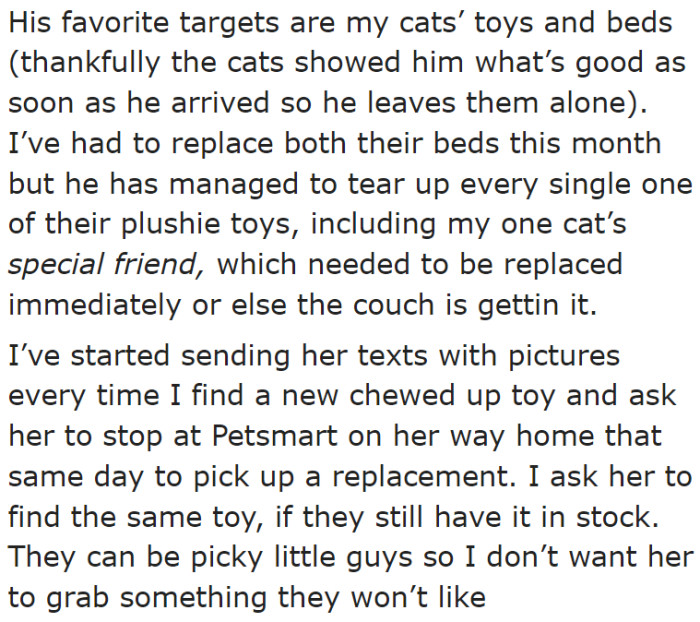
Navigating family dynamics, especially in blended families, can be challenging.
The situation with the stepdaughter's dog destroying the cats' toys highlights the complex interplay of family dynamics and pet ownership. Pets often become focal points in family relationships, embodying both affection and tension. The ongoing conflict over replacing the damaged toys points to deeper issues regarding boundaries and shared responsibilities among family members. This scenario serves as a reminder that disagreements over pet care can reveal significant emotional attachments and responsibilities that need to be navigated within the family structure.
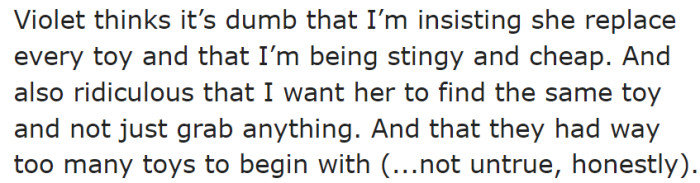
The stepdaughter is upset about having to replace every toy her dog destroys.
The OP is overwhelmed with having a dog at home.
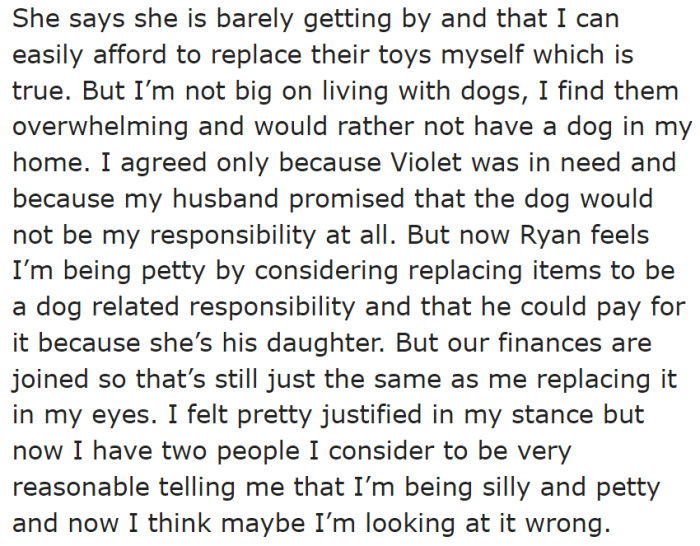
Redditors mostly sided with the OP, but others think that it's partly her fault.
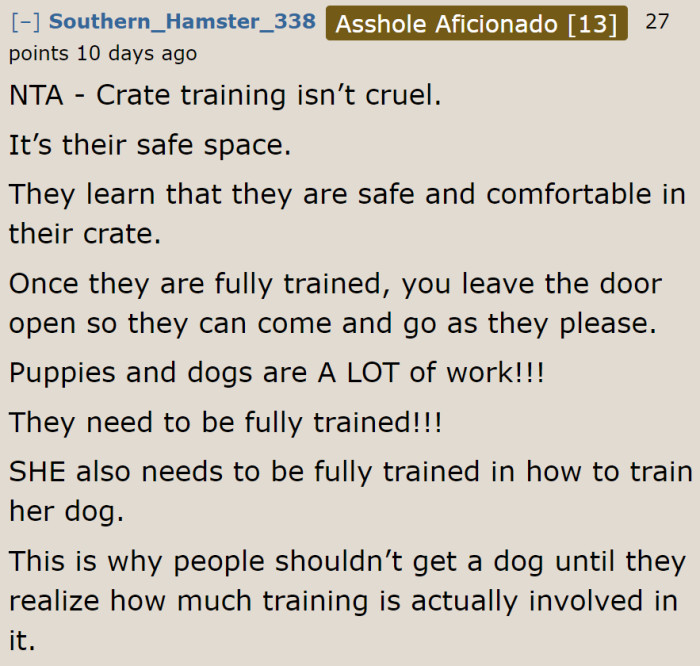
The whole thing kicks off after the family tells the OP she’s being petty for pushing the stepdaughter to replace the cats’ toy stash.
Studies suggest that step-parents may experience feelings of insecurity or inadequacy, particularly when their authority is challenged by stepchildren. This can lead to defensive behaviors, as seen in the mother's insistence on replacing the damaged toys.
Understanding these dynamics can help family members communicate more effectively and find common ground.
The dynamics of family relationships are intricately woven into the way they interact with pets, particularly in the case of the stepmother and her stepdaughter. The ongoing conflict over the cats' toys illustrates how emotional attachments can complicate household interactions. This scenario highlights how family members often project their emotional needs onto their pets, leading to heightened responses when those attachments feel threatened.
A Reddit user believes that the stepdaughter needs to allot time to train her destructive puppy.
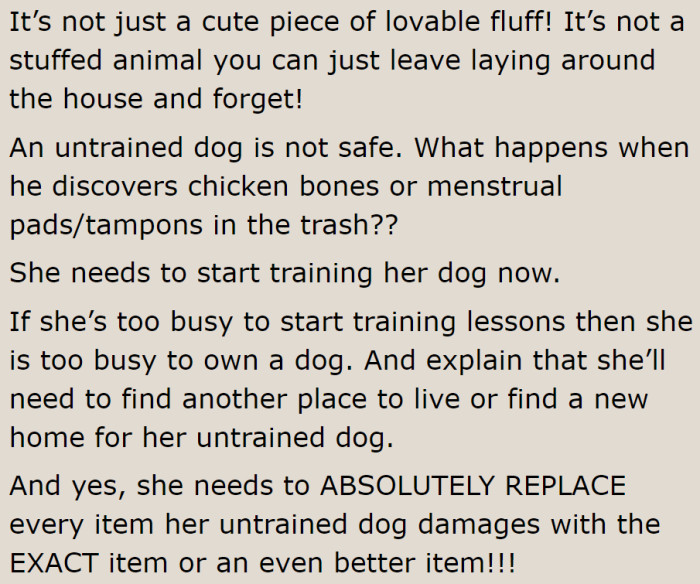
The stepdaughter is responsible for her dog. That's why she needs to replace those toys.
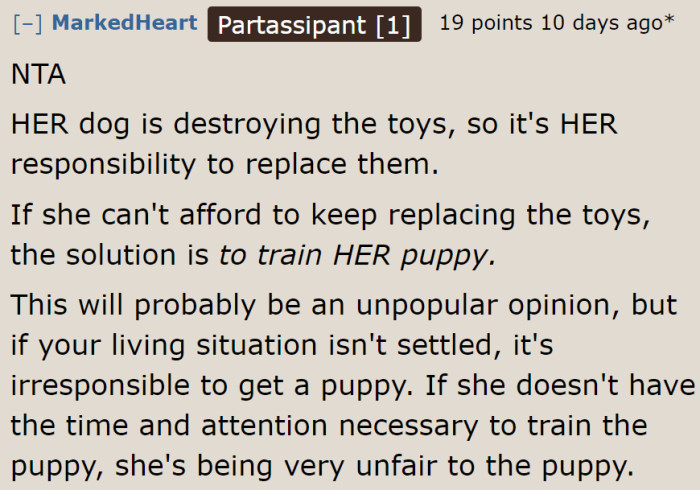
Crate training should be part of this dog's training.
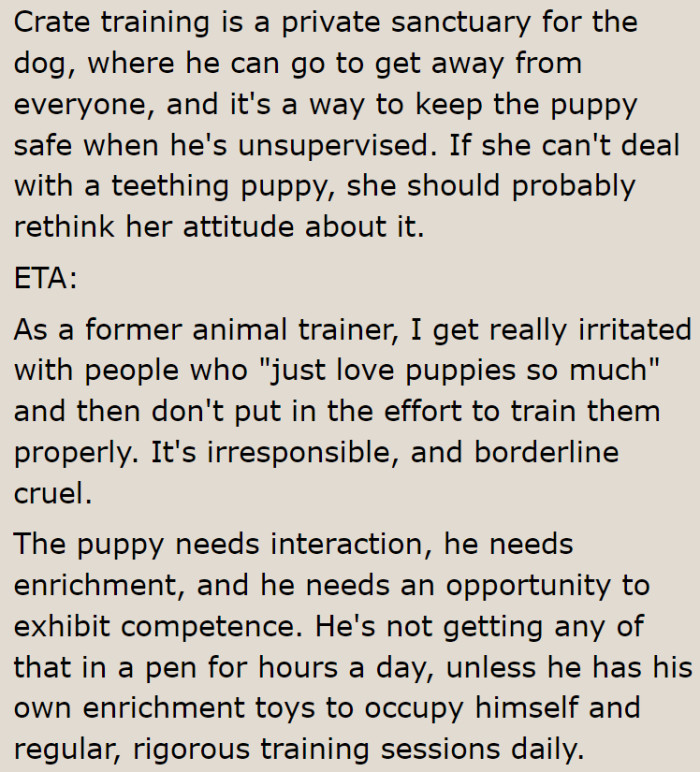
When a puppy keeps shredding every toy the cats touch, the OP’s “just replace it” routine turns into nonstop tension with the stepdaughter.
Open communication is essential in blended families to ensure that everyone's needs are acknowledged and respected.
Communication and Conflict Resolution
Effective communication is crucial for resolving conflicts regarding pet ownership.
Establishing open dialogue about concerns related to pet care can foster empathy and understanding, leading to more constructive outcomes.
This is similar to the college student forced to take her stepmom’s kidney-issue dog out to pee every hour.
The stepdaughter made the wrong choice of having this dog. She isn't financially stable.
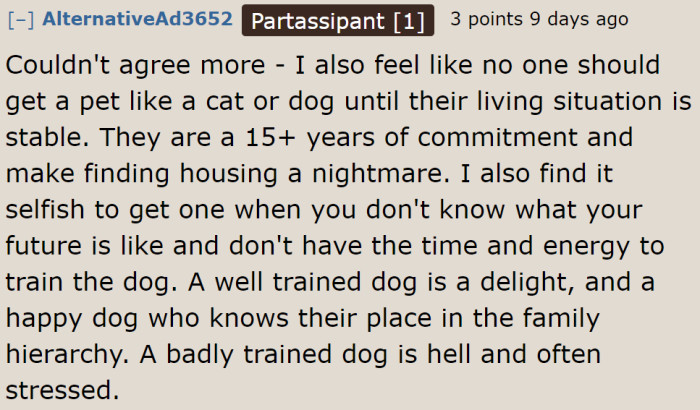
Just keep the toys away from the dog.
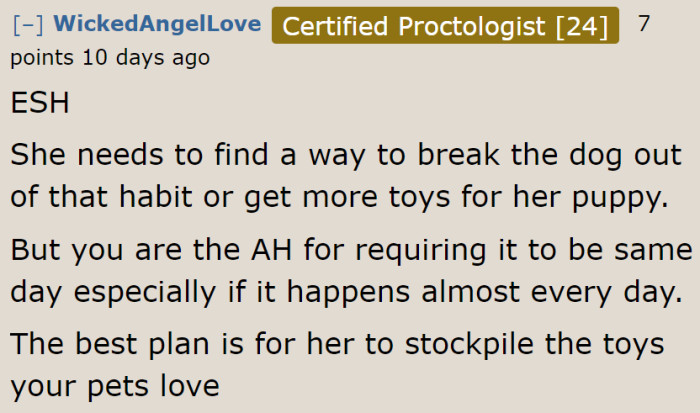
A few Redditors believe that she shouldn't ask a person who's struggling financially to replace the toys.
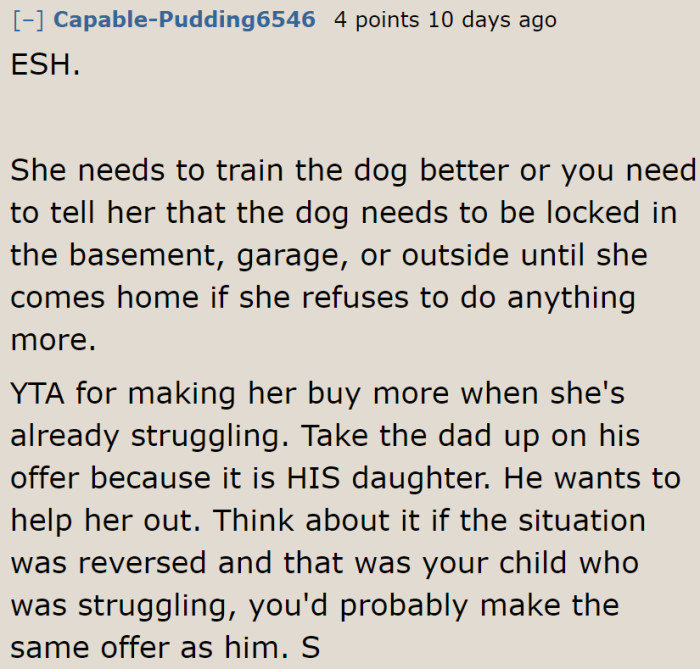
This includes discussing responsibilities for feeding, playing, and cleaning up after pets, which can alleviate some of the tension surrounding pet ownership.
Creating a schedule can also be beneficial, ensuring everyone knows their roles and responsibilities.
Caring for pets often brings to light the complexities of family dynamics, especially when it comes to shared responsibilities. In the case of the stepdaughter and her mother, the ongoing issue of the stepdaughter's dog destroying the cats' toys highlights the potential for stress and resentment when responsibilities are not evenly divided. This situation can breed frustration, as one family member feels overwhelmed by the demands of pet care while another appears disengaged. Addressing this imbalance is crucial, not just for maintaining peace within the household but also for fostering a sense of cooperation and empathy among family members. By recognizing the need for shared responsibilities in pet care, families can learn valuable lessons about teamwork that extend beyond the realm of caring for animals.
They can solve this problem by talking about how they can manage to get the pets to play separately.
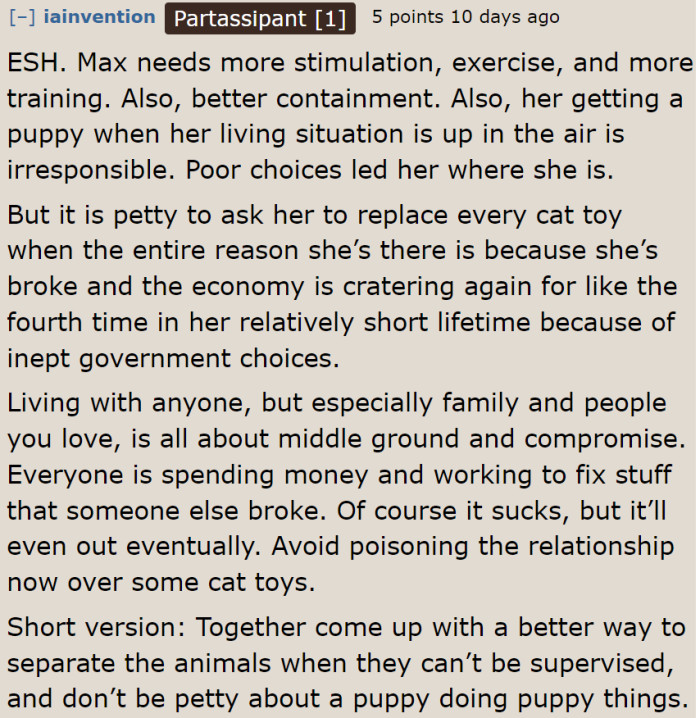
The OP shouldn't be bugging her daughter about the toys every single time.
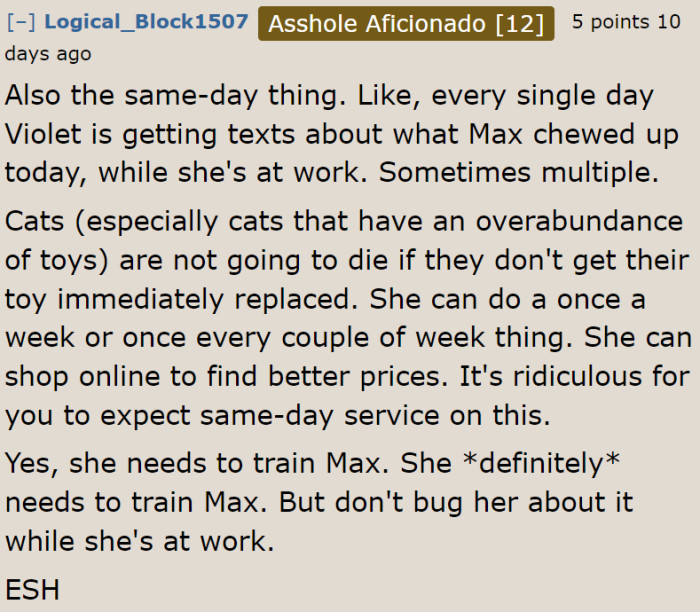
The OP just couldn't keep the toys away because the puppy managed to escape its playpen.
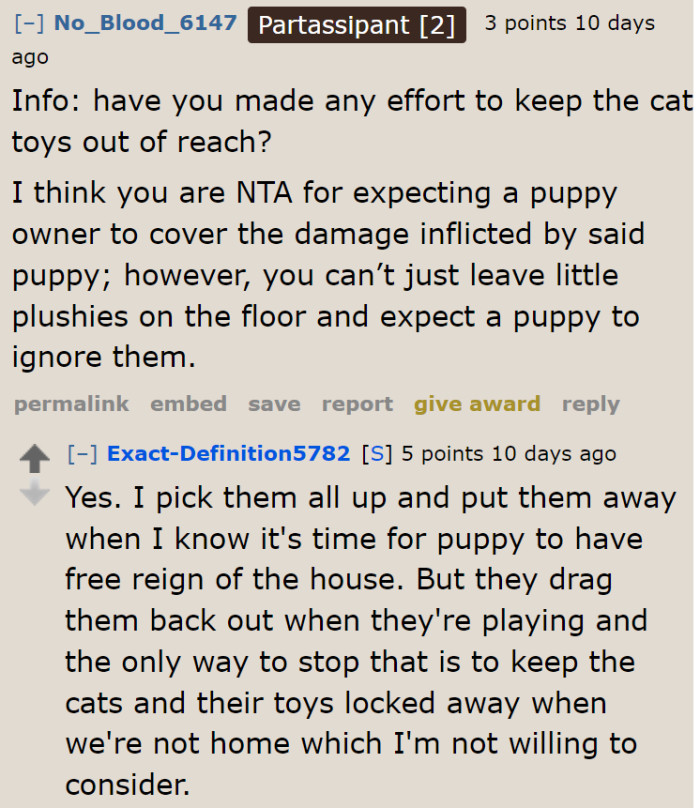
That’s when the OP admits she’s already overwhelmed with having a dog at home, and it changes how people judge her insistence.
Strategies for Managing Household Harmony
To promote harmony within the household, it may be helpful to encourage shared activities involving both pets and family members.
Engaging in playtime with the dog and the cats can create bonding experiences that foster understanding and empathy among family members.
Activities like training sessions or outings can enhance the relationships between step-siblings while also managing pet behavior.
Practical Solutions for Harmonious Pet Care
To alleviate tension surrounding pet care, families can create a shared pet care plan that outlines responsibilities and expectations.
Additionally, regular family meetings to discuss pet care issues can enhance communication and foster a collaborative environment.
A simple yet valid reason
The stepdaughter needs to be more responsible about her puppy because it might destroy other important things in the future.
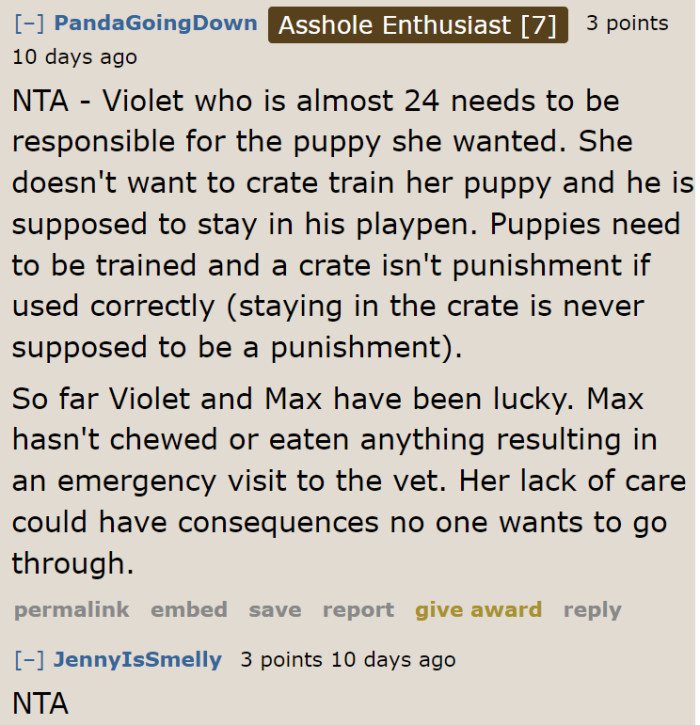
Redditors believe that the stepdaughter isn't ready to take care of the puppy.
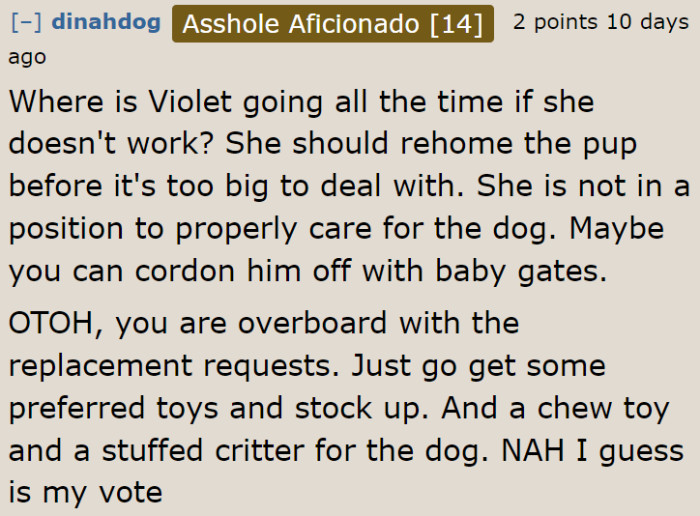
By the time Redditors weigh in on whether it’s the stepdaughter’s responsibility to train the dog, the family dinner energy is basically guaranteed to get worse.
Moreover, incorporating family meetings to discuss pet-related issues regularly can provide a platform for addressing concerns and finding solutions collaboratively.
This open dialogue allows family members to express their feelings and negotiate solutions, ultimately leading to a healthier family dynamic.
Lastly, engaging in family activities centered around pet care can strengthen bonds and reduce stress associated with disagreements.
Building positive associations with pet care can help mitigate conflicts and enhance overall family dynamics.
The cats don't need the toys on the same day these got destroyed.
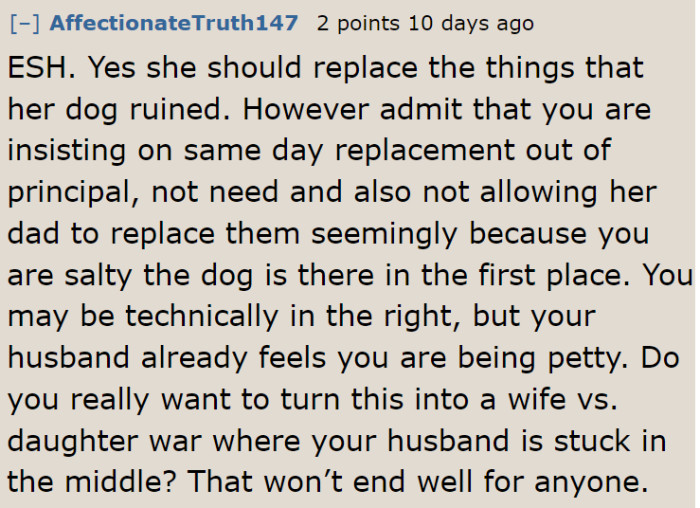
It's either the stepdaughter trains her puppy more, or she gives it up while it's still young.
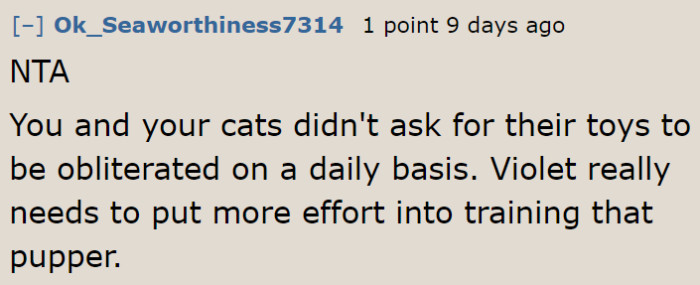
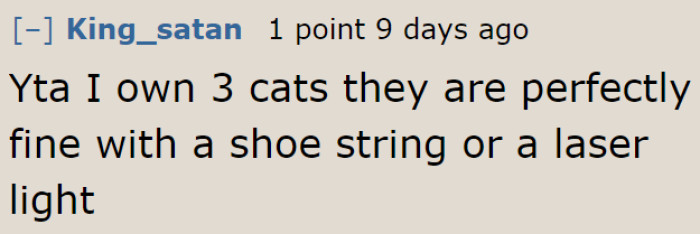
Cats' toys don't have to be expensive, according to this cat owner.
Well, this was an interesting story. The dog will soon run out of things to destroy if the stepdaughter doesn't train him properly.
She can always get a crate for her dog so that it won't go damaging things at home. If she can't handle this dog well, maybe it's time to rehome it.
There are other people out there who can dedicate time to train this puppy.
The situation with the stepdaughter's dog and the constant destruction of the cats' toys highlights significant underlying family dynamics. The ongoing frustration between the stepdaughter and her stepmother reflects a broader theme of communication and responsibility within blended families. Effective communication is essential in these interactions; without it, misunderstandings can lead to unnecessary tension. By tackling these issues openly, families can create a more harmonious environment that benefits both their pets and their relationships.
Blending families comes with its own set of challenges, particularly when it involves pets.
Nobody wants to keep footing the bill for shredded cat toys while the house quietly falls apart.
For another stepfamily tug-of-war, read why the oldest daughter refused to leave her dog behind.
Share this article:





