Abandoned in the Heat, Pickles the Rescue Dog Finally Learned What Home Feels Like

Pickles’ story turns on a stark image. She was found tied to a boulder in extreme heat, starving and alone, with signs that she had recently given birth. What followed was not a sudden transformation, but a steady lesson in safety, comfort, and trust that ended with the dog discovering a family and the family discovering how much they needed her.
A rescue marked by questions
Before Pickles ever knew the routines of a home, her life appears to have been shaped by hardship. When she was discovered, she was tied to a boulder in severe heat and had no one with her. She was also starving.
Rescuers realized she had recently had puppies, a detail that made the scene even more troubling. The puppies were never found, and much about what Pickles had been through remained unknown. What was clear was that she was a gentle dog who needed safety.
She eventually made her way to an animal shelter in New York, where the next part of her life began. There, a woman met her and felt an immediate pull. Something about Pickles made it impossible to leave without her, and adoption gave the dog the fresh start she had not had before.

Everyday life became something new
Once Pickles was home, ordinary things revealed how unfamiliar a stable life had been. A car ride was not just transportation. It was an experience. Even television held her attention, as if the simple sights and sounds of a household were things she was only beginning to take in.
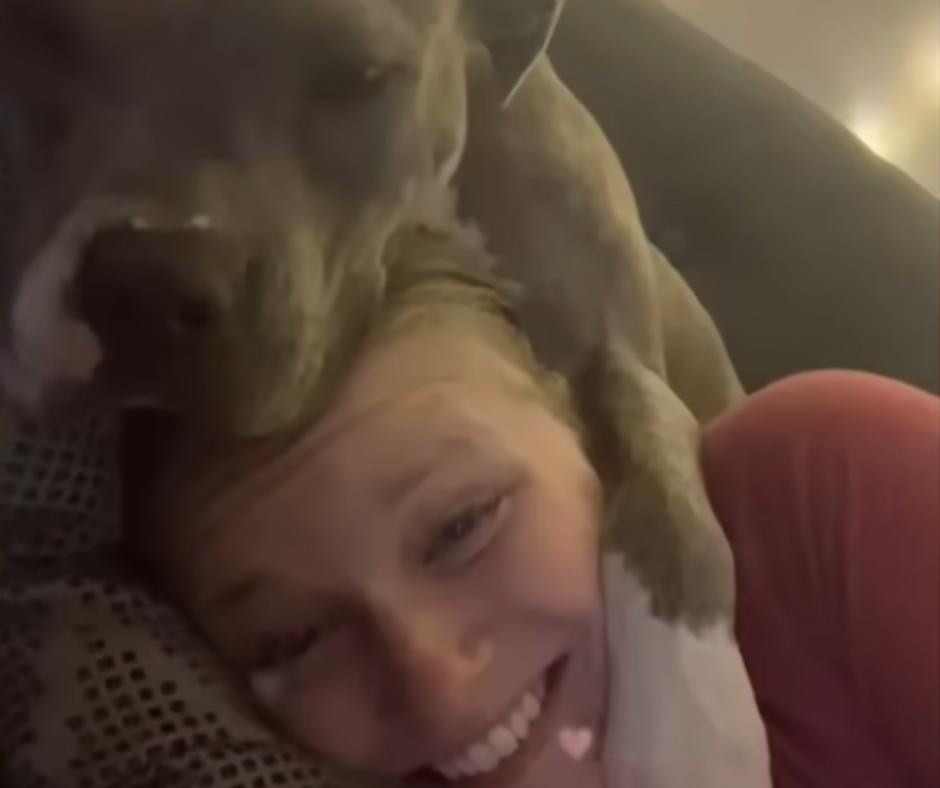
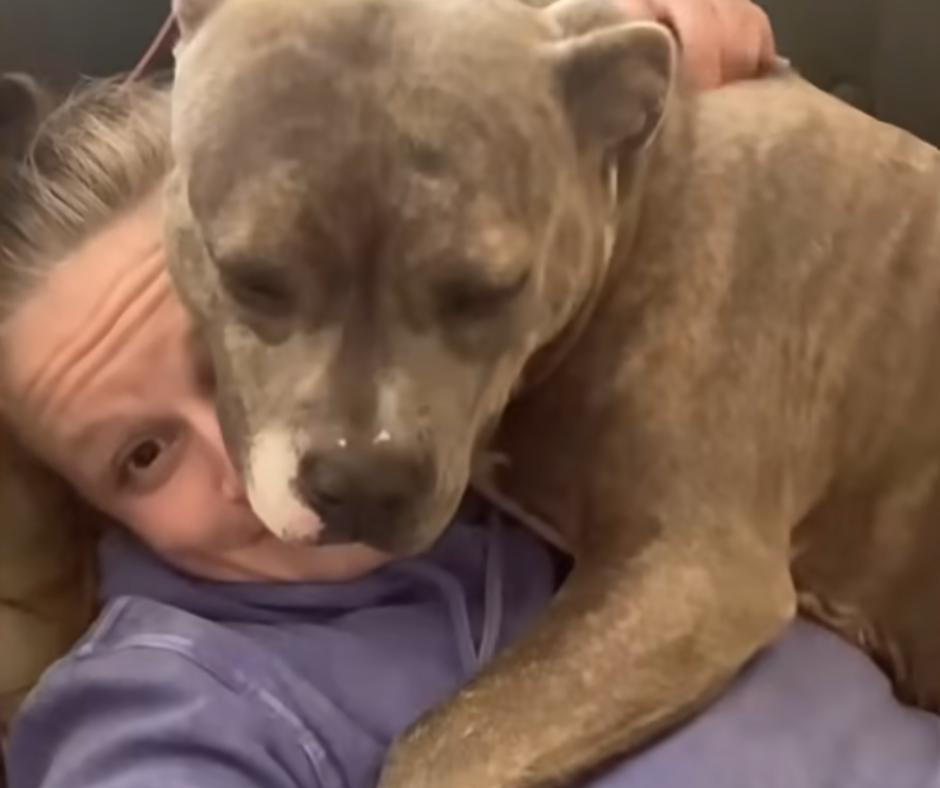
Nighttime seemed to matter especially deeply. Pickles often slept pressed close to her owner or rested her head nearby, as though being able to feel a trusted person near her helped her settle. Those small habits suggested how much reassurance she drew from not being alone.
Her new world also came with the basics she had been missing: food, shelter, affection, and people who were not going to leave her behind. Bit by bit, the dog who had once been left outside in dangerous heat began to understand that this place was different. Home was becoming a place where she could relax instead of brace herself.
That change did not mean Pickles lost her personality. As her confidence grew, so did her comfort in showing exactly what she wanted. She developed a reputation as the queen of the household and was not shy about making her feelings known when she wanted extra attention.
The family she joined needed her too
Pickles’ owner was moving through the pressures of medical school, and the dog’s companionship took on real meaning in that demanding stretch. Hard days felt easier with Pickles at home, offering affection freely and waiting with the steadiness only a devoted pet can bring.
Three months after Pickles was adopted, the owner’s boyfriend became a bigger part of their lives. Pickles quickly bonded with him as well, settling into an expanding family with growing ease. The dog who had arrived with every reason to fear the world was learning that more than one person could be trusted.
Over time, her owner stopped seeing the relationship as a one way act of rescue. Pickles had certainly been the one pulled from danger and given a chance at security. But through stressful periods, major changes, and the ordinary rhythm of daily life, she also became a source of strength for the people around her.
That is what makes her story linger. It began with abandonment, unanswered questions, and a dog left in extreme heat. It ended with Pickles discovering soft places to sleep, familiar faces to lean against, and a home where she belonged. In giving her that safety, her family gained a companion who helped make their home feel fuller too.
Why heat is dangerous for dogs
Dogs do not cool themselves as efficiently as people. They mainly lose heat by panting and through limited sweating from their paws, so hot air, direct sun, warm pavement, and poor ventilation can overwhelm them quickly. Short nosed breeds, seniors, puppies, overweight dogs, and dogs with thick coats or medical problems can be at higher risk, but any dog can overheat.
Warning signs include frantic panting, drooling, bright red or very pale gums, weakness, vomiting, wobbling, confusion, or collapse. If you suspect overheating, move the dog to shade or air conditioning, offer small amounts of cool water, and use cool, not icy, water on the body. A fan can help. Seek veterinary help promptly, because heat illness can worsen after the dog seems calmer.
Prevention matters most. Avoid peak heat, test pavement with your hand, keep walks short when it is muggy, and never leave a dog in a parked vehicle or enclosed space that can heat up.
What rescue and shelter dogs often need
Dogs entering rescue or shelter care are often dealing with stress, confusion, and sensory overload. Even friendly dogs may shut down, pace, bark, guard food, or have accidents indoors at first. That does not always reflect their long term personality. Many improve once they have predictable routines, rest, gentle handling, and enough time to decompress.
If you adopt or foster, start simple. Set up a quiet sleeping area, keep introductions calm, and use a regular schedule for meals, toilet breaks, walks, and bedtime. Supervise around children and other pets until everyone is settled. Use treats and praise to reward desired behavior. Avoid punishment for fear based behavior, because it can increase anxiety and slow trust building.
A veterinary check soon after intake or adoption is useful for vaccinations, parasites, pain, and any hidden illness or injury.
How to help a dog feel at home
Many rescue dogs need a transition period before they feel safe. Let the dog approach at its own pace. Offer choices, such as a crate with the door open, different resting spots, and quiet time away from visitors. Enrichment helps: food puzzles, sniff walks, chew items, and short training sessions can build confidence without overstimulation.
Watch body language. Soft eyes, loose posture, and normal curiosity usually signal comfort. Freezing, lip licking, tucked tail, whale eye, growling, or avoiding touch can mean the dog needs more space. If fear, separation distress, or reactivity is intense, ask a veterinarian or qualified behavior professional for guidance.
People who cannot adopt can still help by fostering, donating supplies, volunteering, or sharing lost and found pet information. Even small, consistent support can make rescue work more successful for animals and caregivers alike.
Share this article: