He Thought Scaring His Dog Would Be Funny But Got A Shocking Response

A simple prank with a curious pitbull turned into one of those pet-owner moments that is funny, awkward, and a little too real all at once.
In this Reddit story, a man tried to scare his 6-month-old dog while she was sniffing around, expecting a dramatic reaction or maybe a laugh. Instead, the dog responded in a way that left him covered in regret, and the internet had plenty to say about it.
It is the kind of story that starts as a joke and ends with everyone learning something the hard way. Read on.
The original post:

Redditor has a 6-month-old Pitbull dog.

He wanted to surprise her:
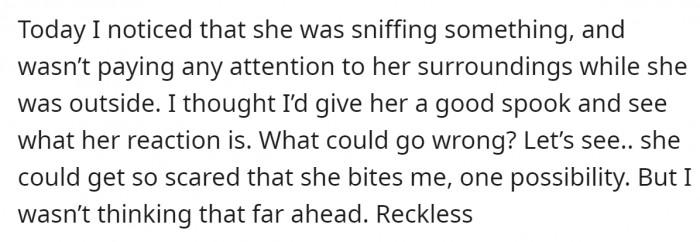
The recent incident where a man attempted to scare his dog for amusement underscores a critical aspect of pet ownership: the need to recognize and respect animal sensitivities. The dog's unexpected response to a perceived threat reflects a common reaction among pets, who can exhibit panic or unusual behaviors when faced with stress. This serves as a poignant reminder that understanding animal psychology is essential for fostering a healthy and trusting relationship between pets and their owners. Distressing situations such as this could be easily avoided by acknowledging the emotional world of our four-legged companions.
That prank did not land the way he expected.
Research indicates that fear-based behaviors, such as sudden reactions to perceived threats, can be deeply rooted in a dog's past experiences.
Recognizing these triggers is essential for pet owners to respond appropriately and mitigate negative outcomes.
And he succeeded in that intention:

But she surprised him back:
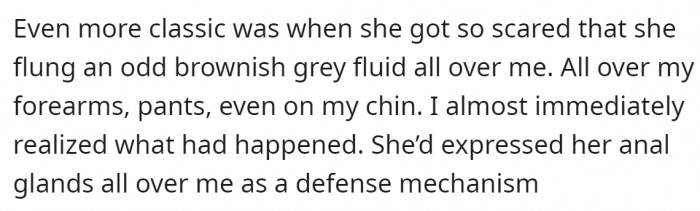
Yet, this experience was very educative for him:
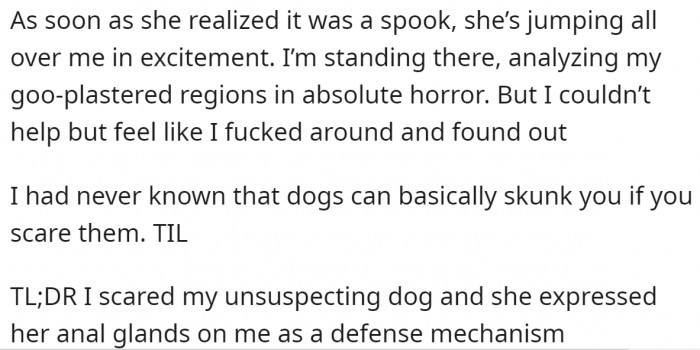
Understanding these responses is crucial for creating safe environments for pets. This incident serves as a poignant reminder of the importance of managing stressors in an animal's environment.
Studies show that fear can lead to unexpected behavioral responses in pets, including aggression or submissiveness.
When owners fail to recognize these signs, it can lead to dangerous situations for both the pet and the owner.
"You scared the sh.t out of me"
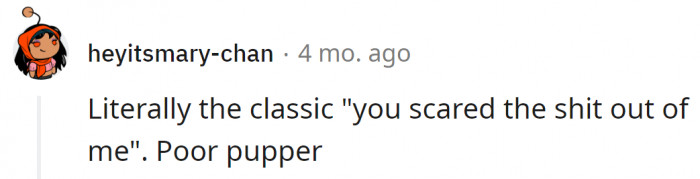
One dog mom expressed her sincere sympathizing for the situation:
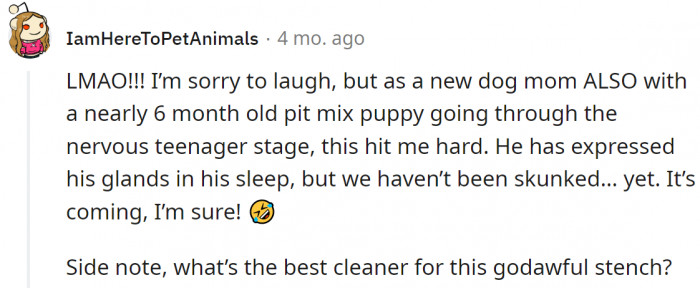
He succeeded and also got a reward for it.
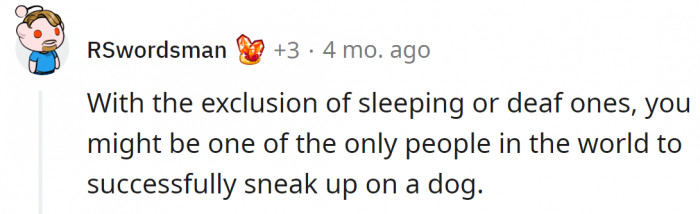
The Psychological Impact of Fear on Animals
Fear can have significant effects on an animal's behavior and emotional well-being.
The Role of Owner Behavior in Pet Reactions
Owner behavior significantly influences how pets respond to fear-inducing situations.
Behavioral research indicates that pets often mirror their owner's emotional states, which can exacerbate anxiety and lead to unpredictable reactions.
Being aware of one's emotional state can help pet owners manage their reactions and create a calmer environment for their pets.
"Today I learned..."

He should be prepared for what comes next...

He really made an effort to earn it
These techniques involve exposing the animal to the source of fear in a controlled and gradual manner, helping them learn to cope with stressors.
Engaging in positive reinforcement strategies can also enhance the learning process, fostering a sense of safety.
This reminds me of the neighbor who made a dog bark to force the owner to bring him inside.
To mitigate fear responses, pet owners should focus on creating a safe and secure environment for their pets.
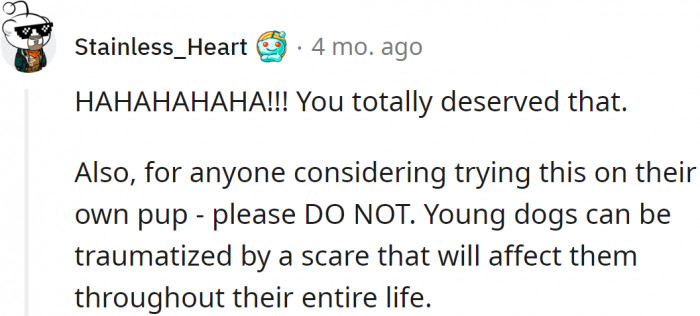
And it will probably be remembered forever

Maybe because he believes it would be fun?
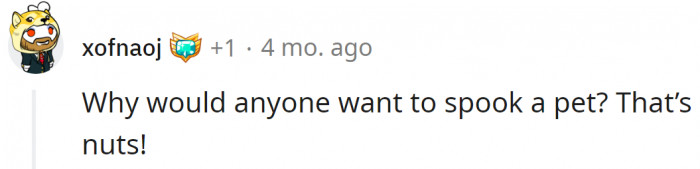
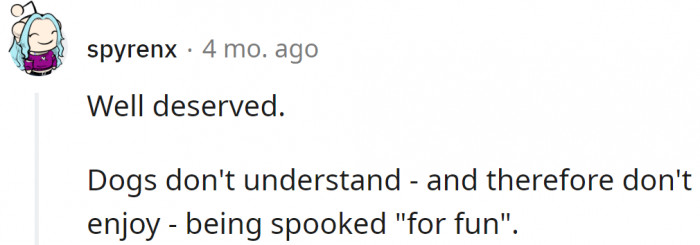
"Well deserved"
Creating a Safe and Comfortable Environment
Establishing a calm and secure environment is crucial for pets, especially those prone to stress.
Addressing Situational Triggers
Identifying specific triggers of fear in pets is essential for effective behavior management.
If you didn't know:
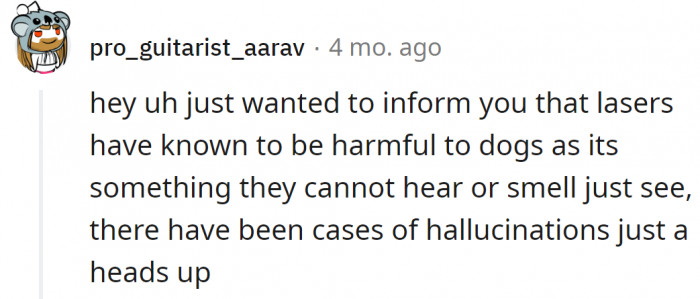
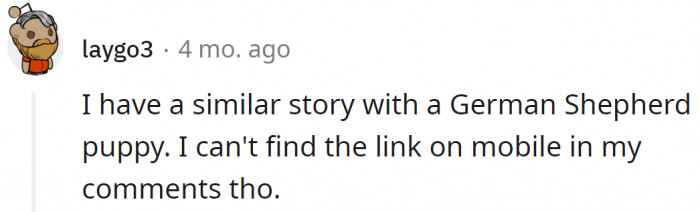
There are more people with similar experiences
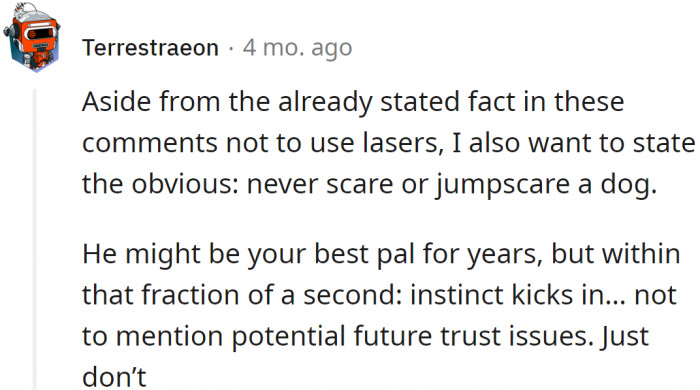
Joking aside, it's not a good idea to scare pets, they experience it stressfully just as we humans do.
Pet owners should observe and document their pet's reactions to various stimuli to identify fear triggers.
That is one way to learn a lesson fast.
It’s a natural defense mechanism in dogs
"Dogs and cats primarily use their anal gland secretions to mark their territory and generally will secrete small amounts of fluid every time they defecate. Many will often express these glands when anxious or frightened as well.
Dogs who are healthy can usually have a wide variety in the appearance of their sac's content. Anal sac fluid varies from yellow to tan or brown in color." Wikipedia
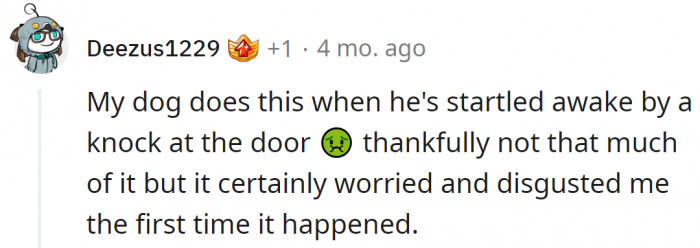
Definitely

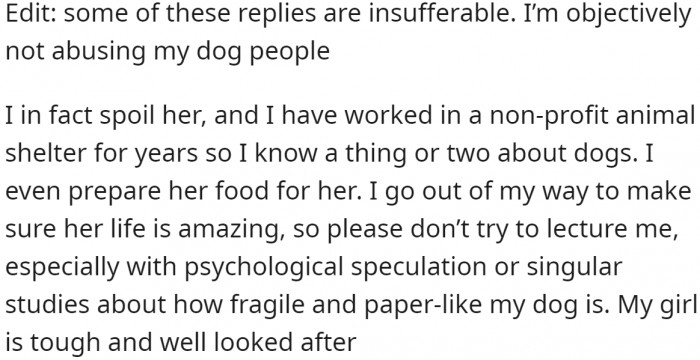
The OP also added some further information:
The Role of Empathy in Animal Care
Empathy plays a crucial role in understanding and responding to an animal's needs.
The Importance of Patience and Understanding
Patience is crucial when addressing fear-based behaviors in pets.
Well, this story was pretty amusing for other Redditors. Although generally, it's not alright to scare your pet for various reasons, some pets find it very interesting and really like it.
What do you feel about this situation? Have you ever heard of this defense mechanism in dogs?
Share your thoughts in the comment section below.
Engaging in regular training sessions that focus on positive interactions can improve the pet-owner bond.
Behavioral studies indicate that consistency and positive reinforcement can lead to more effective training outcomes.
Building trust through patience and understanding can transform fear responses into confidence over time.
The incident of a man attempting to scare his dog highlights the critical importance of understanding fear responses in pets. Such moments can profoundly impact the bond between pet and owner. The article underscores that fostering a healthy relationship requires more than just companionship; it hinges on recognizing and respecting the emotional states of our furry friends. The emphasis on patience and empathy cannot be overstated, especially when considering how a seemingly funny prank can lead to unexpected consequences. Moreover, proactive strategies to engage with pets in a positive manner can greatly enhance their well-being and behavior, ultimately strengthening the connection that brings joy to both parties.
Engaging in activities that foster empathy, such as observing and reflecting on animal behavior, can strengthen the human-animal bond.
Additionally, sharing experiences with other pet owners can provide valuable insights into understanding pets' needs.
Ultimately, fostering empathy can lead to more compassionate and effective care for pets.
The incident highlights the profound connection between a pet's emotional state and their response to perceived threats. When the individual attempted to scare his dog for amusement, he inadvertently triggered a stress response that could have lasting effects on the dog's well-being. This reaction serves as a reminder of the importance of fostering a safe and nurturing environment for pets. Creating such an atmosphere not only improves the quality of life for animals but also strengthens the bond between pets and their owners, facilitating a more harmonious relationship.
He probably will not try that again.
Wait until you see how a stranger’s dog incident turned into an argument after no apology. Read what happened when the owner shouted at the dog and refused to retrieve it.
Share this article: